Kirjojen hintavertailu. Mukana 11 627 067 kirjaa ja 12 kauppaa.

Kirjahaku

Etsi kirjoja tekijän nimen, kirjan nimen tai ISBN:n perusteella.

1000 tulosta hakusanalla David Schaffer

Developing Statistical Software in Fortran 95

Developing Statistical Software in Fortran 95

David R. Lemmon; Joseph L. Schafer

Springer-Verlag New York Inc.
2005
nidottu
Many books teach computational statistics. Until now, however, none has shown how to write a good program. This book gives statisticians, biostatisticians and methodologically-oriented researchers the tools they need to develop high-quality statistical software. Topics include how to: Program in Fortran 95 using a pseudo object-oriented style Write accurate and efficient computational procedures Create console applications Build dynamic-link libraries (DLLs) and Windows-based software components Develop graphical user interfaces (GUIs) Through detailed examples, readers are shown how to call Fortran procedures from packages including Excel, SAS, SPSS, S-PLUS, R, and MATLAB. They are even given a tutorial on creating GUIs for Fortran computational code using Visual Basic.NET. This book is for those who want to learn how to create statistical applications quickly and effectively. Prior experience with a programming language such as Basic, Fortran or C is helpful but not required. More experienced programmers will learn new strategies to harness the power of modern Fortran and the object-oriented paradigm. This may serve as a supplementary text for a graduate course on statistical computing. From the reviews: "This book should be read by all statisticians, engineers, and scientists who want to implement an algorithm as a computer program. The book is the best introduction to programming that I have ever read. I value it as one of my important reference books in my personal library." Melvin J. Hinich for Techonmetrics, November 2006 "Overall, the book is well written and provides a reasonable introduction to the use of modern versions of Fortran for statistical computation. The real thrust of the book is building COM interfaces using Fortran, and it will no doubt be most useful to anyone who needs to build such interfaces." Journal of the American Statistical Association, June 2006 "The book is well written and is divided into chapters and sections which are coherent...Overall the book seems like a good resource for someone that already knows some dialect of FORTRAN and wants to learn a bit about what is new in FORTRAN 95..." Robert Gentleman for the Journal of Statistical Software, December 2006

Monitoring in Coastal Environments Using Foraminifera and Thecamoebian Indicators

Monitoring in Coastal Environments Using Foraminifera and Thecamoebian Indicators

David B. Scott; Franco S. Medioli; Charles T. Schafer

Cambridge University Press
2007
pokkari
Foraminifera and thecamoebians are highly sensitive to environmental stress (natural or anthropogenic). This feature means that they can be used to biologically characterize a variety of freshwater and coastal marine environments. Due to their small size and hard shells, large quantities are also found fossilised in core samples, making them ideal for reconstructing past environmental conditions. This volume covers the specific environmental applications of these organisms and contains an introduction to the subject, detailed descriptions of methods and techniques and case studies. Written for non-specialists, this book will appeal to resource managers and consultants in the public and private sector who routinely work on coastal environmental problems. The book will also serve as a supplementary text for graduate students in many courses on environmental monitoring, ecological baseline studies and environmental science.
Economics of Strategy

Economics of Strategy

David Besanko; David Dranove; Mark Shanley; Scott Schaefer

John Wiley Sons Inc
2017
nidottu
Economics of Strategy focuses on the key economic concepts students must master in order to develop a sound business strategy. Ideal for undergraduate managerial economics and business strategy courses, Economics of Strategy offers a careful yet accessible translation of advanced economic concepts to practical problems facing business managers. Armed with general principles, today's students--tomorrows future managers--will be prepared to adjust their firms business strategies to the demands of the ever-changing environment.
Separation Anxiety in Children and Adolescents

Separation Anxiety in Children and Adolescents

David H. Barlow; Andrew R. Eisen; Charles E. Schaefer

Guilford Publications
2007
nidottu
This unique book presents a research-based approach to understanding the challenges of separation anxiety and helping children, adolescents, and their parents build the skills they need to overcome it. The authors provide step-by-step guidelines for implementing the entire process of therapy--from intake and assessment through coping skills training, cognitive-behavioral interventions, and relapse prevention. Featuring in-depth case examples, the book is written for maximum accessibility for all clinicians, including those with limited cognitive-behavioral therapy experience, who treat separation anxiety and other childhood anxiety disorders. Useful reproducibles include the Separation Anxiety Assessment Scales, which facilitate individualized case formulation and treatment planning.
Singularities and Groups in Bifurcation Theory

Singularities and Groups in Bifurcation Theory

Martin Golubitsky; David G. Schaeffer

Springer-Verlag New York Inc.
1984
sidottu
This book has been written in a frankly partisian spirit-we believe that singularity theory offers an extremely useful approach to bifurcation prob­ lems and we hope to convert the reader to this view. In this preface we will discuss what we feel are the strengths of the singularity theory approach. This discussion then Ieads naturally into a discussion of the contents of the book and the prerequisites for reading it. Let us emphasize that our principal contribution in this area has been to apply pre-existing techniques from singularity theory, especially unfolding theory and classification theory, to bifurcation problems. Many ofthe ideas in this part of singularity theory were originally proposed by Rene Thom; the subject was then developed rigorously by John Matherand extended by V. I. Arnold. In applying this material to bifurcation problems, we were greatly encouraged by how weil the mathematical ideas of singularity theory meshed with the questions addressed by bifurcation theory. Concerning our title, Singularities and Groups in Bifurcation Theory, it should be mentioned that the present text is the first volume in a two-volume sequence. In this volume our emphasis is on singularity theory, with group theory playing a subordinate role. In Volume II the emphasis will be more balanced. Having made these remarks, Iet us set the context for the discussion of the strengths of the singularity theory approach to bifurcation. As we use the term, bifurcation theory is the study of equations with multiple solutions.
Abolitionist of the Most Dangerous Kind

Abolitionist of the Most Dangerous Kind

Todd Mildfelt; David D. Schafer

UNIVERSITY OF OKLAHOMA PRESS
2023
sidottu
A controversial character largely known (as depicted in the movie Glory) as a Union colonel who led Black soldiers in the Civil War, James Montgomery (1814–71) waged a far more personal and radical war against slavery than popular history suggests. It is the true story of this militant abolitionist that Todd Mildfelt and David D. Schafer tell in Abolitionist of the Most Dangerous Kind, summoning a life fiercely lived in struggle against the expansion of slavery into the West and during the Civil War. This book follows a harrowing path through the turbulent world of the 1850s and 1860s as Montgomery, with the fervor of an Old Testament prophet, inflicts destructive retribution on Southern slaveholders wherever he finds them, crossing paths with notable abolitionists John Brown and Harriet Tubman along the way. During the tumultuous years of “Bleeding Kansas,” he became a guerilla chieftain of the antislavery vigilantes known as Jayhawkers. When the war broke out in 1861, Montgomery led a regiment of white troops who helped hundreds of enslaved people in Missouri reach freedom in Kansas. Drawing on regimental records in the National Archives, the authors provide new insights into the experiences of African American men who served in Montgomery’s next regiment, the Thirty-Fourth United States Colored Troops (formerly Second South Carolina Infantry). Montgomery helped enslaved men and women escape via one of the least-explored underground railways in the nation, from Arkansas and Missouri through Kansas and Nebraska. With support of abolitionists in Massachusetts, he spearheaded resistance to the Fugitive Slave Act in Kansas. And, when war came, he led Black soldiers in striking at the very heart of the Confederacy. His full story thus illuminates the actions of both militant abolitionists and the enslaved people fighting to destroy the peculiar institution.
Abolitionist of the Most Dangerous Kind

Abolitionist of the Most Dangerous Kind

Todd Mildfelt; David D. Schafer

UNIVERSITY OF OKLAHOMA PRESS
2026
nidottu
A controversial character largely known (as depicted in the movie Glory) as a Union colonel who led Black soldiers in the Civil War, James Montgomery (1814–71) waged a far more personal and radical war against slavery than popular history suggests. It is the true story of this militant abolitionist that Todd Mildfelt and David D. Schafer tell in Abolitionist of the Most Dangerous Kind, summoning a life fiercely lived in struggle against the expansion of slavery into the West and during the Civil War. This book follows a harrowing path through the turbulent world of the 1850s and 1860s as Montgomery, with the fervor of an Old Testament prophet, inflicts destructive retribution on Southern slaveholders wherever he finds them, crossing paths with notable abolitionists John Brown and Harriet Tubman along the way. During the tumultuous years of “Bleeding Kansas,” he became a guerilla chieftain of the antislavery vigilantes known as Jayhawkers. When the war broke out in 1861, Montgomery led a regiment of white troops who helped hundreds of enslaved people in Missouri reach freedom in Kansas. Drawing on regimental records in the National Archives, the authors provide new insights into the experiences of African American men who served in Montgomery’s next regiment, the Thirty-Fourth United States Colored Troops (formerly Second South Carolina Infantry). Montgomery helped enslaved men and women escape via one of the least-explored underground railways in the nation, from Arkansas and Missouri through Kansas and Nebraska. With support of abolitionists in Massachusetts, he spearheaded resistance to the Fugitive Slave Act in Kansas. And, when war came, he led Black soldiers in striking at the very heart of the Confederacy. His full story thus illuminates the actions of both militant abolitionists and the enslaved people fighting to destroy the peculiar institution.
Enhanced Army Airborne Forces

Enhanced Army Airborne Forces

John Gordon; Agnes Gereben Schaefer; David A. Shlapak; Caroline Baxter; Scott Boston; Michael McGee; Todd Nichols; Elizabeth Tencza

RAND
2014
pokkari
: A RAND research team examined options to increase the mobility, protection, and firepower of Army airborne forces, given likely future missions and threats, and identified a concept for enhancing today s forces by adding a light armored infantry capability. This report examines the numbers and types of vehicles that would be needed to create an airborne light armored force that could be airdropped or air-landed from Air Force transport planes."
Singularities and Groups in Bifurcation Theory

Singularities and Groups in Bifurcation Theory

Martin Golubitsky; David G. Schaeffer

Springer-Verlag New York Inc.
2013
nidottu
This book has been written in a frankly partisian spirit-we believe that singularity theory offers an extremely useful approach to bifurcation prob­ lems and we hope to convert the reader to this view. In this preface we will discuss what we feel are the strengths of the singularity theory approach. This discussion then Ieads naturally into a discussion of the contents of the book and the prerequisites for reading it. Let us emphasize that our principal contribution in this area has been to apply pre-existing techniques from singularity theory, especially unfolding theory and classification theory, to bifurcation problems. Many ofthe ideas in this part of singularity theory were originally proposed by Rene Thom; the subject was then developed rigorously by John Matherand extended by V. I. Arnold. In applying this material to bifurcation problems, we were greatly encouraged by how weil the mathematical ideas of singularity theory meshed with the questions addressed by bifurcation theory. Concerning our title, Singularities and Groups in Bifurcation Theory, it should be mentioned that the present text is the first volume in a two-volume sequence. In this volume our emphasis is on singularity theory, with group theory playing a subordinate role. In Volume II the emphasis will be more balanced. Having made these remarks, Iet us set the context for the discussion of the strengths of the singularity theory approach to bifurcation. As we use the term, bifurcation theory is the study of equations with multiple solutions.
Active Labor Market Policies in Europe

Active Labor Market Policies in Europe

Jochen Kluve; David Card; Michael Fertig; Marek Góra; Lena Jacobi; Peter Jensen; Reelika Leetmaa; Leonhard Nima; Eleonora Patacchini; Sandra Schaffner; Christoph M. Schmidt; Bas van der Klaauw; Andrea Weber

Springer-Verlag Berlin and Heidelberg GmbH Co. K
2007
sidottu
Measures of Active Labor Market Policy - such as training, wage subsidies, public employment measures, and job search assistance - are widely used in European countries to combat unemployment. Little, however, is known about what each country can learn from experiences in other countries. This study provides novel insight on this important policy issue by discussing the role of the European Commission's Employment Strategy, reviewing the experiences made in European states, and giving the first ever quantitative assessment of the existing cross-country evidence, answering the question "what labor market program works for what target group under what (economic and institutional) circumstances?". Using an innovative meta-analytical approach, the authors find that rather than contextual factors such as labor market institutions or the business cycle, it is almost exclusively the program type that matters for program effectiveness: While direct employment programs in the public sector appear detrimental, wage subsidies and "Services and Sanctions" can be effective in increasing participants' employment probability.
Active Labor Market Policies in Europe

Active Labor Market Policies in Europe

Jochen Kluve; David Card; Michael Fertig; Marek Góra; Lena Jacobi; Peter Jensen; Reelika Leetmaa; Leonhard Nima; Eleonora Patacchini; Sandra Schaffner; Christoph M. Schmidt; Bas van der Klaauw; Andrea Weber

Springer-Verlag Berlin and Heidelberg GmbH Co. K
2010
nidottu
Measures of Active Labor Market Policy - such as training, wage subsidies, public employment measures, and job search assistance - are widely used in European countries to combat unemployment. Little, however, is known about what each country can learn from experiences in other countries. This study provides novel insight on this important policy issue by discussing the role of the European Commission's Employment Strategy, reviewing the experiences made in European states, and giving the first ever quantitative assessment of the existing cross-country evidence, answering the question "what labor market program works for what target group under what (economic and institutional) circumstances?". Using an innovative meta-analytical approach, the authors find that rather than contextual factors such as labor market institutions or the business cycle, it is almost exclusively the program type that matters for program effectiveness: While direct employment programs in the public sector appear detrimental, wage subsidies and "Services and Sanctions" can be effective in increasing participants' employment probability.
Singularities and Groups in Bifurcation Theory

Singularities and Groups in Bifurcation Theory

Martin Golubitsky; Ian Stewart; David G. Schaeffer

Springer-Verlag New York Inc.
1988
sidottu
Bifurcation theory studies how the structure of solutions to equations changes as parameters are varied. The nature of these changes depends both on the number of parameters and on the symmetries of the equations. Volume I discusses how singularity-theoretic techniques aid the understanding of transitions in multiparameter systems. This volume focuses on bifurcation problems with symmetry and shows how group-theoretic techniques aid the understanding of transitions in symmetric systems. Four broad topics are covered: group theory and steady-state bifurcation, equicariant singularity theory, Hopf bifurcation with symmetry, and mode interactions. The opening chapter provides an introduction to these subjects and motivates the study of systems with symmetry. Detailed case studies illustrate how group-theoretic methods can be used to analyze specific problems arising in applications.
Singularities and Groups in Bifurcation Theory

Singularities and Groups in Bifurcation Theory

Martin Golubitsky; Ian Stewart; David G. Schaeffer

Springer-Verlag New York Inc.
2011
nidottu
Bifurcation theory studies how the structure of solutions to equations changes as parameters are varied. The nature of these changes depends both on the number of parameters and on the symmetries of the equations. Volume I discusses how singularity-theoretic techniques aid the understanding of transitions in multiparameter systems. This volume focuses on bifurcation problems with symmetry and shows how group-theoretic techniques aid the understanding of transitions in symmetric systems. Four broad topics are covered: group theory and steady-state bifurcation, equicariant singularity theory, Hopf bifurcation with symmetry, and mode interactions. The opening chapter provides an introduction to these subjects and motivates the study of systems with symmetry. Detailed case studies illustrate how group-theoretic methods can be used to analyze specific problems arising in applications.
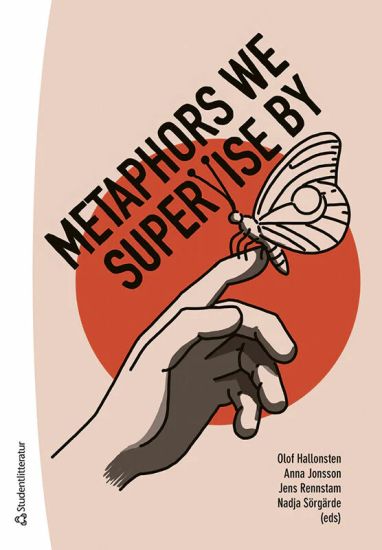
Metaphors We Supervise By

Metaphors We Supervise By

Olof Hallonsten; Anna Jonsson; Jens Rennstam; Nadja Sörgärde; Sanne Frandsen; Katarina Hollertz; Lisa Källström; Björn Lundberg; Jenny Magnusson; Monika Müller; Eddy Nehls; Stephan Schaefer; Katie Sullivan; David Wästerfors; Maria Zackariasson

Studentlitteratur AB
2024
nidottu
This edited volume aims to bring supervision to life and contribute to a better understanding of the relationship between the supervisor and the thesis-writing student.The authors believe and hope that discussing supervision in terms of metaphors will contribute to a more profound mutual understanding between student and supervisor, a deeper understanding of the context(s) of supervision, reduce frustrations, and facilitate a more productive and harmonious collaboration between student and supervisor.By illustrating each metaphor with a piece of comic art, the book aims to contribute to further reflection and discussion about the knowledge and know-how that the authors present through their metaphors.
Brain Tumor Pathology: Current Diagnostic Hotspots and Pitfalls

Brain Tumor Pathology: Current Diagnostic Hotspots and Pitfalls

Davide Schiffer

Springer-Verlag New York Inc.
2006
sidottu
Since Bailey and Cushing (1926), all brain tumor classifications have been called histogenetic. The nosographic position that the tumor types progressively acquired in the classification systems derived from the resemblance of tumor cells to those of the cytogenesis, modified whenever new information became available from different biological research fields and especially from molecular genetics. Classically, on the basis of the rough correspondence between the mature/immature aspect of tumor cells and the benign/malignant biological behavior of the tumors, the histological labels contained a prognostic significance. The supposed origin of the tumors was thus a factor for prognosis. Later on, with the concept of anaplasia (Cox, 1933; Kernohan et al., 1949) new criteria were introduced for establishing the malignancy grades of tumors. Immunohistochemistry and later molecular genetics further refined the prognostic diagnoses, substantially increasing the opportunities to recognize the cell origin of tumors, beside revealing the pathogenetic mechanisms. Prognoses became more accurate, as required by the greater and more targeted possibilities of therapy.
Brain Tumors

Brain Tumors

Davide Schiffer

Springer-Verlag Berlin and Heidelberg GmbH Co. K
2011
nidottu
Neurooncology has become a science of such great proportions and indefinite limits as to include branches which widely diverge from one another. Therefore, it is not an easy task to fit it all into the narrow framework of a book, though the collaboration among scientists compensates partly for the varying depths of knowledge and ex­ perience in the individual disciplines. The principal characteristic of this work, how­ ever, is in casting "pathology" as the common nosographic link. Though scientific progress has brought us well past the nosography of brain tu­ of departure, the area of mutual understanding to mors, pathology remains the point which all students of neurooncology refer when laying out diagnostic, therapeutic, and research schedules. Neurologists, neurosurgeons, and neuroradiologists orient themselves only by referring to tumor types. Neurooncology treatises require ever greater numbers of authors in order to cover the different subject areas with uniform authority. Excellent texts are available today for this purpose. The present book is not, and does not wish to be, a treatise but rather aims at presenting different aspects of neurooncology from the perspective of pathology and its biological and clinical correlates. It expresses the author's experi­ ence in the study of brain tumors and their pathology and clinical characteristics. The emphasis dedicated to the subjects relates to the clinicopathological and theore­ tical importance.
Attraverso il microscopio

Attraverso il microscopio

Davide Schiffer

Springer Verlag
2011
nidottu
Il libro prende le mosse dai pensieri di un giovane che alla maturità liceale si trova affascinato dalla cultura dei classici greco-latini, dai rudimenti filosofici e dall’impatto con le scienze fisiche e naturali. Il latino e i suoi naturalisti hanno suscitato un fervore verso la Botanica Sistematica che lo riporta a Linneo e quindi alla conoscenza del mondo naturale, all’esperienza della denominazione dell’esistente come conoscenza e quindi agli universali di Guglielmo d’Occam. La scelta della facoltà di Medicina fungerà da mediazione fra la filosofia, vista come via alla verità, e la biologia con il grande mistero dell’uomo nella sua dualità di mente/corpo. L’incontro con il microscopio aprirà la strada all’approfondimento della biologia, ma anche alla ricerca dei significati e delle interpretazioni del mondo. I meccanismi della percezione, visiva in particolare, nelle articolazioni della Gestaltpsychologie, e i suoi rapporti con il mondo interiore, sia quello della memoria esplicita che della memoria implicita, sono affrontati nell’esplorazione del mondo attraverso il microscopico e nella ricerca di una obiettività scientifica. Locke e Kant, Popper e Heidegger fanno da contraltare a Ramon y Cajal, Golgi, Kandel, Heisenberg, mentre la semiotica illumina e confonde sull’importanza del linguaggio per la conoscenza. Il segno e il suo riconoscimento si trasferiscono nella scienza attraverso l’inter-soggettività e il linguaggio appare come l’unico modo di penetrare l’esistente. Il libro si dilunga sull’origine di certe denominazioni in patologia tratte dalla vita quotidiana, sull’antropomorfismo spesso applicato agli oggetti del campo microscopico, sempre illustrati su base fenomenologica e psicologica.
Brain Tumor Pathology: Current Diagnostic Hotspots and Pitfalls
Since Bailey and Cushing (1926), all brain tumor classifications have been called histogenetic. The nosographic position that the tumor types progressively acquired in the classification systems derived from the resemblance of tumor cells to those of the cytogenesis, modified whenever new information became available from different biological research fields and especially from molecular genetics. Classically, on the basis of the rough correspondence between the mature/immature aspect of tumor cells and the benign/malignant biological behavior of the tumors, the histological labels contained a prognostic significance. The supposed origin of the tumors was thus a factor for prognosis. Later on, with the concept of anaplasia (Cox, 1933; Kernohan et al., 1949) new criteria were introduced for establishing the malignancy grades of tumors. Immunohistochemistry and later molecular genetics further refined the prognostic diagnoses, substantially increasing the opportunities to recognize the cell origin of tumors, beside revealing the pathogenetic mechanisms. Prognoses became more accurate, as required by the greater and more targeted possibilities of therapy.
Adolescence in a Moroccan Town

Adolescence in a Moroccan Town

Susan Schaefer Davis

Rutgers University Press
1999
nidottu
Adolescence is in many ways a culturally constructed category, with different meanings for different societies. Susan Schaefer Davis and Douglas A. Davis have studied adolescence in Zawiya, a town in northern Morocco. They examine changes in views of adolescence, changes in adolescent behavior, and differences in the adolescent experiences of boys and girls over the past few decades. Rashid was eighteen in 1982, when he helped us understand the feelings and activities of young people in his neighborhood, no longer a boy but not quite a man. He liked to talk about how his feelings and his understanding had grown from the time described, when he was just a kid. He recalled his dreams and plans in one of the hundreds of conversations we had about adolescence in this Moroccan town. His generation of youth in "Zawiya," on the western edge of North Africa, are the subject of this book.