Kirjojen hintavertailu. Mukana 12 390 323 kirjaa ja 12 kauppaa.

Kirjahaku

Etsi kirjoja tekijän nimen, kirjan nimen tai ISBN:n perusteella.

1000 tulosta hakusanalla David W Erickson

Design on the Edge

Design on the Edge

David W. Orr

MIT Press
2008
pokkari
The story of the building of the Adam Joseph Lewis Center at Oberlin College in the context of ecological design, institutional learning, and the green campus movement. The story of the Adam Joseph Lewis Center at Oberlin College-the first substantially green building to be built on a college campus-encompasses more than the particulars of one building. In Design on the Edge, David Orr writes about the planning and design of Oberlin's environmental studies building as part of a larger story about the art and science of ecological design and the ability of institutions of higher learning themselves to learn. The Lewis Center, which has attracted worldwide attention as a model of ecological design, operates according to environmental principles. It is powered entirely by solar energy, features landscaping with fruit trees and vegetable gardens, and houses a Living Machine, which processes all wastewater for reuse in the building or landscape. Orr puts the Lewis Center into historical design context and describes the obstacles and successes he encountered in obtaining funds and college approval, interweaving the particulars of the center with thoughts on the larger environmental and societal issues the building process illustrates. Equal parts analysis, personal reflection, and call to action, Design on the Edge illustrates the process of institutional change, institutional learning, and the political economy of design. It describes how the idea of the Lewis Center originated and was translated into reality with the help of such environmental visionaries as William McDonough and John Todd, and how the building has performed since its completion. College and university administrators will spend 17 billion dollars on new buildings over the next few years. Design on the Edge is essential reading for architects, planners, and environmentalists who need to sell the innovations of ecological design to wary institutions, and for educators and students whose profession is undermined by the very buildings they work in-and for anyone who has ever tried to change an organization for the better.
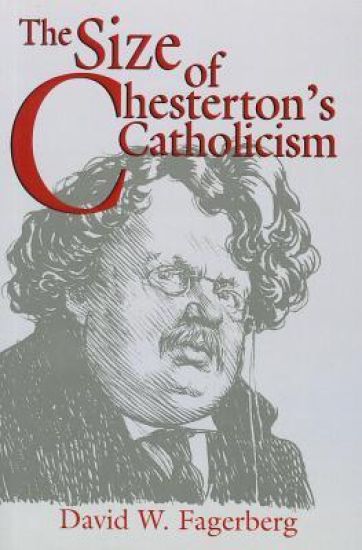
The Size of Chesterton's Catholicism

The Size of Chesterton's Catholicism

David W. Fagerberg

University of Notre Dame Press
2015
nidottu
English writer Gilbert Keith Chesterton was widely known not only for his newspaper columns, novels, poetry, plays, and detective stories, but also for his theological and Catholic apologetical works. This celebration of Chesterton's passion for his faith builds on his own words to reveal the Catholic paradox he was so fond of exploring and which he articulated with zeal, wit, and total lack of animosity. David W. Fagerberg draws on Chesterton's theological writings—avoiding secondary sources so that the reader can encounter his thought as directly as possible—to show how Chesterton championed a Catholicism of great robustness accessible by a thousand doors. Through these doors, Fagerberg shows that Chesterton believed the Church to be a living institution that confounds its critics. He organizes Chesterton's material around seven themes, fashioning a mosaic from the illustrations and arguments found in these apolegetical works. We see how Chesterton responded to accusations that the Church avoids the world with his defense of ordinary life and to the allegation of blind obedience with a defense of doctrinal complexity. We explore his interest in paganism and ritual and learn his response to the objections of liberal Protestantism. Chesterton is shown to be an apologist for a "catholic" Catholicism and he saw in every heresy an effort to narrow the Church. Chesterton said about the Church "that it is not only larger than me, but larger then anything in the world; that it is indeed larger than the world." Fagerberg suggests that the ultimate apology Chesterton made for Catholicism is that it is capacious enough to accommodate the paradoxical combinations which reveal reality—that the Church is a trysting-place for all the truths in the world.
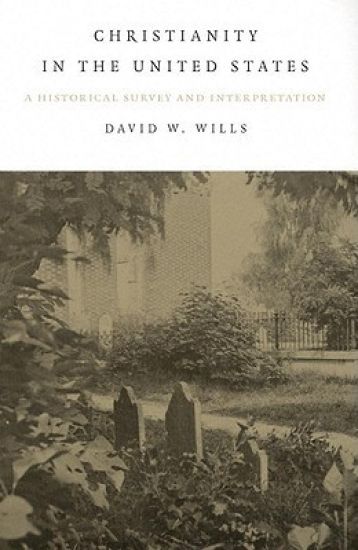
Christianity in the United States

Christianity in the United States

David W. Wills

University of Notre Dame Press
2005
nidottu
In this brief but comprehensive study, David W. Wills provides both a broad interpretation and a wealth of factual information on the history of Christianity in the United States. Though Wills pays careful attention to the diversity of American Christianity, charting the growth of American religious pluralism is only one of his goals. He also emphasizes Christian efforts to build a holy commonwealth and the role of religion in America's still unresolved effort to come to terms with the realities of race. Wills places the history of Christianity in the United States in the larger context of the globalization of the Christian religion. He links the rise of African-American Christianity with the emergence of Christianity in the non-western world. He also argues that the history of Christianity in the United States concerns itself in a central way with the relation of religious ideas, institutions, constituencies, and practices to the creation and exercise of political power. This compelling work will be an invaluable text for courses in religious studies, American history, American studies, and African-American studies.
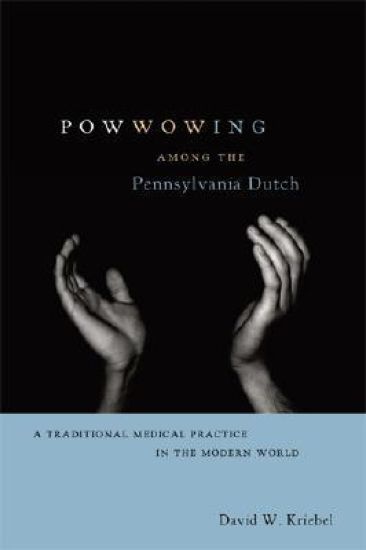
Powwowing Among the Pennsylvania Dutch

Powwowing Among the Pennsylvania Dutch

David W. Kriebel

Pennsylvania State University Press
2008
sidottu
Known in Pennsylvania Dutch as Brauche or Braucherei, the folk-healing practice of powwowing was thought to draw upon the power of God to heal all manner of physical and spiritual ills. Yet some people believed-and still believe today-that this power to heal came not from God, but from the devil. Controversy over powwowing came to a climax in 1929 with the York Hex Murder Trial, in which one powwower killed another who, he believed, had placed a hex on him.Based on seven years of fieldwork and extensive interviews, David Kriebel's study reveals the vibrant world, history, and culture of powwowing in southeastern and central Pennsylvania. He describes, compares, and contrasts powwowing practices of the past and the present; discusses in detail the belief in powwowing as healing; and assesses the future of Braucherei. Biographical sketches of seven living powwowers shed additional light on this little-understood topic.A groundbreaking inquiry into Pennsylvania German culture and history, Powwowing Among the Pennsylvania Dutch opens a window onto an archaic, semi-mystical tradition still very much in practice today.
History of Independence Hall

History of Independence Hall

David W. Belisle

Metalmark Books
2008
pokkari
First published in Philadelphia in 1859, History of Independence Hall combines Belisle’s meditations on the hall as a sacred part of our nation’s history with biographical accounts of each signer of the Declaration of Independence and a meticulous catalogue of the contents of the hall. The author states his hope that the publication will serve as more than just a mere guidebook, but rather will “inspire a deeper love for the Temple wherein our nation’s infancy was cradled and defended.”The author compares the significance of Independence Hall in the history of national independence to that of of other sites in the Western tradition, including Greek, Roman, and biblical sites. As such, Belisle’s record is much more than a thoroughly researched history of Independence Hall: it provides a view of nineteenth-century understandings of nationalism, historiography, and the cultural heritage of the United States. Of particular interest to students of the early history of the United States is the extensive documentation, including an early draft of the Declaration of Independence and sketches of revolutionary relics such as Washington’s pew.
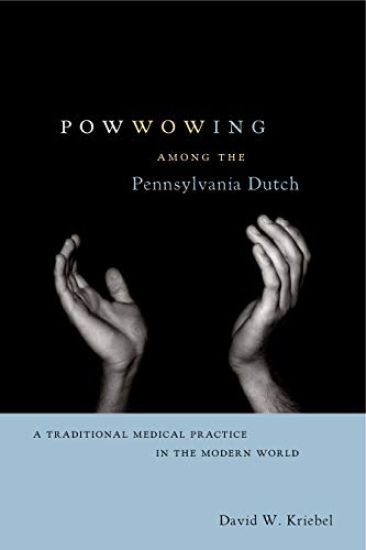
Powwowing Among the Pennsylvania Dutch

Powwowing Among the Pennsylvania Dutch

David W. Kriebel

Pennsylvania State University Press
2016
pokkari
Known in Pennsylvania Dutch as Brauche or Braucherei, the folk-healing practice of powwowing was thought to draw upon the power of God to heal all manner of physical and spiritual ills. Yet some people believed—and still believe today—that this power to heal came not from God, but from the devil. Controversy over powwowing came to a climax in 1929 with the York Hex Murder Trial, in which one powwower killed another who, he believed, had placed a hex on him.Based on seven years of fieldwork and extensive interviews, David Kriebel’s study reveals the vibrant world, history, and culture of powwowing in southeastern and central Pennsylvania. He describes, compares, and contrasts powwowing practices of the past and the present; discusses in detail the belief in powwowing as healing; and assesses the future of Braucherei. Biographical sketches of seven living powwowers shed additional light on this little-understood topic.A groundbreaking inquiry into Pennsylvania German culture and history, Powwowing Among the Pennsylvania Dutch opens a window onto an archaic, semi-mystical tradition still very much in practice today.
No Comment!

No Comment!

David W. Blohowiak

Praeger Publishers Inc
1987
sidottu
The title of Donald Blohowiak's engrossing and highly informative new book reflects the often strained relationship between two of America's most powerful institutions: the news media and business. The author gives an insider's look at why the tensions exist and what business people can do to understand them, to ease them, and to get the upper hand when dealing with the media. Aimed primarily at the business community and the media advisors who serve it, this book demystifies the news process and presents sound, practical advice.
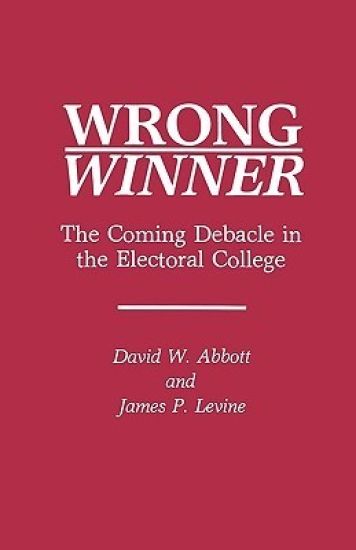
Wrong Winner

Wrong Winner

David W. Abbott; James P. Levine

Praeger Publishers Inc
1991
sidottu
This book describes what the authors identify as an emerging political crisis in U.S. politics: the possible winning of the presidency by a candidate with far fewer votes than his or her opponent. David W. Abbott and James P. Levine stress both the irrationality and peculiar nature of the current electoral system, emphasizing recent and current political developments. On the basis of their computer analysis of past elections and modern political realities, the authors predict that within twenty years it is very likely that the United States will produce a wrong winner. In explaining how this phenomenon could occur, Abbott and Levine introduce the concept of the wasted vote; winning lopsided majorities in states is worth no more than winning states by one vote, due to the antiquated winner-take-all principle.The book gives a brief historical overview of the electoral college and the structure of the existing electoral system. In addition to a detailed discussion of the wrong winner problem, the authors also explain that if no candidate gets a majority of votes in the electoral college because of the presence of a third party candidate, the House of Representatives must choose the president under an odd set of ground rules. This creates the potential for all kinds of nefarious political shenanigans. The authors conclude that the only satisfactory solution to the electoral system's shortcomings is the total abolition of the electoral college and a shift to direct election of the president by the people. Wrong Winner will be an excellent supplementary text in American Government, Parties, Voting, and Public Choice courses. It will also be of interest to political professionals, journalists, and political scientists.
Wrong Winner

Wrong Winner

David W. Abbott; James P. Levine

Praeger Publishers Inc
1991
nidottu
This book describes what the authors identify as an emerging political crisis in U.S. politics: the possible winning of the presidency by a candidate with far fewer votes than his or her opponent. David W. Abbott and James P. Levine stress both the irrationality and peculiar nature of the current electoral system, emphasizing recent and current political developments. On the basis of their computer analysis of past elections and modern political realities, the authors predict that within twenty years it is very likely that the United States will produce a wrong winner. In explaining how this phenomenon could occur, Abbott and Levine introduce the concept of the wasted vote; winning lopsided majorities in states is worth no more than winning states by one vote, due to the antiquated winner-take-all principle.The book gives a brief historical overview of the electoral college and the structure of the existing electoral system. In addition to a detailed discussion of the wrong winner problem, the authors also explain that if no candidate gets a majority of votes in the electoral college because of the presence of a third party candidate, the House of Representatives must choose the president under an odd set of ground rules. This creates the potential for all kinds of nefarious political shenanigans. The authors conclude that the only satisfactory solution to the electoral system's shortcomings is the total abolition of the electoral college and a shift to direct election of the president by the people. Wrong Winner will be an excellent supplementary text in American Government, Parties, Voting, and Public Choice courses. It will also be of interest to political professionals, journalists, and political scientists.
Case Studies in Diversity

Case Studies in Diversity

David W. Haines

Praeger Publishers Inc
1997
nidottu
This text introduces students to the main groups of refugees in America. Divided into political, sociological, anthropological, and historical approaches, the book discusses the peoples themselves as well as their impact on American society. Refugees are a special category of people who are admitted to this country for humanitarian reasons, have suffered greatly before getting here, and are resettled through an impressive combination of public and private resources. This book traces each group through the process and assesses their future prospects.
Manifest Destinies

Manifest Destinies

David W. Haines; Carol Mortland

Praeger Publishers Inc
2000
sidottu
At the turn of the century, America is both retrenching and expanding, becoming more restrictive and more expansive, more utilitarian and, more value- and religion-oriented. As was true a century ago, the flow of these changes is very much a story of immigrants, their lives in America, and the changing lives of those they join. This book examines the interaction of immigrants and the native-born in nine widely varying locales, including Richmond, VA, St. Louis, West Palm Beach, FL, Tacoma, WA, Garden City, KS, Dallas, Phoenix, San Francisco, and New York City.The volume considers a broad range of immigrants from well-educated and economically successful Chinese and Indians, to legally recognized refugees, who often have more difficulty accommodating to U.S. society, to illegal immigrants, who are being Americanized to a shadow world of limited opportunity and limited protection. Through insight into the interactions between immigrants and native-born at the local level, the authors collectively sketch an America that is changing but also re-creating its past.
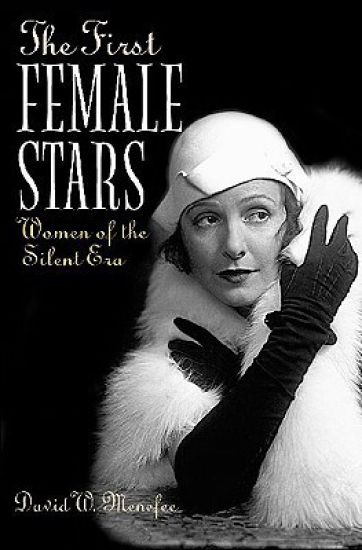
The First Female Stars

The First Female Stars

David W. Menefee

Praeger Publishers Inc
2004
sidottu
The First Female Stars: Women of the Silent Era rediscovers the fascinating lives and pioneering achievements of 15 women who dared to venture into early motion pictures, an industry dominated by men, and who not only succeeded but became the focal points of the industry. Each star earned a position at the height of her profession, and though many are largely forgotten today, made a lasting and significant contribution to early cinema. In this entertaining and informative volume, author David Menefee reveals these women and their signature roles, drawing on many original sources to show us how such actresses as Theda Bara, Sarah Bernhardt, Dorothy Gish, and Norma Talmadge were received in their time, and the many ways in which their influence remains important today. Each profile contains a biographical treatment, an analysis of key films from her career, a discussion of the actress's influence on the medium, and selected filmography. Each also includes two photographs, most often one of the actress herself and a still from a film.
Edible Wild Mushrooms of North America

Edible Wild Mushrooms of North America

David W. Fischer; Alan E. Bessette

University of Texas Press
1992
pokkari
Unusual shapes and colors make many mushrooms alluring to the eye, while the exotic flavors and textures of edible mushrooms are a gourmet delicacy for the palate. Yet many people never venture beyond the supermarket offerings, fearing that all other mushrooms are poisonous.With amateur mushroom hunters especially in mind, David Fischer and Alan Bessette have prepared Edible Wild Mushrooms of North America. This field guide presents more than 100 species of the most delicious mushrooms, along with detailed information on how to find, gather, store, and prepare them for the table. More than 70 savory recipes, ranging from soups and salads to casseroles, canapes, quiches, and even a dessert, are included.Throughout, the authors constantly emphasize the need for correct identification of species for safe eating. Each species is described in detailed, nontechnical language, accompanied by a list of key identifying characteristics that reliably rule out all but the target species. Superb color photographs also aid in identification. Poisonous "lookalikes" are described and illustrated, and the authors also assess the risks of allergic or idiosyncratic reactions to edible species and the possibilities of chemical or bacterial contamination.
Power for the People

Power for the People

David W. Wilma; Walt Crowley

University of Washington Press
2010
sidottu
Since before Seattle voters decided in 1902 to build their own lighting plant, City Light has been a source of fierce civic pride for its independence from "foreign" corporations, its impressive public works projects, and its consistently low electricity rates. It has also been a headache for competitors, managers, and politicians. In the first years of the electric age, when Seattle was still a hard-scrable frontier town, power was supplied by a revolving cast of small private utilities remembered mostly for frequent mergers with rivals and mediocre service at high cost. The failure of the privately owned water company to deliver enough of its product to quell Seattle's Great Fire of 18889 got city officials and residents thinking about an alternative utility model--municipal ownership. Voters quickly approved a municipal wter system, and within a decade had laid the groundwork for an electric utility. City Light quickly began a campaign of dam construction that for most of the twentieth century provided Seattle with the cheapest electricity of any major city in the country.This brisk history traces the utility's origins to 1889 and follows its story through the national energy crisis of 2000-2001 up to the present. It is a quintissentially Northwest story.
Isle of Wight

Isle of Wight

David W. Lloyd; Nikolaus Pevsner

Yale University Press
2006
sidottu
This comprehensive and generously illustrated guide explores the beguiling buildings of the Isle of Wight. The island’s many towns, villages, and resorts are included in a detailed gazetteer, as are the charming villas and cottages ornes dotted around the spectacular coasts. Among the grand architecture found on the island are the powerful fortress of Carisbrooke Castle; the rich Baroque mansion of Appuldurcombe; Victoria and Albert’s Osborne House; and the extraordinary Quarr Abbey, a masterpiece of Expressionist brick. Other attractions include Roman villas, sturdy manor houses, powerful coastal defenses built for Henry VIII (and reinforced under Queen Victoria), and the retreats of Tennyson and other Victorian notables, not to mention a well-established tradition of innovative modern design.
Aberdeenshire: North and Moray

Aberdeenshire: North and Moray

David W. Walker; Matthew Woodworth

Yale University Press
2015
sidottu
This volume is the first of two to illuminate the buildings of the northeast of Scotland. It covers not only Aberdeenshire’s historic districts of Formartine, Buchan, and Banff but also the whole of Moray. Picturesque former fishing villages cling to the rugged coastline, while the inland rivers support some of the most famous whisky distilleries in Scotland. Also included are examples of the finest medieval ecclesiastical architecture, notably the ruins of Elgin Cathedral, major country houses such as Brodie Castle and Duff House, as well as the churches and public buildings of the numerous planned settlements, villages, and major towns.
Dangerous Years

Dangerous Years

David W. Orr

Yale University Press
2018
pokkari
A leading environmental thinker takes a hard look at the obstacles and possibilities on the long road to sustainability This gripping, deeply thoughtful book considers future of civilization in the light of what we know about climate change and related threats. David Orr, an award-winning, internationally recognized leader in the field of sustainability and environmental education, pulls no punches: even with the Paris Agreement of 2015, Earth systems will not reach a new equilibrium for centuries. Earth is becoming a different planet—more threadbare and less biologically diverse, with more acidic oceans and a hotter, more capricious climate. Furthermore, technology will not solve complex problems of sustainability. Yet we are not fated to destroy the Earth, Orr insists. He imagines sustainability as a quest and a transition built upon robust and durable democratic and economic institutions, as well as changes in heart and mindset. The transition, he writes, is beginning from the bottom up in communities and neighborhoods. He lays out specific principles and priorities to guide us toward enduring harmony between human and natural systems.
Yale and Slavery

Yale and Slavery

David W. Blight; Peter Salovey

YALE UNIVERSITY PRESS
2024
sidottu
A comprehensive look at how slavery and resistance to it have shaped Yale University “The most mature examination ever made of the role of slavery in a university’s past.”—John Samuel Harpham, Times Literary Supplement Award-winning historian David W. Blight, with the Yale and Slavery Research Project, answers the call to investigate Yale University’s historical involvement with slavery, the slave trade, and abolition. This narrative history demonstrates the importance of slavery in the making of this renowned American institution of higher learning. Drawing on wide-ranging archival materials, Yale and Slavery extends from the century before the college’s founding in 1701 to the dedication of its Civil War memorial in 1915, while engaging with the legacies and remembrance of this complex story. The book brings into focus the enslaved and free Black people who have been part of Yale’s history from the beginning—but too often ignored in official accounts. These individuals and their descendants worked at Yale; petitioned and fought for freedom and dignity; built churches, schools, and antislavery organizations; and were among the first Black students to transform the university from the inside. Always alive to the surprises and ironies of the past, Yale and Slavery presents a richer and more complete history of Yale, the third-oldest college in the country, showing how pillars of American higher education, even in New England, emerged over time intertwined with the national and international history of racial slavery.
Yale and Slavery

Yale and Slavery

David W. Blight; Peter Salovey

YALE UNIVERSITY PRESS
2025
pokkari
A comprehensive look at how slavery and resistance to it have shaped Yale University “The most mature examination ever made of the role of slavery in a university’s past.”—John Samuel Harpham, Times Literary Supplement Award-winning historian David W. Blight, with the Yale and Slavery Research Project, answers the call to investigate Yale University’s historical involvement with slavery, the slave trade, and abolition. This narrative history demonstrates the importance of slavery in the making of this renowned American institution of higher learning. Drawing on wide-ranging archival materials, Yale and Slavery extends from the century before the college’s founding in 1701 to the dedication of its Civil War memorial in 1915, while engaging with the legacies and remembrance of this complex story. The book brings into focus the enslaved and free Black people who have been part of Yale’s history from the beginning—but too often ignored in official accounts. These individuals and their descendants worked at Yale; petitioned and fought for freedom and dignity; built churches, schools, and antislavery organizations; and were among the first Black students to transform the university from the inside. Always alive to the surprises and ironies of the past, Yale and Slavery presents a richer and more complete history of Yale, the third-oldest college in the country, showing how pillars of American higher education, even in New England, emerged over time intertwined with the national and international history of racial slavery.