Kirjojen hintavertailu. Mukana 12 016 292 kirjaa ja 12 kauppaa.

Kirjahaku

Etsi kirjoja tekijän nimen, kirjan nimen tai ISBN:n perusteella.

1000 tulosta hakusanalla David-T

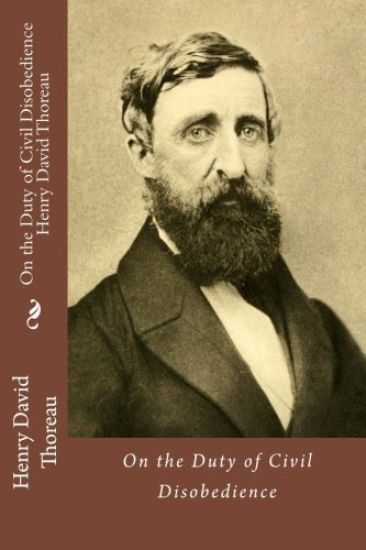
On the Duty of Civil Disobedience Henry David Thoreau

On the Duty of Civil Disobedience Henry David Thoreau

Henry David Thoreau

Createspace Independent Publishing Platform
2017
nidottu
Resistance to Civil Government (Civil Disobedience) is an essay by American transcendentalist Henry David Thoreau that was first published in 1849. In it, Thoreau argues that individuals should not permit governments to overrule or atrophy their consciences, and that they have a duty to avoid allowing such acquiescence to enable the government to make them the agents of injustice. Thoreau was motivated in part by his disgust with slavery and the Mexican-American War (1846-1848).
Little David & The Three ANGELS

Little David & The Three ANGELS

David Kprake

Createspace Independent Publishing Platform
2017
nidottu
Little David and the three Angels is the second in LITTLE DAVID SERIES which children popularly call 'Little David'. It is a fun story. This time, Little David was invited by the police to help in search of the kidnappers who escaped from detention. This series tells of how he was again helped by his flying umbrella and angels. It is both a mystery story and fantasy. The next in the series is, Little David and the seven Giants. Available in both eBook format and Paperback. Grab a copy now
Henry David Thoreau

Henry David Thoreau

Lawrence Buell

OXFORD UNIVERSITY PRESS INC
2025
nidottu
"When I wrote the following pages, or rather the bulk of them, I lived alone, in the woods, a mile from any neighbor, in a house which I had built myself, on the shore of Walden Pond..." Henry David Thoreau (1817-1862) was a leading figure in the American Transcendentalist movement and the era of U. S. literary emergence, an intellectual with worldwide influence as essayist, social thinker, naturalist-environmentalist, and sage. Thoreau's Walden, an autobiographical narrative of his two-year sojourn in a self-built lakeside cabin, is one of the most widely studied works of American literature. It has generated scores of literary imitations and thousands of neo-Walden experiments in back-to-basics living, both rural and urban. Thoreau's great essay, "Civil Disobedience," is a classic of American political activism and a model for nonviolent reform movements around the world. Thoreau also stands as an icon of modern American environmentalism, the father of American nature writing, a forerunner of modern ecology, and a harbinger of freelance spirituality combining the wisdom of west and east. Thoreau is also a controversial figure. From his day to ours, he has provoked sharply opposite reactions ranging from reverence to dismissal. Scholars have regularly offered conflicting assessments of the significance of his work, the evolution of his thought, even the facts of his life. Some disagreements are in the eye of the beholder, but many follow from challenges posed by his own cross-grained idiosyncrasies. He was an advocate for individual self-sufficiency who never broke away from home, a self-professed mystic now also acclaimed as a pioneer natural and applied scientist, and a seminal theorist of nonviolent protest who defended the most notorious guerrilla fighter of his day. All told, he remains a rather enigmatic figure both despite and because we know so much about him, beginning with the two-million-word journal he kept throughout his adult life. The esteemed Thoreau scholar Lawrence Buell gives due consideration to all these aspects of Thoreau's art and thought, framing key issues and complexities in historical and literary context.
Henry David Thoreau

Henry David Thoreau

Lawrence Buell

OXFORD UNIVERSITY PRESS INC
2024
sidottu
"When I wrote the following pages, or rather the bulk of them, I lived alone, in the woods, a mile from any neighbor, in a house which I had built myself, on the shore of Walden Pond..." Henry David Thoreau (1817-1862) was a leading figure in the American Transcendentalist movement and the era of U. S. literary emergence, an intellectual with worldwide influence as essayist, social thinker, naturalist-environmentalist, and sage. Thoreau's Walden, an autobiographical narrative of his two-year sojourn in a self-built lakeside cabin, is one of the most widely studied works of American literature. It has generated scores of literary imitations and thousands of neo-Walden experiments in back-to-basics living, both rural and urban. Thoreau's great essay, "Civil Disobedience," is a classic of American political activism and a model for nonviolent reform movements around the world. Thoreau also stands as an icon of modern American environmentalism, the father of American nature writing, a forerunner of modern ecology, and a harbinger of freelance spirituality combining the wisdom of west and east. Thoreau is also a controversial figure. From his day to ours, he has provoked sharply opposite reactions ranging from reverence to dismissal. Scholars have regularly offered conflicting assessments of the significance of his work, the evolution of his thought, even the facts of his life. Some disagreements are in the eye of the beholder, but many follow from challenges posed by his own cross-grained idiosyncrasies. He was an advocate for individual self-sufficiency who never broke away from home, a self-professed mystic now also acclaimed as a pioneer natural and applied scientist, and a seminal theorist of nonviolent protest who defended the most notorious guerrilla fighter of his day. All told, he remains a rather enigmatic figure both despite and because we know so much about him, beginning with the two-million-word journal he kept throughout his adult life. The esteemed Thoreau scholar Lawrence Buell gives due consideration to all these aspects of Thoreau's art and thought, framing key issues and complexities in historical and literary context.
Henry David Thoreau

Henry David Thoreau

Laura Dassow Walls

University of Chicago Press
2017
sidottu
Walden. Yesterday I came here to live. That entry from the journal of Henry David Thoreau, and the intellectual journey it began, would by themselves be enough to place Thoreau in the American pantheon. His attempt to "live deliberately" in a small woods at the edge of his hometown of Concord has been a touchstone for individualists and seekers since the publication of Walden in 1854. But there was much more to Thoreau than his brief experiment in living at Walden Pond. A member of the vibrant intellectual circle centered on his neighbor Ralph Waldo Emerson, he was also an ardent naturalist, a manual laborer and inventor, a radical political activist, and more. Many books have taken up various aspects of Thoreau's character and achievements, but, as Laura Dassow Walls writes, "Thoreau has never been captured between covers; he was too quixotic, mischievous, many-sided." Two hundred years after his birth, and two generations after the last full-scale biography, Walls restores Henry David Thoreau to us in all his profound, inspiring complexity. Walls traces the full arc of Thoreau's life, from his early days in the intellectual hothouse of Concord, when the American experiment still felt fresh and precarious, and "America was a family affair, earned by one generation and about to pass to the next." By the time he died in 1862, at only forty-four years of age, Thoreau had witnessed the transformation of his world from a community of farmers and artisans into a bustling, interconnected commercial nation. What did that portend for the contemplative individual and abundant, wild nature that Thoreau celebrated? Drawing on Thoreau's copious writings, published and unpublished, Walls presents a Thoreau vigorously alive in all his quirks and contradictions: the young man shattered by the sudden death of his brother; the ambitious Harvard College student; the ecstatic visionary who closed Walden with an account of the regenerative power of the Cosmos. We meet the man whose belief in human freedom and the value of labor made him an uncompromising abolitionist; the solitary walker who found society in nature, but also found his own nature in the society of which he was a deeply interwoven part. And, running through it all, Thoreau the passionate naturalist, who, long before the age of environmentalism, saw tragedy for future generations in the human heedlessness around him. "The Thoreau I sought was not in any book, so I wrote this one," says Walls. The result is a Thoreau unlike any seen since he walked the streets of Concord, a Thoreau for our time and all time.
Henry David Thoreau

Henry David Thoreau

Laura Dassow Walls

University of Chicago Press
2018
pokkari
“Walden. Yesterday I came here to live.” That entry from the journal of Henry David Thoreau, and the intellectual journey it began, would by themselves be enough to place Thoreau in the American pantheon. His attempt to “live deliberately” in a small woods at the edge of his hometown of Concord has been a touchstone for individualists and seekers since the publication of Walden in 1854. But there was much more to Thoreau than his brief experiment in living at Walden Pond. A member of the vibrant intellectual circle centered on his neighbor Ralph Waldo Emerson, he was also an ardent naturalist, a manual laborer and inventor, a radical political activist, and more. Many books have taken up various aspects of Thoreau’s character and achievements, but, as Laura Dassow Walls writes, “Thoreau has never been captured between covers; he was too quixotic, mischievous, many-sided.” Two hundred years after his birth, and two generations after the last full-scale biography, Walls restores Henry David Thoreau to us in all his profound, inspiring complexity. Walls traces the full arc of Thoreau’s life, from his early days in the intellectual hothouse of Concord, when the American experiment still felt fresh and precarious, and “America was a family affair, earned by one generation and about to pass to the next.” By the time he died in 1862, at only forty-four years of age, Thoreau had witnessed the transformation of his world from a community of farmers and artisans into a bustling, interconnected commercial nation. What did that portend for the contemplative individual and abundant, wild nature that Thoreau celebrated? Drawing on Thoreau’s copious writings, published and unpublished, Walls presents a Thoreau vigorously alive in all his quirks and contradictions: the young man shattered by the sudden death of his brother; the ambitious Harvard College student; the ecstatic visionary who closed Walden with an account of the regenerative power of the Cosmos. We meet the man whose belief in human freedom and the value of labor made him an uncompromising abolitionist; the solitary walker who found society in nature, but also found his own nature in the society of which he was a deeply interwoven part. And, running through it all, Thoreau the passionate naturalist, who, long before the age of environmentalism, saw tragedy for future generations in the human heedlessness around him. “The Thoreau I sought was not in any book, so I wrote this one,” says Walls. The result is a Thoreau unlike any seen since he walked the streets of Concord, a Thoreau for our time and all time.
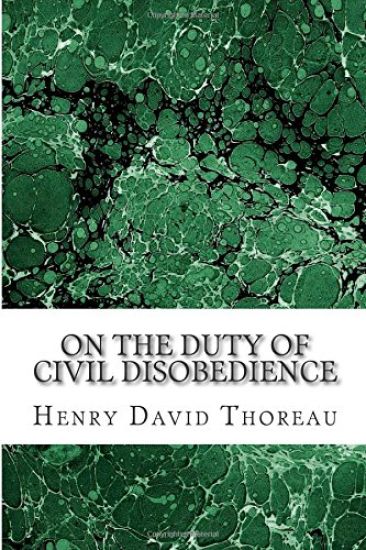
The Daily Henry David Thoreau

The Daily Henry David Thoreau

Henry David Thoreau; Laura Dassow Walls

University of Chicago Press
2020
pokkari
"Live in each season as it passes; breathe the air, drink the drink, taste the fruit, and resign yourself to the influence of each." Modernity rules our lives by clock and calendar, dividing the stream of time into units and coordinating every passing moment with the universal globe. Henry David Thoreau subverted both clock and calendar, using them not to regulate time's passing but to open up and explore its presence. This little volume thus embodies, in small compass, Thoreau's own ambition to "live in season"--to turn with the living sundial of the world, and, by attuning ourselves to nature, to heal our modern sense of discontinuity with our surroundings. Ralph Waldo Emerson noted with awe that from flowers alone, Thoreau could tell the calendar date within two days; children remembered long into adulthood how Thoreau showed them white waterlilies awakening not by the face of a clock but at the first touch of the sun. As Thoreau wrote in Walden, "Time is but the stream I go a-fishing in. I drink at it; but while I drink I see the sandy bottom and detect how shallow it is." Drawn from the full range of Thoreau's journals and published writings, and arranged according to season, The Daily Henry David Thoreau allows us to discover the endless variation and surprise to be found in the repetitions of mundane cycles. Thoreau saw in the kernel of each day an earth enchanted, one he honed into sentences tuned with an artist's eye and a musician's ear. Thoreau's world lives on in his writing so that we too may discover, even in a fallen world, a beauty worth defending.
Henry David Thoreau and the Moral Agency of Knowing

Henry David Thoreau and the Moral Agency of Knowing

Alfred I. Tauber

University of California Press
2003
pokkari
In his graceful philosophical account, Alfred I. Tauber shows why Thoreau still seems so relevant today - more relevant in many respects than he seemed to his contemporaries. Although Thoreau has been skillfully and thoroughly examined as a writer, naturalist, mystic, historian, social thinker, Transcendentalist, and lifelong student, we may find in Tauber's portrait of Thoreau the moralist a characterization that binds all these aspects of his career together. Thoreau was caught at a critical turn in the history of science, between the ebb of Romanticism and the rising tide of positivism. He responded to the challenges posed by the new ideal of objectivity not by rejecting the scientific world view, but by humanizing it for himself. Tauber portrays Thoreau as a man whose moral vision guided his life's work. Each of Thoreau's projects reflected a self-proclaimed 'metaphysical ethics', an articulated program of self-discovery and self-knowing. By writing, by combining precision with poetry in his naturalist pursuits and simplicity with mystical fervor in his daily activity, Thoreau sought to live a life of virtue - one he would characterize as marked by deliberate choice. This unique vision of human agency and responsibility will still seem fresh and contemporary to readers at the start of the twenty-first century.