Count stars instead of sheep with this adorable rhyming bedtime book. With its cuddly animals and early learning concepts, Ten Little Night Stars is the perfect addition to your little one’s bedtime routine.Ten Little Night Stars is:An early learning concept book for children ages 0-4A warm and cozy read-aloud with interactive and engaging rhymesThe perfect gift for birthdays, baby showers, adoption parties, Valentine’s Day, Easter baskets, stocking stuffers, and holiday giftingAn effective model of good bedtime routines, including bath time, story time, and bedtime prayers
Get your coziest pajamas on and explore all the colors of the rainbow! A follow-up to the bestselling?Ten Little Night Stars, snuggle your little one in their favorite jammies as they lift the flaps to learn their colors alongside cuddly animal friends in this interactive bedtime board book.Teach your child colors as you read these playful, sleepy time rhymes together. Utilizing calm, play-based learning,? your child will love to lift the flaps to reveal all the different colors while they gain fine motor skills and learn basic concepts.Sleepy Time Colors:Is an early learning concept book of colors in a playful format that includes sleepy-eyed, bedtime rhymes and an interactive lift-the-flap element that’s perfect for little ones age 0 to 4Is written by Deb Gruelle, the author of bestselling?Ten Little Night StarsIs the perfect gift for birthdays, baby showers, adoption parties, Christmas, Easter baskets, stocking stuffers, and holiday giftingDeb Gruelle is the great-great-grandniece of Johnny Gruelle, creator of Raggedy Ann and AndyI love to put my jammies on, it’s time to take a rest.They’re colorful and cozy too. Warm pj’s are the best!These dinosaurs are bright blue. Rawr! They march across my top.So, when it’s finally time for bed I find them and bee-bop.What is my favorite color? BLUE!
Henry feels a bit nervous on his first day of school, so he chooses to wear his favorite fish costume to give him courage in this endearing picture book about the rewards of self-expression when facing new experiences, for fans of Dragonboy and Julián Is A Mermaid.Henry loves the way he feels in his sparkly fish costume. He wears it everywhere he goes: to the grocery store, at the dinner table, and even when taking his fish, Marigold, for a walk. On his first day of school, Henry is feeling anxious. He wishes he could take Marigold with him, but his mom says fish don't go to school. That's okay-Henry knows just what to wear to make himself feel braver.This heartwarming story follows Henry as he faces his fears and makes new friends, all while staying true to himself.
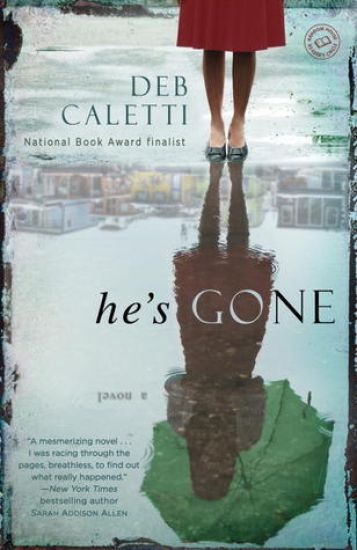
From National Book Award finalist Deb Caletti comes an intensely gripping story about love, loss, marriage, and secrets--perfect for readers of Jodi Picoult, Kristin Hannah, and Anna Quindlen. "One of the best books I've read all year."--Barbara O'Neal, author of "The Garden of Happy Endings" ""What do you think happened to your husband, Mrs. Keller?"" The Sunday morning starts like any other, aside from the slight hangover. Dani Keller wakes up on her Seattle houseboat, a headache building behind her eyes from the wine she drank at a party the night before. But on this particular Sunday morning, she's surprised to see that her husband, Ian, is not home. As the hours pass, Dani fills her day with small things. But still, Ian does not return. Irritation shifts to worry, worry slides almost imperceptibly into panic. And then, like a relentless blackness, the terrible realization hits Dani: He's gone. As the police work methodically through all the logical explanations--he's hurt, he's run off, he's been killed--Dani searches frantically for a clue as to whether Ian is in fact dead or alive. And, slowly, she unpacks their relationship, holding each moment up to the light: from its intense, adulterous beginning, to the grandeur of their new love, to the difficulties of forever. She examines all the sins she can--and cannot--remember. As the days pass, Dani will plumb the depths of her conscience, turning over and revealing the darkest of her secrets in order to discover the hard truth--about herself, her husband, and their lives together. "A thought-provoking and moving exploration.""--New York Times" bestselling author Erica Bauermeister Look for special features inside. Join the Circle for author chats and more.
From bestselling author Deb Caletti comes a beautiful and profound novel of three women coming to terms with love and marriage--sure to move and delight fans of Kristin Hannah, Liane Moriarty, and Anna Quindlen. ""You don't grow up on a divorce ranch and not learn to take a vow seriously."" When Callie McBride finds a woman's number written on a scrap of paper her husband has thrown away, she thinks that her marriage is over. She flees to Nevada and her Aunt Nash's Tamarosa Ranch, but is shocked to see that the place of so many happy childhood memories is in disrepair. Worse, Aunt Nash is acting bizarrely--hoarding stacks of old photographs, burying a book in the yard, and railing against Kit Covey, a handsome government park ranger who piques Callie's interest. But Aunt Nash may be saner than she seems once Callie pulls back the curtain on Tamarosa's heyday--the 1940s and '50s when high-society and Hollywood women ventured to the ranch for quickie divorces and found a unique sisterhood--and uncovers a secret promise Nash made to her true love. What Callie will come to see is that no life is ever ordinary. No story of love is, either. Praise for "He's Gone" "Deb Caletti doesn't just make a stunning debut into adult fiction, she throws down the gauntlet. It's a mesmerizing novel."--"New York Times" bestselling author Sarah Addison Allen "Striking . . . well-written, strongly characterized and emotionally complex fiction."--"Kirkus Reviews" (starred review) Look for special features inside. Join the Random House Reader's Circle for author chats and more.
Developing Management Proficiency: A Self-Directed Learning Approach is a pragmatic, easy-to-follow roadmap for managers to help develop the behaviors and skills necessary for success.Strong behavioral competencies are essential for any manager today. Emphasizing a self-directed learning approach, this book is designed to transform passive learners into active learners by helping to develop behavioral skills, based on individual needs. By providing the reader with the tools for self-directed learning, Deb Cohen provides an unending mechanism to learn, improve, and grow, helping develop the proficiencies needed to be successful in doing their job or advancing in their career. With features such as practical examples, worksheets, tables, and figures, the book is packed full of self-directed learning activities including role play, observation, networking, journaling, and questioning, all powerful drivers of learning and development.With expert guidance on how to approach personal development in day-to-day activities rather than in a formal course setting, this book is an essential resource for managers at all levels, as well as anyone training or interested in a managerial role.
Developing Management Proficiency: A Self-Directed Learning Approach is a pragmatic, easy-to-follow roadmap for managers to help develop the behaviors and skills necessary for success.Strong behavioral competencies are essential for any manager today. Emphasizing a self-directed learning approach, this book is designed to transform passive learners into active learners by helping to develop behavioral skills, based on individual needs. By providing the reader with the tools for self-directed learning, Deb Cohen provides an unending mechanism to learn, improve, and grow, helping develop the proficiencies needed to be successful in doing their job or advancing in their career. With features such as practical examples, worksheets, tables, and figures, the book is packed full of self-directed learning activities including role play, observation, networking, journaling, and questioning, all powerful drivers of learning and development.With expert guidance on how to approach personal development in day-to-day activities rather than in a formal course setting, this book is an essential resource for managers at all levels, as well as anyone training or interested in a managerial role.
Butterfield goes on to give an overview of advances in treatment, helping those who suffer from the disease to know their options. For the families of people with diabetes and the medical professionals who care for them, this book also offers an insight into the life of a diabetic person.
Written for all therapists who want to understand this groundbreaking theory as it might actually show up in their day-to-day practice, this book offers a comprehensive approach to polyvagal-informed intervention. Worksheets and experiential exercises designed to map and shape autonomic response provide therapists with a road map for bringing polyvagal theory into their clinical practice.
This product includes Clinical Applications of the Polyvagal Theory, edited by Stephen W. Porges and Deb Dana, and The Polyvagal Theory in Therapy by Deb Dana. In Clinical Application of the Polyvagal Theory, innovative clinicians share their experiences integrating Polyvagal Theory into their treatment models. Chapters on a range of topics from compassionate medical care to optimized therapeutic relationships to clinician's experiences as parents extract from the theory the powerful influence and importance of cases and feelings of safety in the clinical setting. Through the insights of innovative and benevolent clinicians, whose treatment models are Polyvagal informed, this book provides an accessible way for clinicians to embrace this groundbreaking theory in their own work. Polyvagal Theory in Therapy offers therapists an integrated approach to adding a polyvagal foundation to their work with clients. With clear explanations of the organizing principles of Polyvagal Theory, this complex theory is translated into clinician and client-friendly language. Using a unique autonomic mapping process along with worksheets designed to effectively track autonomic response patterns, this book presents practical ways to work with clients' experiences of connection. Through exercises that have been specifically created to engage the regulating capacities of the ventral vagal system, therapists are given tools to help clients reshape their autonomic nervous systems. The book is essential reading for therapists who work with trauma and those who seek an easy and accessible way of understanding the significance that Polyvagal Theory has to clinical work. The books are packaged as a shrink-wrapped set.
Deb Dana is the foremost translator of polyvagal theory into clinical practice. Here, in her third book on this groundbreaking theory, she provides therapists with a grab-bag of polyvagal-informed exercises for their clients, to use both within and between sessions. These exercises offer readily understandable explanations of the ways the autonomic nervous system directs daily living. They use the principles of polyvagal theory to guide clients to safely connect to their autonomic responses and navigate daily experiences in new ways. The exercises are designed to be introduced over time in a variety of clinical sessions with accompanying exercises appropriate for use by clients between sessions to enhance the therapeutic change process. Essential reading for any therapist who wants to take their polyvagal knowledge to the next level and is looking for easy ways to deliver polyvagal solutions with their clients.
When clients are stuck in the cognitive experience of their story, an explanation of polyvagal theory helps to bring their attention to the autonomic experience—to bring the importance of the biology of their experience back into awareness. Yet polyvagal theory can be challenging and intimidating to explain. This flip chart offers therapists an easy, standardised way to support clients in understanding the role of the autonomic nervous system in their lives. Using a flip chart makes psycho-education an interactive experience. Therapists can feel confident in teaching their clients polyvagal theory by following the chart. With a flip chart visible during sessions, the therapist can: remind clients of the ways the autonomic nervous system has been shaped and is active in their daily living experience, display a page corresponding to the present moment, thus anchoring that experience in the theory and keep a page of the hierarchy visible when working with a client’s habitual response pattern.
Jane Campion is one of the most celebrated auteurs of modern cinema and was the first female director to be awarded the prestigious Palme d'Or. Throughout her relatively short career, Campion has received extraordinary attention from the media and scholars alike and has provoked fierce debates on issues such as feminism, colonialism, and nationalism. In this detailed account of Jane Campion's career as a filmmaker, Deb Verhoeven examines specifically how contemporary film directors 'fashion' themselves as auteurs – through their personal interactions with the media, in their choice of projects, in their emphasis on particular filmmaking techniques and finally in the promotion of their films.Through analysis of key approaches to Campion's films, such as The Piano; In the Cut; Sweetie; An Angel at My Table; and Holy Smoke Deb Verhoeven introduces students to the passionate debates surrounding this controversial and often experimental directorFeaturing a career overview, a filmography, scene by scene analysis and an extended interview with Campion on her approach to creativity, this is a great introduction to one of the most important directors of contemporary cinema.
Jane Campion is one of the most celebrated auteurs of modern cinema and was the first female director to be awarded the prestigious Palme d'Or. Throughout her relatively short career, Campion has received extraordinary attention from the media and scholars alike and has provoked fierce debates on issues such as feminism, colonialism, and nationalism. In this detailed account of Jane Campion's career as a filmmaker, Deb Verhoeven examines specifically how contemporary film directors 'fashion' themselves as auteurs – through their personal interactions with the media, in their choice of projects, in their emphasis on particular filmmaking techniques and finally in the promotion of their films.Through analysis of key approaches to Campion's films, such as The Piano; In the Cut; Sweetie; An Angel at My Table; and Holy Smoke Deb Verhoeven introduces students to the passionate debates surrounding this controversial and often experimental directorFeaturing a career overview, a filmography, scene by scene analysis and an extended interview with Campion on her approach to creativity, this is a great introduction to one of the most important directors of contemporary cinema.
Since footballer sexual assault became top news in 2004, six years after the first case was reported, much has been written in the news media about individual cases, footballers and women who have sex with them. Deb Waterhouse-Watson reveals how media representations of recent sexual assault cases involving Australian footballers amount to "trials by media", trials that result in acquittal. The stories told about footballers and women in the news media evoke stereotypes such as the "gold digger", "woman scorned" and the "predatory woman", which cast doubt on the alleged victims’ claims and suggest that they are lying. Waterhouse-Watson calls this a "narrative immunity" for footballers against allegations of sexual assault.This book details how popular conceptions of masculinity and femininity inform the way footballers’ bodies, team bonding, women, sex and alcohol are portrayed in the media, and connects stories relating to the cases with sports reporting generally. Uncovering similar patterns of narrative, grammar and discourse across these distinct yet related fields, Waterhouse-Watson shows how these discourses are naturalised, with reports on the cases intertwining with broader discourses of football reporting to provide immunity. Despite the prevalence of stories that discredit the alleged victims, Waterhouse-Watson also examines attempts to counter these pervasive rape myths, articulating successful strategies and elucidating the limitations built into journalistic practices, and language itself.
In this highly readable study of Australian cinema, Deb Verhoeven explores the relationship between a series of films produced in different periods of Australian history that are linked by a common thread - the repeated image of sheep. Verhoeven focuses on two key 'sheep films': ""The Squatter's Daughter"" (Hall, 1933) and ""Bitter Springs"" (Smart, 1950). Both movies are concerned with the national project, in which sheep growing and nation building are seamlessly aligned. But Verhoeven artfully demonstrates that it is precisely in their emphasis on textual re-iteration and repetition that the sheep films critique an otherwise ostensibly 'national' vision. In the process, Verhoeven sheds new light on the importance and implication of discourses of originality in the Australian cinema.
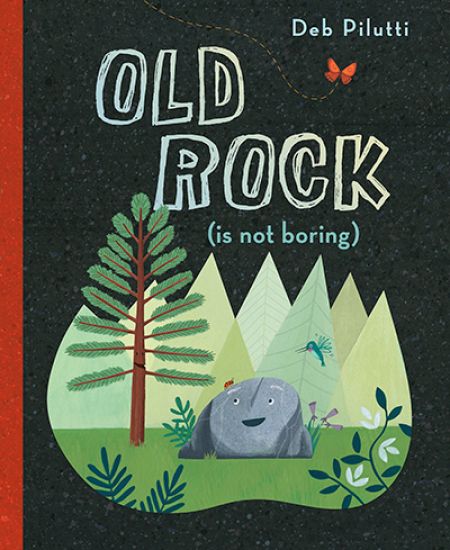
Old Rock has been sitting in the same spot in the pine forest for as long as anyone can remember. Spotted Beetle, Tall Pine, and Hummingbird think just sitting there must be boring, but they are in for a wonderful surprise.Fabulous tales of adventurous travel, exotic scenery, entertaining neighbours, and more from Old Rock's life prove it has been anything but boring.Great storytellers come in all shapes, sizes, and ages, and Old Rock's stories are sure to inspire questions that lead to wonderful conversations about the past and the natural world.
Meet Stinky Stubb, Dirty Dugg, Gorbert, and Melvina, the craftiest crew of monsters ever to build a house. With hard hats and heavy machinery, these feisty fellas dig, dump, hammer, nail, and--after a surprise lunch of Mama's special monsteroni and cheese--they even squeeze in time for an afternoon snooze. With backhoes, bulldozers, and mud mounds galore, here is a book that young construction enthusiasts will want to dig into over and over again.