Kirjahaku
Etsi kirjoja tekijän nimen, kirjan nimen tai ISBN:n perusteella.
1000 tulosta hakusanalla Delphine Perret

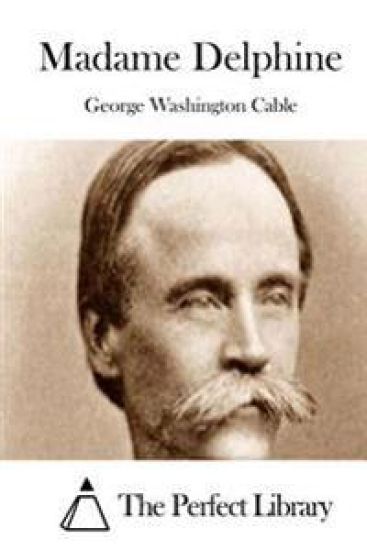
And this is likely to be all the information you get-not that they would not tell, but they cannot grasp the idea that you wish to know-until, possibly, just as you are turning to depart, your informant, in a single word and with the most evident non-appreciation of its value, drops the simple key to the whole matter: "Dey's quadroons." He may then be aroused to mention the better appearance of the place in former years, when the houses of this region generally stood farther apart, and that garden comprised the whole square. Here dwelt, sixty years ago and more, one Delphine Carraze; or, as she was commonly designated by the few who knew her, Madame Delphine.
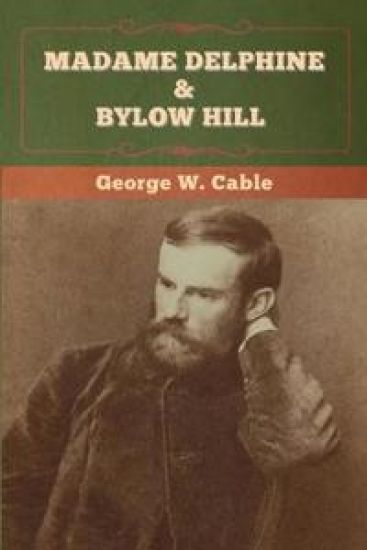
George Washington Cable (October 12, 1844 - January 31, 1925) was an American novelist notable for the realism of his portrayals of Creole life in his native New Orleans, Louisiana. He has been called "the most important southern artist working in the late 19th century", as well as "the first modern southern writer." In his treatment of racism, mixed-race families and miscegenation, his fiction has been thought to anticipate that of William Faulkner.He also wrote articles critical of contemporary society. Due to hostility against him after two 1885 essays encouraging racial equality and opposing Jim Crow, Cable moved with his family to Northampton, Massachusetts. He lived there for the next thirty years, then moved to Florida. Cable was friends with Mark Twain, and the two writers did speaking tours together. In 1884 and 1885 they visited Toronto, Canada, twice, on a reading tour known as the "Twins of Genius" tour. Twain said of Cable that "when it comes down to moral honesty, limpid impotence, and utterly blameless piety, the Apostles were mere policemen compared] to Cable," despite his dark, "indelicate" depictions of society. Twain also mentions Cable in his book Life on the Mississippi: The party had the privilege of idling through this ancient quarter of New Orleans with the South's finest literary genius, the author of "the Grandissimes." In him the South has found a masterly delineator of its interior life and its history. In truth, I find by experience, that the untrained eye and vacant mind can inspect it and learn of it and judge of it more clearly and profitably in his books than by personal contact with it.With Mr. Cable along to see for you, and describe and explain and illuminate, a jog through that old quarter is a vivid pleasure. And you have a vivid sense as of unseen or dimly seen things--vivid, and yet fitful and darkling; you glimpse salient features, but lose the fine shades or catch them imperfectly through the vision of the imagination: a case, as it were, of ignorant near-sighted stranger traversing the rim of wide vague horizons of Alps with an inspired and enlightened long-sighted native.Modern literary historians have said that Cable's treatment of racism in his fiction influenced the later work of William Faulkner and Robert Penn Warren. He has been called "the most important southern artist working in the late 19th century, as well as the first modern southern writer."In 2008 a new edition of his history of the South, including footnotes and research, was published by Louisiana State University Press under the title, The New Orleans of George Washington Cable: The 1887 Census Office Report, edited and with an introduction by Lawrence N. Powell.Cable may have coined the term "authors' editor", in his 1910 tribute to his editor Richard Watson Gilder, when he wrote "I think he was peculiarly an authors' editor, and not merely a publishers'."; this is the earliest known use of the term in print. (wikipedia.org)

George Washington Cable (October 12, 1844 - January 31, 1925) was an American novelist notable for the realism of his portrayals of Creole life in his native New Orleans, Louisiana. He has been called "the most important southern artist working in the late 19th century", as well as "the first modern southern writer." In his treatment of racism, mixed-race families and miscegenation, his fiction has been thought to anticipate that of William Faulkner.He also wrote articles critical of contemporary society. Due to hostility against him after two 1885 essays encouraging racial equality and opposing Jim Crow, Cable moved with his family to Northampton, Massachusetts. He lived there for the next thirty years, then moved to Florida. Cable was friends with Mark Twain, and the two writers did speaking tours together. In 1884 and 1885 they visited Toronto, Canada, twice, on a reading tour known as the "Twins of Genius" tour. Twain said of Cable that "when it comes down to moral honesty, limpid impotence, and utterly blameless piety, the Apostles were mere policemen compared] to Cable," despite his dark, "indelicate" depictions of society. Twain also mentions Cable in his book Life on the Mississippi: The party had the privilege of idling through this ancient quarter of New Orleans with the South's finest literary genius, the author of "the Grandissimes." In him the South has found a masterly delineator of its interior life and its history. In truth, I find by experience, that the untrained eye and vacant mind can inspect it and learn of it and judge of it more clearly and profitably in his books than by personal contact with it.With Mr. Cable along to see for you, and describe and explain and illuminate, a jog through that old quarter is a vivid pleasure. And you have a vivid sense as of unseen or dimly seen things--vivid, and yet fitful and darkling; you glimpse salient features, but lose the fine shades or catch them imperfectly through the vision of the imagination: a case, as it were, of ignorant near-sighted stranger traversing the rim of wide vague horizons of Alps with an inspired and enlightened long-sighted native.Modern literary historians have said that Cable's treatment of racism in his fiction influenced the later work of William Faulkner and Robert Penn Warren. He has been called "the most important southern artist working in the late 19th century, as well as the first modern southern writer."In 2008 a new edition of his history of the South, including footnotes and research, was published by Louisiana State University Press under the title, The New Orleans of George Washington Cable: The 1887 Census Office Report, edited and with an introduction by Lawrence N. Powell.Cable may have coined the term "authors' editor", in his 1910 tribute to his editor Richard Watson Gilder, when he wrote "I think he was peculiarly an authors' editor, and not merely a publishers'."; this is the earliest known use of the term in print. (wikipedia.org)

Madame Delphine (1881). By: George W. Cable 1844-1925: George Washington Cable (October 12, 1844 - January 31, 1925) was an American novelist nota
George W. Cable
Createspace Independent Publishing Platform
2017
nidottu
George Washington Cable (October 12, 1844 - January 31, 1925) was an American novelist notable for the realism of his portrayals of Creole life in his native New Orleans, Louisiana. He has been called "the most important southern artist working in the late 19th century, as well as the first modern southern writer." In his treatment of racism, mixed-race families and miscegenation, his fiction has been thought to anticipate that of William Faulkner. He also wrote articles critical of contemporary society. Due to hostility against him after two 1885 essays encouraging racial equality and opposing Jim Crow, Cable moved with his family to Northampton, Massachusetts. He lived there for the next thirty years, then moved to Florida. Biography: Cable was born in 1844 in New Orleans, Louisiana, the son of George W. Cable, Sr., and Rebecca Boardman Cable. They were wealthy slaveholders who were members of the Presbyterian Church and New Orleans society, whose families had moved there after the Louisiana Purchase. First educated in private schools, the younger Cable had to get work after his father died young. The elder Cable had lost investments, and the family struggled financially. Cable later learned French on his own. He served in the Confederate Army during the American Civil War, in which he took part in support of the Southern cause. His experiences changed his ideas about Southern and Louisiana society, and he began writing during a two-year bout with malaria. In 1870 Cable went into journalism, writing for the New Orleans Picayune. He worked for them from 1865 to 1879, by which time he had become an established writer. In 1869, George Cable married Louisa Stewart Bartlett, with whom he had several children. He was invited to submit stories in Scribner's Monthly, where his story "Sieur George", published in 1873, was a critical and popular success. He published six more stories of Creole life with Scribner's in the following three years. The stories were collected and published in a book in 1879 as Old Creole Days. 2] While romantic in plot, the stories revealed the multi-cultural and multi-racial nature of antebellum New Orleans society, with ties among French, Spanish, African, Native American and Caribbean Creoles. He also addressed conflicts that arose following the Louisiana Purchase, when traditional New Orleans Creoles of color had to confront Anglo-Americans - who ultimately asserted their concept of a biracial society, rather than acknowledging the multiracial class of free people of color.In 1880 Cable published his first novel, The Grandissimes: A Story of Creole Life, portraying multiracial members and different classes of society in the early 1800s shortly after the Louisiana Purchase. It had first been serialized in Scribner's. The plot follows the adventures and romances of several members of the Grandissime family, a French Creole family with mixed-race members. He used this historical romance as a way to explore society and its racial injustice, as he addressed European Creoles, the mixed-race class, pla age, slavery, and lynchings. Also in 1880, the United States Census Bureau commissioned Cable to write a "historical sketch" of pre-Civil War New Orleans for a special section of the 10th United States Census' "Social statistics of cities." He submitted a well-researched 313-page history. It was greatly reduced for publication in 1884. His novella Madame Delphine (1881), expanded from a short story, featured the issue of miscegenation, in which a woman of partially African descent tries to arrange the marriage of her daughter, who has more European ancestry, to one of the French Creole elite. In 1884 he published a work, Dr. Sevier, on prison reform....

Madame Delphine By George Washington Cable

Madame Delphine is an unchanged, high-quality reprint of the original edition of 1881. Hansebooks is editor of the literature on different topic areas such as research and science, travel and expeditions, cooking and nutrition, medicine, and other genres. As a publisher we focus on the preservation of historical literature. Many works of historical writers and scientists are available today as antiques only. Hansebooks newly publishes these books and contributes to the preservation of literature which has become rare and historical knowledge for the future.


Madame Delphine
Outlook Verlag
2024
sidottu
Reproduction of the original: Madame Delphine by George W. Cable
Reproduction of the original: Madame Delphine by George W. Cable

Wie viel Liebe, Kummer, wie viel Geld oder auch gesellschaftliche Mitsprache und Teilhabe bedarf es f r ein gl ckliches Leben? Ausgerechnet den gro en Fragen des Lebens muss sich die junge Anthropologin Ranja stellen, nachdem sie auf einer Forschungsreise in den Amazonas von einer Giftspinne gebissen wird. Weit entfernt von der n chsten Stadt und geschw cht macht Ranja Bekanntschaft mit dem wissbegierigen M dchen Pilula. Diese bittet die Forscherin unvermittelt, ihr doch ihr Herz zu zeigen. Zwischen den beiden entwickelt sich eine Freundschaft, die Ranjas Sicht auf ihr Wertesystem ver ndert. Am Ende ihres Aufenthalts im Dorf des K nigs vom Stamm der Jaguare hat sie gelernt, dass es auf viele Fragen zwar nicht die eine richtige Antwort gibt, aber dass Herzen jedenfalls offen sein m ssen, um liebende N he zwischen Menschen berhaupt zu erm glichen. 'Der kleine Prinz hat' in Corinna-Rosa Falkenberg seine Schwester gefunden. Denn der Baum der Erwachsenenwelt w chst und w chst und nimmt uns die Sicht aufs Wesentliche. Ein Dschungel, den Falkenberg mit dem Abenteuer der Fantasie und 'dem dritten Auge', der Liebe, wundersch n beleuchtet.' M nchner Stadtschreiber W.A. Riegerhof