This text focuses on the contemporary economic, social, geographical, environmental and political realities of the Caribbean region. Historical aspects of the Caribbean, such as slavery, the plantation system and plantocracy are explored in order to explain the contemporary nature of, and challenges faced by, the Caribbean. The book is divided into three parts, dealing respectively with: the foundations of the Caribbean, rural and urban bases of the contemporary Caribbean, and global restructuring and the Caribbean: industry, tourism and politics.
Originally published in 1981 and based on the authors’ own research, this book provides a comprehensive review of planning in the Soviet Union up until the early 1980s for both geographers and Soviet specialists. Planning was particularly important in the Soviet Union since not only most spatial change, but all economic planning was the product of a systematic socio-political ideology. Planning was therefore the key to understanding the Soviet economy, society and spatial change. When it was first published, this was the first study in which the focus had been directed specifically at spatial planning in the Soviet Union in any systematic way.
Originally published in 1981 and based on the authors’ own research, this book provides a comprehensive review of planning in the Soviet Union up until the early 1980s for both geographers and Soviet specialists. Planning was particularly important in the Soviet Union since not only most spatial change, but all economic planning was the product of a systematic socio-political ideology. Planning was therefore the key to understanding the Soviet economy, society and spatial change. When it was first published, this was the first study in which the focus had been directed specifically at spatial planning in the Soviet Union in any systematic way.
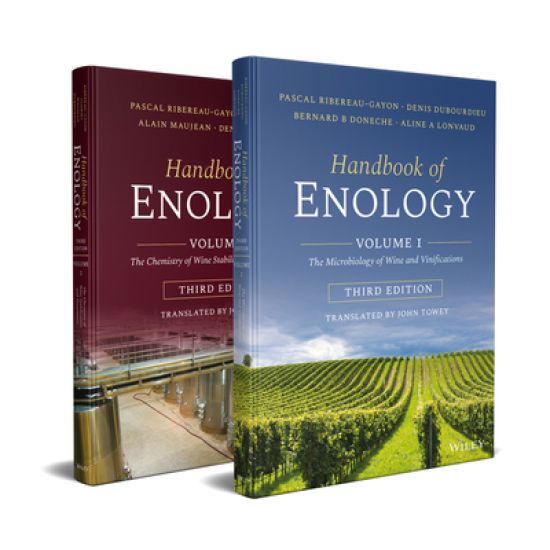
As an applied science, enology is a collection of knowledge from the fundamental sciences including chemistry, biochemistry, microbiology, bioengineering, psychophysics, cognitive psychology, etc., and nourished by empirical observations. The approach used in the Handbook of Enology is thus the same. It aims to provide practitioners, winemakers, technicians and enology students with foundational knowledge and the most recent research results. This knowledge can be used to contribute to a better definition of the quality of grapes and wine, a greater understanding of chemical and microbiological parameters, with the aim of ensuring satisfactory fermentations and predicting the evolution of wines, an7thd better mastery of wine stabilization processes. As a result, the purpose of this publication is to guide readers in their thought processes with a view to preserving and optimizing the identity and taste of wine and its aging potential. This third English edition of The Handbook of Enology, is an enhanced translation from the 7h French 2017 edition, and is published in print as individual themed volumes and as a two-volume set, describing aspects of winemaking using a detailed, scientific approach. The authors, who are highly-respected enologists, examine winemaking processes, theorizing what constitutes a perfect technique and the proper combination of components necessary to produce a quality vintage. They also illustrate methodologies of common problems, revealing the mechanism behind the disorder, thus enabling a diagnosis and solution. Volume 1: The Microbiology of Wine and Vinifications addresses the first phase of winemaking to produce an "unfinished" wine: grading grape quality and maturation, yeast biology then adding it to the grape crush and monitoring its growth during vinification; and identifying and correcting undesired conditions, such as unbalanced lactic and acetic acid production, use of sulfur dioxide and alternatives, etc. Coverage includes: Wine microbiology; Yeasts; Yeast metabolism; The conditions for the development of yeasts; Lactic acid bacteria, their metabolism and their development in wine; Acetic bacteria; The use of sulfur dioxide in the treatment of musts and wines; Products and processes acting in addition to sulfur dioxide; Winemaking; The grape and its maturation; Harvesting and processing of grapes after harvest; Vinification in red and white wine making. The target audience includes advanced viticulture and enology students, professors and researchers, and practicing grape growers and vintners.
As an applied science, Enology is a collection of knowledge from the fundamental sciences including chemistry, biochemistry, microbiology, bioengineering, psychophysics, cognitive psychology, etc., and nourished by empirical observations. The approach used in the Handbook of Enology is thus the same. It aims to provide practitioners, winemakers, technicians and enology students with foundational knowledge and the most recent research results. This knowledge can be used to contribute to a better definition of the quality of grapes and wine, a greater understanding of chemical and microbiological parameters, with the aim of ensuring satisfactory fermentations and predicting the evolution of wines, and better mastery of wine stabilization processes. As a result, the purpose of this publication is to guide readers in their thought processes with a view to preserving and optimizing the identity and taste of wine and its aging potential. This third English edition of The Handbook of Enology, is an enhanced translation from the 7th French 2017 edition, and is published as a two-volume set describing aspects of winemaking using a detailed, scientific approach. The authors, who are highly-respected enologists, examine winemaking processes, theorizing what constitutes a perfect technique and the proper combination of components necessary to produce a quality vintage. They also illustrate methodologies of common problems, revealing the mechanism behind the disorder, thus enabling a diagnosis and solution. The Handbook describes winemaking in two phases: Volume 1: The Microbiology of Wine and Vinifications addresses the first phase of winemaking to produce an "unfinished" wine: grading grape quality and maturation, yeast biology then adding it to the grape crush and monitoring its growth during vinification; and identifying and correcting undesired conditions, such as unbalanced lactic and acetic acid production, use of sulfur dioxide and alternatives, etc. Coverage includes: Wine microbiology; Yeasts; Yeast metabolism; The conditions for the development of yeasts; Lactic acid bacteria, their metabolism and their development in wine; Acetic bacteria; The use of sulfur dioxide in the treatment of musts and wines; Products and processes acting in addition to sulfur dioxide; Winemaking; The grape and its maturation; Harvesting and processing of grapes after harvest; Vinification in red and white wine making. Volume 2: The Chemistry of Wine and Stabilization and Treatments looks at the wine itself in two parts. Part One analyzes the chemical makeup of wine, including organic acids, alcoholic, volatile and phenolic compounds, carbohydrates, and aromas. Part Two describes the procedures necessary to achieve a perfect wine: the clarification processes of fining, filtering and centrifuging, stabilization, and aging. Coverage includes: Wine chemistry; Organic acids; Alcohols and other volatile products; Carbohydrates; Dry extract and mineral matter; Nitrogen substances; Phenolic compounds; The aroma of grape varieties; The chemical nature, origin and consequences of the main organoleptic defects; Stabilization and treatment of wines; The chemical nature, origin and consequences of the main organoleptic defects; The concept of clarity and colloidal phenomena; Clarification and stabilization treatments; Clarification of wines by filtration and centrifugation; The stabilization of wines by physical processes; The aging of wines in vats and in barrels and aging phenomena. The target audience includes advanced viticulture and enology students, professors and researchers, and practicing grape growers and vintners.
This work has been selected by scholars as being culturally important and is part of the knowledge base of civilization as we know it.This work is in the public domain in the United States of America, and possibly other nations. Within the United States, you may freely copy and distribute this work, as no entity (individual or corporate) has a copyright on the body of the work.Scholars believe, and we concur, that this work is important enough to be preserved, reproduced, and made generally available to the public. To ensure a quality reading experience, this work has been proofread and republished using a format that seamlessly blends the original graphical elements with text in an easy-to-read typeface.We appreciate your support of the preservation process, and thank you for being an important part of keeping this knowledge alive and relevant.
This work has been selected by scholars as being culturally important and is part of the knowledge base of civilization as we know it.This work is in the public domain in the United States of America, and possibly other nations. Within the United States, you may freely copy and distribute this work, as no entity (individual or corporate) has a copyright on the body of the work.Scholars believe, and we concur, that this work is important enough to be preserved, reproduced, and made generally available to the public. To ensure a quality reading experience, this work has been proofread and republished using a format that seamlessly blends the original graphical elements with text in an easy-to-read typeface.We appreciate your support of the preservation process, and thank you for being an important part of keeping this knowledge alive and relevant.
Denise is an actress who falls into the Hollywood party circuit and finds herself no longer in demand. When she is broke and cannot find work a producer makes her an offer that she cannot refuse if she wants to ever work again in the film business. It forces her to make a choice that has life changing impacts. Denise is part of a set of stories that includes Jan, Sandra and Karen.Third edition - 7/13/2018
Kenneth Rexroth called Denise Levertov (1923–1997) "the most subtly skillful poet of her generation, the most profound, . . . and the most moving." Author of twenty-four volumes of poetry, four books of essays, and several translations, Levertov became a lauded and honored poet. Born in England, she published her first book of poems at age twenty-three, but it was not until she married and came to the United States in 1948 that she found her poetic voice, helped by the likes of William Carlos Williams, Robert Duncan, and Robert Creeley. Shortly before her death in 1997, the woman who claimed no country as home was nominated to be America's poet laureate. Levertov was the quintessential romantic. She wanted to live vividly, intensely, passionately, and on a grand scale. She wanted the persistence of Cézanne and the depth and generosity of Rilke. Once she acclimated herself to America, the dreamy lyric poetry of her early years gave way to the joy and wonder of ordinary life. By the late 1960s and early 1970s, however, her poems began to engage the issues of her times. Vehement and strident, her poetry of protest was both acclaimed and criticized. The end of both the Vietnam War and her marriage left her mentally fatigued and emotionally fragile, but gradually, over the span of a decade, she emerged with new energy. The crystalline and luminous poetry of her last years stands as final witness to a lifetime of searching for the mystery embedded in life itself. Through all the vagaries of life and art, her response was that of a "primary wonder." In this illuminating biography, Dana Greene examines Levertov's interviews, essays, and self-revelatory poetry to discern the conflict and torment she both endured and created in her attempts to deal with her own psyche, her relationships with family, friends, lovers, colleagues, and the times in which she lived. Denise Levertov: A Poet's Life is the first complete biography of Levertov, a woman who claimed she did not want a biography, insisting that it was her work that she hoped would endure. And yet she confessed that her poetry in its various forms--lyric, political, natural, and religious--derived from her life experience. Although a substantial body of criticism has established Levertov as a major poet of the later twentieth century, this volume represents the first attempt to set her poetry within the framework of her often tumultuous life.
Kenneth Rexroth called Denise Levertov (1923–1997) "the most subtly skillful poet of her generation, the most profound, . . . and the most moving." Author of twenty-four volumes of poetry, four books of essays, and several translations, Levertov became a lauded and honored poet. Born in England, she published her first book of poems at age twenty-three, but it was not until she married and came to the United States in 1948 that she found her poetic voice, helped by the likes of William Carlos Williams, Robert Duncan, and Robert Creeley. Shortly before her death in 1997, the woman who claimed no country as home was nominated to be America's poet laureate. Levertov was the quintessential romantic. She wanted to live vividly, intensely, passionately, and on a grand scale. She wanted the persistence of Cézanne and the depth and generosity of Rilke. Once she acclimated herself to America, the dreamy lyric poetry of her early years gave way to the joy and wonder of ordinary life. By the late 1960s and early 1970s, however, her poems began to engage the issues of her times. Vehement and strident, her poetry of protest was both acclaimed and criticized. The end of both the Vietnam War and her marriage left her mentally fatigued and emotionally fragile, but gradually, over the span of a decade, she emerged with new energy. The crystalline and luminous poetry of her last years stands as final witness to a lifetime of searching for the mystery embedded in life itself. Through all the vagaries of life and art, her response was that of a "primary wonder." In this illuminating biography, Dana Greene examines Levertov's interviews, essays, and self-revelatory poetry to discern the conflict and torment she both endured and created in her attempts to deal with her own psyche, her relationships with family, friends, lovers, colleagues, and the times in which she lived. Denise Levertov: A Poet's Life is the first complete biography of Levertov, a woman who claimed she did not want a biography, insisting that it was her work that she hoped would endure. And yet she confessed that her poetry in its various forms--lyric, political, natural, and religious--derived from her life experience. Although a substantial body of criticism has established Levertov as a major poet of the later twentieth century, this volume represents the first attempt to set her poetry within the framework of her often tumultuous life.
Denise Levertov’s Poems 1960-1967 brings together all of the poetry first published in The Jacob’s Ladder (1961), O Taste and See (1964), and The Sorrow Dance (1967). This new compilation, beginning where her Collected Earlier Poems 1940-1960 (New Directions, 1979) left off, shows both a refining of the poet’s craft and a widening of her concerns.” We are living our whole lives in a state of emergency,” she wrote in 1967. Levertov’s staunch antiwar stand is reflected here in such poems as “Life at War” and “What Were They Like?” with what Kenneth Rexroth called “the special luster of a sensibility that never sacrifices humaneness to intensity.” Side by side with her poetry of protest is that of celebration—“Song for Ishtar,” “Come into Animal Presence,” “ Luxury”—and tolerance for “The Mutes” uttering “those groans men use/passing a woman on the street…to tell her she is female” as well as for “The Ache of Marriage.” Here also are a meditation “During the Eichmann Trial,” “Olga Poems” (a sequence in memoriam), and “Say the Word,” the poet’s first published story.