Kirjojen hintavertailu. Mukana 12 459 402 kirjaa ja 12 kauppaa.

Kirjahaku

Etsi kirjoja tekijän nimen, kirjan nimen tai ISBN:n perusteella.

1000 tulosta hakusanalla Dieter Karstropp

Hans Dieter Schaal, Stage Architecture 20012021 / Buhnenarchitektur 20012021
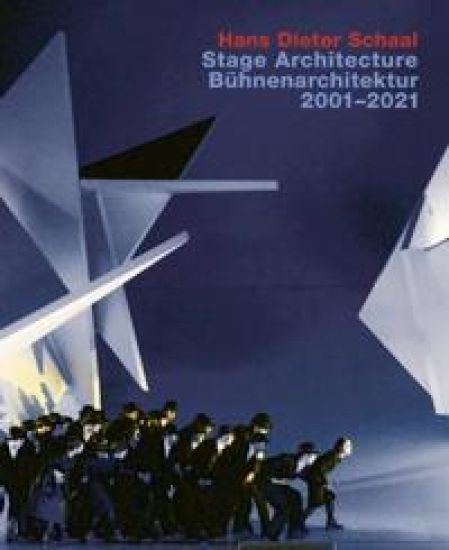
Play-acting but above all the opera have only seemingly little to do with our everyday life. In fact opera is a very artificial work of art in which reality is nevertheless present, but condensed in such a way that it touches us throughout the ages. In experiencing opera performances, we thus become companions of the bard Orpheus in Monteverdis opera L'Orfeo, who mourns the death of his beloved nymph Eurydice with his laments. We transform ourselves into sympathetic and compassionate brothers and sisters of Orpheus, Wozzeck, Tosca, Tristan, Isolde or Jenufa and are thus directly referred to the perils and also pleasures in our own lives. In order to make the visual and sound dimensions of an opera tangible for the audience, a close interaction of dramaturges, actors, singers, dancers, directors, stage designers and technicians is necessary. What role do stage designers play in this? Dont some performances owe their success primarily to the work of the set designer? The stage settings created by Hans Dieter Schaal, who has worked on almost all German stages, but also in many important international theatre venues, including Vienna, Salzburg, Zurich, Brussels, Paris, Moscow and San Francisco, have, over and over again, such a lasting effect due to their visual power that they remain in the memory of the audience for a long time. The first volume on Hans Dieter Schaals stage settings covered the years 1982 to 2000, and this book now brings out a further volume dedicated to the works from 2001 to 2021. The book is captivating not only because of its abundance of mostly large-format photographs and many design drawings, but also because of the detailed texts written by Schaal himself, which reveal how intensively the artist deals with the respective work. As a result he invents images that often trigger a completely new perspective on the works. Hans Dieter Schaal, born in Ulm in 1943, is an architect, landscape designer, stage designer, exhibition designer and artist. His works, the majority of which have been published by Edition Axel Menges, have found an audience far beyond his home country. The author lives and works near Biberach an der Riß.
Hans Dieter Schaal

Hans Dieter Schaal

Frank R. Werner

Edition Axel Menges
1998
sidottu
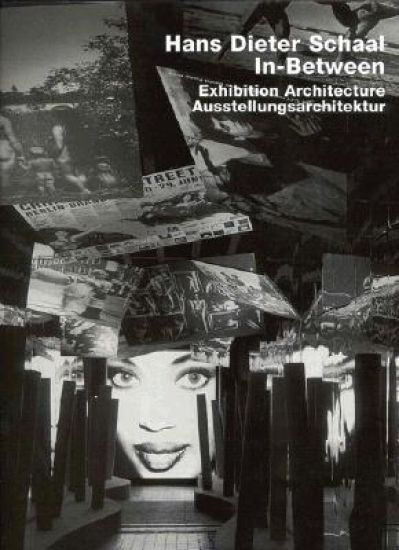
Hans Dieter Schaal is already something of a cultural institution in Germany. Trained as an architect, he always operates outside the "main stream", designing and realizing stage sets, sculptures, cemeteries, parks, squares, spatial installations or book projects, which are often trendsetting in their own field. In the last ten years Schaal has established a focal point that seems to be the sum of all his themes: exhibition architecture. He has provided expansive installations for the broadest possible range of exhibition subjects in such high-volume buildings as the Martin-Gropius-Bau or the Zeughaus in Berlin, the Haus der Geschichte in Bonn, the Kunstvereinsgebäude in Stuttgart, the Deutsches Postmuseum or the Palazzo delle Esposizioni in Rome. His work was never mere exhibition design in these cases. Instead of this he was always concerned to tell spatial stories about the exhibits or their historical background. Of course he was able to draw on his experience in stage-set design here. Admittedly Schaal would not be Schaal, if he were not to use the whole stock of ideas from his decades of lateral thinking or his insatiable search for archetypes and images. On occasions this has meant that Schaal's exhibitions were ad-mired simply of their spatial sensations. It was only the very few people who were prepared to analyse the extraordinarily extensive and complex work more profoundly who found a carefully established subliminal relationship network of selected motifs running through all his exhibition installations like a central theme. Sometimes they come from his own early work, sometimes from literary or cinematic finds, then again from psychological-philosophical footnotes or even private obsessions. Such image particles constitute a thought-edifice perhaps comparable only with Aby Warburg's legendary picture archive which breaks right through the bounds of traditional exhibition architecture. Frank R. Werner has been director of the Institut für Architektur-geschichte und Architekturtheorie at the Bergische Universität in Wuppertal since 1993. He studied painting, architecture and architectural history at the Kunstakademie in Mainz, the Technische Hochschule in Hanover and Stuttgart University.
Hans Dieter Schaal--Stage Designs

Hans Dieter Schaal--Stage Designs

Gottfried Knapp

Edition Axel Menges
2002
sidottu
Text in English and German. Hans Dieter Schaal worked on opera with Ruth Berghaus for ten years, he also created unforgettable stage architecture for the operas of Heinz Werner Henze. Almost all the important European opera houses, for example those in Berlin, Brussels, Stuttgart, Paris, Vienna and Zurich, served as vehicles for his extraordinarily expressive artistic powers, which he used to captivate the public.
Hans Dieter Schaal Work in Progress
Text in English & German. From the 1970s to the present day there is scarcely an architect who has produced such pioneering work as a creative explorer of limits, lateral thinker and stimulating inspirational figure than Hans Dieter Schaal. With a high level of professionalism Schaal has regularly provided us with essential food for thought and hypotheses as an architect, painter, sculptor, draughtsman, designer, garden and stage designer, Utopian, philosopher and author. His work has always been driven not by superficial effects, but by existential statement on what surrounds us in terms of facts and things that are concealed or suppressed. Schaal's artistic statements have elicited responses at home and abroad and have influenced whole generations of younger designers to a considerable extent. Thus Schaal embodies an ideal artistic type that one rarely comes across, known in the Renaissance as uomo universale. As anticipated for some time now, the current volume explores all facets of this complex and fruitful oeuvre, revealing above all its synergetic interrelationships. In addition to this Schaal's thought and action patterns as relevant in terms of art and architectural history are emphasised in this comparative survey of his work, and their efficacy demonstrated. An extensive catalogue of Schaal's work rounds the volume off. Thus the present volume offers an indispensable encyclopaedia of the life's work of one of the truly creative design artists of our day.
Hans Dieter Schaal. Scenic Architecture
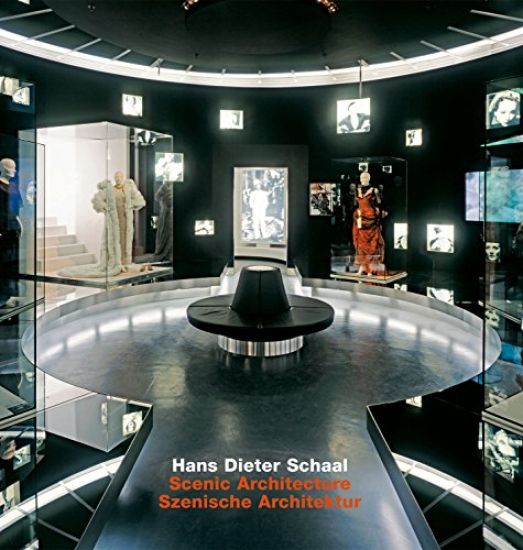
The pioneering character and continuing success of Schaal's scenic compositions for stage sets and exhibitions is significantly due to this field allowing him to take full advantage of his multiple talents. He succeeds equally in the thinking and practical skills of an architect, a painter, a sculptor, a landscape designer, an urban visionary, cineast, and a man of literature, and this allows him to discover, through his space-embracing scenographic installations, unique three-dimensional equivalents for his paper-drawn 'thought spaces' and 'path spaces' or 'thought buildings' from the 1970s. His renowned compendium entitled Architektonische Situationen, published in 1980 and containing, the essence of his early spatial studies, in fact contains within it the seeds of all his later stage set and exhibition configurations. The symbiotic relationship between legendary director Ruth Berghaus and spatial visionary Schaal first began producing history-making stage sets in the early 1980s. Working with Berghaus, Schaal created elementary spatial compositions possessed of great suggestive power for Les Troyens (1983), Wozzeck (1984), Orpheus (1986), Elektra (1986), Moses und Aron (1987), Tristan und Isolde (1988), Lulu (1988), Fierrabras (1988), Ariane et Barbe-Bleue (1991) and Nachtwache (1993), and also working with other directors to do the same for countless other operas and theatre pieces. In creating his installations and their powerful images, Schaal has never solely been concerned with creating suitable illustrations for scene-related plot action. Instead, he always adds something more, as it were, in the form of a boldly independent interpretation. The same is true of his concepts for temporary or permanent ex-hibitions. Before undertaking any of the individual projects on his long list of exhibition projects, Schaal has always researched archive material, historic background, and repercussions, but also the emotional and psychoanalytical implications of the exhibitions' theme and the exhibits concerned, with the meticulousness of a scientific specialist. In works such as his installations for Berlin Berlin (1987) or Prometheus (1998), for the Filmmuseum Berlin (2000), and for the memorials of the former concentration camps Mittelbau-Dora (2006), Bergen-Belsen (2007) or Esterwegen (2011), he always presents his own view of the world, his own view of things. Frank R. Werner studied painting, architecture and architectural history in Mainz, Hanover and Stuttgart. From 1990 to 1994 he was professor of history and theory of architecture at the Staatliche Akademie der Bildenden Künste Stuttgart, from 1994 until his retirement in 2011 he was director of the Institut für Architekturgeschichte und Architekturtheorie at the Bergische Universität in Wuppertal.
Klaus-Dieter John

Klaus-Dieter John

Janet Benge; Geoff Benge

YWAM PUBLISHING
2014
nidottu
Klaus-Dieter John dreamed of becoming a medical missionary in the developing world. He would do whatever it took -- study in top universities and practice surgery in remote and dangerous places -- to reach his goal of providing health care for people who needed it most. Dr. John's seemingly impossible vision of Diospi-Suyana, a world-class hospital for impoverished Peruvians deep in the Andes Mountains, was blessed by God to the end. Despite challenges in fund-raising, construction, moving his family from Germany, and countless roadblocks, Klaus's dream was finally realized, bringing hope in a land loved by God. (1960-)
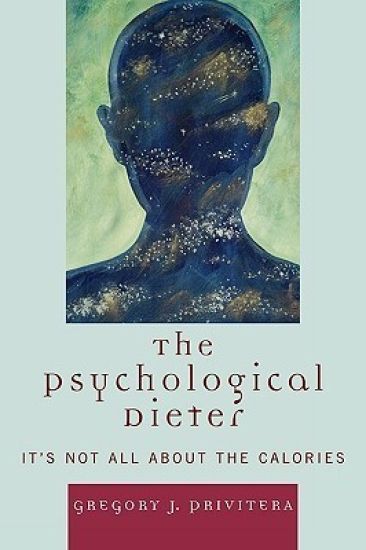
The Psychological Dieter

The Psychological Dieter

Gregory J. Privitera

University Press of America
2007
nidottu
The Psychological Dieter explores a variety of research topics in psychology to explain how diet is acquired and why it is so difficult to change. While many healthier diets on the market will work, few (if any) will provide long-term solutions to healthier dieting. This is a key challenge for research psychologists who study diet and health. Based on scientific research and thinking, this book is one of the first to explore how psychology can help explain why shifting diet is so difficult and provides practical suggestions for what can be done to stop this trend. Professor Privitera integrates research from the biological to the behavioral to provide an easy to follow and broad review of these topics. The Psychological Dieter explores how factors such as metabolism, the brain, sensation, perception, learning, society, and culture all influence weight gain, food choice, meal size, and consumption. Organized into three sections, this book describes how the body regulates hunger and fullness, why diet change is so difficult long-term, and how learning can affect almost any sensation and behavior associated with diet. Rooted in scientific research and clearly written, this book's engaging style makes topics in psychology accessible to scientists, health professionals, and everyday dieters alike.