Kirjahaku
Etsi kirjoja tekijän nimen, kirjan nimen tai ISBN:n perusteella.
1000 tulosta hakusanalla Edward Lear
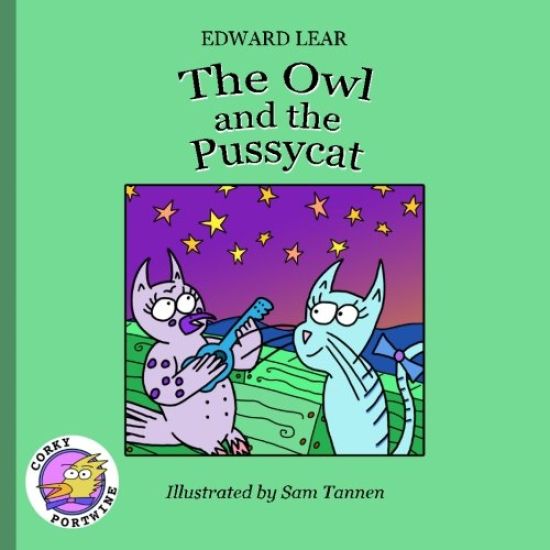
The Owl And The Pussycat: Corky Portwine Illustrated Edition
Edward Lear
Createspace Independent Publishing Platform
2014
nidottu
A Book of Nonsense: Bilingua With Russian Translations by D. Smirnov-Sadovsky
Edward Lear
Createspace Independent Publishing Platform
2017
nidottu
Nonsense Alphabets. The Owl and the Pussycat: English-Russian Bilingual Edition. Coloring Book
Edward Lear
Createspace Independent Publishing Platform
2017
nidottu
Edward Lear was an English artist, illustrator, author, and poet, renowned for his literary nonsense, in poetry and prose, and especially his limericks, a form that he popularized. Lear's nonsense works are distinguished by a facility of verbal invention and a poet's delight in the sounds of words, both real and imaginary. A stuffed rhinoceros becomes a "diaphanous doorscraper". A "blue Boss-Woss" plunges into "a perpendicular, spicular, orbicular, quadrangular, circular depth of soft mud". His heroes are Quangle-Wangles, Pobbles, and Jumblies. His most famous piece of verbal invention, a "runcible spoon" occurs in the closing lines of The Owl and the Pussycat, and is now found in many English dictionaries.
"A Book of Nonsense" by Edward Lear is a delightful and imaginative collection of playful poetry that can bring joy, laughter, and linguistic exploration to readers of all ages. Whether you appreciate wordplay, enjoy whimsical verses, or simply want to experience a classic work, this book offers a delightful journey into the realm of nonsense and creativity.First published in 1846, the book showcases Lear's inventive wordplay and clever use of rhyme. The limericks often feature absurd characters, strange situations, and delightful word combinations, making them entertaining and enjoyable to read.Lear's verses in this book often involve playful language, including puns, alliteration, and creative nonsense words. Despite being written over a century ago, the humor in "A Book of Nonsense" still holds up today. Lear's wit and absurdity transcend time, making the book appealing to readers of all ages. It can be a great way to introduce children to the joy of wordplay and nonsensical humor.Lear was not only a poet but also a talented artist. This edition features Lear's own charming illustrations alongside the verses. The combination of witty poetry and delightful visuals enhances the reading experience and adds to the book's charm.

"I wish I were an egg and was going to be hatched." -Edward Lear Illustrations of the Family of Psittaidae, or Parrots (1832) consists of 42 lithographs that were produced by Edward Lear at the London Zoo beginning when Lear was only 18 years old. By the age of 20 he was able to publish the entire collection. It is considered among Lear's greatest because he created it before he started to lose his sight. Thanks to this new jacketed hard cover edition, which is being released in full color, readers will have access to a unique replica of Lear's unparalleled art.Art lovers and naturalists, especially birdwatchers, will be enchanted.
"'How pleasant to know Mr. Lear 'Who has written such volumes of stuff Some think him ill-tempered and queer, But a few think him pleasant enough." -Edward Lear (1887)The Book of Nonsense (1887) by Edward Lear is a collection of 109 limericks that are considered among the immortal classics of English literature. These nonsense rhymes which were both written and illustrated by Edward Lear are uniquely inspired by whimsical creatures-both human and animal-and are as quirky and fun as they are rich in character. Although often classified as children's literature, they are universally enjoyed by adults as well.
Edward Lear (1812 - 1888) was an English writer of nonsense, the most famous piece of which is The Owl and the Pussycat. He is also credited with popularizing the limerick, though there was some speculation as to whether his patron, the Earl of Derby, simply used Lear as a pseudonym for his own writings. Lear was also a successful illustrator and even spent some time tutoring Queen Victoria in drawing before his improper behaviour had him thrown out of court.
Book of Nonsense by Edward Lear. Edward Lear was an English artist, illustrator, musician, author and poet, and is known now mostly for his literary nonsense in poetry and prose and especially his limericks, a form he popularised. His principal areas of work as an artist were threefold: as a draughtsman employed to illustrate birds and animals; making coloured drawings during his journeys, which he reworked later, sometimes as plates for his travel books; as a (minor) illustrator of Alfred, Lord Tennyson's poems. He published four settings in 1853, five in 1859, and three in 1860. Lear's were the only musical settings that Tennyson approved of. Lear also composed music for many of his nonsense songs, including "The Owl and the Pussy-cat," but only two of the scores have survived, the music for "The Courtship of the Yonghy-Bonghy-Bo" and "The Pelican Chorus". While he never played professionally, he did perform his own nonsense songs and his settings of others' poetry at countless social gatherings, sometimes adding his own lyrics (as with the song "The Nervous Family"), and sometimes replacing serious lyrics with nursery rhymes.
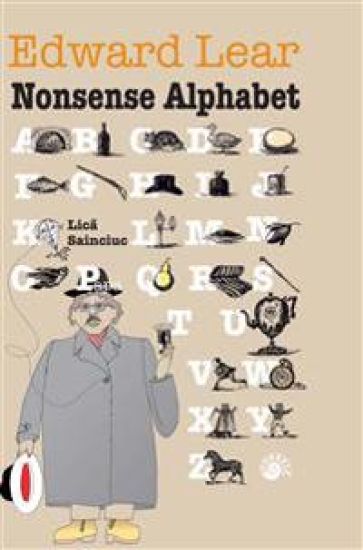

Edward Lear's delightful nonsense verse is as fresh and fun now as it has always been. This brilliant collection from 1900 is illustrated by the peerless L. Leslie Brooke. It contains: 'The Jumblies', 'The Owl and the Pussy-Cat', 'The Broom, the Shovel, the Poker and the Tongs', 'The Duck and the Kangaroo', 'The Cummerbund', 'The Dong with a Luminous Nose', 'The New Vestments', 'Calico Pie', 'The Courtship of the Yonghy-Bonghy-B ' and 'Incidents in the Life of my Uncle Arly'. This color version has been carefully typeset to keep as close to the original as possible, faithfully reproducing the detailed black-and-white drawings and the six high-quality full-page color plates.