
Kirjahaku
Etsi kirjoja tekijän nimen, kirjan nimen tai ISBN:n perusteella.
1000 tulosta hakusanalla Elizabeth Gaskell
A selection of texts by Elizabeth Gaskell, accompanied by annotations. It brings together Gaskell academics to provide readers with scholarship on her work and seeks to bring the crusading spirit and genius of the writer into the 21st century to take her place as a major Victorian writer.
Features Elizabeth Gaskell's work. This work brings together her journalism, her shorter fiction, which was published in various collections during her lifetime, her early personal writing, including a diary written between 1835 and 1838 when she was a young mother, her five full-length novels and "The Life of Charlotte Bronte".
North and South by Elizabeth Gaskell (Book Analysis)
Bright Summaries
BrightSummaries.com
2019
nidottu
Nord et Sud de Elizabeth Gaskell (Analyse de l'oeuvre)
LePetitLitteraire.fr (new)
2023
pokkari
Performativity in Elizabeth Gaskell’s Shorter Fiction
Melissa Schaub
Springer Nature Switzerland AG
2019
sidottu
This book simultaneously examines the specific theoretical issues raised by Elizabeth Gaskell’s use of characterization in her shorter fiction, and addresses the larger question of how literary critics ought to use theory. The text gives a history of Judith Butler’s theory of performativity and the uptake of that theory in literary criticism, and also provides detailed close reading of Gaskell’s fiction—both frequently examined texts like Cranford, Mary Barton, and Wives and Daughters, and some that are less often studied, such as “Lizzie Leigh” and Cousin Phillis. The book argues that as theory becomes naturalized into the vocabulary of literary scholars, it often becomes more optimistic and less specific. In discussing the naturalization of theory exemplified by the application of performativity to Gaskell, the book advances general principles on the use of theory. It can be read as scholarship or used as a textbook in literary methods courses.
Text Strategy in Elizabeth Gaskell's "Ruth". The Stated and the Unstated
Mona Engl
Grin Publishing
2016
pokkari
Place and Progress in the Works of Elizabeth Gaskell
Lesa Scholl; Emily Morris
Routledge
2019
nidottu
Critical assessments of Elizabeth Gaskell have tended to emphasise the regional and provincial aspects of her writing, but the scope of her influence extended across the globe. Building on theories of space and place, the contributors to this collection bring a variety of geographical, industrial, psychological, and spatial perspectives to bear on the vast range of Gaskell’s literary output and on her place within the narrative of British letters and national identity. The advent of the railway and the increasing predominance of manufactory machinery reoriented the nation’s physical and social countenance, but alongside the excitement of progress and industry was a sense of fear and loss manifested through an idealization of the country home, the pastoral retreat, and the agricultural south. In keeping with the theme of progress and change, the essays follow parallel narratives that acknowledge both the angst and nostalgia produced by industrial progress and the excitement and awe occasioned by the potential of the empire. Finally, the volume engages with adaptation and cultural performance, in keeping with the continuing importance of Gaskell in contemporary popular culture far beyond the historical and cultural environs of nineteenth-century Manchester.
Place and Progress in the Works of Elizabeth Gaskell
Lesa Scholl; Emily Morris
Routledge
2015
sidottu
Critical assessments of Elizabeth Gaskell have tended to emphasise the regional and provincial aspects of her writing, but the scope of her influence extended across the globe. Building on theories of space and place, the contributors to this collection bring a variety of geographical, industrial, psychological, and spatial perspectives to bear on the vast range of Gaskell’s literary output and on her place within the narrative of British letters and national identity. The advent of the railway and the increasing predominance of manufactory machinery reoriented the nation’s physical and social countenance, but alongside the excitement of progress and industry was a sense of fear and loss manifested through an idealization of the country home, the pastoral retreat, and the agricultural south. In keeping with the theme of progress and change, the essays follow parallel narratives that acknowledge both the angst and nostalgia produced by industrial progress and the excitement and awe occasioned by the potential of the empire. Finally, the volume engages with adaptation and cultural performance, in keeping with the continuing importance of Gaskell in contemporary popular culture far beyond the historical and cultural environs of nineteenth-century Manchester.

Private Voices: The Diaries of Elizabeth Gaskell and Sophia Holland
Edinburgh University Press
1996
sidottu
These two diaries, by the nineteenth-century novelist Elizabeth Gaskell and her cousin Sophia Holland, provide us with uniquely personal and revealing accounts of Victorian womanhood and motherhood. This is the first critical edition of the Gaskell diary and the first ever publication of the Holland diary. The Gaskells were among the first generation of parents to experience the benefits and burdens of an abundance of child-care literature. Both Elizaeth and Sophia reveal themselves here as anxious to be seen as conscientious and well-informed mothers, but as confused as contemporary parents by the conflicting advice to be found within the pages of the so-called 'experts'. As a piece of social history, these diaries documen the challenges, dilemmas and rewards of Victorian parenthood. As a pieceof literature, there is no doubt that, in cultivating the powers of observation to be found in her diary, Elizabeth was laying the foundation for the wider social vision to be found in her novels. Both works have been carefully edited and annotated from their original manuscripts by J A V Chapple and are accompanied by an illuminating introduction by Anita Wilson.
Masculinity in the Work of Elizabeth Gaskell
Meghan Lowe
Springer Nature Switzerland AG
2020
sidottu
This book is the first full-length study to focus on the representation of masculinity in Elizabeth Gaskell’s novels. In examining Gaskell’s understanding of masculine identity as a social construct and considering how her writing engages with Victorian ideologies of gender, this book demonstrates that Gaskell defies an essentialist approach to gender and instead explores masculinity over time, genre, region, and class, making it clear that masculinity is not monolithic but relational, culturally constructed, and dependent on many contexts. It analyses Gaskell’s depiction of what it means to be a ‘man’ and a ‘gentleman’, exploring Mary Barton, North and South, Ruth, Cousin Phillis, Sylvia’s Lovers, and Wives and Daughters, as well as contemporary Victorian works and key contexts such as sympathy, historic change, and industrialism. The target audiences are academics, as well as undergraduate and postgraduate students and research specialists, and it will most appeal toVictorian Literature, Gender Studies, and Masculinity Studies disciplines.
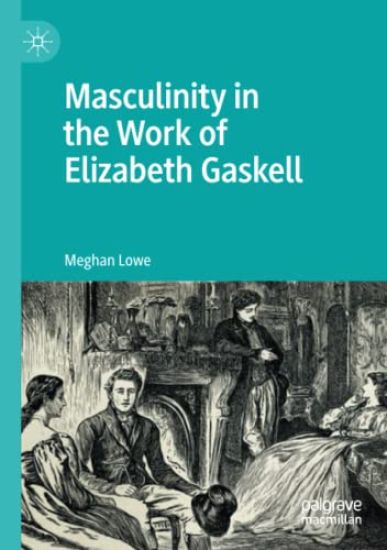
Masculinity in the Work of Elizabeth Gaskell
Meghan Lowe
Springer Nature Switzerland AG
2021
nidottu
This book is the first full-length study to focus on the representation of masculinity in Elizabeth Gaskell’s novels. In examining Gaskell’s understanding of masculine identity as a social construct and considering how her writing engages with Victorian ideologies of gender, this book demonstrates that Gaskell defies an essentialist approach to gender and instead explores masculinity over time, genre, region, and class, making it clear that masculinity is not monolithic but relational, culturally constructed, and dependent on many contexts. It analyses Gaskell’s depiction of what it means to be a ‘man’ and a ‘gentleman’, exploring Mary Barton, North and South, Ruth, Cousin Phillis, Sylvia’s Lovers, and Wives and Daughters, as well as contemporary Victorian works and key contexts such as sympathy, historic change, and industrialism. The target audiences are academics, as well as undergraduate and postgraduate students and research specialists, and it will most appeal toVictorian Literature, Gender Studies, and Masculinity Studies disciplines.
Reconstructing the Gentleman Ideal in Elizabeth Gaskell's "North and South"
Anonymous
GRIN Verlag
2020
nidottu
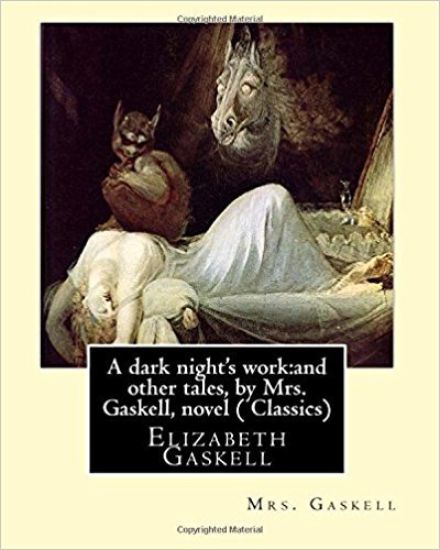
A dark night's work: and other tales, by Mrs. Gaskell, novel (Penguin Classics): Elizabeth Gaskell
Mrs Gaskell
Createspace Independent Publishing Platform
2016
nidottu
Servants and Paternalism in the Works of Maria Edgeworth and Elizabeth Gaskell
Julie Nash
CRC Press Inc
2017
sidottu
Writing during periods of dramatic social change, Maria Edgeworth and Elizabeth Gaskell were both attracted to the idea of radical societal transformation at the same time that their writings express nostalgia for a traditional, paternalistic ruling class. The author shows how this tension is played out especially through the characters of servants in short fiction and novels such as Edgeworth's Castle Rackrent, Belinda, and Helen and Gaskell's North and South and Cranford. Servant characters, the author contends, enable these writers to give voice to the contradictions inherent in the popular paternalistic philosophy of their times because the situation of domestic servitude itself embodies such inconsistencies. Servants, whose labor was essential to the economic and social function of eighteenth- and nineteenth-century British society, made up the largest category of workers in England by the nineteenth century and yet were expected to be socially invisible. At the same time, they lived in the same houses as their masters and mistresses and were privy to the most intimate details of their lives. Both Edgeworth and Gaskell created servant characters who challenge the social hierarchy, thus exposing the potential for dehumanization and corruption inherent in the paternalistic philosophy. the author's study opens up important avenues for future scholars of women's fiction in the nineteenth century.
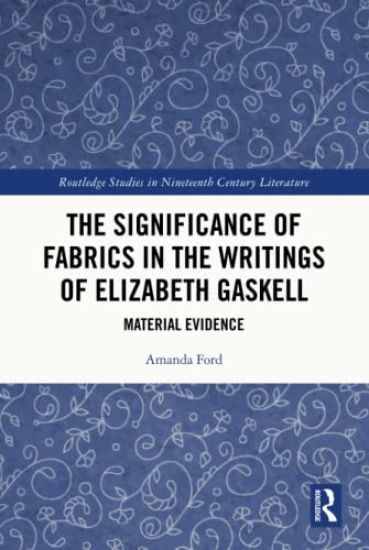
The Significance of Fabrics in the Writings of Elizabeth Gaskell
Amanda Ford
TAYLOR FRANCIS LTD
2022
sidottu
Elizabeth Gaskell’s writings abound in references to a cultural materiality encompassing different types of fabric, stuffs, calicoes, chintzes and fine-point lace. These are not merely the motifs of the Realist genre but reveal a complex polysemy. Utilizing a metonymic examination of these tropes, this volume exposes the dramatic structural and socio-economic upheaval generated by industrialization, urbanization and the widening sphere of empire. The material evidence testifies to the technological and production innovations evolving diachronically for the period, and the evolution of Manchester as the industrial ‘Cottonpolis’ that clothed the world by the 1840s. This volume analyses Gaskell’s manipulation of the materiality, arguing its firm roots lie in the quotidian of women’s domestic and provincial life within the growing ranks of the middle classes. Exploring Gaskell’s tactile imagination, an embodied relationship with fabrics and sewing, a function of her daily life from an early age, this volume provides insight into the sensory aspects of cloth and its ability to stir affective responses, emotions and memories, whereby worn fabrics and even the absence of previous textile treasures, is poignant, recreating layers of recollection. This book aims to restore the pulsating, dynamic context of ordinary women’s dressed lives and presents innovative interpretations of Gaskell’s texts.
The Significance of Fabrics in the Writings of Elizabeth Gaskell
Amanda Ford
TAYLOR FRANCIS LTD
2024
nidottu
Elizabeth Gaskell’s writings abound in references to a cultural materiality encompassing different types of fabric, stuffs, calicoes, chintzes and fine-point lace. These are not merely the motifs of the Realist genre but reveal a complex polysemy. Utilizing a metonymic examination of these tropes, this volume exposes the dramatic structural and socio-economic upheaval generated by industrialization, urbanization and the widening sphere of empire. The material evidence testifies to the technological and production innovations evolving diachronically for the period, and the evolution of Manchester as the industrial ‘Cottonpolis’ that clothed the world by the 1840s. This volume analyses Gaskell’s manipulation of the materiality, arguing its firm roots lie in the quotidian of women’s domestic and provincial life within the growing ranks of the middle classes. Exploring Gaskell’s tactile imagination, an embodied relationship with fabrics and sewing, a function of her daily life from an early age, this volume provides insight into the sensory aspects of cloth and its ability to stir affective responses, emotions and memories, whereby worn fabrics and even the absence of previous textile treasures, is poignant, recreating layers of recollection. This book aims to restore the pulsating, dynamic context of ordinary women’s dressed lives and presents innovative interpretations of Gaskell’s texts.
Servants and Paternalism in the Works of Maria Edgeworth and Elizabeth Gaskell
Julie Nash
Routledge
2020
nidottu
Writing during periods of dramatic social change, Maria Edgeworth and Elizabeth Gaskell were both attracted to the idea of radical societal transformation at the same time that their writings express nostalgia for a traditional, paternalistic ruling class. The author shows how this tension is played out especially through the characters of servants in short fiction and novels such as Edgeworth's Castle Rackrent, Belinda, and Helen and Gaskell's North and South and Cranford. Servant characters, the author contends, enable these writers to give voice to the contradictions inherent in the popular paternalistic philosophy of their times because the situation of domestic servitude itself embodies such inconsistencies. Servants, whose labor was essential to the economic and social function of eighteenth- and nineteenth-century British society, made up the largest category of workers in England by the nineteenth century and yet were expected to be socially invisible. At the same time, they lived in the same houses as their masters and mistresses and were privy to the most intimate details of their lives. Both Edgeworth and Gaskell created servant characters who challenge the social hierarchy, thus exposing the potential for dehumanization and corruption inherent in the paternalistic philosophy. the author's study opens up important avenues for future scholars of women's fiction in the nineteenth century.