His lies keep the evil away....Before he became a Guardian, charged with protecting Vampire Hunters from the creatures that lurk in the shadows, Elliott Sanderson used his mystical powers of persuasion to survive an abusive parent, bullies at school, and to become the best used car salesman in all of Oklahoma. Oblivious to the bloodsuckers stalking him, biding his time, Elliott struggles to find his place through countless tragedies until he can no longer deny who he really is and that it is his calling to join forces with LIGHTS and work to rid the world of vampires once and for all. Elliott: A Vampire Hunter's Tale Book 3 gives us the backstory for one of the most loved characters from The Clandestine Saga series. It isn't necessary to read the books in A Vampire Hunter's Tale series in order, but you may enjoy this book more if you've already read The Clandestine Saga series.
Elliott is a poetry chapbook that illustrates the delicate balance between beauty and pain in caring for a child with special needs. Brian Muriel encapsulates a caregiver's profound fear and love for his son. In the poem "his brother," Muriel delves into the relationship between two siblings. Initially, the children appear strikingly similar, but as they grow, their "mechanical" differences become starkly apparent, shattering the idyllic vision of their shared fairy tale and revealing a tragic reality. The oldest brother watches as his youngest lives the life any parent would wish for their child as their clock remains stuck between the seconds their brother's clock passed years ago. Muriel's Elliott coaxes readers along an unflinching journey through parenthood, exposing the raw guilt accompanying the yearning for a "normal" child, both a dream and a nightmare. Muriel is unforgiving in his poetry, his words racing toward the period at the end of the chapbook, leaving readers breathless and contemplative. Brian Muriel brings a formidable view on caregiving and continues the long-needed conversation.
These previously unpublished lectures by Elliott Carter date to the summer of 1967, when the acclaimed composer taught at the Contemporary Music Workshop held by the University of Minnesota. Leading an introductory course on orchestra repertoire, Carter gave nine hours of lectures covering principal topics like how to live with the musical present and whether the symphony orchestra was a relic of the past or a possible active force for new music. But Carter's observations and prompts by audience questions broadened the discussion into areas ranging from electronic music to analyses of works by other artists and himself. Laura Emmery presents the complete text from each session alongside introductions, commentary, and annotated examples that provide valuable context for readers. Expansive and essential, Elliott Carter Speaks opens up the artist's teaching and introspection to new contemporary perspectives on his thought and art.Please note that the order and arrangement of materials in this book differs from that of Elliott Carter’s original lectures.
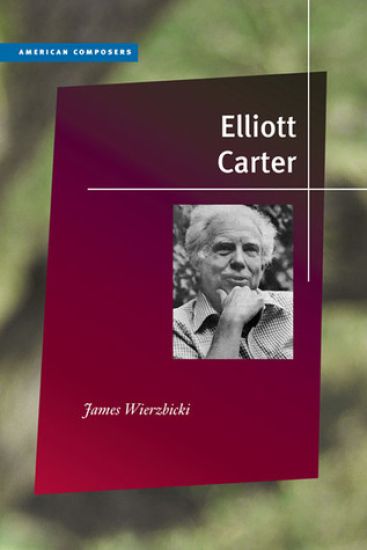
This compact introduction to the life and works of composer Elliott Carter provides a fresh perspective on one of the most significant American composers of the twentieth and twenty-first centuries. A leading voice of the American classical music tradition and a two-time winner of the Pulitzer Prize for Music, Carter was initially encouraged to become a composer by Charles Ives, and he went on to learn from Walter Piston at Harvard University and Nadia Boulanger in Paris. Drawing on Carter's voluminous writings and compositions, James Wierzbicki provides a clear discussion of Carter's evolving understanding of musical time and the influence of film on his work. Celebrating his 100th birthday in 2008 by premiering a number of new compositions, Carter has been a powerful presence on the American new music scene, an important connection to American music's foundational figures, and a dynamic force in its continuing evolution.
Best known for his Oscar-nominated song "Miss Misery" from the Good Will Hunting soundtrack, Elliott Smith was catapulted to the status of indie rock star after performing at the 1997 Academy Awards. Some of his albums, XO and Either/Or among them, would become'90s classics, helping to define an understated aesthetic that owed as much to the melodic emphasis of The Beatles as it did to punk. In the afterglow of the success of "Miss Misery," Smith's fame grew- alongside his struggles with depression and substance abuse. First relocating to Brooklyn, and then finally to L.A., he fell into a downward spiral evident to friends and fans alike, even as he continued to write such beautifully realized songs as "Waltz #2" ( XO ). Drawing on new interviews with those who knew and loved Smith, and focusing on the crucial interplay between Smith's life and music, Ben Nugent compellingly and sympathetically portrays an enormously gifted, yet troubled, artist.
Internationally recognized American composer Elliott Cook Carter, Jr. has composed over three dozen substantial pieces, ranging from stage and choral works to ballets, symphonies, and chamber music. Even at age 85, he continues to pioneer trails into new territory in modern American music. Carter has been the recipient of two Guggenheim Fellowships, two Pulitzer Prizes for Music, and numerous other awards and honors. This book contains a listing of all compositions by Carter with detailed information on premiere performances, a complete discography, and annotated citations of Carter's writings and writings about Carter and his music.
"This is a definitive, excellent book on Elliott, and I recommend it to all who have an interest in the Wave Principle."—Richard Russell, Dow Theory Letters "Gold and Silver Today wholeheartedly endorses this book. It is the definitive work on a scientific wave theory of human experience. If you are interested in technical or wave analysis, it should be required reading."—Gold & Silver Today "This book is extremely well done. It is clear, brief and bold...by far the most useful and comprehensive for both the beginner and the veteran."—William Dilanni, Wellington Mgmt. Co. "An outstanding job...I don't think a better basic handbook of Elliott Wave theory could be written."—Donald J. Hoppe, Business and Investment Analysis "...A top-drawer reference for serious technical analysts....all the nuts and bolts necessary to do their own Elliott Wave assembly."—Futures Magazine "Chapter Three is the best description of Fibonacci numbers we've seen in print and that alone is worth the price of the book."—Janes Dines, The Dines Letter "In a third of a lifetime in this business, this was the first time I really understood Elliott, and this is certainly the first book on Elliott that I could recommend. All the methods that Prechter has used so successfully are fully described in this book."—The Professional Investor "Elliott Wave Principle is such an important, fascinating, even mind-bending work, we are convinced that it should be read by and and every serious student of the market, be they fundamentalist or technician, dealing in stocks, bonds or commodities."—Market Decisions "Even allowing for minor stumbles, that 1978 prediction must go down as the most remarkable stick market prediction of all time."—James W. Cowan, Monitor Money Review; Recipient of the Technical Analysis Association's Award of Excellence
Magnum reporter Elliott Erwitt (born 1928) is a witty photographer with an eye that is not always optimistic, but is always stylish. Sudden coincidences and chance encounters with objects and situations allow him to capture glimpses of the ridiculous or comical side of everyday events. Dogs are his favourite subject, an affectionate metaphor for human frailities. Erwitt’s visual jokes become striking and pithy observations about life.
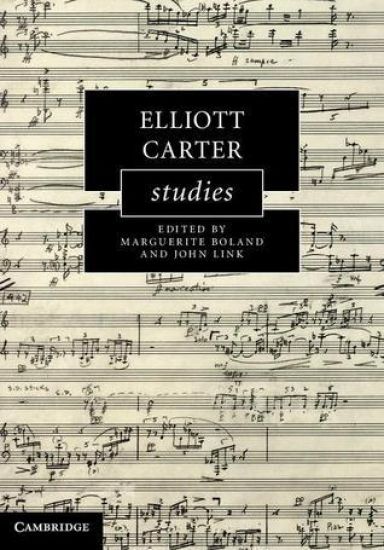
Over the course of an astonishingly long career, Elliott Carter has engaged with many musical developments of the twentieth and now twenty-first centuries - from his early neo-classic music of the interwar period, to his modernist works of conflict and opposition in the 1960s and 1970s, to the reshaping of a modernist aesthetic in his latest compositions. Elliott Carter Studies throws new light on these many facets of Carter's extensive musical oeuvre. This collection of essays presents historic, philosophic, philological and theoretical points of departure for in-depth investigations of individual compositions, stylistic periods in Carter's output and his contributions to a variety of genres, including vocal music, the string quartet and the concerto. The first multi-authored book to appear on Carter's music, it brings together research from a distinguished team of leading international Carter scholars, providing the reader with a wide range of perspectives on an extraordinary musical life.
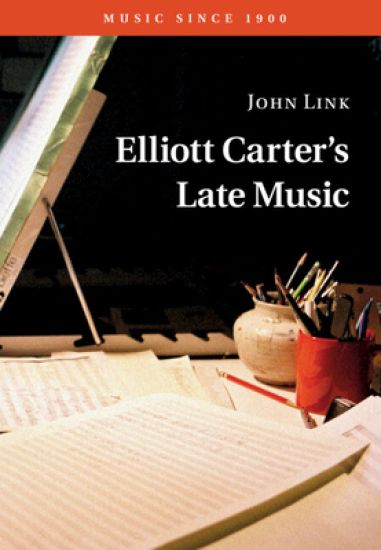
The first comprehensive study of the late music of one of the most influential composers of the last half century, this book places Elliott Carter's music from 1995 to 2012 in the broader context of post-war contemporary concert music, including his own earlier work. It addresses Carter's reception history, his aesthetics, and his harmonic and rhythmic practice, and includes detailed essays on all of Carter's major works after 1995. Special emphasis is placed on Carter's settings of contemporary modernist poetry from John Ashbery to Louis Zukofsky. In readable and engaging prose, Elliott Carter's Late Music illuminates a body of late work that stands at the forefront of the composer's achievements.
Elliott is an experiment in biographical verse. It does not lead you through the tunnel of the character's experience with a bright light and comforting narrative, but asks you to follow by the feel of walls in the dark and the recognition of something familiar just a few steps ahead. What could be called an essay on male identity in the modern age is communicated here with the same tension that underlies its thesis.
Phaidon’s seminal monograph is now available in abridged format, creating an unparalleled introduction to one of our best-loved photographers. Combining Erwitt’s most famous images of instantly recognisable figures, and his extraordinary gift for recognising the eccentricities of the ordinary, Snaps comes complete with introductions from Erwitt’s close friends Charles Flowers and Murray Sayle, in a wonderfully personal collection of work.
Primera monografia exhaustiva de la obra completa de Elliott Erwitt, uno de los fotografos mas importantes de su generacion y figura destacada de la agencia de fotografia Magnum desde 1954.Una panoramica de celebridades y de gente corriente, de lo insolito y de lo divertido, a traves del objetivo de uno de los mejores fotografos de su tiempo.Contiene mas de 200 fotografias ineditas que revelan la prolifica produccion fotografica de Erwitt.Con imagenes de lugares, objetos, personas y animales de todo el planeta captados con el estilo inconfundible, y a menudo ingenioso, de Erwitt.
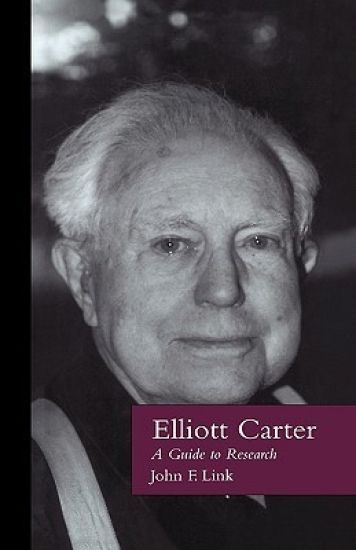
This is a comprehensive guide to research on the American composer Elliott Carter (b. 1908), widely acknowledged as one of the greatest composers of the twentieth century. It contains a chronology, complete list of works, detailed discography, and fully annotated bibliography of over 1,000 books, articles, interviews, video recordings, and Carter's own writings. This essential reference book covers the most significant works in English, French, German, and Italian, from the 1940s-when Carter's music first began to attract attention-to the 1990s.
This book focuses on the genius of Smith's 1998 debut that remains his defining album. Many albums could be cited to support the claim that great suffering yields great art. Elliott Smith's "XO" should not be one of them. Smith's 1998 major label debut defies the 'tortured singer-songwriter' stereotype and takes up this defiance as a central theme. At a time when Smith was being groomed for a particular (and particularly condescending) brand of stardom, he produced a record that eviscerated one of the central assumptions of singer-songwriters: that pain is beautiful. Indeed, "XO" insists that romanticizing personal tragedy can only leave you 'deaf and dumb and done'. It backs up this claim with some of the most artful and intelligent music of its day. While these themes permeate "XO", the record hardly registers like a thesis statement. The album's title cleverly reflects one of its central concerns - the difference between how we present ourselves and the damage we do through such self-denial. It's simple lyrical phrasing and characteristically hesitant vocal delivery have led many to overlook how mean, witty and incisive XO is. It is the product of an artist who could never quite shake off the stigma of his early work. Matthew LeMay writes an original take on a widely beloved album, steering clear of the sensationalist suicide angles that have dogged most analysis of Elliott Smith's extraordinary work. "33 1/3" is a series of short books about a wide variety of albums, by artists ranging from James Brown to the Beastie Boys. Launched in September 2003, the series now contains over 50 titles and is acclaimed and loved by fans, musicians and scholars alike.
The first comprehensive study of the late music of one of the most influential composers of the last half century, this book places Elliott Carter's music from 1995 to 2012 in the broader context of post-war contemporary concert music, including his own earlier work. It addresses Carter's reception history, his aesthetics, and his harmonic and rhythmic practice, and includes detailed essays on all of Carter's major works after 1995. Special emphasis is placed on Carter's settings of contemporary modernist poetry from John Ashbery to Louis Zukofsky. In readable and engaging prose, Elliott Carter's Late Music illuminates a body of late work that stands at the forefront of the composer's achievements.
This Element offers a critical analysis of the history of Elliott Carter's String Quartet No. 1 and the composer's rise to public acclaim, not through the study of the work itself but through intriguing and captivating narratives that surround this quartet and their socio-cultural-political context, which led Carter to become one of the most dominant voices in the post-1945 American music scene. Carter's road to success was meticulously paved by powerful institutions and individuals, including critics, scholars, festival and radio programming directors, and the US government, for whom, in the context of the Cold War, Carter was chosen to represent an exemplary American triumphant story. The author argues that it is not the quartet itself that contributed to Carter's reception and legacy, but the inextricable narratives that we associate with this work.
This Element offers a critical analysis of the history of Elliott Carter's String Quartet No. 1 and the composer's rise to public acclaim, not through the study of the work itself but through intriguing and captivating narratives that surround this quartet and their socio-cultural-political context, which led Carter to become one of the most dominant voices in the post-1945 American music scene. Carter's road to success was meticulously paved by powerful institutions and individuals, including critics, scholars, festival and radio programming directors, and the US government, for whom, in the context of the Cold War, Carter was chosen to represent an exemplary American triumphant story. The author argues that it is not the quartet itself that contributed to Carter's reception and legacy, but the inextricable narratives that we associate with this work.
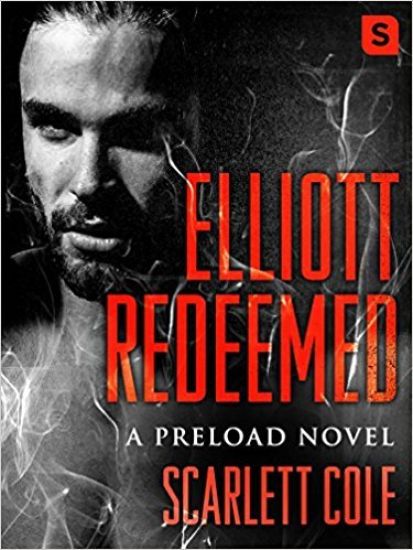
"OMG This was such a GORGEOUS ROMANCE It was everything I was hoping it would be -- heartfelt, sexy and full of feels And let me tell you, this hero was PURE ALPHA SWOON material If you love tortured heroes, strong heroines, gorgeous family dynamics, no stupid drama, and sexy swoon-filled love stories, you have to read this book "--Aestas Book Blog on Elliott RedeemedFrom the queen of heart-pounding, sexy, emotional romance Scarlett Cole comes Elliott Redeemed, the next novel in the Preload series. Elliott "Pyro" Dawson burns up the lead guitar like a legend. But the nickname Pyro isn't just a clever play on words. It's much darker. A past he's fought like hell to overcome.Grocery store cashier Kendalee Walker is at her wits end and homeless. She's watched her fourteen-year-old son, Daniel, go so far off the rails, he can no longer see the tracks.When the two are brought together, attraction flares, but the life of a badass rockstar couldn't be more different than that of a struggling mom. Can Elliott find the family he never had with the sexy woman and her son, or will he fall back on dangerous habits?