

Kirjahaku
Etsi kirjoja tekijän nimen, kirjan nimen tai ISBN:n perusteella.
1000 tulosta hakusanalla Eric A.K. Middlemost


Do-it-Yourself Solar-Powered Go-Kart: Simple DIY Solar Powered Go-kart Picture Guide for a Fun Weekend Project or Science Fair Project
Eric a. Layton
Createspace Independent Publishing Platform
2017
nidottu
Eric Layton, a solar DIY hobbyist, wrote this guide for readers that are trying to build their own solar powered electric go-kart. This DIY solar electric go-kart was built using solar panels with a battery system. This book is a comprehensive guide with pictures on the design, thought process, equipment, and technique on designing this DIY go-kart. Using photographs taken throughout the building process, he covers why he chose certain components in addition to any issues building and using this project for a science fair entry. This book was written to help fellow solar and project enthusiasts, as well as inspire those who would like to build their own DIY go-kart.
The role of the school principal has become more complexed and demanding in recent years. Where once, the site administrator was viewed as no more than a building manager, the numerous tasks of the principal can now range from monitoring daily attendance of the students and staff, to mediating and advocating for at-risk students and their families. Few would disagree, for example, that at least part of the reason administrative vacancies are growing has to do with unrealistic working conditions. Nearly half of new principals leave their schools after three years and nearly 20 percent leave every year (Superville 2020).The need for effective leadership continues to be one of the most important issues facing many schools and districts across the nation. Parents are seeking schools in which their children are nurtured by competent and qualified administrators and teachers. In pondering over what I wanted to share in this book, I began to think of the many different articles and published writing on the subject of effective school leadership. Volumes have been written on what great principals do and don't do.And so, rather than write another book filled with the many ideas written about leadership theory, in this book, I instead recount the many life lessons I've learned regarding the characteristics of a principled leader. My goal is to share what I've learned, with the hope that I might inspire those of us who have been at this for a while as well as what I believe might be very useful ideas to new and future school administrators who desire to be principled principals.
At What Cost? A Gripping Examination of the Price for Redemption
Bishop Eric a Lambert
Outskirts Press
2021
pokkari

A Guide to the ICC Rules of Arbitration
Yves Derains; Eric A. Schwartz
Kluwer Law International
2005
sidottu
The ICC Rules of Arbitration constitute one of the world's oldest and most widely used sets of rules for the resolution of international commercial disputes. In 1998, shortly after the entry into force of the current version of the Rules, the First Edition of this book appeared and quickly became an indispensable resource for all those involved or interested in ICC arbitrations, including arbitrators, counsel, and parties. In this updated and revised edition, the authors two of the world's leading experts on ICC arbitration have revised the Guide in order to take stock not only of the evolution in ICC practice over the last seven years, but of new arbitral and judicial decisions bearing on the interpretation and application of the Rules and of developments in international arbitration practice generally.The Guide s notable features include: article-by-article commentary on the ICC Rules, enriched by the authors personal involvement in their drafting and years of experience as arbitrators, counsel, and former Secretaries General of the ICC International Court of Arbitration; ample and greatly expanded references, in respect of the Rules individual provisions, to relevant national court judgments and arbitral awards, together with extensive bibliographical sources; and up-to-date statistics on ICC arbitration and copies of all ICC rules on dispute resolution mechanisms in addition to arbitration. A truly comprehensive reference work on ICC arbitration practice, the Second Edition of the Guide will be of immeasurable value to corporate counsel, international lawyers, and business people, as well as to all those interested in the international arbitration process.

Ethical Considerations When Preparing a Clinical Research Protocol
Evan DeRenzo; Eric A. Singer; Joel Moss
Academic Press Inc
2020
nidottu
Ethical Considerations When Preparing a Clinical Research Protocol, Second Edition, provides a foundation for improving skills in the understanding of ethical requirements in the design and conduct of clinical research. It includes practical information on ethical principles in clinical research, how to design appropriate research studies, how to consent and assent documents, how to get protocols approved, special populations, confidentiality issues, and the reporting of adverse events. The book's valuable appendix includes a listing of web resources about research ethics, along with a glossary, making it an invaluable resource for scientists collaborating in clinical trials, physician investigators, clinical research fellows, and more.
The Incidence and Economic Burden of Injuries in the United States
Eric A. Finkelstein; Phaedra S. Corso; Ted R. Miller
Oxford University Press Inc
2006
sidottu
Injuries are one of the most serious public health problems facing the United States today. Through premature death, disability, medical cost and lost productivity, injuries impact the health and welfare of all Americans. Deaths only begin to tell the story. Although many injuries are minor, a large proportion result in fractures, amputations, burns, or significant injuries that have far-reaching consequences. Now, for the first time in over 15 years, we have comprehensive estimates of the impact of these injuries in economic terms. This book updates a landmark Report to Congress from 1989. Since that report, no undertaking has addressed the incidence and economic burden of injuries with more timely data, despite major changes in the fields of prevention, reporting and surveillance. Since the mid-eighties, new safety technologies have been developed to prevent injuries or to decrease the severity of injuries, and new policies and laws have been enacted to promote injury prevention. Chapter topics include incidence by detailed categorisations, lifetime medical costs and productivity losses as a result of injuries, and a discussion of recent trends. Lavishly illustrated with tables and graphs, this volume is a valuable reference for public health practitioners, researchers, and students alike.

In Terror in the Balance, Posner and Vermeule take on civil libertarians of both the left and the right, arguing that the government should be given wide latitude to adjust policy and liberties in the times of emergency. They emphasize the virtues of unilateral executive actions and argue for making extensive powers available to the executive as warranted. The judiciary should neither second-guess security policy nor interfere on constitutional grounds. In order to protect citizens, government can and should use any legal instrument that is warranted under ordinary cost-benefit analysis. The value gained from the increase in security will exceed the losses from the decrease in liberty. At a time when the 'struggle against violent extremism' dominates the United States' agenda, this important and controversial work will spark discussion in the classroom and intellectual press alike.

A trenchant account of an unacknowledged driver of inequality and wage stagnation in America: the abandonment of antitrust law, which has allowed corporations to combine into a smaller number of massive conglomerates whose market dominance robs workers of their bargaining power. The consequences of the massive consolidation wave in corporate America that began decades ago are now increasingly apparent: labor markets are no longer competitive. Since the 1970s, Americans have seen income and wealth inequality skyrocket--and job opportunities stagnate. There are many theories of why this happened, including the decline of organized labor and the introduction of tax policies that favored the rich. However, another crucial event was the precipitous decline in antitrust enforcement that began in earnest during the Reagan administration. With ever-increasing combination and consolidation, workers had fewer options to turn to. In How Antitrust Law Failed Workers, Eric Posner documents the role of antitrust in our economy and why it failed. Only through reforming antitrust law can we shield workers from employers' overwhelming market power. As Posner explains, antitrust laws were created to protect the labor market by attacking monopolies, like Facebook and Google today, that are able to either charge high prices or degrade the quality of their services because customers cannot switch to competitors. Antitrust laws are also used to attack business cartels that can fix prices. In recent years, it has become clear that firms with market power not only charge higher prices; they also suppress wages and output. Many employers use anticompetitive devices--like covenants not to compete for workers and no-poaching agreements--to advance their market power at the expense of workers. Posner shares stories that illustrate how the problem is playing out on the ground, and then contextualizes what is going on via a concise history of the American economy and labor relations since the 1980s. Essential reading for anyone interested in fighting economic inequality, How Antitrust Failed Workers also offers a sharp primer on the true nature of the American economy--one that is increasingly uncompetitive and tilted against workers.
Ever since Arthur M. Schlesinger Jr. used "imperial presidency" as a book title, the term has become central to the debate about the balance of power in the U.S. government. Since the presidency of George W. Bush, when advocates of executive power such as Dick Cheney gained ascendancy, the argument has blazed hotter than ever. Many argue the Constitution itself is in grave danger. What is to be done? The answer, according to legal scholars Eric Posner and Adrian Vermeule, is nothing. In The Executive Unbound, they provide a bracing challenge to conventional wisdom, arguing that a strong presidency is inevitable in the modern world. Most scholars, they note, object to today's level of executive power because it varies so dramatically from the vision of the framers of the Constitution. But Posner and Vermeule find fault with James Madison's premises. Like an ideal market, they write, Madison's separation of powers has no central director, but it lacks the price system which gives an economy its structure; there is nothing in checks and balances that intrinsically generates order or promotes positive arrangements. In fact, the greater complexity of the modern world produces a concentration of power, particularly in the White House. The authors chart the rise of executive authority, noting that among strong presidents only Nixon has come in for severe criticism, leading to legislation which was designed to limit the presidency, yet which failed to do so. Political, cultural and social restraints, they argue, have been more effective in preventing dictatorship than any law. The executive-centered state tends to generate political checks that substitute for the legal checks of the Madisonian constitution. Piety toward the founders and a historic fear of tyranny have been powerful forces in American political thinking. Posner and Vermeule confront them both in this startlingly original contribution.
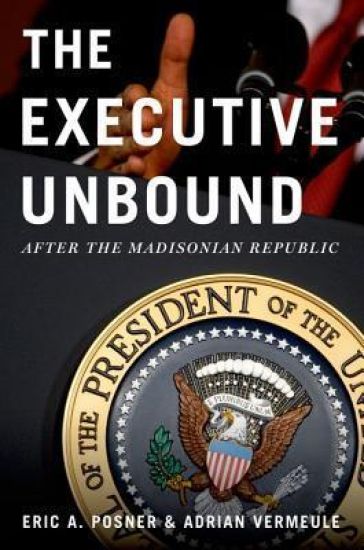
Ever since Arthur M. Schlesinger Jr. used "imperial presidency" as a book title, the term has become central to the debate about the balance of power in the U.S. government. Since the presidency of George W. Bush, when advocates of executive power such as Dick Cheney gained ascendancy, the argument has blazed hotter than ever. Many argue the Constitution itself is in grave danger. What is to be done? The answer, according to legal scholars Eric Posner and Adrian Vermeule, is nothing. In The Executive Unbound, they provide a bracing challenge to conventional wisdom, arguing that a strong presidency is inevitable in the modern world. Most scholars, they note, object to today's level of executive power because it varies so dramatically from the vision of the framers of the Constitution. But Posner and Vermeule find fault with James Madison's premises. Like an ideal market, they write, Madison's separation of powers has no central director, but it lacks the price system which gives an economy its structure; there is nothing in checks and balances that intrinsically generates order or promotes positive arrangements. In fact, the greater complexity of the modern world produces a concentration of power, particularly in the White House. The authors chart the rise of executive authority, noting that among strong presidents only Nixon has come in for severe criticism, leading to legislation which was designed to limit the presidency, yet which failed to do so. Political, cultural and social restraints, they argue, have been more effective in preventing dictatorship than any law. The executive-centered state tends to generate political checks that substitute for the legal checks of the Madisonian constitution. Piety toward the founders and a historic fear of tyranny have been powerful forces in American political thinking. Posner and Vermeule confront them both in this startlingly original contribution.

The bailouts during the recent financial crisis enraged the public. They felt unfair--and counterproductive: people who take risks must be allowed to fail. If we reward firms that make irresponsible investments, costing taxpayers billions of dollars, aren't we encouraging them to continue to act irresponsibly, setting the stage for future crises? And beyond the ethics of it was the question of whether the government even had the authority to bail out failing firms like Bear Stearns and AIG. The answer, according to Eric A. Posner, is no. The federal government freely and frequently violated the law with the bailouts--but it did so in the public interest. An understandable lack of sympathy toward Wall Street has obscured the fact that bailouts have happened throughout economic history and are unavoidable in any modern, market-based economy. And they're actually good. Contrary to popular belief, the financial system cannot operate properly unless the government stands ready to bail out banks and other firms. During the recent crisis, Posner agues, the law didn't give federal agencies sufficient power to rescue the financial system. The legal constraints were damaging, but harm was limited because the agencies--with a few exceptions--violated or improvised elaborate evasions of the law. Yet the agencies also abused their power. If illegal actions were what it took to advance the public interest, Posner argues, we ought to change the law, but we need to do so in a way that also prevents agencies from misusing their authority. In the aftermath of the crisis, confusion about what agencies did do, should have done, and were allowed to do, has prevented a clear and realistic assessment and may hamper our response to future crises. Taking up the common objections raised by both right and left, Posner argues that future bailouts will occur. Acknowledging that inevitability, we can and must look ahead and carefully assess our policy options before we need them.
The first two years of the Obama administration have led to expectations, both in the United States and abroad, that in the coming years America will increasingly promote the international rule of law - a position that many believe is both ethically necessary and in the nation's best interests. With "The Perils of Global Legalism", Eric A. Posner explains that such views demonstrate a dangerously naive tendency toward legalism - an idealistic belief that law can be effective even in the absence of legitimate institutions of governance. After tracing the historical roots of the concept, Posner carefully lays out the many illusions - such as universalism, sovereign equality, and the possibility of disinterested judgment by politically unaccountable officials - on which the legalistic view is founded. Drawing on such examples as NATO's invasion of Serbia, attempts to ban the use of land mines, and the free-trade provisions of the WTO, Posner demonstrates throughout that the weaknesses of international law confound legalist ambitions - and that whatever their professed commitments, all nations stand ready to dispense with international agreements when it suits their short- or long-term interests.
The first two years of the Obama administration have led to expectations, both in the United States and abroad, that in the coming years America will increasingly promote the international rule of law - a position that many believe is both ethically necessary and in the nation's best interests. With "The Perils of Global Legalism", Eric A. Posner explains that such views demonstrate a dangerously naive tendency toward legalism - an idealistic belief that law can be effective even in the absence of legitimate institutions of governance. After tracing the historical roots of the concept, Posner carefully lays out the many illusions - such as universalism, sovereign equality, and the possibility of disinterested judgment by politically unaccountable officials - on which the legalistic view is founded. Drawing on such examples as NATO's invasion of Serbia, attempts to ban the use of land mines, and the free-trade provisions of the WTO, Posner demonstrates throughout that the weaknesses of international law confound legalist ambitions - and that whatever their professed commitments, all nations stand ready to dispense with international agreements when it suits their short- or long-term interests.

The sharp wit of a free-thinking Mormon folk heroIn The J. Golden Kimball Stories, beloved and iconoclastic Mormon humorist J. Golden Kimball (1853-1938) speaks on death, marriage, love, hell, God, and everything in between. Compiled by Eric A. Eliason from previously unpublished archival resources, this collection of stories, anecdotes, and jokes captures the irreverent comedy and independent thinking that made Kimball so beloved both in and out of his Mormon community. Arranged thematically and framed by short contextual introductions, each chapter presents a colorful portrait of Kimball on topics including tricks, cussing, ministering, chastising, and repentance. A comprehensive introductory essay places Kimball in the context of Mormon history and folklore scholarship.
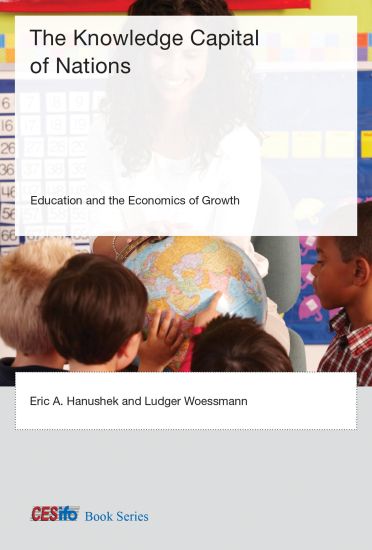
A rigorous, pathbreaking analysis demonstrating that a country's prosperity is directly related in the long run to the skills of its population. In this book Eric Hanushek and Ludger Woessmann make a simple, central claim, developed with rigorous theoretical and empirical support: knowledge is the key to a country's development. Of course, every country acknowledges the importance of developing human capital, but Hanushek and Woessmann argue that message has become distorted, with politicians and researchers concentrating not on valued skills but on proxies for them. The common focus is on school attainment, although time in school provides a very misleading picture of how skills enter into development. Hanushek and Woessmann contend that the cognitive skills of the population--which they term the "knowledge capital" of a nation--are essential to long-run prosperity. Hanushek and Woessmann subject their hypotheses about the relationship between cognitive skills (as consistently measured by international student assessments) and economic growth to a series of tests, including alternate specifications, different subsets of countries, and econometric analysis of causal interpretations. They find that their main results are remarkably robust, and equally applicable to developing and developed countries. They demonstrate, for example, that the "Latin American growth puzzle" and the "East Asian miracle" can be explained by these regions' knowledge capital. Turning to the policy implications of their argument, they call for an education system that develops effective accountability, promotes choice and competition, and provides direct rewards for good performance.

The Politics of International Humanitarian Aid Operations
Eric A. Belgrad; Nitza Nachmias
Praeger Publishers Inc
1997
sidottu
The theories and case studies examined in this volume constitute a thorough study of foreign intervention in civil conflicts for the purpose of rendering humanitarian aid. The classical paradigm of the ethics of intervention forbids the violation of territorial sovereignty. Public international law and the UN charter also mandate nonintervention within the territorial boundaries of a state. Nevertheless, in recent years, as a result of brutal civil conflicts and their violent and inhumane consequences—as in Rwanda, Bosnia, and Cambodia—international aid interventions have become an accepted practice. Still, international humanitarian aid involves unsettled, controversial issues—dilemmas concerning donors, recipients, and international organizations. These issues, as well as the concepts of sovereignty, human rights, coercive interventions, and peacekeeping, are critically evaluated in this volume, which will be of interest to scholars and policymakers in international relations, human rights, and military affairs.

Like the haggadah, the traditional “telling” of the story of the Israelites’ exodus from Egypt that is read at the Passover seder, cinema offers a valuable text from which to gain an understanding of the social, political, and cultural realities of Jews in America. In an industry strongly influenced by Jewish filmmakers who made and continue to make the decisions as to which films are produced, the complex and evolving nature of the American Jewish condition has had considerable impact on American cinema and, in particular, on how Jews are reflected on the screen. This groundbreaking study analyzes select mainstream films from the beginning of the sound era to today to provide an understanding of the American Jewish experience over the last century.In the first half of the twentieth century, Hollywood’s movie moguls, most of whom were Jewish, shied away from asserting a Jewish image on the screen for fear that they might be too closely identified with that representation. Over the next two decades, Jewish moviemakers became more comfortable with the concept of a Jewish hero and with an overpowered, yet heroic, Israel. In time, the Holocaust assumed center stage as the single event with the greatest effect on American Jewish identity. Recently, as American Jewish screenwriters, directors, and producers have become increasingly comfortable with their heritage, we are seeing an unprecedented number of movies that spotlight Jewish protagonists, experiences, and challenges.

Like the haggadah, the traditional “telling” of the story of the Israelites’ exodus from Egypt that is read at the Passover seder, cinema offers a valuable text from which to gain an understanding of the social, political, and cultural realities of Jews in America. In an industry strongly influenced by Jewish filmmakers who made and continue to make the decisions as to which films are produced, the complex and evolving nature of the American Jewish condition has had considerable impact on American cinema and, in particular, on how Jews are reflected on the screen. This groundbreaking study analyzes select mainstream films from the beginning of the sound era to today to provide an understanding of the American Jewish experience over the last century.In the first half of the twentieth century, Hollywood’s movie moguls, most of whom were Jewish, shied away from asserting a Jewish image on the screen for fear that they might be too closely identified with that representation. Over the next two decades, Jewish moviemakers became more comfortable with the concept of a Jewish hero and with an overpowered, yet heroic, Israel. In time, the Holocaust assumed center stage as the single event with the greatest effect on American Jewish identity. Recently, as American Jewish screenwriters, directors, and producers have become increasingly comfortable with their heritage, we are seeing an unprecedented number of movies that spotlight Jewish protagonists, experiences, and challenges.