This is the first book devoted to the work of Ernest Sosa, one of the most influential contemporary epistemologists. Part of the acclaimed Philosophers and Their Critics series.The editor's introduction serves as an introduction to Sosa's epistemology.Contains critical essays by more than twenty of the most prominent epistemologists in the world, commenting on Sosa's work.Concludes with Sosa's own reply to his critics.
This is the first book devoted to the work of Ernest Sosa, one of the most influential contemporary epistemologists. Part of the acclaimed Philosophers and Their Critics series.The editor's introduction serves as an introduction to Sosa's epistemology.Contains critical essays by more than twenty of the most prominent epistemologists in the world, commenting on Sosa's work.Concludes with Sosa's own reply to his critics.
Ernest Gruening is perhaps best known for his vehement fight against U.S. military involvement in Vietnam, where he set himself apart by casting one of two votes against the Tonkin Gulf Resolution in 1964. However, as Robert Johnson shows in this political biography, it's Gruening's sixty-year public career in its entirety that provides an opportunity for historians to explore continuity and change in dissenting thought, on both domestic and international affairs, in twentieth-century America.Gruening's outlook on domestic affairs took shape in the intellectual milieu of Progressive-era Boston, where he first devoted attention to foreign affairs in crusades against aggressive U.S. policies toward Haiti and Mexico. In the late 1920s, he was appointed editor of a reform newspaper in Portland, Maine, and moved from there to The Nation. By the early 1930s he had built a national reputation as an expert on Latin American affairs, prompting Franklin Roosevelt to appoint him chief U.S. policymaker for Puerto Rico. In 1939, Roosevelt named Gruening governor of Alaska, where for fourteen years he played a key role in the political development of the territory. In 1958 Alaskan voters elected him to the U.S. Senate, where he articulated a dissenting outlook in inter-American affairs, foreign aid policy, and the relationship between the federal government, the economy, and the issue of monopoly.Throughout his life, Gruening struggled to reconcile his ideological perspective, which drew on dissenting ideas long embedded in American history, with a desire for political effectiveness.
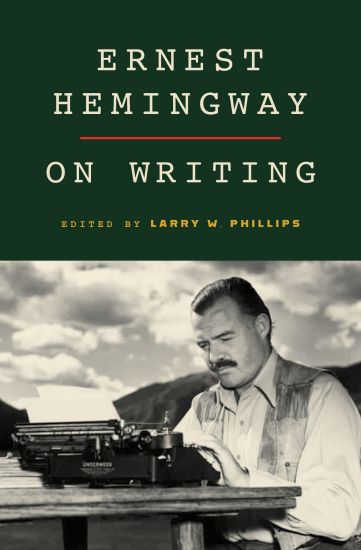
Drawing from works of fiction, letters, interviews, and articles by Hemingway, a unique collection of the great writer's insights and techniques for writing offers thoughtful advice on discipline, honesty, and craft for any aspiring writer. Reprint. 25,000 first printing.
This supplementary bibliography describes work by and about Ernest Hemingway published between 1966 and 1973. Part One lists publications by Hemingway, including six recent books, new editions of previously published volumes, and work by other authors to which Hemingway contributed. Translations and anthologies are entered, as are previously unpublished writings and material reprinted in newspapers and periodicals (including articles recently attributed to Hemingway). The first half of Part Two lists 448 books and pamphlets on or mentioning Hemingway. The second half describes work that appeared in newspapers and journals, including articles, reviews, poems, critical essays, and textual studies. Foreign publications arc noted throughout Part Two. Omissions to the first volume of the bibliography have been entered in each section. Originally published in 1975. The Princeton Legacy Library uses the latest print-on-demand technology to again make available previously out-of-print books from the distinguished backlist of Princeton University Press. These editions preserve the original texts of these important books while presenting them in durable paperback and hardcover editions. The goal of the Princeton Legacy Library is to vastly increase access to the rich scholarly heritage found in the thousands of books published by Princeton University Press since its founding in 1905.
This bibliography of Hemingway's writings and related materials includes, for the first time, all of his books, pamphlets, stories, articles, newspaper contributions, juvenilia, library holdings of his letters and manuscripts, items written about Hemingway between 1918 and 1965, and short excerpts from reviews of each of Hemingway's novels. It is the first bibliography of Hemingway published since 1931, and includes much material never before assembled: thirty-eight contributions to his high school newspaper, Trapeze, twenty-eight Spanish Civil War dispatches, and first editions published in some thirty foreign languages. First editions of books and pamphlets, both American and English with bibliographic descriptions, are given. Originally published in 1967. The Princeton Legacy Library uses the latest print-on-demand technology to again make available previously out-of-print books from the distinguished backlist of Princeton University Press. These editions preserve the original texts of these important books while presenting them in durable paperback and hardcover editions. The goal of the Princeton Legacy Library is to vastly increase access to the rich scholarly heritage found in the thousands of books published by Princeton University Press since its founding in 1905.
This supplementary bibliography describes work by and about Ernest Hemingway published between 1966 and 1973. Part One lists publications by Hemingway, including six recent books, new editions of previously published volumes, and work by other authors to which Hemingway contributed. Translations and anthologies are entered, as are previously unpublished writings and material reprinted in newspapers and periodicals (including articles recently attributed to Hemingway). The first half of Part Two lists 448 books and pamphlets on or mentioning Hemingway. The second half describes work that appeared in newspapers and journals, including articles, reviews, poems, critical essays, and textual studies. Foreign publications arc noted throughout Part Two. Omissions to the first volume of the bibliography have been entered in each section. Originally published in 1975. The Princeton Legacy Library uses the latest print-on-demand technology to again make available previously out-of-print books from the distinguished backlist of Princeton University Press. These editions preserve the original texts of these important books while presenting them in durable paperback and hardcover editions. The goal of the Princeton Legacy Library is to vastly increase access to the rich scholarly heritage found in the thousands of books published by Princeton University Press since its founding in 1905.
This bibliography of Hemingway's writings and related materials includes, for the first time, all of his books, pamphlets, stories, articles, newspaper contributions, juvenilia, library holdings of his letters and manuscripts, items written about Hemingway between 1918 and 1965, and short excerpts from reviews of each of Hemingway's novels. It is the first bibliography of Hemingway published since 1931, and includes much material never before assembled: thirty-eight contributions to his high school newspaper, Trapeze, twenty-eight Spanish Civil War dispatches, and first editions published in some thirty foreign languages. First editions of books and pamphlets, both American and English with bibliographic descriptions, are given. Originally published in 1967. The Princeton Legacy Library uses the latest print-on-demand technology to again make available previously out-of-print books from the distinguished backlist of Princeton University Press. These editions preserve the original texts of these important books while presenting them in durable paperback and hardcover editions. The goal of the Princeton Legacy Library is to vastly increase access to the rich scholarly heritage found in the thousands of books published by Princeton University Press since its founding in 1905.
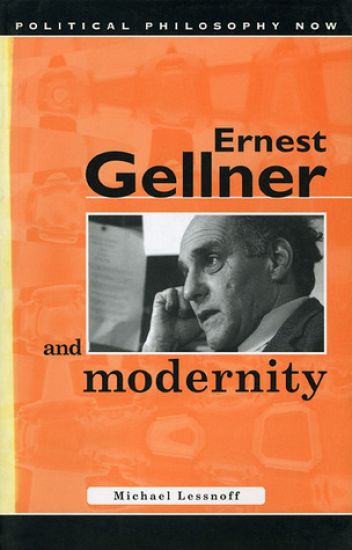
Ernest Gellner (1925 - 1995) was one of the major thinkers of the twentieth century. He held major chairs in philosophy, sociology and social anthropology during his distinguished career and contributed to a wide range of political and philosophical debates, most notably in linguistic philosophy, the theory of political nationalism and the theory of history. Gellner was also an outspoken defender of the Enlightenment tradition and social democracy. In Ernest Gellner and Modernity, Michael Lessnoff presents a lucid and coherent exposition of Gellner's thought, both in terms of the specific areas in which he worked and the underlying consistency of his theoretical principles. Lessnoff provides a context within which to evaluate Gellner's contribution to social and political thought and, in keeping with the aims of the series, demonstrates the importance of Gellner's work for contemporary political philosophy.
Ernest Gellner (1925-1995) was one of the major thinkers of the twentieth-century. He held major chairs in philosophy, sociology and social anthropology during his distinguished career and contributed to a wide range of political and philosophical debates, from linguistic philosophy to the theory of political nationalism and the theory of history. As an outspoken defender of the Enlightenment tradition and of liberal pluralism, Gellner was a committed opponent of theocracy, totalitarianism and libertarianism, and also acquired a deserved reputation as a scourge of a number of the twentieth century's intellectual idols, most notably Marx, Freud and Wittgenstein.Ernest Gellner and Modernity is a groundbreaking book which provides the first comprehensive discussion of this polymathic writer and thinker. Michael Lessnoff presents a lucid and coherent exposition of Gellner's thought, making clear both his major contributions to the diverse areas in which he worked and the underlying consistency and unity of his thought. He shows how Gellner's analysis of the social, economic and cognitive forms intrinsic to modernity carried forward the work of Max Weber and Karl Popper and also enabled him to develop a profound and original philosophy of science which is at the same time a political philosophy.
In this book from the critically acclaimed, multimillion-copy bestselling Little People, BIG DREAMS series, discover the life of Ernest Shackleton, the fearless Antarctic adventurer.When Ernest Shackleton was young, he longed for a life of adventure. After a career in the Merchant Navy, he joined a landmark expedition to try to reach the South Pole for the first time in history. Although he had to go home early, he never gave up. His own expeditions set new records for the closest anyone had ever been to the South Pole, and he is remembered now as a courageous and inspirational leader. This exciting book features stylish and quirky illustrations and extra facts at the back, including a biographical timeline with historical photos and a detailed profile of the intrepid explorer's life.?Little People, BIG DREAMS is a bestselling biography series for kids that explores the lives of outstanding people, from designers and artists to scientists and activists. All of them achieved incredible things, yet each began life as a child with a dream.This empowering series of books offers inspiring messages to children of all ages, in a range of formats. The board books are told in simple sentences, perfect for reading aloud to babies and toddlers. The hardback and paperback versions present expanded stories for beginning readers. With rewritten text for older children, the treasuries each bring together a multitude of dreamers in a single volume. You can also collect a selection of the books by theme in boxed gift sets. Activity books and a journal provide even more ways to make the lives of these role models accessible to children.Inspire the next generation of outstanding people who will change the world with Little People, BIG DREAMS!
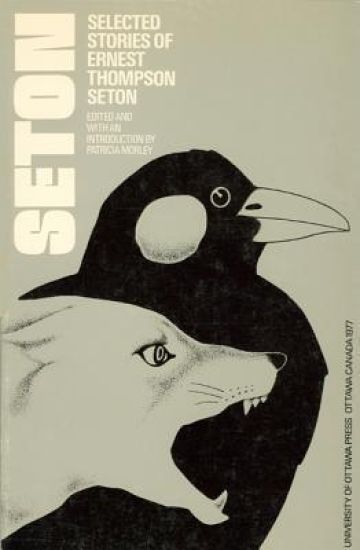
In the late 19th century, the impact of the Canadian wilderness on writers led to the formation of a new and uniquely Canadian genre, the realistic animal story. This collection of Ernest Thompson Seton's short stories reflects his talents as writer, naturalist, and artist.
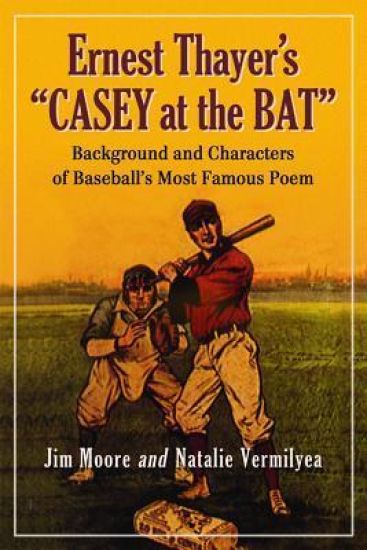
Ernest Thayer's ""Casey at the Bat"" was first published in the San Francisco Daily Examiner on June 3, 1888. Its popularity owed much to the universality of its subject; every city seemed to have a ""Casey"" on its team. Thayer, a Harvard graduate, said little about the real Casey, though he did leave a few clues. ""The verses owe their existence,"" he wrote in 1930, ""to my enthusiasm for college baseball...and to my association with Will Hearst."" Thayer's background is examined here as the basis for determining the origins of the colorfast cast of characters behind his ""Ballad of the Republic""--men who may have been ""Casey,"" ""Flynn,"" ""Cooney"" and other members of the Mudville Nine.
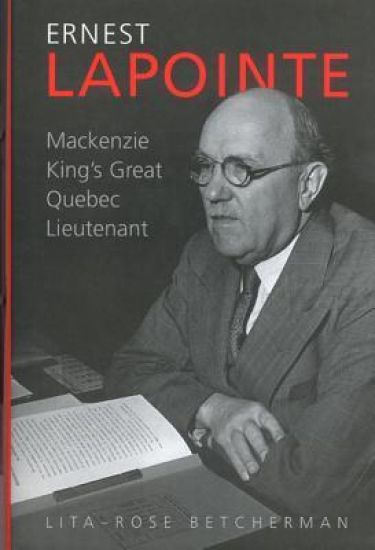
This is a long-overdue study of one of Canada's most important political relationships. Highly readable and engaging, this work details the relationship between Quebec lieutenant Ernest Lapointe and Prime Minister Mackenzie King, showing how the close association of the two affected Canadian history in many important ways. Lapointe was the dominant French Canadian in federal politics from the start of the 1920s to the early years of the Second World War, serving as Minister of Justice and King's Quebec lieutenant. In return for promoting Liberal policies in Quebec, he was given an unusual amount of autonomy in his constituency, and, because the Prime Minister had a poor understanding of the province and of the French language, he was relied upon to give King the French-Canadian perspective. Lapointe's role in maintaining Liberal party unity, and, by extension, national unity, was crucial. Lapointe was equally important when it came to foreign affairs. He was known to take the lead over King, and the isolationist stance of both politicians served to undermine the League of Nations in its dealings with Italy over the invasion of Ethiopia. Lita-Rose Betcherman draws on key primary sources for her material, including the Lapointe Papers, the King Papers, the King Diary, and the media of the times. Ernest Lapointe thus documents Canadian politics and society in a rigourous and accessible manner that will appeal to a scholarly and general audiences.
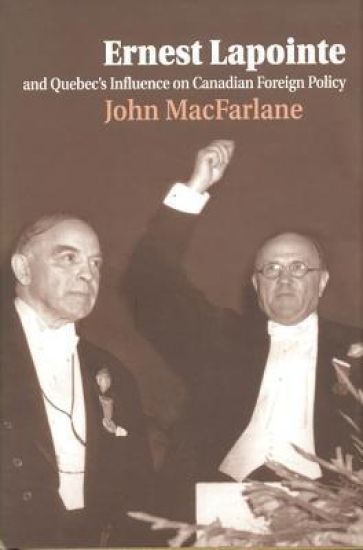
Currently the stakes are higher than ever for anglophone Canada to recognize and understand the extent and nature of Quebec's role in the shaping of the nation. John MacFarlane's revision of anglophone history is a compelling step in that process. Historians often emphasize how, during both the difficult inter-war years and the Second World War, the Liberal government of Mackenzie King successfully reconciled the needs of majority rule with the recognition of minority voice, particularly in foreign affairs. How did a consummate anti-Catholic, who did not even speak French, manage to acknowledge and accommodate the vastly different demands of the French-speaking population? Issues such as conscription, relations with Great Britain, and Canadian policy at the League of Nations threatened to divide Canada when the instability of the international scene urgently required a unified voice. Ernest Lapointe, officially the minister of justice (1924-5, 1926-30, 1935-41) and minister of fisheries (1921-4), represented francophone Quebeckers in the federal cabinet. His ability to influence and reflect the views of the Quebec population, his loyalty to Mackenzie King, and in some cases, his threats of resignation, awarded him considerable weight in many external affairs questions. Yet his influence, as a major figure of twentieth century Canadian political history, is one of the least understood. Analysing seventeen foreign policy decisions, the author uncovers Ernest Lapointe's relationship with King, and the voice of Quebec represented by his skilful interceptions.
Few who appreciate the visual arts or the American Southwest can behold the masterpieces Sangre de Cristo Mountains or Haystack, Taos Valley, 1927 or Bend in the River, 1941 and come away without a vivid image burned into memory. The creator of these and many other depictions of the Southwest and its people was Ernest L. Blumenschein, cofounder of the famous Taos art colony. This insightful, comprehensive biography examines the character and life experiences that made Blumenschein one of the foremost artists of the twentieth century.Robert W. Larson and Carole B. Larson begin their life of ""Blumy"" with his Ohio childhood and trace his development as an artist from early study in Cincinnati, New York City, and Paris through his first career as a book and magazine illustrator. Blumenschein and artist Bert G. Phillips discovered the budding art community of Taos, New Mexico, in 1898. In 1915 the two along with Joseph Henry Sharp, E. Irving Couse, and other like-minded artists organized the Taos Society of Artists, famous for preferring American subjects over European themes popular at the time.Leaving illustration work behind, Blumenschein sought a distinctive place in his American homeland and in fine-art painting. He moved with his family to Taos in 1919 and began his long career as a figurative and landscape painter, becoming prominent among American artists for his Pueblo Indian figures and stunning southwestern landscapes.Robert Larson calls Blumenschein a ""transformational artist,"" trained classically but drawing to a limited degree on abstract representation. Placing Blumy's life in the context of World War I, the Great Depression, and other national and world events, the authors show how an artistic genius turned a fascination with the people, light, and color of New Mexico into a body of work of lasting significance to the international art world.
Western fans today may not recognize the name Ernest Haycox (1899-1950), but they know his work. John Ford turned one of his stories into the iconic film Stagecoach, and the whole Western literary genre still follows conventions that Haycox deftly mastered and reshaped. In this new book about Haycox's literary career, Richard W. Etulain tells the engrossing story of his rise through the ranks of popular magazine and serial fiction to become one of the Western's most successful creators. After graduating from the University of Oregon in 1923 with a degree in journalism, Haycox began his quest to break into New York's pulp magazine scene, submitting dozens of stories before he began to make a living from his writing. By the end of the 1920s he had become a top writer for Western Story, Short Stories, and Adventure, among other popular weeklies and monthlies.Ernest Haycox and the Western traces Haycox's path from rank beginner, to crack pulp writer, to regular contributor to Collier's and the Saturday Evening Post. Etulain shows how Haycox experimented with techniques to deepen and broaden his Westerns, creating more introspective protagonists (Hamlet heroes), introducing new types of heroines (the brunette vixen, the blonde Puritan), and weaving greater historical realism into his plots. After reaching the height of success with his best-selling Custer novel, Bugles in the Afternoon (1944), Haycox moved away from the financially rewarding but artistically constricting Western formula - only to achieve his final coup with The Earthbreakers, a historical novel about the end of the Oregon Trail, published posthumously in 1952. Reconstructing the career of a popular literary giant, Ernest Haycox and the Western restores Haycox to his rightful place in the history of Western literature.
One of the most successful writers in Hollywood, Ernest Lehman penned some of the most iconic and memorable scenes to ever grace the silver screen. Hailed by Vanity Fair as "perhaps the greatest screenwriter in history," Lehman's work on films such as North by Northwest, The King and I, Sabrina, West Side Story, and the Sound of Music helped define a generation of movie making. But while his talent took center stage, the public knew little of Lehman himself, a native of Manhattan's Upper West Side and the Five Towns of Long Island devoted to his wife of 50 years. His relentless perfectionism, hypochondria and all-night writing sessions fueled by tequila and grilled cheese sandwiches were some of the quirks that made Lehman a legend in the Hollywood community. In Ernest Lehman: The Sweet Smell of Success, author Jon Krampner lays bare the life of this lauded yet elusive character. Moving seamlessly from post-production meetings to sound stages and onto the locations of Lehman's greatest films, Krampner's extensive biography brings to life the genius and singularity of the revered screenwriter's personality and the contributions he made to the world of cinema.
Ernest Hemingway - American Writers 1 was first published in 1959. Minnesota Archive Editions uses digital technology to make long-unavailable books once again accessible, and are published unaltered from the original University of Minnesota Press editions.