Kirjojen hintavertailu. Mukana 12 390 323 kirjaa ja 12 kauppaa.

Kirjahaku

Etsi kirjoja tekijän nimen, kirjan nimen tai ISBN:n perusteella.

91 tulosta hakusanalla Ethyene Andrade Costa

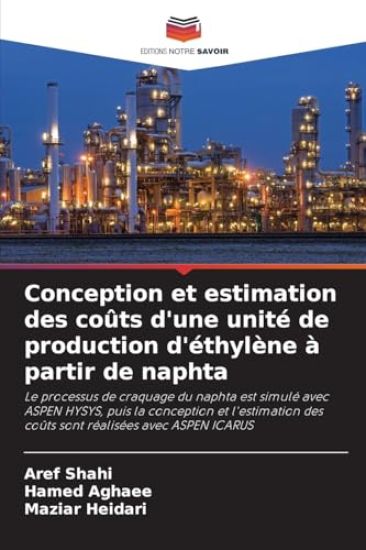
Conception et estimation des coûts d'une unité de production d'éthylène à partir de naphta
L' thyl ne est largement utilis dans l'industrie chimique, et sa production mondiale (plus de 109 millions de tonnes en 2006) d passe celle de tout autre compos organique. Commercialement, l' thyl ne est obtenu par (1) craquage thermique d'hydrocarbures tels que l' thane, le propane, le butane, le naphta, k ros ne, gazole, p trole brut, etc., (2) du craquage autothermique (oxydation partielle) des hydrocarbures susmentionn s, (3) de la r cup ration partir des gaz r siduaires des raffineries, (4) de la r cup ration partir des gaz de cokerie et (5) de la d shydratation catalytique de l'alcool thylique ou de l' ther thylique. Le proc d de craquage thermique est le proc d le plus int ressant pour produire de l' thyl ne des fins commerciales. Dans le cadre de ce projet, la production d' thyl ne partir de naphta est tudi e. Le naphta, une mati re premi re importante pour la production d' thyl ne, est un ensemble de produits interm diaires liquides issus du raffinage du p trole. Il s'agit d'un m lange d'hydrocarbures dont le point d' bullition est compris entre 30 et 200 C. Il est introduit dans le four de craquage du naphta.
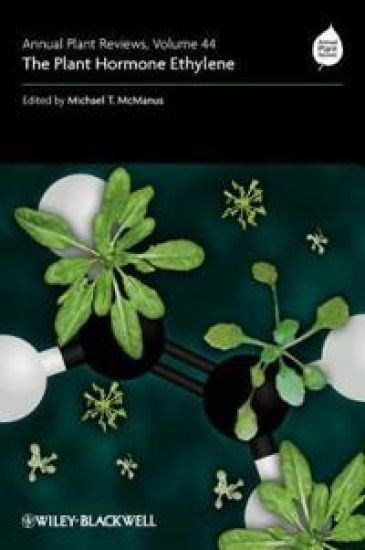
Annual Plant Reviews, The Plant Hormone Ethylene

Annual Plant Reviews, The Plant Hormone Ethylene

Michael T. McManus

Wiley-Blackwell (an imprint of John Wiley Sons Ltd)
2012
sidottu
The plant hormone ethylene is one of the most important, being one of the first chemicals to be determined as a naturally-occurring growth regulator and influencer of plant development. It was also the first hormone for which significant evidence was found for the presence of receptors. This important new volume in Annual Plant Reviews is broadly divided into three parts. The first part covers the biosynthesis of ethylene and includes chapters on S-adenosylmethionine and the formation and fate of ACC in plant cells. The second part of the volume covers ethylene signaling, including the perception of ethylene by plant cells, CTR proteins, MAP kinases and EIN2 / EIN3. The final part covers the control by ethylene of cell function and development, including seed development, germination, plant growth, cell separation, fruit ripening, senescent processes, and plant-pathogen interactions. The Plant Hormone Ethylene is an extremely valuable addition to Wiley-Blackwell's Annual Plant Reviews. With contributions from many of the world's leading researchers in ethylene, and edited by Professor Michael McManus of Massey University, this volume will be of great use and interest to a wide range of plant scientists, biochemists and chemists. All universities and research establishments where plant sciences, biochemistry, chemistry, life sciences and agriculture are studied and taught should have access to this important volume.
Azinphos-methyl, Disulfoton, Esfenvalerate, Ethylene oxide, Fenvalerate, et al. - Tolerance Actions (US Environmental Protection Agency Regulation) (E
Azinphos-methyl, Disulfoton, Esfenvalerate, Ethylene oxide, Fenvalerate, et al. - Tolerance Actions (US Environmental Protection Agency Regulation) (EPA) (2018 Edition) The Law Library presents the complete text of the Azinphos-methyl, Disulfoton, Esfenvalerate, Ethylene oxide, Fenvalerate, et al. - Tolerance Actions (US Environmental Protection Agency Regulation) (EPA) (2018 Edition). Updated as of May 29, 2018 EPA is revoking certain tolerances for the fungicides prothioconazole and thiabendazole; the herbicide primisulfuron-methyl; and the insecticides azinphos-methyl, disulfoton, esfenvalerate, fenvalerate, and phosalone; the plant growth regulator 1-naphthaleneacetic acid; and the antimicrobial/insecticidal agent ethylene oxide. Also, EPA is modifying certain tolerances for the insecticides disulfoton, esfenvalerate, and phosmet; and the plant growth regulator 1-naphthaleneacetic. In addition, EPA is establishing new tolerances for the insecticides disulfoton, esfenvalerate, and phosmet; and the antimicrobial/insecticidal agent ethylene oxide and ethylene chlorohydrin (a reaction product formed during the fumigation/sterilization process). The regulatory actions finalized in this document are in follow-up to the Agency's reregistration program under the Federal Insecticide, Fungicide, and Rodenticide Act (FIFRA), and tolerance reassessment program under the Federal Food, Drug, and Cosmetic Act (FFDCA), section 408(q). This book contains: - The complete text of the Azinphos-methyl, Disulfoton, Esfenvalerate, Ethylene oxide, Fenvalerate, et al. - Tolerance Actions (US Environmental Protection Agency Regulation) (EPA) (2018 Edition) - A table of contents with the page number of each section