Kirjojen hintavertailu. Mukana 11 244 527 kirjaa ja 12 kauppaa.

Kirjahaku

Etsi kirjoja tekijän nimen, kirjan nimen tai ISBN:n perusteella.

1000 tulosta hakusanalla Eugene Bagger

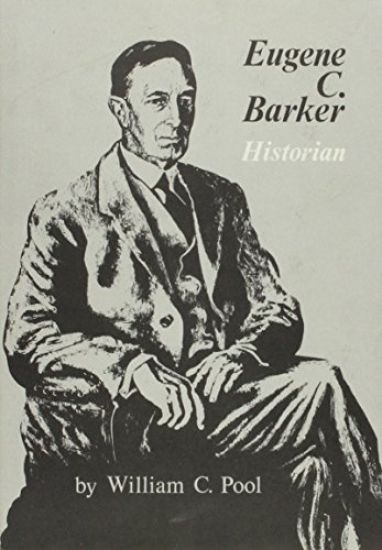
Eugene C. Barker: Historian

Eugene C. Barker: Historian

Pool- W

Texas State Historical Association,U.S.
1971
sidottu
Eugene C. Barker, one of the most influential historians to teach at the University of Texas, has been described as "a granite monolith," "half sabre-toothed tiger and half St. Francis of Assisi," with "a mind like a surgeon's scalpel." The late William C. Pool, Barker's former student, presents a vivid portrait of Barker from knowledge-hungry youth to administrator, professor, leader, author, and historian.
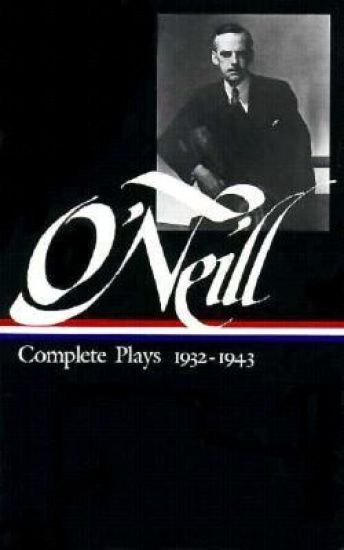
Eugene O'Neill: Complete Plays Vol. 3 1932-1943 (LOA #42)
The third and final volume of the first complete collection of Eugene O'Neill's dramatic writings (available exclusively from The Library of America) contains eight plays written between 1932 and 1943, when illness forced him to stop writing. They represent the crowning achievements of his career. O'Neill described Ah, Wilderness as "the way I would have liked my boyhood to have been." Set in the summer of 1906, it affectionately depicts the warm, close family of sixteen-year-old Richard Miller and the innocence with which he faces the trials of first love, strong drink, and sexual temptation. John Loving, hero of Days Without End, is split by his lack of faith into two selves: John and his Mephistophelian double Loving, who wears John's death mask and plots his destruction. Burdened by guilt but desperately wanting to love, John struggles with Loving's nihilistic hatred in what O'Neill termed his "modern miracle play." In A Touch of the Poet, Irish tavern-keeper Con Melody is drawn by his proud past as a Byronic cavalry hero of the Napoleonic Wars toward a fatal confrontation with his wealthy Yankee neighbors, the Harfords. Throughout More Stately Mansions, the idealistic yet cunning Simon Harford, his wife, Sara Melody Harford, and his mother, Deborah, continually shift roles and alliances as they engage in an eerie psychological and sexual battle for possession of each other and their own maddeningly elusive dreams. This volume presents the never-before-published complete text of the revised typescript for this unfinished play. The derelict inhabitants of Harry Hope's saloon in The Iceman Cometh find solace in their comradeship until their drifting calm is destroyed by the visiting salesman Theodore Hickey, who insists that they abandon all "pipe dreams" and face the truth about their lives. O'Neill carefully orchestrates the voices of over a dozen characters to form a chorus of overwhelming despair and surprising compassion. Hughie is a one-act dialogue between a reminiscing gambler and a weary hotel night clerk about the promise and loneliness of city life. Long Day's Journey into Night unsparingly dissects the pain, rage, guilt, and love that drive a wounded family apart and bind it together. In their summer home the four Tyrones--James, a proud actor haunted by poverty, his devout, morphine-addicted wife, Mary, and their sons, Jamie, a cynical drunkard, and Edmund, an aspiring poet--slowly unveil the truth about their lives until they can no longer hope either to save or to escape one another. Published and produced posthumously, it won O'Neill his fourth Pulitzer Prize. In its elegiac coda, A Moon for the Misbegotten, Jamie Tyrone seeks the peace that has long eluded him in the arms of sharp-tongued Josie Hogan. The volume concludes with "Tomorrow" (1917), O'Neill's only published short story. LIBRARY OF AMERICA is an independent nonprofit cultural organization founded in 1979 to preserve our nation's literary heritage by publishing, and keeping permanently in print, America's best and most significant writing. The Library of America series includes more than 300 volumes to date, authoritative editions that average 1,000 pages in length, feature cloth covers, sewn bindings, and ribbon markers, and are printed on premium acid-free paper that will last for centuries.
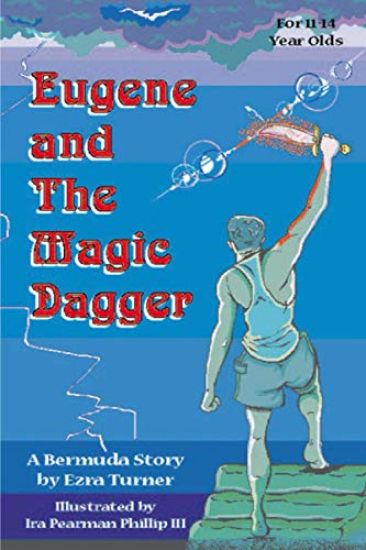
Eugene and the Magic Dagger

Eugene and the Magic Dagger

Ezra Turner

Bermuda Library
2020
nidottu
Ezra has written a skillful tale, full of Bermudian adventures, incorporating man's quest to find the magical city of Atlantic. Bermudian children love the water and so many of them have been known to spend the whole summer swimming, fishing and diving from "the rocks" or along our beautiful beaches. Ezra captures many of Eugene's adventures in a very colourful descriptive way reminding us of our adventures as children from Dockyard to St. George.
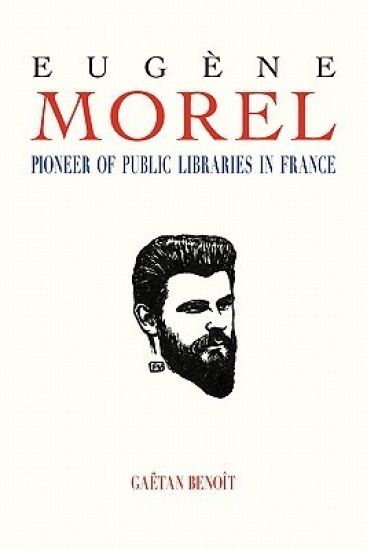
Eugene Morel

Eugene Morel

Gaetan Benoit

Library Juice Press
2008
pokkari
Eug ne Morel (1869-1934) was a French Librarian who, along the lines of such eminent public library pioneers as Edward Edwards and Melvil Dewey, made a remarkable contribution towards the development of public librarianship in France. Morel was genuinely interested in all facets of librarianship and played a dominant role in molding the development of most of them. His writings on the profession made a fitting testimony to the life's work of a very active library pioneer. His relationship with the British and American Library Associations helped to bring closer the French professional association to both of them. Morel had an "avant-garde" view on the automation of libraries and was the first to encourage the employment of women in French libraries. This book is the first biography of Eugene Morel to appear in the English language.
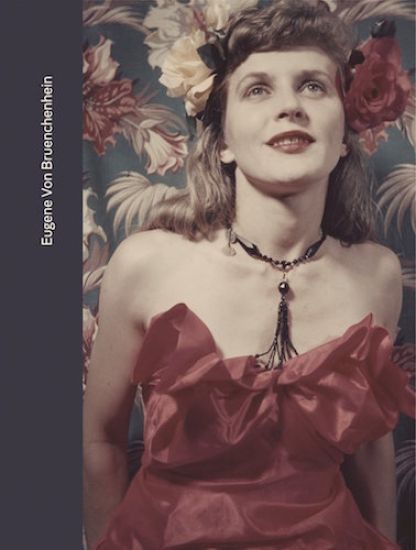
Eugene Von Bruenchenhein: King of Lesser Lands
"Von Bruenchenhein belongs among the great American outsider artists." -Roberta Smith, The New York Times King of Lesser Lands traces the fugitive career of Eugene Von Bruenchenhein (1910–83), a prolific creator of a diverse range of distinctive images and sculptural objects, who produced his art in private over a period of about 50 years at his home in Milwaukee, Wisconsin. His large and unusual body of work was not discovered until after he died. In 1939, at the age of 29, Von Bruenchenhein met Evelyn Kalka. She became his wife and muse. Evelyn, who was nicknamed “Marie,” served as his model and the subject of thousands of erotic photo-portraits, which he shot and printed himself. For these images, which emulated girlie-magazine pinups with an offbeat air, Von Bruenchenhein designed and created his own background sets and costumes for Marie. Around the mid-1950s, the artist began to make abstract paintings using his fingers or sticks, combs, leaves and other makeshift utensils to push oil paint around the surfaces of Masonite boards or cardboard taken from packing boxes at the bakery where he worked. Von Bruenchenhein’s abstract explosions of vibrant color evoke the forms of strange plants or fantasy creatures and architectural structures. Later, Von Bruenchenhein used clay to produce home-fired crowns and vases, and also created mysterious sculptures resembling towers or thrones with chicken and turkey bones. During his lifetime, only his closest family members and friends knew anything about his artistic pursuits. In 1983, after the artist’s death, one of his friends called the attention of the Milwaukee Art Museum to Von Bruenchenhein’s extraordinary oeuvre. On the occasion of a 2010 survey of his work at the American Folk Art Museum in New York, Roberta Smith wrote in The New York Times: “Von Bruenchenhein belongs among the great American outsider artists whose work came to light or resurfaced in the last three decades of the 20th century.” Smith placed Von Bruenchenhein’s unusual art in the company of that of Henry Darger, Martin Ramírez, Bill Traylor, James Castle and Morton Bartlett.
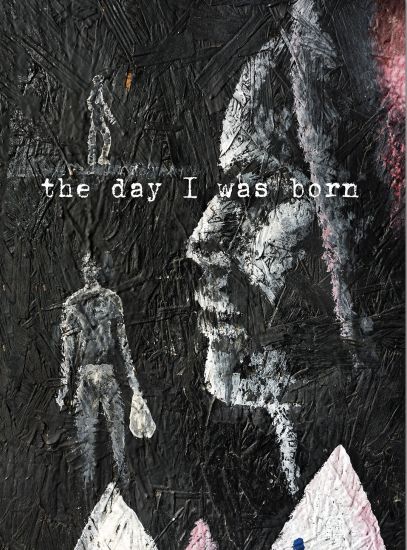
Eugene Richards: The Day I Was Born
A diaristic photographic portrait of the memory-laden Mississippi Delta of Arkansas Fifty years ago, New York–based photographer Eugene Richards (born 1944) worked as a VISTA Volunteer and then as a reporter in the Arkansas Delta. Even after the newspaper he helped found closed its doors, Richards kept revisiting the region. In early 2019 he returned to the small town of Earle, Arkansas, where, on a September night in 1970, peaceful protesters were attacked by a crowd of white men and women brandishing sticks and firing guns. Crossing the tracks from what had been the Black side of the town into the white side of the town, Richards happened upon an old appliance store. On the shadowy and cracked walls of the building were painted the faces of Jesus, Malcolm X, H. Rap Brown, Angela Davis, Dr. Martin Luther King and John Brown—the faces of revolution, reconciliation, change. In the months that followed, the old store became for Richards a kind of portal, a doorway into the region’s volatile history and into the lives of those who lived, struggled, raised families, grew old and died there. The Day I Was Born interweaves full-bleed images of Earle with deeply personal narratives in the words of people who live there.
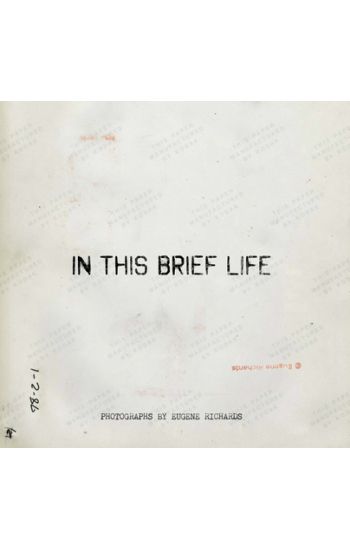
Eugene Richards: In This Brief Life
A half-century of social documentary from the acclaimed American photographer, with previously unseen works In this deeply personal book, Eugene Richards (born 1944) excavated a collection of more than 50 years of mostly unseen photographs—from his earliest pictures of sharecropper life in the Arkansas Delta to the present. In the midst of a fraught political climate—pandemic, rise in gun violence, polarized politics and the devastation in Beirut—Richards found himself meditating on what it means to make socially conscious documentary photography today. Upon his son’s suggestion, he began to post his photographs on social media, sifting through dusty binders of contact sheets—photographs taken for a community newspaper, on assignment for magazines, as a volunteer for human rights organizations, when wandering alone and at home with his family—and scanning the negatives. In This Brief Life compiles these works, along with personal commentary and extensive captions by the photographer.
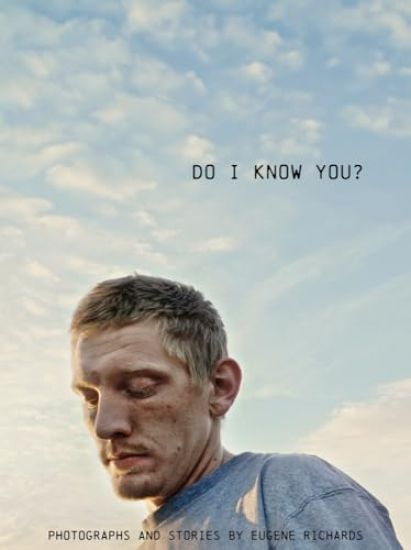
Eugene Richards: Do I Know You?
A veteran documentarian using images, personal texts and interviews to delve into the lives of Americans After meeting people during his travels, the American documentary photographer Eugene Richards (born 1944) learns what he can about their lives, then photographs them as they are, without direction or artifice. As to why people allow him into their lives, some may sense that by speaking with him, they might better understand the things that they’ve experienced: their losses, hopes, fears, disappointments, joys. Being photographed can be a means of being lifted out of the shadows, acknowledged as existing, as alive. Do I Know You? is a compendium of 24 photographic and textual stories that speak of the diversity of America, of survival, the shadows cast by slavery, crime, imprisonment, blind hatred, incomprehensible loss, the longing for love and what it means to be beautiful. Richards has published 20 books of photography, including the recent Remembrance Garden, a deeply personal look at Brooklyn’s Green-Wood Cemetery.
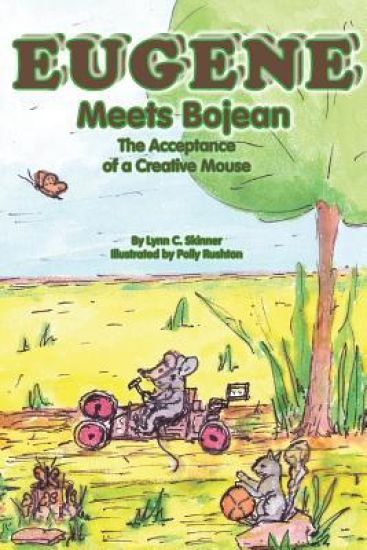
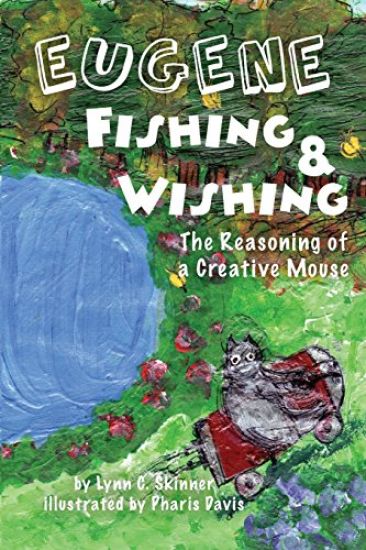
Eugene Fishing & Wishing: The Reasoning of a Creative Mouse
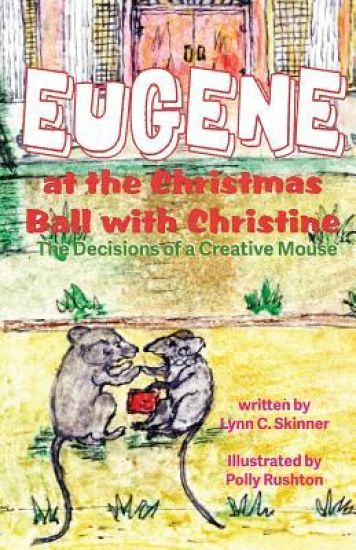
Every hobby is not appropriate for every type of character. Eugene, the mouse, must discover interesting lessons about this activity.Other books by this author: Eugene and His Go-Kart Machine: A Tale of a Creative MouseEugene at the Christmas Ball with Christine: The Decisions of a Creative MouseEugene Meets Bojean: The Acceptance of a Creative Mouse
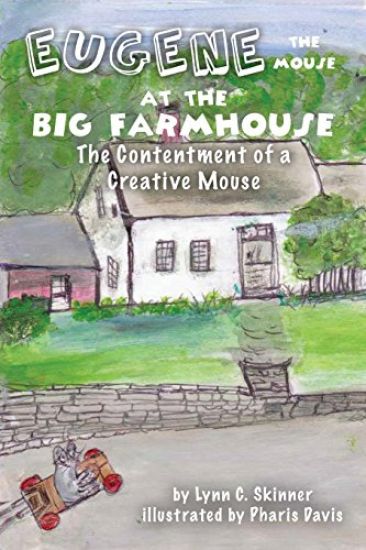
Eugene the Mouse at the Big Farmhouse: The Contentment of a Creative Mouse
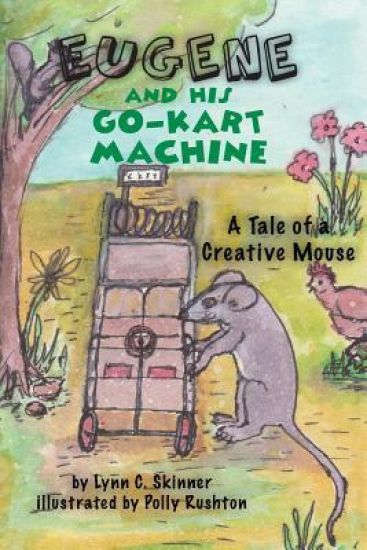
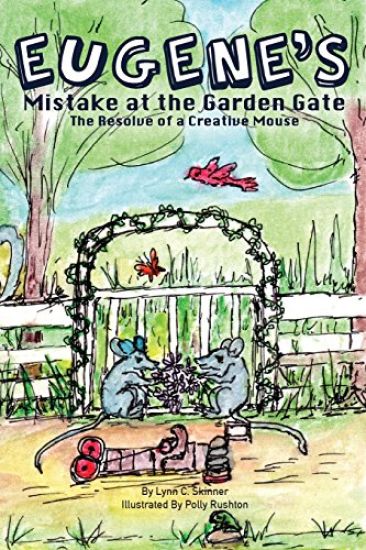
Eugene, the mouse, likes to drive his go-kart. On a recent ride, he makes an interesting discovery and then must make an important decision.Other books by this author: Eugene at the Christmas Ball with Christine: The Decisions of a Creative MouseEugene Meets Bojean: The Acceptance of a Creative MouseEugene and His Go-Kart Machine: A Tale of a Creative MouseEugene's Mistake at the Garden Gate: The Resolve of a Creative MouseEugene Fishing and Wishing: The Reasoning of a Creative Mouse
Eugene Field

Eugene Field

Slason Thompson

Blurb
2025
pokkari
"In the loving "Memory" which his brother Roswell contributed to the "Sabine Edition" of Eugene Field's "Little Book of Western Verse," he says: "Comradeship was the indispensable factor in my brother's life. It was strong in his youth: it grew to be an imperative necessity in later life. In the theory that it is sometimes good to be alone he had little or no faith." From the time of Eugene's coming to Chicago until my marriage, in 1887, I was his closest comrade and almost constant companion. At the Daily News office, for a time, we shared the same room and then the adjoining rooms of which I have spoken."
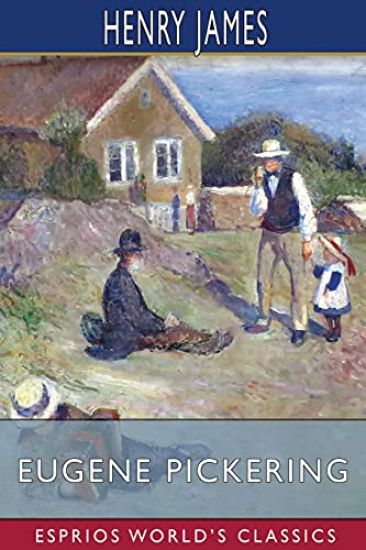
Eugene Pickering (Esprios Classics)
Henry James OM (1843-1916) was an Anglo-American novelist. He was one of the most important literary people of the late 19th century. James was the son of Henry James Senior, a clergyman, and the brother of William James, the psychologist and philosopher. He grew up mostly in the United States but spent the majority of his life in England. He became a British citizen in 1915. His sister, Alice James, was also a writer. In his novels, he wrote from the viewpoint of one of the characters. Some literary critics compared this to impressionist painting. In his own literary criticism, James insisted that writers be allowed the greatest possible freedom in how they looked at the world.