Kirjojen hintavertailu. Mukana 12 390 323 kirjaa ja 12 kauppaa.

Kirjahaku

Etsi kirjoja tekijän nimen, kirjan nimen tai ISBN:n perusteella.

967 tulosta hakusanalla Ezekiel Cheever

Ezekiel H/B Dsb

Ezekiel H/B Dsb

WESTMINSTER/JOHN KNOX PRESS,U.S.
1983
sidottu
This illuminating study enables the reader to better understand the vocation and message of an extraordinary prophet. The message Ezekiel delivered to the people of Babylon centered on the holiness of God. Even though he foretold doom and judgement, the prophet held out the promise of hope, based on the continuing mercy and forgiveness of God.Carrying forward brilliantly the pattern established by Barclay's New Testament series, The Daily Study Bible has been extended to cover the entire Old Testament as well. Invaluable for individual devotional study, for group discussion, and for classroom use, The Daily Study Bible provides a useful, reliable, and eminently readable way to discover what the Scriptures were saying then and what God is saying today.
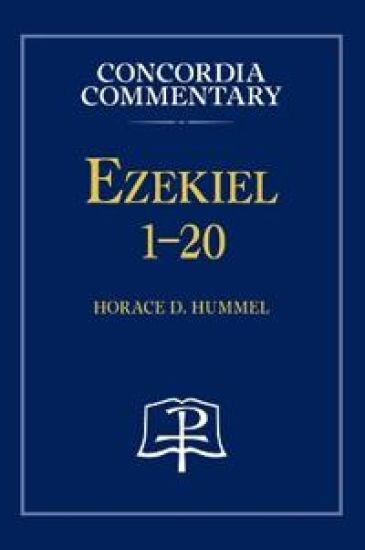
Ezekiel 21-48 - Concordia Commentary

Ezekiel 21-48 - Concordia Commentary

Horace Hummel

Concordia Publishing House
2007
sidottu
This commentary expounds upon the later chapters of Ezekiel according to the book's classic prophetic outline. After judgment falls on Israel, oracles against the Gentile nations bring them under God's judgment too. But God's purpose is to lead all people to repentance and salvation through faith. God promises forgiveness, restoration, and resurrection through a new David, the Shepherd who will unite all believers. The book ends with an extended vision of the new temple and rejuvenated land in the new earth, where God's redeemed people shall dwell under their Prince forever.About the SeriesThe Concordia Commentary Series: A Theological Exposition of Sacred Scripture is written to enable pastors and teachers of the Word to proclaim the Gospel with greater insight, clarity, and faithfulness to the divine intent of the biblical text.This landmark work will cover all the canonical books of the Old and New Testaments, interpreting Scripture as a harmonious unity centered in the person and work of Jesus Christ. Every passage bears witness to the Good News that God has reconciled the world to Himself through our Lord's life, death, and resurrection.The commentary fully affirms the divine inspiration, inerrancy, and authority of Scripture as it emphasizes "that which promotes Christ" in each pericope.Authors are sensitive to the rich treasury of language, imagery, and themes found throughout Scripture, including such dialectics as Law and Gospel, sin and grace, death and new life, folly and wisdom, demon possession and the arrival of the kingdom of God in Christ. Careful attention is given to the original Hebrew, Aramaic, or Greek. Further light is shed on the text from archaeology, history, and extra-biblical literature. Finally, Scripture's message is applied to the ongoing life of the church in terms of ministry, worship, proclamation of the Word, Baptism, the Lord's Supper, confession of the faith--all in joyful anticipation of the life of the world to come.
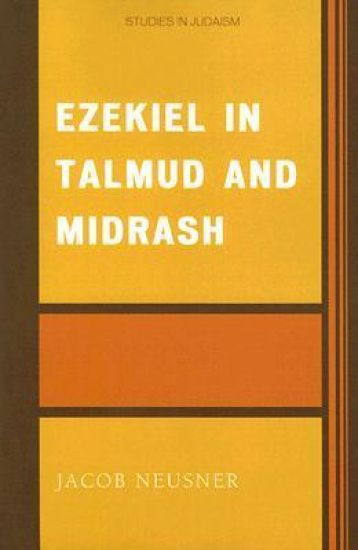
Ezekiel in Talmud and Midrash

Ezekiel in Talmud and Midrash

Jacob Neusner

University Press of America
2007
nidottu
The Rabbis of classical Judaism, in the first six centuries of the Common Era, commented on the teachings of ancient Israel's prophets and shaped, as much as they were shaped by, prophecy. They commented on much of the Scriptural heritage and they made it their own. This collection of the Rabbinic comments on biblical books makes easily accessible the Rabbinic reading of the prophetic heritage and opens the way to the study of how normative Judaism responded to the challenge of the prophetic writings.
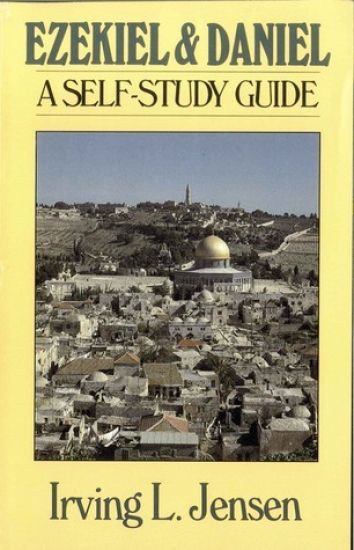
Ezekiel and Daniel

Ezekiel and Daniel

Jensen Irving L.

Moody Publishers
1990
nidottu
Exploring the Bible's message is easy and exciting with these complete do-it-yourself Bible study guides. Each study includes helpful outlines, charts, maps, diagrams and explanations. For personal, group or classroom use.
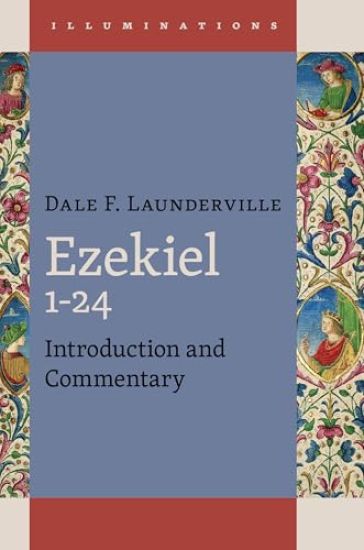
Ezekiel 1-24: Introduction and Commentary

Ezekiel 1-24: Introduction and Commentary

Dale F. Launderville

William B. Eerdmans Publishing Company
2026
sidottu
Explore the historical and theological significance of the book of Ezekiel. Authored by Dale F. Launderville, an expert in Semitics and the Hebrew Bible, this cutting-edge commentary provides scholars, teachers, and preachers with essential resources for understanding Ezekiel 1-24. In addition to discussing key issues of language, methodology, structure, and theology, Launderville explores the book's history of reception. Throughout, he weaves together scholarly and pastoral concerns. The volume is part of the Eerdmans Illuminations series, in which authors employ the full range of biblical scholarship to illumine the text from a wide variety of perspectives, including the engagement and impact of the text through the centuries. For each chapter of Ezekiel 1-24, Launderville offers translation, interpretation, and commentary. The translation of the Hebrew text is complemented by translations of the Old Greek, Aramaic, Syriac, and Latin texts. Within the interpretive section that follows, Launderville includes a subsection entitled "history of consequences," which aims to give an account of how the text of Ezekiel has sparked the imagination of subsequent thinkers, writers, and artists. Each chapter concludes with a section of commentary dedicated to a historical-critical examination of the canonical text. This section is attentive to the history of composition of the Ezekiel text from the sixth to the first century BCE. Cross-cultural influences of the ancient Near Eastern and eastern Mediterranean environments are explored in this section as well. By studying this remarkable volume, readers will become better equipped to make informed contributions to discussions of the book of Ezekiel. They will also become more confident in their understanding of Old Testament prophecy and its relevance to contemporary issues in church and society. This is a vital reference book for ministers, seminary students, and teachers of biblical studies courses.
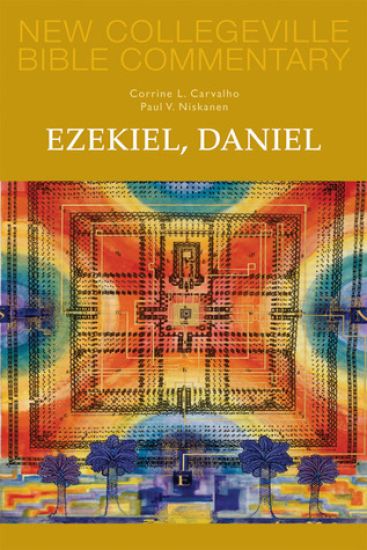
Ezekiel, Daniel

Ezekiel, Daniel

Corrine L. Carvalho; Paul V. Niskanen

Liturgical Press
2012
pokkari
The books of Ezekiel and Daniel provide some of the most memorable stories and images of the Old Testament.Ezekiel, the wild prophet of the Babylonian exile, gave us images of the blazing wheeled throne of God leaving Jerusalem and the valley of dry bones that only God could restore to life. Struggling to prove his authenticity as a prophet, Ezekiel gives hard messages to the people of Israel that predict the fall of Jerusalem and punishment of all the nations. At the heart of the fiery speech and actions, however, is someone trying to explain how Jerusalem could fall and Israel could lose the Promised Land. In the end, there can be no mistake about his message of God's power and the cost of Israel's unfaithfulness.The prophet Daniel's message balances that of Ezekiel's, offering stories of God's faithfulness to those who keep the law. The dramatic stories of the three men in the fiery furnace and Daniel in the lion's den, as well as the account of Susanna and the elders, show God's saving power to those who are faithful. Daniel's message is one of hope for a people living under severe oppression during and after exile. Combining storytelling, prophecy, and apocalyptic, this book puts history in the context of God's larger plan for humanity.
Ezekiel the Priest

Ezekiel the Priest

T. J. Betts

Peter Lang Publishing Inc
2005
sidottu
As one of the most significant figures in ancient Israel, the priest had numerous responsibilities, the most important of which was the exposition of the Mosaic Tora. The ministry of Ezekiel, a prophetic priest, offers a glimpse of how one priest carried out his duties as a custodian of Tora. "Ezekiel the Priest" provides the possibility of a deeper understanding of the pastoral ministry of priests as teachers of God's word during Old Testament times through the example of one ancient Israelite priest."
Ezekiel, Daniel

Ezekiel, Daniel

Kenneth Stevenson; Michael Glerup; Thomas C. Oden

Inter-Varsity Press,US
2008
sidottu
The books of Ezekiel and Daniel are rich in imagery that is taken up afresh in the New Testament. Echoes of Ezekiel—with its words of doom and hope, vision of a new temple, and scroll-eating prophet—are especially apparent in the book of Revelation. Daniel is most notable in supplying terminology and imagery for Jesus of Nazareth's favored self-description as "Son of man," a phrase also found in Ezekiel. The four beasts of Daniel find their counterparts in the lion, ox, man, and eagle of Ezekiel and Revelation. It is no wonder these books, despite the difficulties in interpreting them, took hold on the imagination of the early church. In this Ancient Christian Commentary on Scripture volume, over forty church fathers are cited in the commentary on Ezekiel, some of whom are here translated into English for the first time, but pride of place goes to four significant extant works: the homilies of Origen and Gregory the Great, and the commentaries of Jerome and Theodoret of Cyr, thus bridging East and West, North and South. A similar array of fathers are found within the commentary on Daniel. Extensive comments derive from the works of Theodoret of Cyr, Hippolytus, Jerome, and Isho'dad of Merv, providing a wealth of insight.
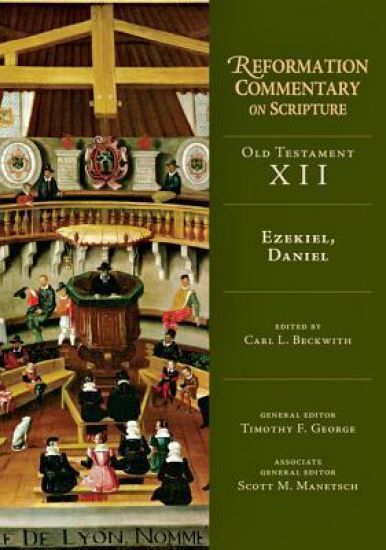
Ezekiel, Daniel

Ezekiel, Daniel

Carl L. Beckwith

Inter-Varsity Press,US
2012
sidottu
The Reformation era revolution in preaching and interpreting the Bible did not occur without keen attention to the Old Testament Scriptures. This is especially true with regard to the Hebrew prophets. Ezekiel and Daniel, replete with startling, unnerving imagery and visions, apocalyptic oracles of judgment and destruction, captivated the reformers as they sought to understand their time and themselves through the lens of Scripture. Equally, these prophetic books underscored the covenantal promises to God's people and the hope of restoration, which the Reformers understood to be the righteousness of Christ made available in faith. Reformation commentary on the prophets Ezekiel and Daniel are windows into the biblical, theological and pastoral minds of the reformers as they engage the details of the texts, make theological judgments and apply fresh reading of Scripture to their contemporary hearers. Familiar passages, such as Ezekiel's dazzling vision of the wheels, the building of the temple, or Daniel's four beasts, are given new layers and textures. This volume collects the comments of the monumental figures like Luther, Calvin and Melancthon, alongside many lesser known and read thinkers, such as Heinrich Bullinger, Hans Denck, Giovanni Diodati, Johann Gerhard, John Mayer, Matthew Mead, Johann Oecolampadius, Jakob Raupius, Johann Wigand and Andrew Willet. Several beloved English Puritans are included as well: Richard Baxter, John Bunyan, Thomas Manton and John Owen. The wealth of Reformation interpretation on these books of Scripture is brought together for the first time.
Ezekiel, Daniel

Ezekiel, Daniel

Kenneth Stevenson; Michael Glerup; Thomas C. Oden

IVP Academic
2019
nidottu
The books of Ezekiel and Daniel are rich in imagery that is taken up afresh in the New Testament. Echoes of Ezekiel—with its words of doom and hope, vision of a new temple, and scroll-eating prophet—are especially apparent in the book of Revelation. Daniel is most notable in supplying terminology and imagery for Jesus of Nazareth's favored self-description as "Son of man," a phrase also found in Ezekiel. The four beasts of Daniel find their counterparts in the lion, ox, man, and eagle of Ezekiel and Revelation. It is no wonder these books, despite the difficulties in interpreting them, took hold on the imagination of the early church. In this Ancient Christian Commentary on Scripture volume, over forty church fathers are cited in the commentary on Ezekiel, some of whom are here translated into English for the first time, but pride of place goes to four significant extant works: the homilies of Origen and Gregory the Great, and the commentaries of Jerome and Theodoret of Cyr, thus bridging East and West, North and South. A similar array of fathers are found within the commentary on Daniel. Extensive comments derive from the works of Theodoret of Cyr, Hippolytus, Jerome, and Isho'dad of Merv, providing a wealth of insight.