
Kirjahaku
Etsi kirjoja tekijän nimen, kirjan nimen tai ISBN:n perusteella.
287 tulosta hakusanalla Farnaz Zirakbash
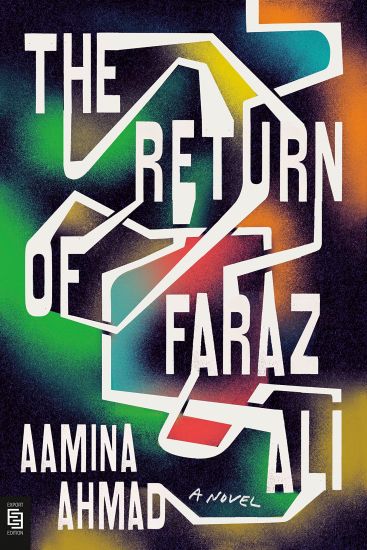
'Stunning, not only on account of the author's talent, of which there is clearly plenty, but also in its humanity' New York Times Book ReviewA spellbinding debut set in Pakistan during the anarchic late '60s - a multi-layered tale of family, identity and the politics of power in a caste-ridden society. As riots erupt on the streets of Lahore, Inspector Faraz returns to his birthplace, the red-light district in the ancient walled city where women still pass on the profession of courtesan to their daughters. Plucked from it as a small boy by his influential father, Faraz has kept his roots well hidden. Now his father has sent him back: to cover up the murder of a young courtesan. It should be a simple task in the marginalised community, but Faraz finds himself unable to obey orders or to resist searching for the mother and sister he left behind. Chasing down the walled city's labyrinthine alleys for answers that risk shattering his carefully constructed existence, he is unaware that his sister faces having to return too, and to a life she thought she had escaped. As riveting as it is thought-provoking, as profoundly intimate as it is wide in scope, The Return of Faraz Ali poses a timeless question: whom do we choose to protect, and at what price?
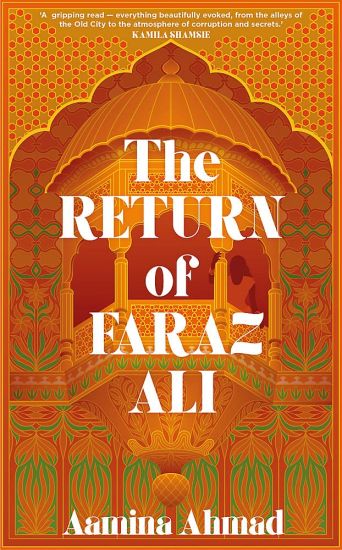
'Stunning, not only on account of the author's talent, of which there is clearly plenty, but also in its humanity' New York Times Book Review>br> 'A gripping read - everything beautifully evoked, from the alleys of the Old City to the atmosphere of corruption and secrets.' Kamila Shamsie A spellbinding debut set in Pakistan during the anarchic late '60s - a multi-layered tale of family, identity and the politics of power in a caste-ridden society. As riots erupt on the streets of Lahore, Inspector Faraz returns to his birthplace, the red-light district in the ancient walled city where women still pass on the profession of courtesan to their daughters. Plucked from it as a small boy by his influential father, Faraz has kept his roots well hidden. Now his father has sent him back: to cover up the murder of a young prostitute. It should be a simple task in the marginalised community, but Faraz finds himself unable to obey orders or to resist searching for the mother and sister he left behind. Chasing down the walled city's labyrinthine alleys for answers that risk shattering his carefully constructed existence, he is unaware that his sister faces having to return too, and to a life she thought she had escaped. As riveting as it is thought-provoking, as profoundly intimate as it is wide in scope, The Return of Faraz Ali poses a timeless question: whom do we choose to protect, and at what price?
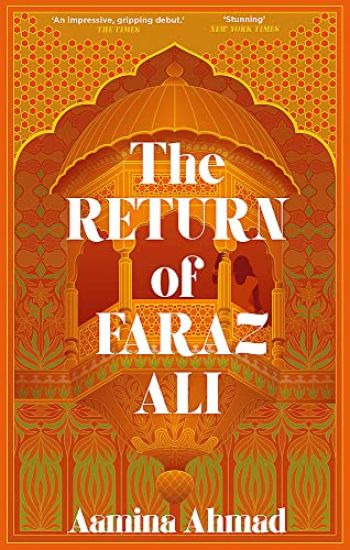
A spellbinding debut set in Pakistan during the political upheavals of the late '60s - a propulsive tale of family, secrets and survival in a caste-ridden, patriarchal society.
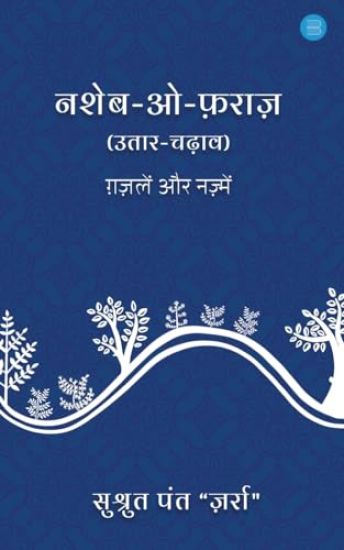
"Nasheb-o-Faraaz" means "Ups and Downs". This book is a selection of gazals and nazms penned by Sushrut Pant "Zarraa" written over the last 15 years in 5 countries. The script of this book is Devanagri and the language is Hindustani - a seamless fusion of Hindi and Urdu. "Zarra" has chosen for you 111 of his poems that convey a myriad of emotions, opinions and questions inspired by his ups and downs in life. He places this labour of love in your hands for your reading pleasure and feedback. You can contact Zarraa at [email protected] to give your invaluable opinion and also connect with him at facebook id "Zarraa's Shayari".
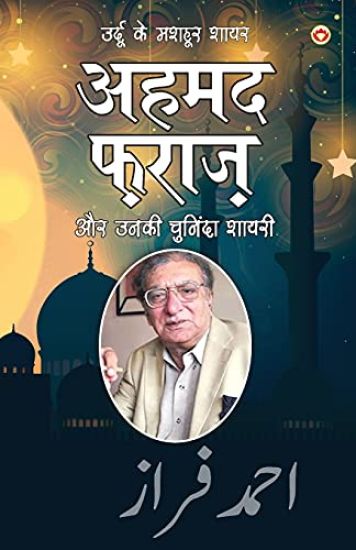
Urdu Ke Mashhoor Shayar Ahmad Faraz Aur Unki Chuninda Shayari (उर्दू के मशहूर शायर अहमद फ़राज़ è
Narender Govind Behl
DIAMOND POCKET BOOKS
2021
pokkari
Urdu Ke Mashhoor Shayar Ahmad Faraz Aur Unki Chuninda Shayari (????? ?? ????? ???? ???? ?????? è
Narender Govind Behl
diamond pocket books pvt ltd
2023
sidottu
Confessions of a Prohibitionist: An Address by Henry W. Farnam Before the Rotary Club of New Haven, October 3, 1922
Henry W. Farnam
Literary Licensing, LLC
2012
nidottu
![The Eternity Effect [The Original Unabridged, Unedited version] (The Adventures In Farnar and Other Lands)](/covers/9781466332133.jpg)
The Eternity Effect [The Original Unabridged, Unedited version] (The Adventures In Farnar and Other Lands)
Marc Evan Aupiais
Createspace Independent Publishing Platform
2011
nidottu
{The Eternity Effect by M. E. (Marc Evan) / Marc Aupiais is the first novel in the Series "The Adventures in Farnar and Other Lands": Note, this is the version of the book written as the author intended it, including poetic spellings, even seeming errors and arcanum at times. At the time this was published, a different version of the manuscript was being worked through Which differs at times from the author's intent The book is supposed to reflect how one would read an actual, translated ancient manuscript including errors, much as the bible, and many ancient works had many spelling errors in publication, even many variations. The original concept of the author was to comment on human history, even portray very close to it, and its many ancient manuscripts at times, with the intent of creating perspective of these. Humanity's manuscripts for the great religions, for instance often refer to wind or breath, when referring to God or the spiritual, and if wolves were higher beings such as human beings, the phrase wolfs would exist. There is no direct copying of any ancient manuscript, however at times events are purposely close to those of human history: this is intended to note details afresh, even compare ancient ideas of nationality, causing so much unnecessary strife to modern ideas on foreigners in many cultures, to cause a reader to think, deeply on these, sometimes mysterious or unexplained or unexplainable events. The different nations of Farnar and the groups are not meant to reflect any one culture in a negative sense, but rather ideas of human history and especially at the present time. The Author has dedicated much of his time in study, of history, often with the intent of better describing it in unusual ways. He has decided that this unabridged unedited version of his work be published, that his original intent may be noted, while working on a more refined version that loses some of the intent The author is a South African, Caucasian, and strongly Roman Catholic, however, he is well known for curiosity in study of cultures, and religions across the world; and both the Literals and The Wolves of Farnar are not only based on human history, but on modern culture and conflicts, especially as regards superstition that has caused many unfortunate witch killings and trials in Africa, and violence against foreigners, minorities, and tribal groups: sometimes both for political gain with unfortunate consequences. The novel certainly makes commentary on ancient Judah and Ancient Israel, and on Eastern and Western, European and African cultures, nations and regions in modern times; Facebook: http: //www.facebook.com/pages/The-Eternity-Effect/220623094657505} When Anne's world is destroyed by the Deity, "The Divine Lion", She is sent to Earth, and then to Farnar, to find love, and through the death of perfect sacrifice, Save her world from destruction. She goes first to earth to find love, and brings the Earth People to Farnar, using the Pseudonym Alice Wonderland, In Farnar she is a foreigner, and some think a witch, ... a war breaks out... Which could kill both Alice Wonderland, and her new Earth Human Companions... Kindle ebook description: read at: The Eternity Effect (The Adventures In Farnar and Other Lands) Kindle Edition] Marc Evan Aupiais (Author) http: //www.amazon.com/Eternity-Effect-Adventures-Farnar-ebook/dp/B005MGETZO/ Copyright Marc Aupiais All Rights Reserved
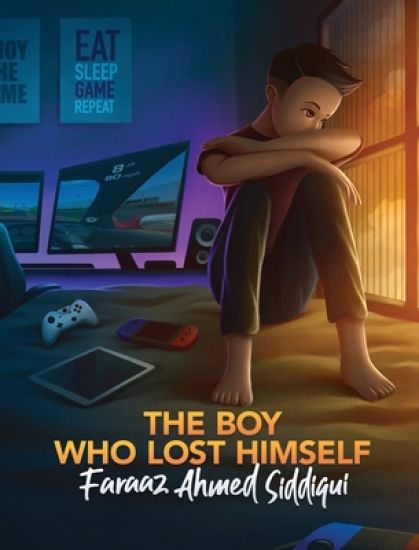
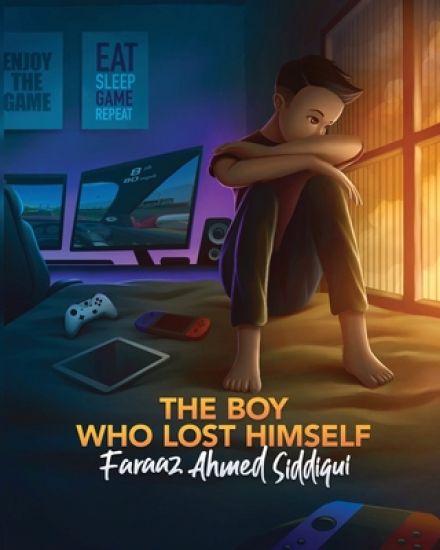
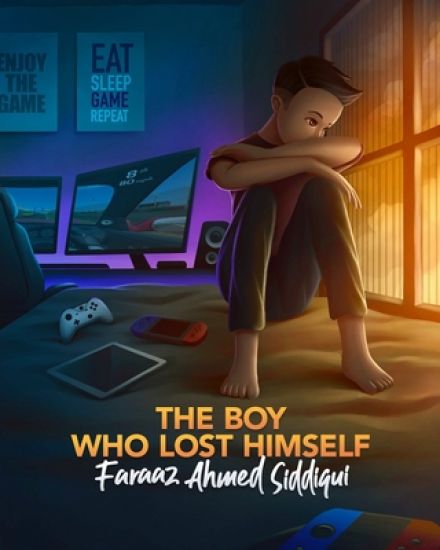
A very relatable and relevant story of an experience of today's children. Themes of peer pressure, greed, instant gratification and gamesWe hope it inspires your child to be their best selves and make the best of the gifts Allah(swt) has blessed them within themselves
This book of poetry is my endeavor to restore the ignited enlightenment among all. The poems versify the supreme being as the alpha and omega for all the worldly pleasures and deadly devastations. As he is the embodiment of everything and is none, we must carry all his virtues of selflessness, generosity, and truth at all times and spread the goodness of righteousness among all corners of the world.
There are many ways of living religiously informed ethical Muslim lives In this book, the author presents two important accounts, one by the 9th century moral pedagogue, al-Harith al-Muhasibi (d. 857) and the other by 20th century Kurdish Quran scholar, Said Nursi (d. 1960), of what the psychic states and moral subjectivity of an authentic, ideal Muslim ought to look like in everyday life. The book analyzes their accounts of the nature of and the discursive practices implicated in the self-production, of what the author calls ideal Muslim subjects. The book draws on Foucault's insights about ethics and the practices of self-care, to examine Muslim discourses in a way that enriches contemporary discussions about identity, individuality, community, authority, agency and virtue in the fields of religious ethics, Islamic studies and Islamic ethics. The author deepens our understanding of the fluidity and fragility of both the more familiar obligation-centered ethics in Islam and the less familiar, belief-centered mode of Muslim ethical life.
What forms can a religiously informed, ethical Muslim life take? This book presents two important accounts of ideal Muslim subjectivity, one by 9th century moral pedagogue, al-Harith al-Muhasibi (d. 857) and the other by 20th century Kurdish Quran scholar, Said Nursi (d. 1960). It reconstructs Muhasibi’s and Nursi’s accounts of ideal Muslim consciousness and analyzes the discursive practices implicated in its formation and expression. The book discusses the range of psychic states and ethical relations that Muhasibi and Nursi consider critical for living an authentically Muslim life. It highlights the importance of discursive practices in Muslim religious and moral self-production. The author draws on Foucault's insights about ethics and practices of self-care to examine familiar Muslim discourses in ways that enrich contemporary conversations about identity, individuality, community, authority, moral agency and virtue in the fields of religious studies, Islamic studies and Muslim ethics. The book deepens our understanding of the fluidity and fragility of both the more familiar, obligation-centered ethics in Islamic thought and the less familiar, belief-centered modes of religio-moral being.