Kirjojen hintavertailu. Mukana 12 016 292 kirjaa ja 12 kauppaa.

Kirjahaku

Etsi kirjoja tekijän nimen, kirjan nimen tai ISBN:n perusteella.

1000 tulosta hakusanalla Filip Johanson

Dialogic Feedback for High Impact Learning

Dialogic Feedback for High Impact Learning

Filip Dochy; Mien Segers; Simla Arikan

TAYLOR FRANCIS LTD
2022
nidottu
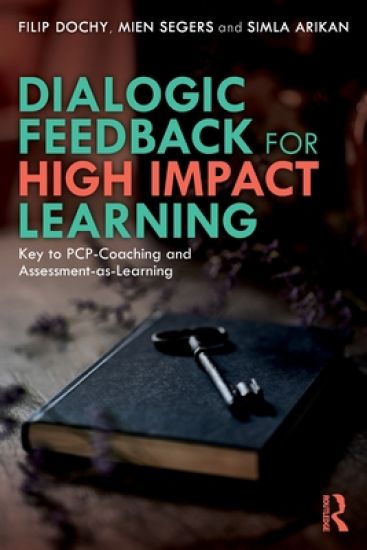
In recent years, the transmission paradigm of learning and teaching is making way for new approaches fuelled in part by the technology and AI revolutions. Learning is seen now more often in the light of connectivism, collaboration and creative problem solving. Dialogic Feedback for High Impact Learning explores this fascinating trend championing learning as a dialogic process between learners and coaches where learning is connecting networks and resources and leads to creative problem solving. It addresses the need for feedback as a dialogue in training for tomorrow, what it entails and how you can best deal with it.The book explores the power of feedback in a high-impact learning setting, where all parties strive for a learning and feedback culture rather than a consumption and testing culture. The authors discuss the feedback process, feedback seeking behaviour and the quality of the feedback message, sharing tips for software and apps to support this process and how teachers and coaches from a variety of settings have integrated the feedback dialogue into their training.This book is intended for everyone who wants to contribute to the learning culture of tomorrow, including learning coaches, managers, education and training professionals, and teachers and trainees at all levels in education.
The Revival of the Left in the Balkans

The Revival of the Left in the Balkans

Filip Balunovic

TAYLOR FRANCIS LTD
2024
sidottu
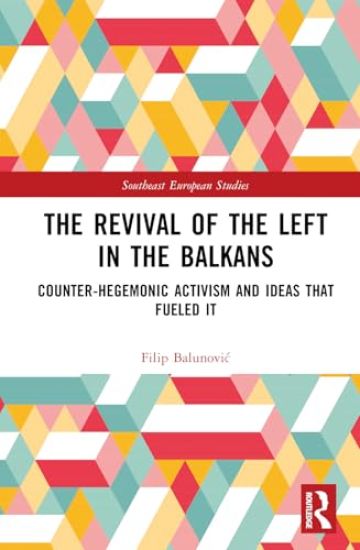
This book explores how the critical discursive breakthrough of social movements in Serbia, Bosnia and Herzegovina, and Croatia disrupted the post-socialist transitional status quo.While critical ideas have long fueled social and political actions, the specifics of their relationship with activism have received limited scholarly attention. This book discusses the emergence of new left actors through the lens of a maturation of consciousness, rather than the opening of structural or other “windows of opportunity,” suggesting the potential for such actors to emerge stemmed from the exposure of a segment of the populace to critical ideas. Questions surrounding the relevance of different types of knowledge in contemporary movements, their origins, dissemination, and the organizational factors shaping their adoption within social movement collectives are central to this work as the author digs into the intricate relationship between critical knowledge and activism, explores the cognitive underpinnings of critical social and political engagement, and examines the influence of both non-theoretical and theoretical knowledge.This book will be of great value to postgraduate students and scholars in social sciences, particularly those studying social movements and Eastern and Southeastern European politics.
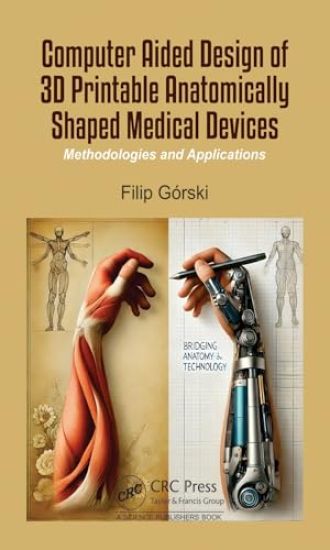
Computer Aided Design of 3D Printable Anatomically Shaped Medical Devices
"Computer Aided Design of 3D Printable Anatomically Shaped Medical Devices: Methodologies and Applications" presents a comprehensive framework for designing 3D printable medical devices tailored to individual anatomies. Bridging engineering and medicine, the book guides readers through advanced CAD techniques, anatomical data acquisition (via 3D scanning and imaging), and additive manufacturing processes, presenting mostly results of author's own and co-authored research. Emphasizing efficiency, customization, and real-world applications, it showcases methodologies developed in collaboration with medical professionals for orthopedic devices, surgical aids, and prosthetics. Case studies offer insights into practical uses, demonstrating how these innovations enhance patient care and surgical outcomes through personalized, accessible solutions.
Cybercrime and the Law

Cybercrime and the Law

Filip Radoniewicz

TAYLOR FRANCIS LTD
2025
sidottu
This book provides a comprehensive and synthetic analysis of the legal acts of the Council of Europe and the European Union affecting regulation of cybercrime in EU countries. Technical aspects relating to cybercrime are also discussed. The work explains core ideas, including background, nomenclature, a definition of computer crime and a history of its criminalisation. It examines the Council of Europe’s Convention on Cybercrime, the first international law act governing the subject, and the additional Protocol to the Convention on Cybercrime, dealing with the criminalisation of computer-generated racist and xenophobic acts. The volume discusses European Union regulations, including applicable European Union laws on cybercrime such as the Council Framework Decision 2005/222/JHA and Directive 2013/40/EU on attacks against information systems, and Directive 2011/93/EU on Combating the Sexual Abuse and Sexual Exploitation of Children and Child Pornography. Finally, the work explores issues of cyberterrorism including the dissemination of terrorist content online. The book will be a valuable resource for academics, researchers and policy-makers working in the areas of Criminal Law, IT Law, EU law and Cyber security.
It's always been in me

It's always been in me

Filip Tomasz Zwozdziak

Independently Published
2019
nidottu
A man awakens without memory only to find out soon that he is about to change the very fabric of reality as we know it. There is, however, a catch-nothing in nature happens without consequences. This time is no different, making the man's journey much more than what he bargained for. The arms' race begins. The organisation against him. Can he trust anyone? Can he trust himself? Is he still himself? A voyage through an invisible metamorphosis takes turn after turn, gets flipped inside and out to finally culminate in the unexpected. Meticulously crafted descriptions to paint the emotional as well as visual bits of the storyline will invite you to sink in. Don't procrastinate, and start peeling the pages away allowing yourself to be the part of Jonah's journey.
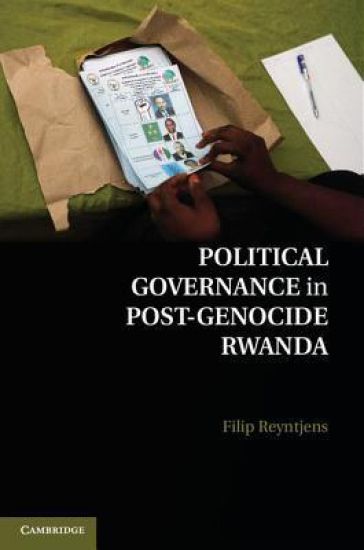
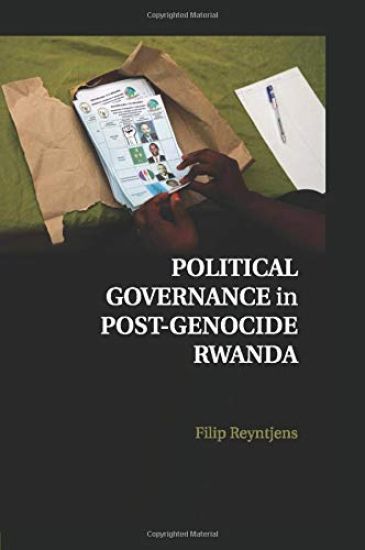
Political Governance in Post-Genocide Rwanda

Political Governance in Post-Genocide Rwanda

Filip Reyntjens

Cambridge University Press
2013
sidottu
Filip Reyntjens's book analyzes political governance in post-genocide Rwanda and focuses on the rise of the authoritarian Rwandan Patriotic Front (RPF). In the aftermath of the 1994 Rwandan genocide, the RPF has employed various means - rigged elections, elimination of opposition parties and civil society, legislation outlawing dissenting opinions, and terrorism - to consolidate power and perpetuate its position as the nation's ruling party. Although many international observers have hailed Rwanda as a 'success story' for its technocratic governance, societal reforms, and economic development, Reyntjens complicates this picture by casting light on the regime's human rights abuses, social engineering projects, information management schemes, and retributive justice system.
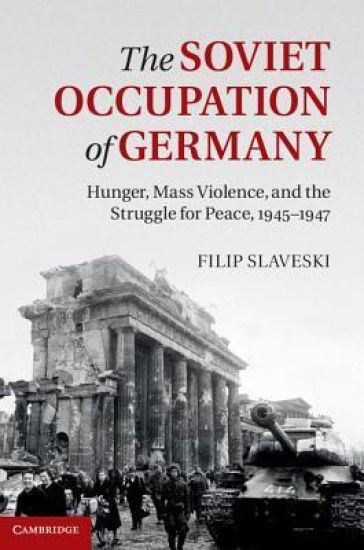
The Soviet Occupation of Germany

The Soviet Occupation of Germany

Filip Slaveski

Cambridge University Press
2013
sidottu
This is a major account of the Soviet occupation of postwar Germany and the beginning of the Cold War. Dr Filip Slaveski shows how in the immediate aftermath of war the Red Army command struggled to contain the violence of soldiers against German civilians and, at the same time, feed and rebuild the country. This task was then assumed by the Soviet Military Administration in Germany (SVAG) which was established to impose order on this chaos. Its attempt, however, intensified the battle for resources and power among competing occupation organs, especially SVAG and the army, which spilled over from threats and sabotage into fighting and shootouts in the streets. At times, such conflicts threatened to paralyse occupation governance, leaving armed troops, liberated POWs and slave labourers free to roam. SVAG's successes in reducing the violence and reconstructing eastern Germany were a remarkable achievement in the chaotic aftermath of war.
Political Governance in Post-Genocide Rwanda

Political Governance in Post-Genocide Rwanda

Filip Reyntjens

Cambridge University Press
2015
pokkari
Filip Reyntjens's book analyzes political governance in post-genocide Rwanda and focuses on the rise of the authoritarian Rwandan Patriotic Front (RPF). In the aftermath of the 1994 Rwandan genocide, the RPF has employed various means - rigged elections, elimination of opposition parties and civil society, legislation outlawing dissenting opinions, and terrorism - to consolidate power and perpetuate its position as the nation's ruling party. Although many international observers have hailed Rwanda as a 'success story' for its technocratic governance, societal reforms, and economic development, Reyntjens complicates this picture by casting light on the regime's human rights abuses, social engineering projects, information management schemes, and retributive justice system.
Remaking Ukraine after World War II

Remaking Ukraine after World War II

Filip Slaveski

Cambridge University Press
2024
pokkari
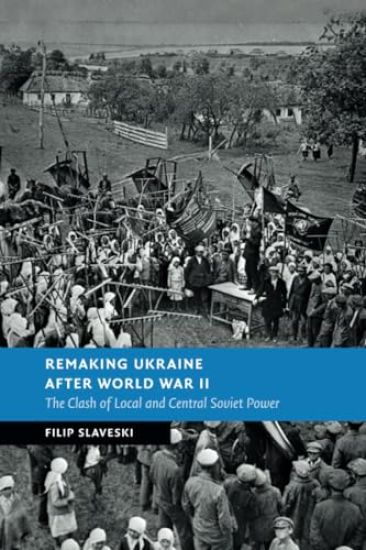
Ukraine was liberated from German wartime occupation by 1944 but remained prisoner to its consequences for much longer. This study examines Soviet Ukraine's transition from war to 'peace' in the long aftermath of World War II. Filip Slaveski explores the challenges faced by local Soviet authorities in reconstructing central Ukraine, including feeding rapidly growing populations in post-war famine. Drawing on recently declassified Soviet sources, Filip Slaveski traces the previously unknown bitter struggle for land, food and power among collective farmers at the bottom of the Soviet social ladder, local and central authorities. He reveals how local authorities challenged central ones for these resources in pursuit of their own vision of rebuilding central Ukraine, undermining the Stalinist policies they were supposed to implement and forsaking the farmers in the process. In so doing, Slaveski demonstrates how the consequences of this battle shaped post-war reconstruction, and continue to resonate in contemporary Ukraine, especially with the ordinary people caught in the middle.
Remaking Ukraine after World War II

Remaking Ukraine after World War II

Filip Slaveski

Cambridge University Press
2021
sidottu
Ukraine was liberated from German wartime occupation by 1944 but remained prisoner to its consequences for much longer. This study examines Soviet Ukraine's transition from war to 'peace' in the long aftermath of World War II. Filip Slaveski explores the challenges faced by local Soviet authorities in reconstructing central Ukraine, including feeding rapidly growing populations in post-war famine. Drawing on recently declassified Soviet sources, Filip Slaveski traces the previously unknown bitter struggle for land, food and power among collective farmers at the bottom of the Soviet social ladder, local and central authorities. He reveals how local authorities challenged central ones for these resources in pursuit of their own vision of rebuilding central Ukraine, undermining the Stalinist policies they were supposed to implement and forsaking the farmers in the process. In so doing, Slaveski demonstrates how the consequences of this battle shaped post-war reconstruction, and continue to resonate in contemporary Ukraine, especially with the ordinary people caught in the middle.
Creating Impact Through Future Learning

Creating Impact Through Future Learning

Filip Dochy; Mien Segers

Routledge
2018
sidottu
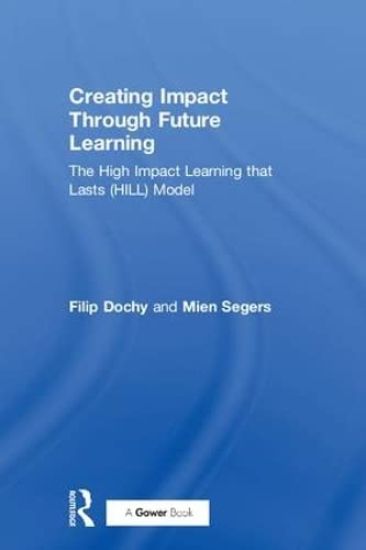
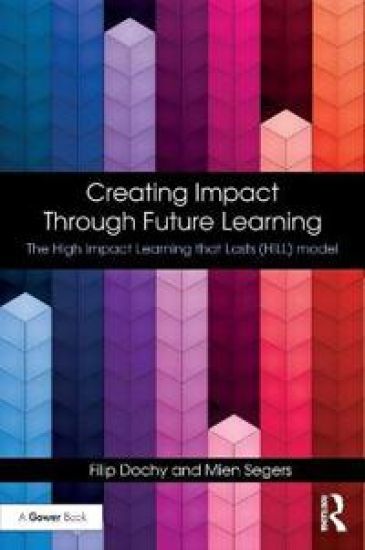
Organisations today operate in a fascinating world where change is constant, fast and continues to accelerate. It is the combination of evolving developments such as technological advancements, globalisation and new ways of communicating through multimedia technologies that drive us to reorganise how we live, how we work, how we create value, and how we learn. These developments call for a Learning & Development policy and practice that supports professionals to be or become successful in this fascinating changing world. In other words: one of the core goals of Learning & Development is to support sustainable employability. Creating Impact through Future Learning introduces a model for High Impact Learning that Lasts (HILL) that is very much in synch with the demands of an agile organisation. The HILL model is about the learning of young adults, professionals, and experts. It is about the many possibilities to inspire and to support adults in their continuous learning and development process, aiming to create value for today’s and tomorrow’s society. It is about how designers of learning programmes – be it L&D officers or teachers in vocational and higher education preparing adults for professional life – can take a step forward to build the future of learning. A new mindset is needed to create a real impact.
Creating Impact Through Future Learning

Creating Impact Through Future Learning

Filip Dochy; Mien Segers

Routledge
2018
nidottu
Organisations today operate in a fascinating world where change is constant, fast and continues to accelerate. It is the combination of evolving developments such as technological advancements, globalisation and new ways of communicating through multimedia technologies that drive us to reorganise how we live, how we work, how we create value, and how we learn. These developments call for a Learning & Development policy and practice that supports professionals to be or become successful in this fascinating changing world. In other words: one of the core goals of Learning & Development is to support sustainable employability. Creating Impact through Future Learning introduces a model for High Impact Learning that Lasts (HILL) that is very much in synch with the demands of an agile organisation. The HILL model is about the learning of young adults, professionals, and experts. It is about the many possibilities to inspire and to support adults in their continuous learning and development process, aiming to create value for today’s and tomorrow’s society. It is about how designers of learning programmes – be it L&D officers or teachers in vocational and higher education preparing adults for professional life – can take a step forward to build the future of learning. A new mindset is needed to create a real impact.