Kirjojen hintavertailu. Mukana 12 418 261 kirjaa ja 12 kauppaa.

Kirjahaku

Etsi kirjoja tekijän nimen, kirjan nimen tai ISBN:n perusteella.

1000 tulosta hakusanalla Foulcault Publisher

Foucault and Classical Antiquity

Foucault and Classical Antiquity

Wolfgang Detel

Cambridge University Press
2005
sidottu
This 2005 book is a critical examination of Michel Foucault's relation to ancient Greek thought, in particular his famous analysis of Greek history of sexuality. Wolfgang Detel offers an understanding of Foucault's theories of power and knowledge based on modern analytical theories of science and concepts of power. He offers a complex reading of the texts which Foucault discusses, covering topics such as Aristotle's ethics and theory of sex, Hippocratic dietetics, the earliest treatises on economics, and Plato's theory of love. The result is a philosophically rich and probing critique of Foucault's later writings, and a persuasive account of the relation between ethics, power and knowledge in classical antiquity. His book will have a wide appeal to readers interested in Foucault and in Greek thought and culture.
Foucault on Freedom

Foucault on Freedom

Johanna Oksala

Cambridge University Press
2005
sidottu
Freedom and the subject were guiding themes for Michel Foucault throughout his philosophical career. In this clear and comprehensive analysis of his thought, Johanna Oksala identifies the different interpretations of freedom in his philosophy and examines three major divisions of it: the archaeological, the genealogical, and the ethical. She shows convincingly that in order to appreciate Foucault's project fully we must understand his complex relationship to phenomenology, and she discusses Foucault's treatment of the body in relation to recent feminist work on this topic. Her sophisticated but lucid book illuminates the possibilities that Foucault's philosophy opens up for us in thinking about freedom.
Foucault and Theology

Foucault and Theology

Jonathan Tran

T. T.Clark Ltd
2011
sidottu
This is a major contribution to the link between theology and philosophy, introducing the core ideas of Michel Foucault to students of theology. Near the end of his life, Michel Foucault turned his attention to the early church Fathers. He did so not for anything like a return to God but rather because he found in those sources alternatives for re-imaging the self. And though Foucault never seriously entertained Christianity beyond theorizing its aesthetic style one might argue that Christian practices like confession or Eucharist share family resemblances to Foucaultian sensibilities. This book will explain how to do theology in light of Foucault, or more precisely, to read Foucault as if God mattered. Therefore, it will seek to articulate practices like confession, prayer, and so on as techniques for the self, situate 'the church as politics' within present constellations of power, disclose theological knowledges as modes of critical intervention, or what Foucault called archaeology, and conceptualize Christian existence in time through mnemonic practices of genealogy. "The Philosophy and Theology" series looks at major philosophers and explores their relevance to theological thought as well as the response of theology.
Foucault and Theology

Foucault and Theology

Jonathan Tran

T. T.Clark Ltd
2011
nidottu
This is a major contribution to the link between theology and philosophy, introducing the core ideas of Michel Foucault to students of theology. Near the end of his life, Michel Foucault turned his attention to the early church Fathers. He did so not for anything like a return to God but rather because he found in those sources alternatives for re-imaging the self. And though Foucault never seriously entertained Christianity beyond theorizing its aesthetic style one might argue that Christian practices like confession or Eucharist share family resemblances to Foucaultian sensibilities. This book will explain how to do theology in light of Foucault, or more precisely, to read Foucault as if God mattered. Therefore, it will seek to articulate practices like confession, prayer, and so on as techniques for the self, situate 'the church as politics' within present constellations of power, disclose theological knowledges as modes of critical intervention, or what Foucault called archaeology, and conceptualize Christian existence in time through mnemonic practices of genealogy. "The Philosophy and Theology" series looks at major philosophers and explores their relevance to theological thought as well as the response of theology.
Foucault

Foucault

Blackwell Publishers
1986
nidottu
This collection of articles on Michel Foucault confirms his position as one of the most influential thinkers in this last quarter of the century, and simultaneously demonstrates the current ambivalence among philosophers and social scientists about the actual grounds for such an assessment.
Foucault and The Writing of History
This volume is the first to address Foucault's influence and the potential of his work in the understanding and the writing of history. It does so critically and accessibly. Scholars from the United States, France and Italy, including historians, sociologists, an anthropogist and a philosopher, range over Foucault's writing - on love and the family in classical antiquity, the constitution of the self, the history of science and sexuality, to the origins of the liberal state. But, true to its subject, this book does not conceive of history divorced from philosophy: it explores how Foucault's understanding of the past relates to his ideas of truth, ethics, knowledge and action. All-in-all, the book offers a series of mind-opening perspectives on Foucault's work, on the past, and on the present.
Foucault

Foucault

Routledge
1998
nidottu
Five eminent critics explore the validity of Foucault's ideas on such questions as the fit between power and knowledge and the tension between historicist and universalist claims.The very possibility of a critical stance is a recurring theme in all of Foucault's works, and the contributors vary in the ways that they relate to his key views on truth and reason in relation to power and government.
Foucault

Foucault

Routledge
1998
sidottu
Five eminent critics explore the validity of Foucault's ideas on such questions as the fit between power and knowledge and the tension between historicist and universalist claims.The very possibility of a critical stance is a recurring theme in all of Foucault's works, and the contributors vary in the ways that they relate to his key views on truth and reason in relation to power and government.
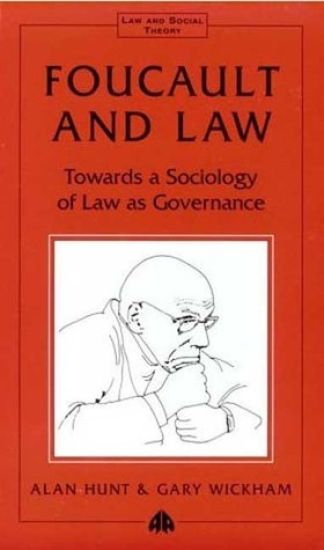
Foucault and Law

Foucault and Law

Alan Hunt; Gary Wickham

Pluto Press
1994
pokkari
When he died in 1984, Michel Foucault was regarded as one of the most profoundly influential philosophers of his day. Although the law itself never formed a central focus for Foucault, many of the principal themes in his writings are concerned with issues of governance and power that are of direct relevance to the study of law. And yet, until now, Foucault's work has attracted only fleeting attention from the legal academy. Foucault and Law corrects this oversight. Opening with a lucid, critical and unpretentious account of Foucault's work, Hunt and Wickham map out a terrain of methodological and theoretical principles, providing the groundwork for a new sociology of law as governance.
Foucault

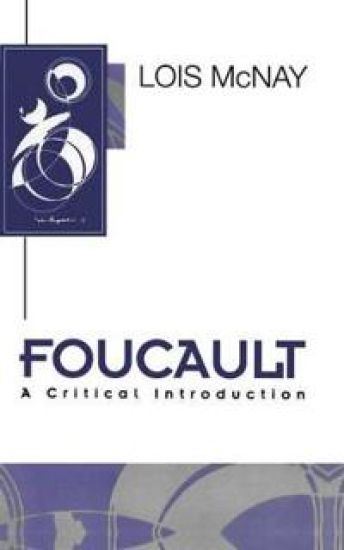
Foucault

Lois (Somerville College McNay

Blackwell Publishers
1994
pokkari
This text examines all Foucault's work, including his final writings on governmentality and the self. The author examines the way in which the latter relate to his previous theories of power and the body. She also assesses the normative and political implications of his social criticism.
Foucault

Foucault

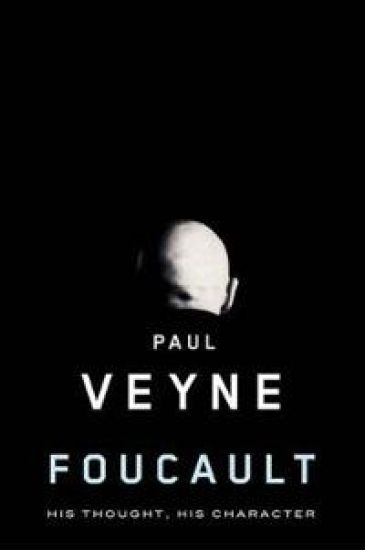
Paul Veyne

Polity Press
2010
sidottu
Michel Foucault and Paul Veyne: the philosopher and the historian. Two major figures in the world of ideas, resisting all attempts at categorization. Two timeless thinkers who have long walked and fought together. In this short book Paul Veyne offers a fresh portrait of his friend and relaunches the debate about his ideas and legacy. ‘Foucault is not who you think he is’, writes Veyne; he stood neither on the left nor on the right and was frequently disowned by both. He was not so much a structuralist as a sceptic, an empiricist disciple of Montaigne, who never ceased in his work to reflect on 'truth games', on singular, constructed truths that belonged to their own time. A unique testimony by a scholar who knew Foucault well, this book succeeds brilliantly in grasping the core of his thought and in stripping away the confusions and misunderstandings that have so often characterized the interpretation of Foucault and his work.
Foucault

Foucault

Paul Veyne

Polity Press
2010
nidottu
Michel Foucault and Paul Veyne: the philosopher and the historian. Two major figures in the world of ideas, resisting all attempts at categorization. Two timeless thinkers who have long walked and fought together. In this short book Paul Veyne offers a fresh portrait of his friend and relaunches the debate about his ideas and legacy. ‘Foucault is not who you think he is’, writes Veyne; he stood neither on the left nor on the right and was frequently disowned by both. He was not so much a structuralist as a sceptic, an empiricist disciple of Montaigne, who never ceased in his work to reflect on 'truth games', on singular, constructed truths that belonged to their own time. A unique testimony by a scholar who knew Foucault well, this book succeeds brilliantly in grasping the core of his thought and in stripping away the confusions and misunderstandings that have so often characterized the interpretation of Foucault and his work.
Foucault Now

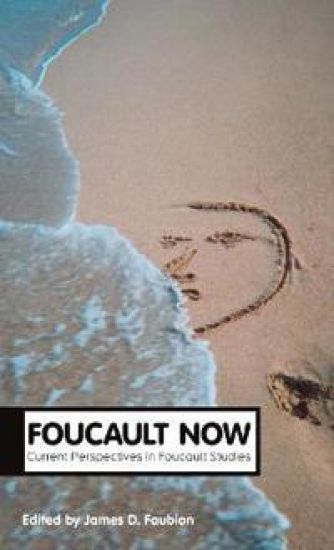
Foucault Now

Polity Press
2014
sidottu
Michel Foucault is recognized as one of the twentieth century's most influential thinkers, however the authors in this volume contend that more use can be made of Foucault than has yet been done and that some of the uses to which Foucault has so far been put run the risk of and occasionally simply amount to misuse. This interdisciplinary volume brings together a group of esteemed scholars, recognized for their command of and insights into Foucault's oeuvre. They demonstrate the many respects in which Foucault's project of an ontology of the present remains vital and continues to yield compelling insights and show that an ontology of the present is restricted to no particular terrain, but instead ranges widely and on paths that frequently intersect. The essays in this much-needed new collection address the key components of Foucault's thought, ranging from his approach to power, biopolitics and parrhesia to analysis of key texts such as Folie et Déraison and Histoire de la sexualité. This collection will spark debate amongst students and scholars alike and demonstrates that that every further encounter with Foucault's corpus is more likely than not to demand a revisiting of interpretations already formulated, conclusions already drawn, uses already devised. Contributors include Didier Eribon, Eric Fassin, John Forrester, Ian Hacking, Lynne Huffer, Colin Koopman, James Laidlaw, Laurence McFalls, Mariella Pandolfi, Paul Rabinow and Cary Wolfe.
Foucault Now

Foucault Now

Polity Press
2014
nidottu
Michel Foucault is recognized as one of the twentieth century's most influential thinkers, however the authors in this volume contend that more use can be made of Foucault than has yet been done and that some of the uses to which Foucault has so far been put run the risk of and occasionally simply amount to misuse. This interdisciplinary volume brings together a group of esteemed scholars, recognized for their command of and insights into Foucault's oeuvre. They demonstrate the many respects in which Foucault's project of an ontology of the present remains vital and continues to yield compelling insights and show that an ontology of the present is restricted to no particular terrain, but instead ranges widely and on paths that frequently intersect. The essays in this much-needed new collection address the key components of Foucault's thought, ranging from his approach to power, biopolitics and parrhesia to analysis of key texts such as Folie et Déraison and Histoire de la sexualité. This collection will spark debate amongst students and scholars alike and demonstrates that that every further encounter with Foucault's corpus is more likely than not to demand a revisiting of interpretations already formulated, conclusions already drawn, uses already devised. Contributors include Didier Eribon, Eric Fassin, John Forrester, Ian Hacking, Lynne Huffer, Colin Koopman, James Laidlaw, Laurence McFalls, Mariella Pandolfi, Paul Rabinow and Cary Wolfe.
Foucault's Last Decade

Foucault's Last Decade

Stuart Elden

Polity Press
2016
sidottu
On 26 August 1974, Michel Foucault completed work on Discipline and Punish, and on that very same day began writing the first volume of The History of Sexuality. A little under ten years later, on 25 June 1984, shortly after the second and third volumes were published, he was dead.This decade is one of the most fascinating of his career. It begins with the initiation of the sexuality project, and ends with its enforced and premature closure. Yet in 1974 he had something very different in mind for The History of Sexuality than the way things were left in 1984. Foucault originally planned a thematically organised series of six volumes, but wrote little of what he promised and published none of them. Instead over the course of the next decade he took his work in very different directions, studying, lecturing and writing about historical periods stretching back to antiquity.This book offers a detailed intellectual history of both the abandoned thematic project and the more properly historical version left incomplete at his death. It draws on all Foucault’s writings in this period, his courses at the Collège de France and lectures elsewhere, as well as material archived in France and California to provide a comprehensive overview and synthetic account of Foucault’s last decade.
Foucault's Last Decade

Foucault's Last Decade

Stuart Elden

Polity Press
2016
nidottu
On 26 August 1974, Michel Foucault completed work on Discipline and Punish, and on that very same day began writing the first volume of The History of Sexuality. A little under ten years later, on 25 June 1984, shortly after the second and third volumes were published, he was dead.This decade is one of the most fascinating of his career. It begins with the initiation of the sexuality project, and ends with its enforced and premature closure. Yet in 1974 he had something very different in mind for The History of Sexuality than the way things were left in 1984. Foucault originally planned a thematically organised series of six volumes, but wrote little of what he promised and published none of them. Instead over the course of the next decade he took his work in very different directions, studying, lecturing and writing about historical periods stretching back to antiquity.This book offers a detailed intellectual history of both the abandoned thematic project and the more properly historical version left incomplete at his death. It draws on all Foucault’s writings in this period, his courses at the Collège de France and lectures elsewhere, as well as material archived in France and California to provide a comprehensive overview and synthetic account of Foucault’s last decade.
Foucault's Archaeology

Foucault's Archaeology

David Webb

Edinburgh University Press
2012
sidottu
This title puts "The Archaeology of Knowledge" at the Heart of Foucault's thought. Michel Foucault (1926-1984) was a continental philosopher and critical theorist. His book "The Archaeology of Knowledge" (1969) was his main excursion into methodology, providing an anti-humanist account of the human sciences, particularly psychology and sociology. David Webb reveals the extent to which Foucault's approach to language in "The Archaeology of Knowledge" was influenced by the mathematical sciences, adopting a mode of thought indebted to thinkers in the scientific and epistemological traditions. By aligning his thought with the challenge to Kantian philosophy from mathematics and science in the late-19th and early-20th centuries, he shows how Foucault established his own perspective on the future of critical philosophy. It sheds new light on a crucial period of Foucault's work. It highlights Foucault's relation to thinkers such as Cavailles and Serres. It has interdisciplinary appeal to continental philosophers, critical theorists, analytical philosophers and philosophers of mathematics.
Foucault's History of Sexuality Volume I, The Will to Knowledge

Foucault's History of Sexuality Volume I, The Will to Knowledge

Mark G. E. Kelly

Edinburgh University Press
2013
nidottu
This is a step-by-step guide to Foucault's "History of Sexuality Volume I, The Will to Knowledge". In the first volume of his "History of Sexuality, The Will to Knowledge", Foucault weaves together the most influential theoretical account of sexuality since Freud. Mark Kelly systematically unpacks the intricacies of Foucault's dense and sometimes confusing exposition in a straightforward way, putting it in its historical and theoretical context. This is both a guide for the reader new to the text and one that offers new insights to those already familiar with Foucault's work.
Foucault's History of Sexuality Volume I, The Will to Knowledge

Foucault's History of Sexuality Volume I, The Will to Knowledge

Mark G. E. Kelly

Edinburgh University Press
2013
sidottu
This is a step-by-step guide to Foucault's "History of Sexuality Volume I, The Will to Knowledge". In the first volume of his "History of Sexuality, The Will to Knowledge", Foucault weaves together the most influential theoretical account of sexuality since Freud. Mark Kelly systematically unpacks the intricacies of Foucault's dense and sometimes confusing exposition in a straightforward way, putting it in its historical and theoretical context. This is both a guide for the reader new to the text and one that offers new insights to those already familiar with Foucault's work.