Kirjojen hintavertailu. Mukana 11 244 527 kirjaa ja 12 kauppaa.

Kirjahaku

Etsi kirjoja tekijän nimen, kirjan nimen tai ISBN:n perusteella.

1000 tulosta hakusanalla Francis Alua

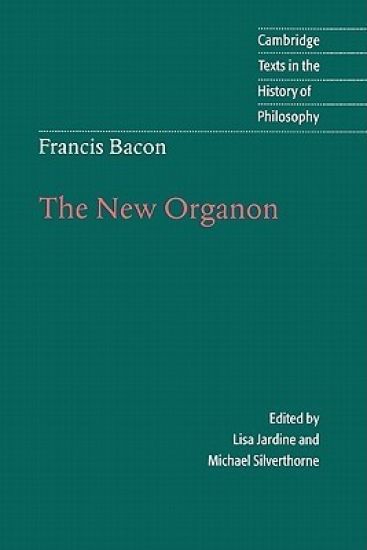
Francis Bacon: The New Organon

Francis Bacon: The New Organon

Francis Bacon

Cambridge University Press
2000
sidottu
When the New Organon appeared in 1620, part of a six-part programme of scientific inquiry entitled 'The Great Renewal of Learning', Francis Bacon was at the high point of his political career, and his ambitious work was groundbreaking in its attempt to give formal philosophical shape to a new and rapidly emerging experimentally-based science. Bacon combines theoretical scientific epistemology with examples from applied science, examining phenomena as various as magnetism, gravity, and the ebb and flow of the tides, and anticipating later experimental work by Robert Boyle and others. His work challenges the entire edifice of the philosophy and learning of his time, and has left its mark on all subsequent philosophical discussions of scientific method. This volume presents a new translation of the text into modern English by Michael Silverthorne, and an introduction by Lisa Jardine that sets the work in the context of Bacon's scientific and philosophical activities.
Francis Bacon: The New Organon

Francis Bacon: The New Organon

Bacon Francis

Cambridge University Press
2000
pokkari
When the New Organon appeared in 1620, part of a six-part programme of scientific inquiry entitled ‘The Great Renewal of Learning’, Francis Bacon was at the high point of his political career, and his ambitious work was groundbreaking in its attempt to give formal philosophical shape to a new and rapidly emerging experimentally-based science. Bacon combines theoretical scientific epistemology with examples from applied science, examining phenomena as various as magnetism, gravity, and the ebb and flow of the tides, and anticipating later experimental work by Robert Boyle and others. His work challenges the entire edifice of the philosophy and learning of his time, and has left its mark on all subsequent philosophical discussions of scientific method. This volume presents a new translation of the text into modern English by Michael Silverthorne, and an introduction by Lisa Jardine that sets the work in the context of Bacon’s scientific and philosophical activities.
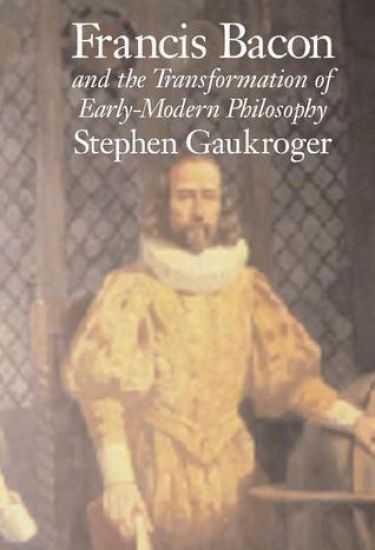
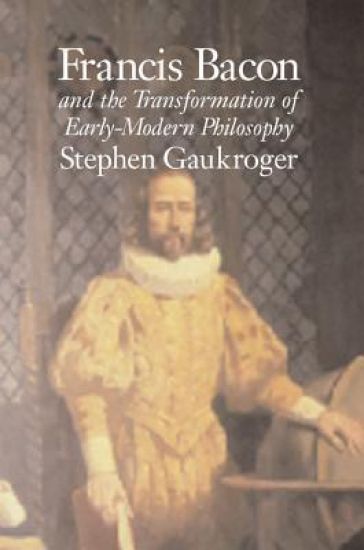
Francis Bacon and the Transformation of Early-Modern Philosophy

Francis Bacon and the Transformation of Early-Modern Philosophy

Stephen Gaukroger

Cambridge University Press
2001
sidottu
This ambitious and important book, first published in 2001, provides a truly general account of Francis Bacon as a philosopher. It describes how Bacon transformed the values that had underpinned philosophical culture since antiquity by rejecting the traditional idea of a philosopher as someone engaged in contemplation of the cosmos. The book explores in detail how and why Bacon attempted to transform the largely esoteric discipline of natural philosophy into a public practice through a program in which practical science provided a model that inspired many from the seventeenth to the twentieth centuries. Stephen Gaukroger shows that this reform of natural philosophy was dependent on the creation of a new philosophical persona: a natural philosopher shaped through submission to the dictates of Baconian method. This book will be recognized as a major contribution to Baconian scholarship, of special interest to historians of early-modern philosophy, science, and ideas.
Francis Bacon and the Transformation of Early-Modern Philosophy

Francis Bacon and the Transformation of Early-Modern Philosophy

Stephen Gaukroger

Cambridge University Press
2001
pokkari
This ambitious and important book, first published in 2001, provides a truly general account of Francis Bacon as a philosopher. It describes how Bacon transformed the values that had underpinned philosophical culture since antiquity by rejecting the traditional idea of a philosopher as someone engaged in contemplation of the cosmos. The book explores in detail how and why Bacon attempted to transform the largely esoteric discipline of natural philosophy into a public practice through a program in which practical science provided a model that inspired many from the seventeenth to the twentieth centuries. Stephen Gaukroger shows that this reform of natural philosophy was dependent on the creation of a new philosophical persona: a natural philosopher shaped through submission to the dictates of Baconian method. This book will be recognized as a major contribution to Baconian scholarship, of special interest to historians of early-modern philosophy, science, and ideas.