Kirjojen hintavertailu. Mukana 11 342 296 kirjaa ja 12 kauppaa.

Kirjahaku

Etsi kirjoja tekijän nimen, kirjan nimen tai ISBN:n perusteella.

1000 tulosta hakusanalla Frank Merlo

Frank and Beans

Frank and Beans

Kathy-jo Wargin

Zondervan
2010
nidottu
A Lesson in Caring and Kindness.Frank's neighbor has puppies, and boy, does Frank want one But by the time his parents say yes, the puppies are all gone. Will Frank ever get the dog he wants?
Frank Martin

Frank Martin

Charles King

Greenwood Press
1990
sidottu
Appropriately, this work written on the year of the 100th birthday of Frank Martin, is the first English language resource dealing with work by and about the Swiss composer. Charles King provides access to a great deal of critical substantive writing about Martin's work and to the considerable body of writing by the composer himself. Many of the most important writings, derived from articles, lectures, letters, program notes and interviews, are now collected into several monographs in French with some parts in English and German, all of which have been indexed here. Comprehensive coverage is given to articles in English, and excellent work written in German, French, Dutch, and Italian has been highlighted also.The volume consists of a biography of Martin, a cataloging of the composer's works and performances, and a 229-item discography followed by two separate bibliographies that list writings by and about Martin. Two appendixes and an index complete the work. As the only comprehensive introduction in English to Frank Martin and his work, this reference will assist future researchers and stimulate the interest and curiosity of others to learn more of this composer's life and work.
Frank Bridge

Frank Bridge

Karen Little

Greenwood Press
1991
sidottu
This bio-bibliography traces the stylistic development and defines the musical personality of one of the major British composers of the first half of the 20th century. Bridge's works, enjoying renewed interest since the late 1960s, are the subject of careful research in this volume, which lists his works and their performances. It includes both arrangements and orchestrations listed by genre and then alphabetically by title. Many of the works cited also feature premiere and other selected performance information.Included in the text is a substantial discography which catalogues commercially produced sound recordings as well as an annotated bibliography containing writings by and about the composer. Contemporary performances of Bridge's work receive particular attention by the inclusion of excerpts from current reviews which signal a fresh look at this critically appreciated artist. The book concludes with two appendixes which arrange Bridge's works both alphabetically and chronologically, followed by a complete index.
Frank Lloyd Wright

Frank Lloyd Wright

Donald Langmead

Praeger Publishers Inc
2003
sidottu
Frank Lloyd Wright is one of the 20th century's best-known architects. Over 40 years after his death, historical and critical comment and debate are increasing and controversy continues to surround him. This volume is a chronologically arranged, annotated bibliography of English- and foreign-language sources including over 3,500 primary entries, with thousands more connected references, presented alphabetically by decades and genres.The book documents not only the literature on Wright from 1886 to the present, but also his own extensive writings. It covers source books, monographs, anthologies, exhibition catalogues, book and exhibition reviews, periodical articles, and obituaries. All references are indexed by personal names, buildings, and projects. There is also a photo-essay comprised entirely of images published here for the first time, and a comprehensive chronology of the architect's life and career, which spanned 70 years and produced about 450 buildings and almost 550 unrealized architectural projects. The book will be of great value to scholars, students, and practitioners.
Frank Furness

Frank Furness

Michael J. Lewis

WW Norton Co
2001
sidottu
This first biography details his abolitionist upbringing in staid Philadelphia, the horror of war and its translation into aggressive architecture - train stations, banks, and libraries - and illuminates his influence on his century and the world.
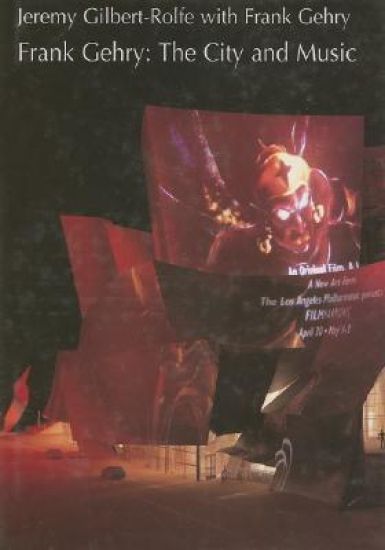
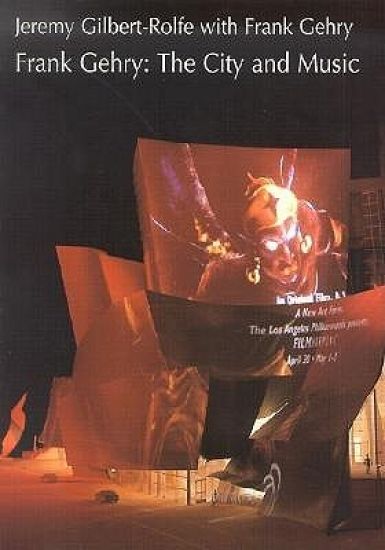
Frank Gehry

Frank Gehry

Jeremy Gilbert-Rolfe; Frank Gehry

Routledge
2001
sidottu
Frank Gehry: The City and Music is the result of a unique collaboration between the architect and leading critic Jeremy Gilbert-Rolfe. It focuses on two projects, Gehry's unrealised proposal for the rehabilitation of Berlin's Museum Island and his soon to be completed Disney Concert Hall in Los Angeles, while discussing other projects such as the Pavilion for the Performing Arts in Concord, California, the Guggenheim Museum in Bilbao, and the Experience Music Project in Seattle. Gehry's much debated relationship to Minimalist sculpture, use of new building materials and attitude to tradition, are discussed with regard to his belief in architecture as a democratic practice which is at once practical and expressive.
Frank and Lilian Gilbreth
Husband and wife, Frank Gilbreth (1868-1924) and Lilian Gilbreth (1878-1972), are the figures most closely identified with time and motion studies. Pushing F.W. Taylor's ideas to the limit, they sought ways to determine 'the one best way to do work'. Their lasting influence is evident in the fact that the process charts and other techniques they devised remain essentially unchanged in modern systems analysis. Along with this, they were also interested in the human aspect of work, emphasizing the need for training and worker involvement. The collection makes available, in one place, some of the most significant writings gathered from a variety of sources. The works are invaluable, not only for reference purposes, but as contributions to the history of management thought as well as the analysis of contemporary theory and the study of strategic management.
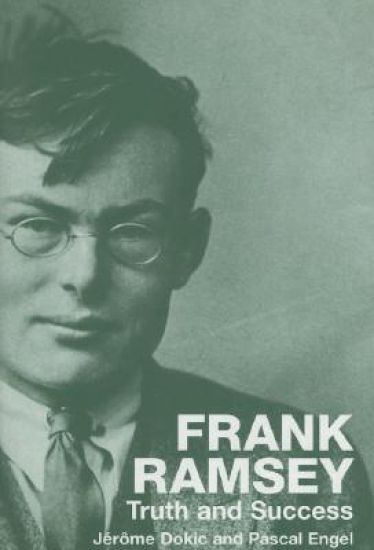
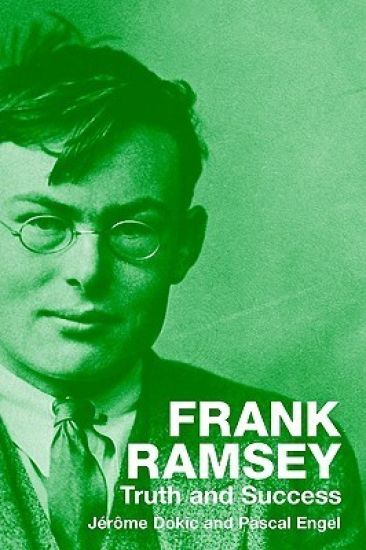
Frank Ramsey

Frank Ramsey

Jérôme Dokic; Pascal Engel

Routledge
2002
sidottu
Despite his tragic death at the age of 26, Frank Ramsey (1903 - 1930) remains one of the most intriguing minds of the twentieth century. His thought had a profound influence on both Ludwig Wittgenstein and Bertrand Russell, and many strands of contemporary analytic philosophy find their origin in Ramsey's ideas. Frank Ramsey: Truth and Success provides a much-needed introduction to the work of this undervalued thinker, and makes an important and profound contribution to our understanding of Ramsey's work and his place in twentieth century philosophy. It will be of interest to all students of logic, metaphysics and the history of philosophy.
Frank Gehry

Frank Gehry

Jeremy Gilbert-Rolfe; Frank Gehry

Routledge
2002
nidottu
A collaboration between critic Jeremy Gilbert-Rolfe and the architect focuses on two projects: Gehry's unrealised proposal for the rehabilitation of Berlin's Museum Island and his soon to be completed Disney Concert Hall in Los Angeles.
Frank Ramsey

Frank Ramsey

Jérôme Dokic; Pascal Engel

Routledge
2006
nidottu
Despite his tragic death at the age of 26, Frank Ramsey (1903 - 1930) remains one of the most intriguing minds of the twentieth century. His thought had a profound influence on both Ludwig Wittgenstein and Bertrand Russell, and many strands of contemporary analytic philosophy find their origin in Ramsey's ideas. Frank Ramsey: Truth and Success provides a much-needed introduction to the work of this undervalued thinker, and makes an important and profound contribution to our understanding of Ramsey's work and his place in twentieth century philosophy. It will be of interest to all students of logic, metaphysics and the history of philosophy.
Frank Knight and the Chicago School in American Economics
Over the last twenty years, Ross B. Emmett has explored the work of Frank H. Knight, the philosopher of the Chicago School of economics. Knight occupies a paradoxical place in the history of Chicago economics: vital to the tradition’s teaching of price theory and the twentieth-century re-articulation of the defense of free enterprise and liberal democracy, yet a critic (in advance) of the empirical and methodological orientation that has characterized Chicago economics and the rest of the discipline in the post-war period, and skeptical of liberalism’s prospects. In the course of his investigation of Knight’s work, Emmett has written not only about Knight’s economics and philosophy, the nature of Chicago economics, and Knight’s place in the Chicago tradition, but also about the application of hermeneutic theory to the history of economics, the relation of the history of economic thought to the discipline of economics, and the relation between economics and religion. His eight-volume collection of primary-source material on The Chicago Tradition in Economics, 1892-1945 was published by Routledge in 2001.
Frank Knight and the Chicago School in American Economics
Over the last twenty years, Ross B. Emmett has explored the work of Frank H. Knight, the philosopher of the Chicago School of economics. Knight occupies a paradoxical place in the history of Chicago economics: vital to the tradition’s teaching of price theory and the twentieth-century re-articulation of the defense of free enterprise and liberal democracy, yet a critic (in advance) of the empirical and methodological orientation that has characterized Chicago economics and the rest of the discipline in the post-war period, and skeptical of liberalism’s prospects. In the course of his investigation of Knight’s work, Emmett has written not only about Knight’s economics and philosophy, the nature of Chicago economics, and Knight’s place in the Chicago tradition, but also about the application of hermeneutic theory to the history of economics, the relation of the history of economic thought to the discipline of economics, and the relation between economics and religion. His eight-volume collection of primary-source material on The Chicago Tradition in Economics, 1892-1945 was published by Routledge in 2001.
Frank Lloyd Wright’s Sacred Architecture
A comprehensive study of the sacred buildings built and designed by Frank Lloyd Wright, this book offers scholarly discussion with analytical drawings and photographs. These projects represent different periods of Wright’s career (from 1886 to 1958), new building technologies, and application of his design concepts as demonstrated in his sacred architecture. This unique contribution will be useful to all those interested in Wright’s architecture and theory as well as in sacred architecture.
Frank Ankersmit's Lost Historical Cause
The contemporary Dutch historical theorist/philosopher Frank Ankersmit, an erstwhile advocate and promulgator of what has become known as "the linguistic turn" in historical theory, is very well known within the discipline. His early position with regard to the historical text is frequently discussed and evaluated today, and his writings on the subject are often cited. However, this former narrativist position, so robustly and effectively defended by Ankersmit in the past, has been progressively marginalized by Ankersmit himself as his current and radically different theoretical position, most fully expressed in his recent publication Sublime Historical Experience, now (for him) takes precedence. Yet, despite this radical shift in Ankersmit's position, this conspicuous "conversion" of an eminent prime mover in the field of mainstream language centred historical theory, there has been no comprehensive and sustained (investigative) critique of his various works taken in the whole. Consequently, there has until now been no close reading and analytical dissection of that whole, such that Ankersmit's overall trajectory of philosophical thought might be adequately discerned, and perhaps even explained. In short, there is a vacant space here, and the function of this book is, precisely, to fill that space.
Frank Lloyd Wright to 1910

Frank Lloyd Wright to 1910

Grant Carpenter Manson

John Wiley Sons Inc
1979
nidottu
The story--personal and professional--of one of the greatest architects who ever lived is here told by the man whom Frank Lloyd Wright once introduced as "Grant Manson, who knows more about me than I do." This volume takes the reader up to 1910, a turning point in Wright's life as an architect and as an individual. Wright's accomplishment by 1910 was considerable; he had already enjoyed what to many people would have been a full career. Most outstanding perhaps was his conception and evolution of the Prairie House, an expression of organic architecture that was the result of many factors: Wright's resourceful Welsh forebears, his Midwest background, his experience with Lyman Silsbee and Louis Sullivan, his interest in Japanese art, and especially his native genius. During the same period Wright also set many precedents for nonresidential architecture, including Unity Church and the Larkin Building. These buildings--residential and nonresidential--plus the unexecuted projects shown add up to a new understanding of Wright's mentality. Grant Carpenter Manson first met Mr. Wright in 1939 while preparing his Harvard doctoral thesis, but his influence reaches back to Mr. Manson's childhood. He fell in love with the Husser House at the age of six and has been faithful ever since.
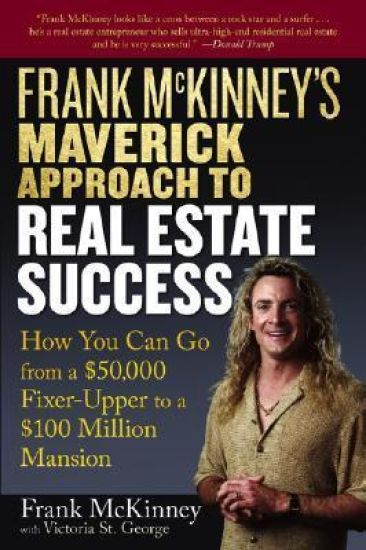
Frank McKinney's Maverick Approach to Real Estate Success
Praise for Frank McKinney "My neighbor, Frank McKinney, is certainly a maverick and a spiritually grounded young man. The oceanfront homes he builds here in Florida are magnificent and unique. More important, Frank's life and the contributions he makes to his community and the world illustrate how a successful businessman can do well while doing good. The principles in Frank McKinney's Maverick Approach to Real Estate Success represent a road map of his achievements--a proven strategy for succeeding not just in real estate, but also in the business of life." --Rich DeVos, cofounder of Amway, owner of the Orlando Magic "If you're ready to make big profits in real estate, then read, absorb, and use the brilliance of Frank McKinney." --Mark Victor Hansen, coauthor of The One Minute Millionaire "Frank McKinney's book is an excellent how-to guide to earning real estate profits by using McKinney's maverick formulas to find undervalued real estate with profit potential. McKinney is different. This isn't another how-to-get-rich-in-real-estate book. Instead, it is the lively success story of a real estate maverick. McKinney reveals his simple strategies, with intriguing personal profit examples that explain how his repeatable techniques work over and over." --Robert J. Bruss, syndicated real estate columnist "If Hollywood were casting the role of a maverick who started with very little and went from a $50,000 fixer-upper to a $100 million mansion, they would choose Frank McKinney. Frank McKinney's Maverick Approach to Real Estate Success represents his approach to life. He decided to apply that approach to real estate and look what happened!" --Kendra Todd, winner of The Apprentice
Frank Lloyd Wright

Frank Lloyd Wright

Robert C. Twombly

John Wiley Sons Inc
1987
nidottu
A complete biography based on a wide range of previously untapped primary sources, covering Wright's private life, architecture, and role in American society, culture, and politics. Views Wright's buildings as biographical as well as social statements, analyzing his work by type, category, and individual structure. Examines Wright's struggle to develop a new artistic statement, his dramatic personal life, and his political and economic ideas, including those on cities, energy conservation, cooperative home building, and environmental preservation. Includes over 150 illustrations (photographs, floor plans, and drawings—many never before published), extensive footnotes, and the most exhaustive bibliography of Wright's published work available.