Kirjojen hintavertailu. Mukana 12 358 750 kirjaa ja 12 kauppaa.

Kirjahaku

Etsi kirjoja tekijän nimen, kirjan nimen tai ISBN:n perusteella.

1000 tulosta hakusanalla Fred Inglis

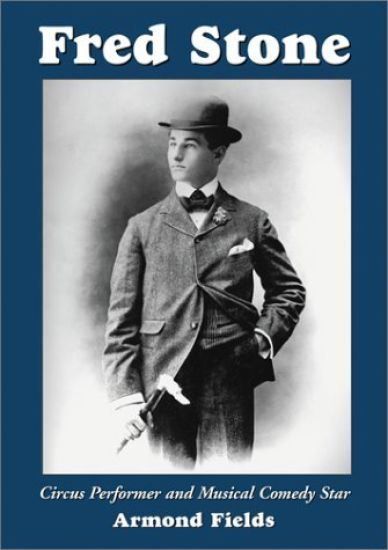
Fred Stone

Fred Stone

Armond Fields

McFarland Co Inc
2002
pokkari
Fred Stone was one of America's most versatile and talented of Broadway's colorful entertainers. Audiences quickly discovered he could do anything and everything, from tightrope walking and acrobatics to song-and-dance, musical comedies, and straight drama. This work chronicles his extraordinary life and career. He was born in a log cabin August 19, 1873, in Valmont, Colorado, to a family that was part of the covered-wagon migration into the virtually unknown West. He joined a traveling circus at age 11 and two years later, joined a different one as a self-taught tightrope walker. During his teens, Stone performed on the variety stage, and at age 22, met Dave Montgomery, with whom he performed for over twenty years, including Broadway musicals, notably as the scarecrow in The Wizard of Oz. After Montgomery's tragic death in 1917, Stone continued to perform and shared his continued success with his closest friend Will Rogers, and Annie Oakley, Broadway producer Charles Dillingham, Western artists Charles Russell and Ed Borein, and author Rex Beach. Stone appeared in some 18 movies, from 1918 to 1940, including such western classics as The Westerner and Trail of the Lonesome Pine. In 1950, he retired from show business and during the last years of his life suffered from increasing blindness and heart trouble. He died at his Los Angeles home in 1959.
Fred Zinnemann

Fred Zinnemann

Neil Sinyard

McFarland Co Inc
2003
pokkari
Director Fred Zinnemann was one of the most honored and revered directors of Hollywood's golden age. Peter Ustinov said, "Working with him was a permanent lesson in integrity." Zinnemann will always be remembered for such award-winning classics as High Noon, From Here to Eternity and A Man for All Seasons, and for his direction of such stars as Marlon Brando, Montgomery Clift, Rod Steiger, Spencer Tracy, Gary Cooper, Burt Lancaster, Audrey Hepburn, Robert Mitchum, Jane Fonda, Meryl Streep and Sean Connery. Above all, he deserves to be appreciated for raising the intelligence of popular cinema, making individualist dramas of conscience that could appeal to mass audiences without condescending to them and without compromising the director's vision. This book, the first single-author survey of Zinnemann's career, draws on the author's personal interviews with Zinnemann and reveals the coherence and subtlety of the director's work. The first part of the book deals with Zinnemann's struggle to make films of his own choosing in his own way, up to his breakthrough with The Search. The remainder of the text discusses Zinnemann's post-Search films according to major themes, including the ravages of war, the "sovereignty of selfhood," character as destiny, the outsider in society, and politics and the liberal conscience. A list of Zinnemann's awards is provided.
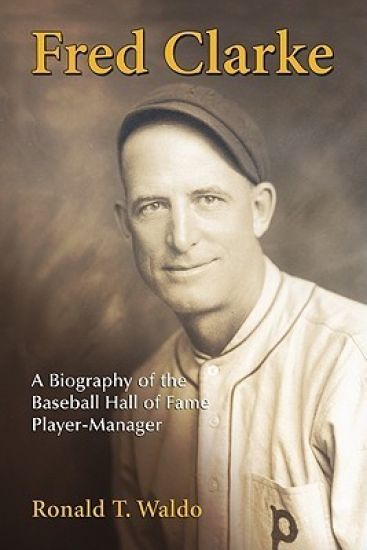
Fred Clarke

Fred Clarke

Ronald T. Waldo

McFarland Co Inc
2010
pokkari
Elected to the Baseball Hall of Fame in 1945, Fred Clarke began his career in 1894 with a record day at the plate, going 5 for 5. He would go on to play for 21 years spending most of that time as the player-manager of the Pirates, a team he led to four pennants and one World Series Championship (1909).
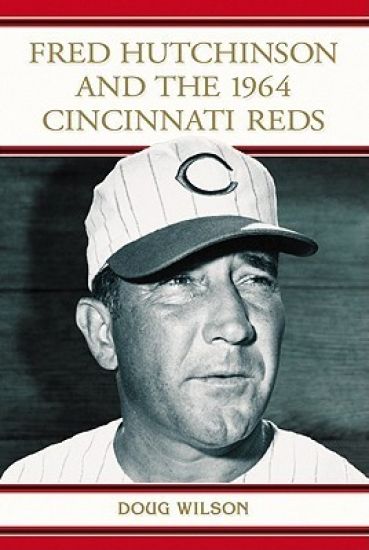
Fred Hutchinson and the 1964 Cincinnati Reds
Fred Hutchinson, the popular manager of the Cincinnati Reds, was at the top of his profession when he was suddenly diagnosed with terminal lung cancer in December 1963. This is the story of Fred Hutchinson and his players as they completed his inspirational final season. In 1964, the Reds battled themselves, their opponents and their emotions to mount a late winning streak which, coupled with the historic collapse of the Phillies, allowed the team to enter the final day with a chance to win the pennant for their stricken manager.
Fred Barton and the Warlords' Horses of China

Fred Barton and the Warlords' Horses of China

Larry Weirather

McFarland Co Inc
2015
pokkari
In the years before World War I, Montana cowboy Fred Barton was employed by Czar Nicholas II to help establish a horse ranch--the largest in the world--in Siberia to supply the Russian military. Barton later assembled a group of American rodeo stars and drove horses across Mongolia for the war-lords of northern China, creating a 250,000 acre ranch in Shanxi Province. Along the way, Barton became part of an unofficial U.S. intelligence network in the Far East, bred a new type of horse from Russian, Mongolian and American stock and promoted the lifestyle of the open range cowboy. Returning to America, he married one of the wealthiest widows in the Southwest and hobnobbed with Western film stars at a time when Hollywood was constructing the modern myth of the Old West, just as open range cowboy life was disappearing.
Fred Cumberland

Fred Cumberland

Geoffrey Simmins

University of Toronto Press
1997
sidottu
In the first comprehensive study of Frederic William Cumberland (1820-1881), Geoffrey Simmins traces Cumberland's career as architect, railway manager, and politician, providing a richly detailed history and analysis of his contribution to Toronto's urban landscape. The architect of such prominent buildings as the University of Toronto's University College, Osgoode Hall, and St James's Cathedral, Cumberland was devoted to building the Victorian dream - optimistic and materialistic in its outlook, yet also spiritual in its basis. His diverse interests and accomplishments make him an important figure in Canadian architecture and in Victorian studies more generally. Of modest origins, but fuelled by ambition and talent, Cumberland emigrated from England seeking new opportunities. Favourable family connections provided him with an introduction to leading members of Toronto society, and he and his wife, Wilmot, formed long-lasting associations with such prominent families as the Ridouts and the Gzowskis. Drawing on letters and other archival materials, Simmins shows Cumberland to have been a witty, intelligent man, an acerbic social critic, a loving father and husband, and a respected businessman and politician who became a confidant of Sir John A. Macdonald. Through the mists of the Victorian past, a powerful and energetic figure emerges, a man of vision, tenacity, and commitment. The book is divided into three parts. Part One establishes the context of Cumberland's life and times. Part Two is devoted to examining his architectural career. Part Three consists of a catalogue raisonnT of all of Cumberland's architectural designs.
Fred Meijer

Fred Meijer

Bill Smith; Larry Ten Harmsel

William B Eerdmans Publishing Co
2009
nidottu
Retailing pioneer Fred Meijer comes alive in the pages of this intimate biography, told in part by the people in Fred's life -- from store cashiers to American presidents. Astute businessman, visionary arts patron, homespun philosopher -- Fred is a man of many parts. His story weaves a chronicle of how to succeed in business, how to shape one's life, how to leave the world a better place, and how to have fun along the way. / -Fred, in his unpretentious way, has always been a leader. . . . He is able, he is dedicated, and he's fun.--- Gerald R. Ford / -I have always admired Fred Meijer as the great visionary who first recognized the potential of the supercenter in the United States. As we developed our Wal-Mart model, we learned a great deal by watching what he did.--- Don Soderquist - former Vice Chairman and Chief Operating Officer of Wal-Mart / -Fred Meijer's life story is a supersize grocery cart, full to the brim with values that we should live by -- honesty, fairness, and respect for others.--- Mike Lloyd - Grand Rapids Press
Fred Terman at Stanford

Fred Terman at Stanford

C. Stewart Gillmor

Stanford University Press
2004
sidottu
Fred Terman was an outstanding American engineer, teacher, entrepreneur, and manager. Terman was also deeply devoted to his students, to engineering, and to Stanford University. This biography focuses on the weave of personality and place across time—it examines Terman as a Stanford faculty child growing up at an ambitious little regional university; as a young electrical engineering professor in the heady 1920s and the doldrums of the Depression; as an engineering manager and educator in the midst of large-scale wartime research projects and the postwar rise of Big Science and Big Engineering; as a university administrator on the razor's edge of great expectations and fragile budgets; and, finally, as a senior statesman of engineering education. The first doctoral student of Vannevar Bush at M.I.T., Terman was himself a prodigious teacher and adviser to many, including William Hewlett and David Packard. Terman was widely hailed as the magnet that drew talent together into what became known as Silicon Valley. Throughout his life, Fred Terman was constant in his belief that quality could be quantified, and he was adamant that a university's success must, in the end, be measured by the success of its students. Fred Terman's formula for success, both in life and for his university, was fairly simple: hard work and persistence, systematic dedication to clearly articulated goals, accountability, and not settling for mediocre work in yourself or in others.
Fred Thompson’s Southern Sides

Fred Thompson’s Southern Sides

The University of North Carolina Press
2012
sidottu
Side dishes are the very heart and soul of southern cuisine. So proclaims Fred Thompson in this heartfelt love letter to the marvelous foods on the side of the plate. From traditional, like Pableaux's Red Beans and Rice, to contemporary, like Scuppernong-Glazed Carrots, Thompson's 250 recipes recommend the virtues of the utterly simple and the totally unexpected. Fred Thompson's Southern Sides celebrates the sheer joy of cooking and eating these old and new classic dishes. Exploring the importance of side dishes in the cuisine of the American South, Thompson suggests that if you look closely enough, you can find a historical tale of family, culture, and ethnicity in one awesome recipe after another. Twelve richly illustrated chapters feature a full array of produce, grains and beans, fish and meats, and more. The recipes are enhanced by Thompson's amusing observations, tales of southern living and eating, and straightforward cooking tips. Thompson also provides menus for special occasions throughout the year--for Thanksgiving, you may want to include Twice-Baked Sweet Potatoes with Sage, Sorghum, and Black Walnuts.
Hit Me, Fred

Hit Me, Fred

Fred Wesley

Duke University Press
2005
pokkari
With Hit Me, Fred, sensational sideman Fred Wesley Jr. moves front and center to tell his life story. A legendary funk, soul, and jazz musician, Wesley is best known for his work in the late sixties and early seventies with James Brown and as the leader of Brown’s band, Fred Wesley and the JB’s. Having been the band’s music director, arranger, trombone player, and frequent composer, Wesley is one of the original architects of funk music. He describes what it was like working for the Godfather of Soul, revealing the struggle and sometimes stringent discipline behind Brown’s tight, raucous tunes. After leaving Brown and the JB’s, Wesley arranged the horn sections for Parliament, Funkadelic, and Bootsy’s Rubber Band, and led Fred Wesley and the Horny Horns. Adding his signature horn arrangements to the P-Funk mix, Wesley made funk music even funkier.Wesley’s distinctive sound reverberates through rap and hip-hop music today. In Hit Me, Fred, he recalls the many musicians whose influence he absorbed, beginning with his grandmother and father-both music teachers-and including mentors in his southern Alabama hometown and members of the Army band. In addition to the skills he developed working with James Brown, George Clinton, Bootsy Collins, and the many talented musicians in their milieu, Wesley describes the evolution of his trombone playing through stints with the Ike and Tina Turner Revue, Hank Ballard, and Count Basie’s band. He also recounts his education in the music business, particularly through his work in Los Angeles recording sessions.Wesley is a virtuoso storyteller, whether he's describing the electric rush of performances when the whole band is in the groove, the difficulties of trying to make a living as a rhythm and blues musician, or the frustrations often felt by sidemen. Hit Me, Fred is Wesley’s story of music-making in all its grit and glory.
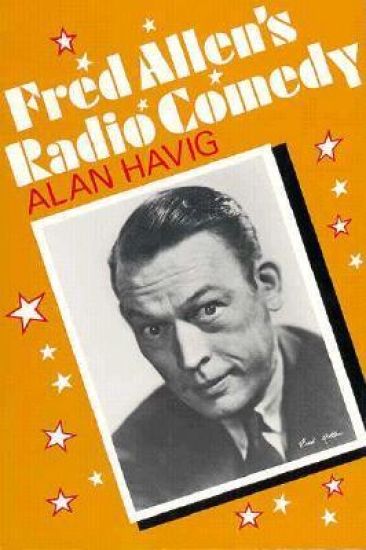
Fred Allen's Radio Comedy

Fred Allen's Radio Comedy

Alan Havig

Temple University Press,U.S.
1991
nidottu
In 1954, James Thurber wrote: "You can count on the thumb of one hand the American who is at once a comedian, a humorist, a wit, and a satirist, and his name is Fred Allen." Several decades after his death and more than forty years since his radio program left the air, Fred Allen's reputation as a respected humorist remains intact. In this book, Alan Havig explores the roots of his comedy, the themes it exploited, the problems and challenges that faced the radio comedy writer, and Allen's unique success with the one-dimensional medium of radio. Tracing a career that lasted from 1912 into the 1950s and encompassed vaudeville, Broadway revues, movies, radio, and television, Havig describes the "verbal slapstick" style that was Fred Allen's hallmark and legacy to American comedy. More than a biography of Fred Allen, this is a study of the development of the radio industry, a discussion of American humor, and the story of how one relates to the other. Using a wide variety of published and unpublished sources, including the Allen Papers, Havig analyzes Allen's radio comedy of the 1930s and 40s within the context of the peculiar advantages and limitations of radio as a medium for comedy. He argues that Allen did not merely transfer vaudeville routines to a non-visual medium as did Eddie Cantor, Ed Wynn, and others. Allen developed a comedic style that depended on word play, sound effects, and on his audience's ability and readiness to imagine a visual world in which his eccentric characters operated. Havig illustrates his story with numerous examples of Allen's humor, with fascinating anecdotes, and excerpts from radio broadcasts. In accounting for the comedian's success, he deals with vaudeville, comedy writing, sponsor's demands and censorship of material, and the organizational world of radio broadcasting companies. Describing radio as "an instrument of wit," Fred Allen wrote: "on radio you could do subtle writing because you had access to the imagination...that was why I liked radio. we had some fun." Readers will also have some fun remembering or discovering for the first time Allen's Alley and the magic of radio comedy in its prime. Author note: Alan Havig is Professor of History and American Studies at Stephens College in Columbia Missouri.
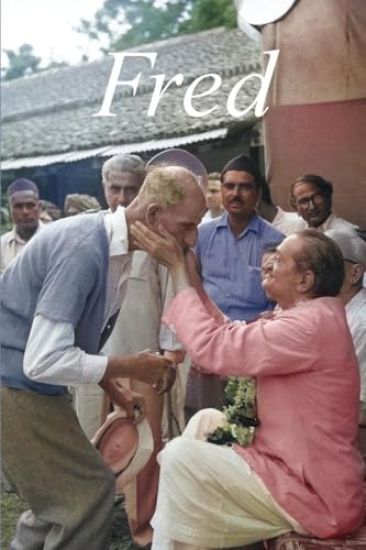
Fred - Meher Baba's 'Grand Old Man of England'
Fred is the biography of an ordinary man who ultimately led an extraordinary life of devotion to his beloved spiritual Master, Avatar Meher Baba. Born at the turn of the twentieth century, Fred's life was seemingly no different from countless others throughout the United Kingdom. But it would not remain ordinary, and with the passage of time, can be considered exceptional, and entirely worthy of record. This biography is written in tribute to Fred but also, as he might prefer it to be described, as a testament to God, illustrating a spiritual path devoid of dogma or ritual, cult or creed: a path that requires no affiliation to any specific religion. It is written to exemplify that the path towards union with God is a 'simple', if not easy, path of pure love.Fred Marks was from Nottingham, England. Raised as an Anglican, he had three brothers and one sister, and his father worked as a French polisher. In his late teens, Fred served in the First World War, returning with compromised health and a degree of disillusionment with humanity. His thoughts turned increasingly inward, and in his 30s he read a newspaper account of a visit to England by Avatar Meher Baba, described in the Press as an Indian Mystic. Fred recognised Him inwardly and, a few years later, experienced a 'Divine Call' to 'leave all and follow the Master'. He was convinced that it was Meher Baba who called to him.Avatar Meher Baba was born in Poona Pune] India in 1894. His mission as Avatar - the Hindu word for God incarnate - began in 1921. His principal message of love was expressed by practical example in countless ways - establishing schools, feeding the poor, bathing lepers, establishing homes for the mad, and for mothers and their babies. He travelled widely, making contact with countless people. Declaring that enough words had already been given through every past spiritual advent, He chose to observe strict silence from 1925 until His death in 1969.Eventually Fred was destined to encounter a circle of Meher Baba's followers in London, and he came to understand that Meher Baba was the Avatar of the Age: the same Eternal One as Zoroaster, Ram, Krishna, Buddha, Jesus and Mohammed. It changed Fred's life forever, taking him on pilgrimages to India and the USA. He became a trusted disciple, chosen to disseminate Meher Baba's messages of love throughout the UK and beyond.Fred was asked to write about his life by Meher Baba's Mandali (or close circle). This he did, but the manuscript was lost for more than forty years owing to the passing of the proposed publisher. Intensely humble, Fred shunned the limelight, and it is rare for one so shy to reveal their inner spiritual journey. Yet Fred's writings make his journey to, and with, God entirely accessible to the reader through its utter simplicity. In so doing, he makes it crystal clear that every one of us may have direct access to God. Moreover, he impresses upon the reader that God Himself is longing for our love and waiting patiently for us to turn to Him.
Fred Hollows

Fred Hollows

Fred Hollows; Peter Corris

Kerr Publishing
2021
pokkari
This book was first published in 1991, claiming it 'replenishes the sense of what it possible'. Three decades on, it still does. This edition shows what is possible - problems encountered and overcome, breakthroughs big and small, and the spread of Fred Hollows' work across the globe with more and more people getting modern eye care.The book's heart remains the same: the life, work and ideas of Fred Hollows.Fred was no saint. He didn't pretend to be. He was as rough a diamond as they come. Author Tom Keneally called him 'the wild colonial boy of Australian surgery'.'Every eye is an eye' as Fred put it. Four out of five people who are blind don't need to be - but millions of people are blind simply because they don't have access to treatment. It's daunting, but no excuse for inaction or failure. Fred knew what tools were needed. Look, talk, listen, think. Act.Today, The Foundation bearing Fred Hollows' name is continuing his dream to end avoidable blindness.'A story to lift the spirits ... it is possible to change the world' - Judith Wright, Sun Herald'... an all-action drama' - Kirsty Cameron, Australian'... like listening to him holding forth in the pub' - John Carmody, Australian'In parts this is a shocking book' - Peter Wilmoth, Age