
Kirjahaku
Etsi kirjoja tekijän nimen, kirjan nimen tai ISBN:n perusteella.
1000 tulosta hakusanalla Frederick Locker-Lampson
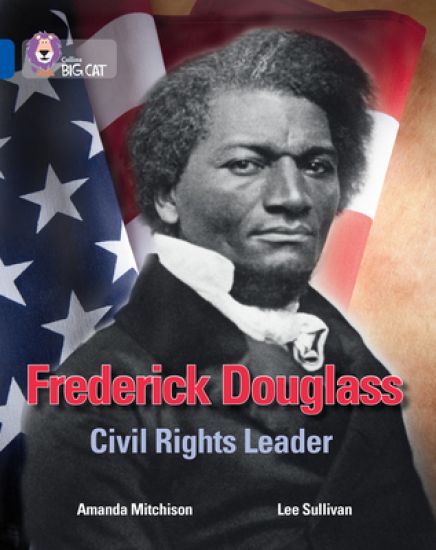
Build your child’s reading confidence at home with books at the right level Antislavery campaigner, author, diplomat and political statesmen, Frederick Douglass was one of the greatest men of his age. Having been enslaved himself, Frederick fought publicly against slavery and was an inspiration in the fight for social and political change. Written by Amanda Mitchison, find out about this life-long battle to fight for equality. Sapphire/Band 16 books offer longer reads to develop children's sustained engagement with texts and are more complex syntactically.Text type: A biographyCurriculum links: History, CitizenshipThis book has been quizzed for Accelerated Reader.

HarperCollins is proud to present its incredible range of best-loved, essential classics. You have seen how a man was made a slave; you shall see how a slave was made a man. Born into slavery during the early nineteenth century, Frederick Douglass escaped to freedom before he was twenty-one years old. From the moment he arrived in New York City, he felt a need to tell his story, one that mirrored so many people still enslaved in the South with no hope of escape. As an orator and preacher, Douglass was an abolitionist, supporter of women’s suffrage and staunch defender of equality for all. In his first autobiographical work, published in 1845, The Narrative of Frederick Douglass describes how he went from slave to a free man.
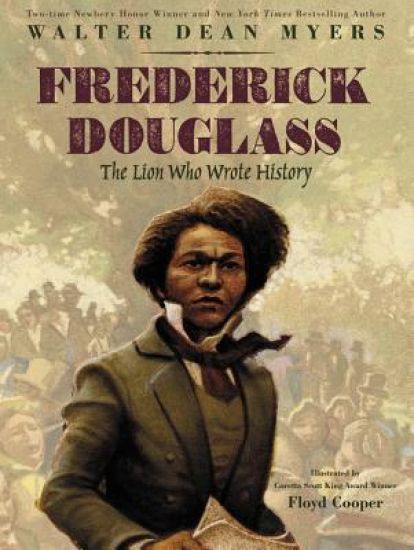
"The go-to Frederick Douglass biography for younger students" (Booklist starred review).In this powerful picture book biography, New York Times bestselling author Walter Dean Myers and acclaimed artist Floyd Cooper take readers on an inspiring journey through the life of Frederick Douglass.Frederick Douglass was born into slavery in the South, taught himself to read, and grew up to become an icon. He was a leader of the abolitionist movement, a celebrated writer, an esteemed speaker, and a social reformer, proving that "once you learn to read, you will be forever free."The story of one of America's most revered figures is brought to life by the text of award-winning author Walter Dean Myers and the sweeping, lush illustrations of artist Floyd Cooper. This picture book biography draws on Frederick Douglass's autobiographies and includes a timeline, making it an excellent source for reports."A stirring testament to the power of words and daring action to create change" (Publishers Weekly starred review).
"The go-to Frederick Douglass biography for younger students" (Booklist starred review).In this powerful picture book biography, New York Times bestselling author Walter Dean Myers and acclaimed artist Floyd Cooper take readers on an inspiring journey through the life of Frederick Douglass.Frederick Douglass was born into slavery in the South, taught himself to read, and grew up to become an icon. He was a leader of the abolitionist movement, a celebrated writer, an esteemed speaker, and a social reformer, proving that "once you learn to read, you will be forever free."The story of one of America's most revered figures is brought to life by the text of award-winning author Walter Dean Myers and the sweeping, lush illustrations of artist Floyd Cooper. This picture book biography draws on Frederick Douglass's autobiographies and includes a timeline, making it an excellent source for reports."A stirring testament to the power of words and daring action to create change" (Publishers Weekly starred review).
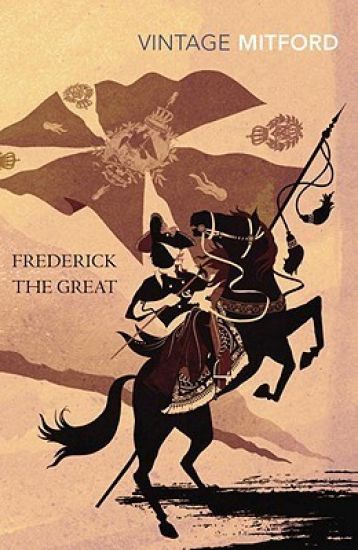
WITH AN INTRODUCTION BY KATE WILLIAMSFrederick II of Prussia attempted to escape his authoritarian father as a boy, but went on to become one of history's greatest rulers. Nancy Mitford brings all these contradictions and achievements to sparkling life in an fascinating, intimate biography.
Narrative of the Life of Frederick Douglass, an American Slave
Frederick Douglass
Vintage
2015
pokkari
An autobiography of author who was born into slavery in Maryland in 1818. He describes his life as a slave - the cruelty he suffered at the hands of plantation owners; his struggles to educate himself in a world where slaves are deliberately kept ignorant; and ultimately, his fight for his right to freedom.

'Highly readable and deeply researched' - Andrew Roberts 'Masterful ... brilliantly brings to life one of the most complex characters of modern European history' - Sunday Telegraph'It is sure to be the standard English-language account for many years. It instructs; it entertains; and it surprises' - Philip Mansel, The SpectatorFrederick the Great, King of Prussia, dominated the eighteenth century in the same way that Napoleon dominated the start of the nineteenth. He was a force of nature, a ruthless, brilliant, charismatic military commander, a monarch of exceptional energy and talent, a gifted composer, performer, poet and philosopher, and a discerning patron of artists, architects and writers, most famously Voltaire. From the very start of his reign he was an intensely divisive figure - fascinating even to those who hated him.Tim Blanning's brilliant new biography captures Frederick's vitality, complexity and flawed genius better than any previous writer. He also recreates a remarkable era, the last flowering of the old regime that would be swept away almost immediately after Frederick's death by the French Revolution. Equally at home on the battlefield or in the music room at Frederick's extraordinary miniature palace of Sanssouci, Blanning draws on a lifetime's immersion in the eighteenth century to present him in the round, with new attention paid to his cultural self-fashioning, including his sexuality. Frederick's spectre has hung over Germany ever since, both as inspiration and warning - Blanning at last allows us to understand him in his own time.

A newly edited collection of the seminal writings and speeches of a legendary writer, orator, and civil rights leader.The life of Frederick Douglass is nothing less than the history of America in the 19th century from slavery to reconstruction. His influence was felt in the political sphere, major social movements, literary culture, and even international affairs. His resounding words tell not only his own remarkable story, but also that of a burgeoning nation forced to reckon with its tremulous moral ground. This compact volume offers a full course on a necessary historical figure, giving voice once again to a man whose guiding words are needed now as urgently as ever. The Portable Frederick Douglass includes the full range of Douglass's writings, from autobiographical writings that span from his life as a slave child to his memories of slavery as an elder statesman in the late 1870s; his protest fiction (one of the first works of African American fiction); his brilliant oratory, constituting the greatest speeches of the Civil War era, which launched his political career; and his journalistic essays that range from cultural and political critique toart, literature, law, history, philosophy, and reform.
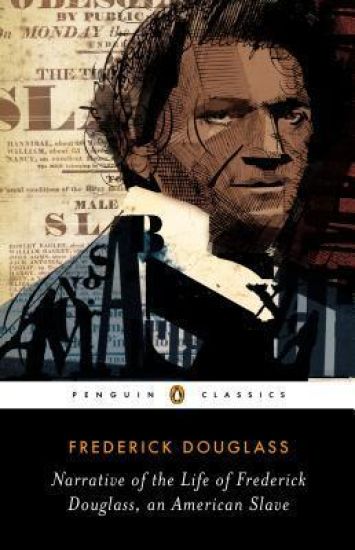
A new edition of the classic African American autobiography, now with with the inclusion of Douglass's other works.The pre-eminent American slave narrative published in 1845, the Narrative powerfully details the life of the abolitionist Frederick Douglass from his birth into slavery in 1818 to his escape to the North in 1838: how he endured the daily physical and spiritual brutalities of his owners and drivers, how he learned to read and write, and how he grew into a man who could only live free or die.Also included in this edition are Douglass's famous oration The Meaning of the Fourth of July to the Negro and his only known work of fiction, the novella The Heroic Slave.Frederick Augustus Washington Bailey was born into slavery in 1818 in Tuckahoe, Maryland. He changed his surname to Douglass to conceal his identity after escaping slavery in 1838 and making his way to Philadelphia and New York. Having been taught to read by the wife of one of his former owners, Douglass wrote later that literacy was his 'pathway from slavery to freedom', and in 1845 he published his instantly bestselling Narrative of the Life of Frederick Douglass, an American Slave. Renowned as the foremost African American advocate against slavery and segregation of his time, he repeatedly risked his own freedom as an antislavery lecturer, writer and publisher. He died in Washington, D.C., in 1895, and after lying in state in the nation's capital, was buried in the Mount Hope Cemetery in Rochester, New York.Ira Dworkin is Associate Director of the Prince Alwaleed Center for American Studies and Research and Assistant Professor of English and Comparative Literature at The American University in Cairo.
Narrative of the Life of Frederick Douglass, an American Slave
Frederick Douglass
Penguin Classics
2021
sidottu
An updated edition of a classic African American autobiography, with new supplementary materials A Penguin Vitae Edition The preeminent American slave narrative first published in 1845, Frederick Douglass's Narrative powerfully details the life of the abolitionist from his birth into slavery in 1818 to his escape to the North in 1838, how he endured the daily physical and spiritual brutalities of his owners and driver, how he learned to read and write, and how he grew into a man who could only live free or die. In addition to Douglass's classic autobiography, this new edition also includes his most famous speech "What to the Slave Is the Fourth of July?" and his only known work of fiction, The Heroic Slave, which was written, in part, as a response to Harriet Beecher Stowe's Uncle Tom's Cabin. Penguin Classics presents Penguin Vitae, loosely translated as "Penguin of one's life," a deluxe hardcover series featuring a dynamic landscape of classic fiction and nonfiction that has shaped the course of our readers' lives. Penguin Vitae invites readers to find themselves in a diverse world of storytellers, with beautifully designed classic editions of personal inspiration, intellectual engagement, and creative originality.
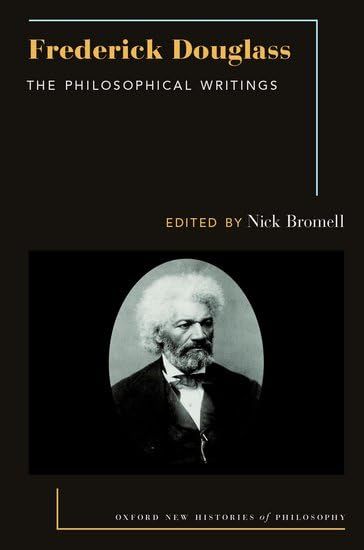
Frederick Douglass: The Philosophical Writings
Oxford University Press
2025
sidottu

Frederick Douglass: The Philosophical Writings
Oxford University Press
2025
nidottu

The second edition of Frederick Ashton's Ballets: Style, Performance, Choreography adds two further ballets to this ground-breaking study of Frederick Ashton's choreography. It not only examines the contribution these ballets made to twentieth century dance art, but also presents a detailed account of Ashton's work and dances, demonstrating his remarkable choreographic and artistic talent. Having danced with the Royal Ballet Company during the years Ashton was Director, author, Geraldine Morris also draws on her years as an academic in the field. As well as highlighting the dances, the book explores the contribution made by Ashton's collaborators, both designers and musicians. Central is the issue of identity and how style can be retained in dance, despite alterations in training. It considers the problem of how the values of ballet training change, thereby affecting contemporary performances of his works. Through eight works Morris examines the various sources that Ashton used, whether they were dances with words, or those influenced by dancers' movement style, jazz dance, abstraction, mysticism, or narrative. With this new material, the second edition makes a significant contribution to dance scholarship.
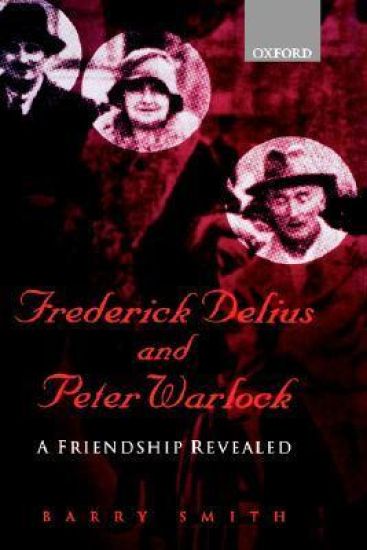
Frederick Delius and Peter Warlock
Clarendon Press
2000
sidottu
The Eton schoolboy, Philip Heseltine (Peter Warlock), was not yet 17 when he first met his musical hero Frederick Delius at a concert of his works given by Sir Thomas Beecham at Queen's Hall in 1911. The next day he wrote an ecstatic letter to Delius enthusing over `such perfect performances of such perfect music'. Flattered and intrigued by the young admirer, Delius replied in warm and encouraging terms. And so began a correspondence that was to last until Heseltine's untimely death in 1930. It is fortunate that each composer kept the others' letters and, now placed in chronological order, they give a fascinating picture, not only of the two men and their music, but also of musical life in England and Europe. In their often frank writing the characters and interaction of the two men is highlighted and in their informal and often gossipy way they illuminate the musical life and many personalities of the time. Barry Smith, the author of a recent highly regarded biography of Peter Warlock, has fully researched the background of the correspondence and by means of generous annotations and linking narrative has produced a compelling story of an unusual and unique friendship between two composers.

Frederick William IV and the Prussian Monarchy 1840-1861
David E. Barclay
Clarendon Press
1995
sidottu
This is the first full-scale study in English of the reign of Frederick William IV, King of Prussia from 1840 to 1861, and arguably the most important German monarch in the century between the death of Frederick the Great and the accession of William II. Although Frederick William has long been criticized as a Romantic reactionary who was utterly out of touch with his times, this study reaches different conclusions, arguing that he was in fact a modern and in many ways, 'successful' monarch. The book is not a biography in the traditional sense. Rather, it focuses on the structures, institutions and transformations of the monarchial system in Prussia during a time of revolutionary change. It thus represents a contribution to our understanding of the structures of the nineteenth-century European state, and the strategies by which conservative elites were able to adjust themselves to new circumstances.

Frederick Temple, Archbishop of Canterbury
Peter Hinchliff; Lord Runcie
Clarendon Press
1998
sidottu
This is the first full-length, serious biography of Frederick Temple, an eminent, nineteenth-century figure and father of William Temple who was Archbishop of Canterbury during the Second World War. Born on a Greek island, of middle-class but impoverished parents, he was educated at Balliol College on a scholarship, became principal of a college which trained teachers for pauper children, then headmaster of Rugby, and Bishop successively of Exeter and London before finally becoming Archbishop of Canterbury at the age of 76 in 1897. In the realm of education he could be considered the real designer of the Oxford and Cambridge Examination Board in the 1850s; was a contributor to the first of the `scandalous' volumes of liberal theology, Essays and Reviews in 1860; was secretary of the Taunton Commission on grammar school education in 1868; and gave the Bampton lectures of 1884 on science and religion which made the theory of evolution respectable. As Bishop of London he attempted to mediate in the London dock strike of 1889; was responsible for the final form of the Archbishops' reply to the Pope's encyclical on Anglican orders; presided over the `Archbishops' Headings' on certain ritual practices in the `Church Crisis' at the end of the century; was much involved in Queen Victoria's Diamond Jubilee celebrations; and crowned Edward VII. He collapsed in the House of Lords after speaking in the debate on the education bill of 1902 and died soon afterwards. To gather the material for this fluent and attractive biography, the author has made use of the Temple family papers, most of which have been hitherto unpublished, as well as the more than 100 volumes of the Archbishop's official papers at Lambeth Palace.

'It will be seen in these pages that I have lived several lives in one: first, the life of slavery; secondly, the life of a fugitive from slavery; thirdly, the life of comparative freedom; fourthly, the life of conflict and battle; and, fifthly, the life of victory, if not complete, at least assured.' First published in 1892, Life and Times of Frederick Douglass Written By Himself is the final autobiography written by Frederick Douglass (1818-1895), a man who was born into slavery in Talbot County, Maryland. Securing his self-liberation at twenty years of age in 1838, he went on to become the most renowned antislavery activist, social justice campaigner, author, orator, philosopher, essayist, historian, intellectual, statesman, and liberator in U.S. history. A powerful literary work, Douglass' final autobiography shares the stories of his 'several lives in one.' Beginning with his war against 'the hell-black system of human bondage,' Douglass bears witness to his personal experiences of mind-body-and soul-destroying tragedies. Living a new life as a 'fugitive from slavery,' he tells his audiences of his decades-long labours as a world-leading freedom-fighter. Ever vigilant in his protest against the discriminatory persecutions endured by millions of 'my people,' he testifies to the terrible reality that his 'life of comparative freedom' necessitated a lifelong fight against the inhumane injustices of 'American prejudice against colour.' Living a death-defying 'life of conflict and battle' during the Civil War, Douglass celebrates the 'life of victory' promised by post-war civil rights legislation only to condemn the failures of the U.S. nation either to exterminate slavery or secure equal rights for all. All too painfully aware that the 'conflict between the spirit of liberty and the spirit of slavery' was far from over and would become the unending struggle for 'aftercoming generations' in the ongoing war against white supremacy, Douglass remained a fearless fighter against the 'infernal and barbarous spirit of slavery' 'wherever I find it' to the day that he died. This new edition examines Douglass' memorialization of his own and his mother Harriet Bailey's first-hand experiences of enslavement and of their 'mental' liberation through a 'love of letters'; his representation of Civil War Black combat heroism; his conviction that 'education means emancipation'; and finally, his 'unending battle' with white publishers for the freedom to 'tell my story.' This volume reproduces Frederick Douglass' emotionally powerful and politically hard-hitting anti-lynching speech, Lessons of the Hour, published in 1894. ABOUT THE SERIES: For over 100 years Oxford World's Classics has made available the widest range of literature from around the globe. Each affordable volume reflects Oxford's commitment to scholarship, providing the most accurate text plus a wealth of other valuable features, including expert introductions by leading authorities, helpful notes to clarify the text, up-to-date bibliographies for further study, and much more.

Frederick Pollock and the English Juristic Tradition
Neil Duxbury
Oxford University Press
2004
sidottu
Frederick Pollock and the English Juristic Tradition provides the first detailed historical account of one of England's great jurists. Until the later decades of the twentieth century, law developed little as an academic discipline in England. One exceptional period of intellectual growth, however, was the late-Victorian era, when a number of brilliant and now celebrated jurists produced works and devised projects which had a crucial impact on the development of English legal thought. Among this band of jurists was the great legal treatise writer, historian, and editor, Frederick Pollock. Compared with many of his contemporaries, however, Pollock has been largely overlooked by modern legal historians. Drawing upon a vast array of sources, Neil Duxbury offers a detailed picture of this enigmatic figure, examining Pollock's career, jurisprudence, philosophy of the common law, treatise writing, and editorial initiatives, and shows that Pollock's contribution to the development of English law and juristic inquiry is both complex and crucial.
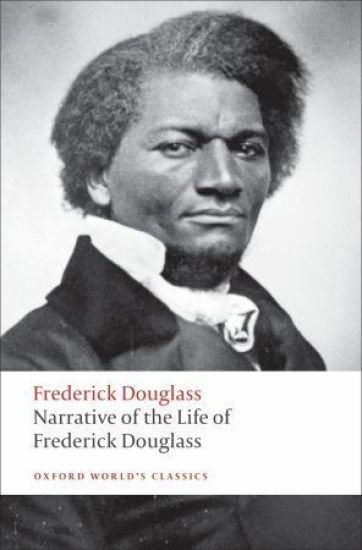
Narrative of the Life of Frederick Douglass, an American Slave
Frederick Douglass
Oxford University Press
2009
nidottu
'I was born in Tuckahoe I have no accurate knowledge of my age, never having seen any authentic record containing it. By far the larger part of the slaves know as little of their ages as horses know of theirs, and it is the wish of most masters within my knowledge to keep their slaves thus ignorant.' Thus begins the autobiography of Frederick Douglass (1818-1895) who was born into slavery in Maryland and after his escape to Massachusetts in 1838 became an ardent abolitionist and campaigner for women's rights. His Narrative, which became an instant bestseller on publication in 1845, describes his life as a slave, the cruelty he suffered at the hands of his masters, his struggle to educate himself and his fight for freedom. Passionately written, often using striking biblical imagery, the Narrative came to assume epic proportions as a founding anti-slavery text in which Douglass carefully crafted both his life story and his persona. This new edition examines Douglass, the man and the myth, his complex relationship with women and the enduring power of his book. It includes extracts from Douglass's primary sources and examples of his writing on women's rights. ABOUT THE SERIES: For over 100 years Oxford World's Classics has made available the widest range of literature from around the globe. Each affordable volume reflects Oxford's commitment to scholarship, providing the most accurate text plus a wealth of other valuable features, including expert introductions by leading authorities, helpful notes to clarify the text, up-to-date bibliographies for further study, and much more.