Kirjojen hintavertailu. Mukana 11 244 527 kirjaa ja 12 kauppaa.

Kirjahaku

Etsi kirjoja tekijän nimen, kirjan nimen tai ISBN:n perusteella.

1000 tulosta hakusanalla Frederick Starr Jr.

Ferghana Valley

Ferghana Valley

S. Frederick Starr

Routledge
2011
nidottu
The Ferghana Valley can reasonably be said to lie in the heart of Central Asia. As such, the Valley has made an inordinate contribution to the history and culture of the region as a whole, as well as significantly affecting the economic, political and religious spheres. This book looks at the region over time, from its early history to the present. It embraces not just the obvious fields of politics, economics and religion, but also ethnography, sociology and culture, and includes the insights of leading scholars from all three Ferghana countries. The book discusses various questions of identity relating to the region, showing how the identity of the Ferghana Valley relates to the emerging national identities of the three post-colonial states that are still gradually emerging from the demise of the Soviet Union, as well as how an understanding of the Ferghana Valley is key to understanding Central Asia itself.
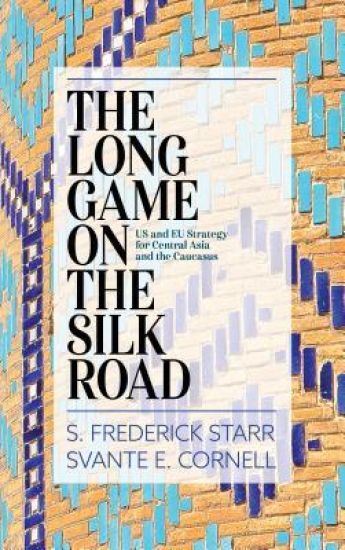
The Long Game on the Silk Road

The Long Game on the Silk Road

S. Frederick Starr; Svante E. Cornell

Rowman Littlefield
2018
sidottu
This book argues that American and European policies toward Central Asia and the Caucasus suffer from both conceptual and structural impediments. It traces the framework of Western policies to the 1975 Helsinki Final Act, which resulted in the stovepiping of relations into political, economic, and democracy categories – and in often uncoordinated or contradictory policies. While the authors embrace the goal of promoting human rights and democracy, they argue that the antagonistic methods adopted to advance this goal have proven counter-productive. They propose that Western governments work with the regional states rather than on or against them; and that instead of focusing directly on political systems, policies should focus on developing the quality of governance and help build institutions that will be building blocks of rule of law and democracy in the long term. The authors also argue that Western leaders have largely failed to grasp the significance of this region, relegated it to a subordinate status and thus damaging western interests. The development of sovereign, economically strong, and effectively self-governing states in the Caucasus and Central Asia is an important goal in its own right; the book stresses the importance of a region where the development and preservation of secular statehood could become a model for the entire Muslim world.
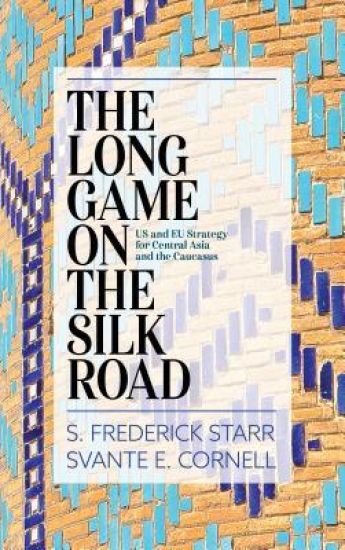
The Long Game on the Silk Road

The Long Game on the Silk Road

S. Frederick Starr; Svante E. Cornell

Rowman Littlefield
2018
nidottu
This book argues that American and European policies toward Central Asia and the Caucasus suffer from both conceptual and structural impediments. It traces the framework of Western policies to the 1975 Helsinki Final Act, which resulted in the stovepiping of relations into political, economic, and democracy categories – and in often uncoordinated or contradictory policies. While the authors embrace the goal of promoting human rights and democracy, they argue that the antagonistic methods adopted to advance this goal have proven counter-productive. They propose that Western governments work with the regional states rather than on or against them; and that instead of focusing directly on political systems, policies should focus on developing the quality of governance and help build institutions that will be building blocks of rule of law and democracy in the long term. The authors also argue that Western leaders have largely failed to grasp the significance of this region, relegated it to a subordinate status and thus damaging western interests. The development of sovereign, economically strong, and effectively self-governing states in the Caucasus and Central Asia is an important goal in its own right; the book stresses the importance of a region where the development and preservation of secular statehood could become a model for the entire Muslim world.
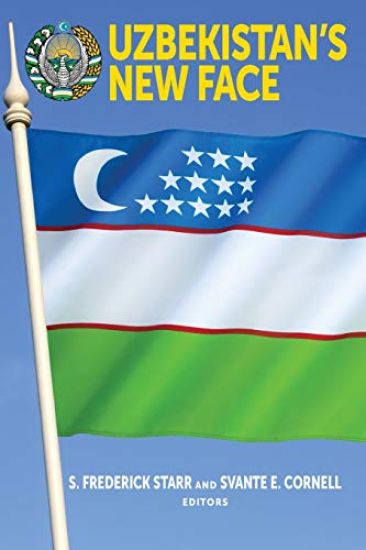
Uzbekistan's New Face

Uzbekistan's New Face

S. Frederick Starr; Svante E. Cornell

Rowman Littlefield
2018
sidottu
Uzbekistan, long considered the center of Central Asia, has the region’s largest population and borders every other regional state including Afghanistan. For the first 25 years of its independence, it adopted a cautious, defensive policy that emphasized sovereignty and treated regional efforts at cooperation with skepticism. But after taking over as President in autumn 2016, Shavkat Mirziyoyev launched a breathtaking series of reform initiatives. His slogan – “it is high time the government serves the people, not vice versa” – led to large-scale reforms in virtually every sector. Time will tell whether the reform effort will succeed, but its first positive fruits are already visible, particularly in a new dynamism within Uzbek society, as well as a fresh approach to foreign relations, where a new spirit of regionalism is taking root. This book is the first systematic effort to analyze Uzbekistan’s reforms.
Uzbekistan's New Face

Uzbekistan's New Face

S. Frederick Starr; Svante E. Cornell

Rowman Littlefield
2018
nidottu
Uzbekistan, long considered the center of Central Asia, has the region’s largest population and borders every other regional state including Afghanistan. For the first 25 years of its independence, it adopted a cautious, defensive policy that emphasized sovereignty and treated regional efforts at cooperation with skepticism. But after taking over as President in autumn 2016, Shavkat Mirziyoyev launched a breathtaking series of reform initiatives. His slogan – “it is high time the government serves the people, not vice versa” – led to large-scale reforms in virtually every sector. Time will tell whether the reform effort will succeed, but its first positive fruits are already visible, particularly in a new dynamism within Uzbek society, as well as a fresh approach to foreign relations, where a new spirit of regionalism is taking root. This book is the first systematic effort to analyze Uzbekistan’s reforms.
The International Politics of Eurasia: v. 1: The Influence of History
First Published in 1995. This ambitious ten-volume series develops a comprehensive analysis of the evolving world role of the post-Soviet successor states. Each volume considers a different factor influencing the relationship between internal politics and international relations in Russia and in the western and southern tiers of newly independent states. The contributors were chosen not only for their recognized expertise but also to ensure a stimulating diversity of perspectives and a dynamic mix of approaches. This is Volume I and covers The Legacy of History in Russia and the New States of Eurasia.
The International Politics of Eurasia: v. 1: The Influence of History
First Published in 1995. This ambitious ten-volume series develops a comprehensive analysis of the evolving world role of the post-Soviet successor states. Each volume considers a different factor influencing the relationship between internal politics and international relations in Russia and in the western and southern tiers of newly independent states. The contributors were chosen not only for their recognized expertise but also to ensure a stimulating diversity of perspectives and a dynamic mix of approaches. This is Volume I and covers The Legacy of History in Russia and the New States of Eurasia.
The International Politics of Eurasia: v. 2: The Influence of National Identity
First Published in 1995. This ambitious ten-volume series develops a comprehensive analysis of the evolving world role of the post-Soviet successor states. Each volume considers a different factor influencing the relationship between internal politics and international relations in Russia and in the western and southern tiers of newly independent states. The contributors were chosen not only for their recognized expertise but also to ensure a stimulating diversity of perspectives and a dynamic mix of approaches. This is Volume 2 on National Identity and Ethnicity In Russia and the New States of Eurasia edited by Roman Szporluk.
The International Politics of Eurasia: v. 2: The Influence of National Identity
First Published in 1995. This ambitious ten-volume series develops a comprehensive analysis of the evolving world role of the post-Soviet successor states. Each volume considers a different factor influencing the relationship between internal politics and international relations in Russia and in the western and southern tiers of newly independent states. The contributors were chosen not only for their recognized expertise but also to ensure a stimulating diversity of perspectives and a dynamic mix of approaches. This is Volume 2 on National Identity and Ethnicity In Russia and the New States of Eurasia edited by Roman Szporluk.
The International Politics of Eurasia: v. 3: The Politics of Religion in Russia and the New States of Eurasia
First Published in 2015. This ambitious ten-volume series develops a comprehensive analysis of the evolving world role of the post-Soviet successor states. Each volume considers a different factor influencing the relationship between internal politics and international relations in Russia and in the western and southern tiers of newly independent states. The contributors were chosen not only for their recognized expertise but also to ensure a stimulating diversity of perspectives and a dynamic mix of approaches. This is Volume3 The Politics of Religion in Russia and the New States of Eurasia.
The International Politics of Eurasia: v. 3: The Politics of Religion in Russia and the New States of Eurasia
First Published in 2015. This ambitious ten-volume series develops a comprehensive analysis of the evolving world role of the post-Soviet successor states. Each volume considers a different factor influencing the relationship between internal politics and international relations in Russia and in the western and southern tiers of newly independent states. The contributors were chosen not only for their recognized expertise but also to ensure a stimulating diversity of perspectives and a dynamic mix of approaches. This is Volume3 The Politics of Religion in Russia and the New States of Eurasia.
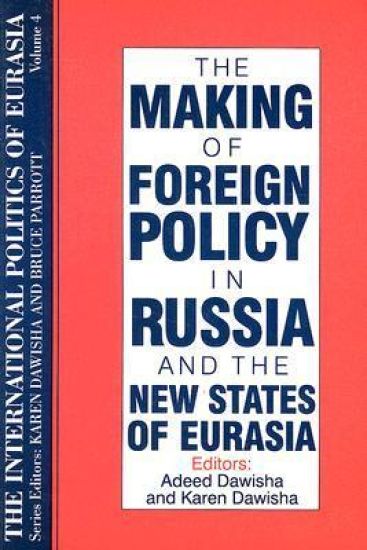
The International Politics of Eurasia: v. 4: The Making of Foreign Policy in Russia and the New States of Eurasia
First Published in 2015. The chapters in this text examine the foreign policies of Russia and other selected states of the former Soviet Union. Each chapter analyses the conduct of foreign policy with the context of each state's unique situation. While the authors look at different countries and subregions and analyse various policy factors and imperatives, they all tend to agree that at present no other power has more direct and substantial impact on the foreign policies and international relations of the region than Russia.
The International Politics of Eurasia: v. 4: The Making of Foreign Policy in Russia and the New States of Eurasia
This ambitious ten-volume series develops a comprehensive analysis of the evolving world role of the post-Soviet successor states. Each volume considers a different factor influencing the relationship between internal politics and international relations in Russia and in the western and southern tiers of newly independent states. The collapse of the Soviet Union and the discrediting of Marxism-Leninism as a source of political legitimacy have prompted a search for fresh principles of political organization that will shape the nature of political culture in all the post-Soviet countries. This volume looks at the making of foreign policy in Russia and the new states of Eurasia.
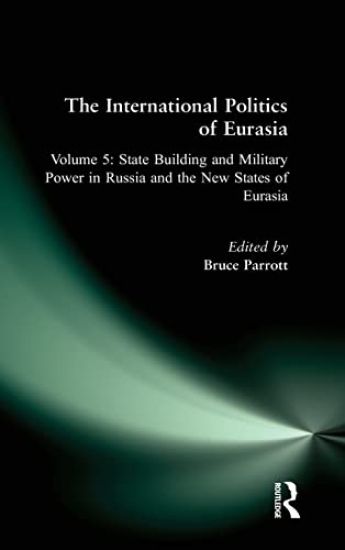
The International Politics of Eurasia: v. 5: State Building and Military Power in Russia and the New States of Eurasia
First Published in 2015. The chapters in this text examine the foreign policies of Russia and other selected states of the former Soviet Union. Each chapter analyses the conduct of foreign policy with the context of each state's unique situation. While the authors look at different countries and subregions and analyse various policy factors and imperatives, they all tend to agree that at present no other power has more direct and substantial impact on the foreign policies and international relations of the region than Russia.
The International Politics of Eurasia: v. 5: State Building and Military Power in Russia and the New States of Eurasia
This ambitious ten-volume series develops a comprehensive analysis of the evolving world role of the post-Soviet successor states. Each volume considers a different factor influencing the relationship between internal politics and international relations in Russia and in the western and southern tiers of newly independent states. The collapse of the Soviet Union and the discrediting of Marxism-Leninism as a source of political legitimacy have prompted a search for fresh principles of political organization that will shape the nature of political culture in all the post-Soviet countries. This volume looks at military power and state building.
The International Politics of Eurasia: v. 8: Economic Transition in Russia and the New States of Eurasia
First Published in 1996. This ambitious ten-volume series develops a comprehensive analysis of the evolving world role of the post-Soviet successor states. Each volume considers a different factor influencing the relationship between internal politics and international relations in Russia and in the western and southern tiers of newly independent states. The contributors were chosen not only for their recognized expertise but also to ensure a stimulating diversity of perspectives and a dynamic mix of approaches. This is Volume 8 Economic Transition in Russia and the New States of Eurasia.