Kirjojen hintavertailu. Mukana 11 244 527 kirjaa ja 12 kauppaa.

Kirjahaku

Etsi kirjoja tekijän nimen, kirjan nimen tai ISBN:n perusteella.

1000 tulosta hakusanalla French Hacking

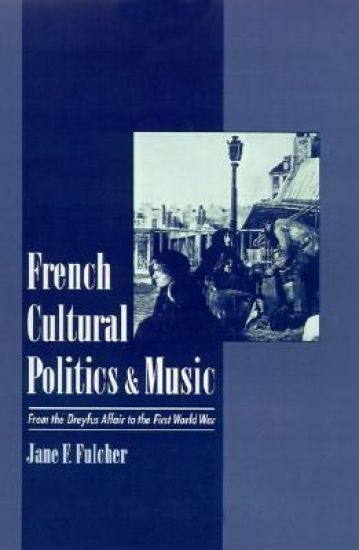
French Cultural Politics and Music

French Cultural Politics and Music

Fulcher Jane F.

Oxford University Press Inc
1999
sidottu
This book argues that French musical meanings and values in the years from 1898 to 1914 are best explained not in terms of contemporary artistic movements, but rather in terms of the political culture, which was undergoing subtle but profound transformation as nationalist leagues enlarged the arena of political action. Applying recent insights from French history, sociology, political anthropology, and literary theory, the book reveals how nationalists used critics, educational institutions, concert series and lectures to disseminate their values through a discourse on French music; and it demonstrates how the Republic and Left responded to this challenge through their own discourses on French musical values. Against this background Fulcher traces the impact of this politicized musical culture on composers such as d'Indy, Charpentier, Magnard, Debussy, and Satie.
French Beans and Food Scares

French Beans and Food Scares

Susanne Freidberg

Oxford University Press Inc
2004
sidottu
From mad cows to McDonaldization to genetically modified maize, European food scares and controversies at the turn of the millennium provoked anxieties about the perils hidden in an increasingly industrialized, internationalized food supply. These food fears have cast a shadow as long as Africa, where farmers struggle to meet European demand for the certifiably clean green bean. But the trade in fresh foods between Africa and Europe is hardly uniform. Britain and France still do business mostly with their former colonies, in ways that differ as dramatically as their national cuisines. The British buy their "baby veg" from industrial-scale farms, pre-packaged and pre-trimmed; the French, meanwhile, prefer their green beans naked, and produced by peasants. Managers and technologists coordinate the baby veg trade between Anglophone Africa and Britain, whereas an assortment of commercants and self-styled agro-entrepreneurs run the French bean trade. Globalization, then, has not erased cultural difference in the world of food and trade, but instead has stretched it to a transnational scale. French Beans and Food Scares explores the cultural economies of two "non-traditional" commodity trades between Africa and Europe--one anglophone, the other francophone--in order to show not only why they differ but also how both have felt the fall-out of the wealthy world's food scares. In a voyage that begins in the mid-19th century and ends in the early 21st, passing by way of Paris, London, Burkina Faso and Zambia, French Beans and Food Scares illuminates the daily work of exporters, importers and other invisible intermediaries in the global fresh food economy. These intermediaries' accounts provide a unique perspective on the practical and ethical challenges of globalized food trading in an anxious age. They also show how postcolonial ties shape not only different societies' geographies of food supply, but also their very ideas about what makes food good.
French Beans and Food Scares

French Beans and Food Scares

Susanne Freidberg

Oxford University Press Inc
2004
nidottu
From mad cows to McDonaldization to genetically modified maize, European food scares and controversies at the turn of the millennium provoked anxieties about the perils hidden in an increasingly industrialized, internationalized food supply. These food fears have cast a shadow as long as Africa, where farmers struggle to meet European demand for the certifiably clean green bean. But the trade in fresh foods between Africa and Europe is hardly uniform. Britain and France still do business mostly with their former colonies, in ways that differ as dramatically as their national cuisines. The British buy their "baby veg" from industrial-scale farms, pre-packaged and pre-trimmed; the French, meanwhile, prefer their green beans naked, and produced by peasants. Managers and technologists coordinate the baby veg trade between Anglophone Africa and Britain, whereas an assortment of commercants and self-styled agro-entrepreneurs run the French bean trade. Globalization, then, has not erased cultural difference in the world of food and trade, but instead has stretched it to a transnational scale. French Beans and Food Scares explores the cultural economies of two "non-traditional" commodity trades between Africa and Europe--one anglophone, the other francophone--in order to show not only why they differ but also how both have felt the fall-out of the wealthy world's food scares. In a voyage that begins in the mid-19th century and ends in the early 21st, passing by way of Paris, London, Burkina Faso and Zambia, French Beans and Food Scares illuminates the daily work of exporters, importers and other invisible intermediaries in the global fresh food economy. These intermediaries' accounts provide a unique perspective on the practical and ethical challenges of globalized food trading in an anxious age. They also show how postcolonial ties shape not only different societies' geographies of food supply, but also their very ideas about what makes food good.
French Opera at the Fin de Siecle

French Opera at the Fin de Siecle

Huebner Steven

Oxford University Press
2005
sidottu
This is the first book-length study of the rich operatic repertory written and performed in France during the last two decades of the nineteenth century. Steven Huebner gives an accessible and colourful account of such operatic favourites as Manon and Wether by Massenet, Louise by Charpentier, and lesser-known gems such as Chabrier's Le Roi malgre lui and Chausson's Le Roi Arthus.
French-Canadian and Quebecois Novels

French-Canadian and Quebecois Novels

Shek Ben-Z.

OXFORD UNIVERSITY PRESS, CANADA
1991
pokkari
French-Canadian novels began as a marginal offshoot of French metropolitan writing and are now read and studied not only in English Canada but around the world. This study covers the genre and its main authors from the beginnings in 1837 to the rapid development of feminist writings in the last two decades. Discussion concentrates on fiction available in English translation.
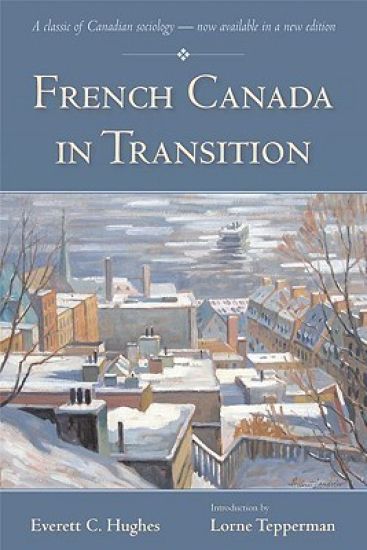
French Canada in Transition

French Canada in Transition

Everett Hughes

Oxford University Press, Canada
2009
nidottu
French Canada in Transition is a landmark study of the impact of rapid industrialization on small French Canadian communities. First published in 1943 by the University of Chicago Press, it remains one of the most widely cited works of Canadian Sociology. Hughes's careful study of a typical Quebec city revealed trends and developing fault lines that would only make themselves apparent to less perceptive observers two decades later with the flowering of the so-call "Quiet Revolution." Special features of this Wynford edition included the new introduction by Tepperman, the foreword to the 1963 Chicago paperback by Nathan Keyfitz of the Dominion Bureau of Statistics (predessor to Statistics Canada), and Hughes's own preface to the 1963 reprint, as well as a brief biography of Hughes and selections from important reviews of the book. French Canada in Transition is a Wynford Book-one of a series of titles representing significant milestones in Canadian literature, thought, and scholarship. New introductions place each book in a modern context and show its continuing relevance.
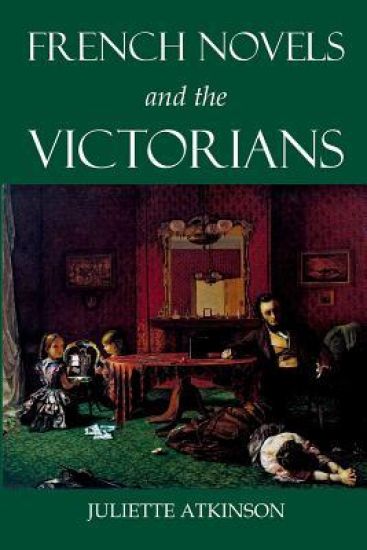
French Novels and the Victorians

French Novels and the Victorians

Juliette Atkinson

Oxford University Press
2017
sidottu
In 1836, John Wilson Croker, having immersed himself in dozens of contemporary French novels, warned his readers that 'she who dares to read a single page of the hundred thousand licentious pages with which the last five years have indundated society, is lost for ever.' It has become common to build an opposition between the attitudes towards fiction held in prudish Victorian England and permissive 19th-century France. The lack of a full-length study of 19th-century Anglo-French literary relations means, however, that the rejection of French novels has been greatly exaggerated. French Novels and the Victorians sheds new light on these relations by exploring the enormous impact of French fiction on the Victorian reading public. The book considers the many different ties built between the two countries in the publishing industry, identifying how French novels could be accessed and by whom, as well as who promoted and who resisted the importation of Continental works in England and why. The book reflects on what 'immorality' meant to both critics and the readers they sought to warn, and how the notion was subjected to scrutiny through censorship debates as well as the fictional representations of readers. It also tackles the contemporary preoccupation with literary influence, and explores how the extensive circulation of French fiction in England affected the concept of a 'national' literature. In addition to highlighting the cultural importance of novelists such as Sand, Balzac, and Dumas, this book uncovers the networks and mediums that enabled French novels to cross the Channel, and looks at how the concept of 'the French novel' was elaborated, interpreted, and challenged.
French Lyric Diction

French Lyric Diction

Jason Nedecky

OXFORD UNIVERSITY PRESS INC
2023
sidottu
Singers, teachers, coaches, and conductors will appreciate French Lyric Diction: A Singer's Guide for its thorough account of the language as it is sung in opera and mélodie. Often-overlooked topics are explored, including phrasal and emphatic stress, vocalic length, singing the French r, and traditions in the setting of French poetry. Considerable attention is paid to the subject of liaison, with recommendations on how to make decisions about optional liaisons in singing. A comprehensive guide to orthography provides instruction on the pronunciation of all French spellings, including many optional secondary pronunciations, and accepted francisé pronunciation for loanwords. Pronunciation dictionaries give transcriptions for over 10,000 names of composers, poets, artists, roles, performers, characters, and places, as well as everyday musical terms.
French Lyric Diction

French Lyric Diction

Jason Nedecky

OXFORD UNIVERSITY PRESS INC
2023
nidottu
Singers, teachers, coaches, and conductors will appreciate French Lyric Diction: A Singer's Guide for its thorough account of the language as it is sung in opera and mélodie. Often-overlooked topics are explored, including phrasal and emphatic stress, vocalic length, singing the French r, and traditions in the setting of French poetry. Considerable attention is paid to the subject of liaison, with recommendations on how to make decisions about optional liaisons in singing. A comprehensive guide to orthography provides instruction on the pronunciation of all French spellings, including many optional secondary pronunciations, and accepted francisé pronunciation for loanwords. Pronunciation dictionaries give transcriptions for over 10,000 names of composers, poets, artists, roles, performers, characters, and places, as well as everyday musical terms.
French Musical Life

French Musical Life

Katharine Ellis

Oxford University Press Inc
2022
sidottu
Explicitly or not, the historical musicology of post-Revolutionary France has focused on Paris as a proxy for the rest of the country. This distorting lens is the legacy of political and cultural struggle during the long nineteenth century, indicating a French Revolution unresolved both then and now. In light of the capital's power as the seat of a centralizing French state (which provincials found 'colonizing') and as a cosmopolitan musical crossroads of nineteenth-century Europe, the struggles inherent in creating sustainable musical cultures outside Paris, and in composing local and regionalist music, are ripe for analysis. Replacement of 'France' with Paris has encouraged normative history-writing articulated by the capital's opera and concert life. Regional practices have been ignored, disparaged or treated piecemeal. This book is a study of French musical centralization and its discontents during the period leading up to and beyond the "provincial awakening" of the Belle Époque. The book explains how different kinds of artistic decentralization and regionalism were hard won (or not) across a politically turbulent century from the 1830s to World War II. In doing so it redraws the historical map of musical power relations in mainland France. Based on work in over 70 archives, chapters on conservatoires, concert life, stage music, folk music and composition reveal how tensions of State and locality played out differently depending on the structures and funding mechanisms in place, the musical priorities of different communities, and the presence or absence of galvanizing musicians. Progressively, the book shifts from musical contexts to musical content, exploring the pressure point of folk music and its translation into "local color" for officials who perpetually feared national division. Control over composition on the one hand, and the emotional intensity of folk-based musical experience on the other, emerges as a matter of consistent official praxis. In terms of "French music" and its compositional styles, what results is a surprising new historiography of French neoclassicism, bound into and growing out of a study of diversity and its limits in daily musical life.
French Autobiography: Devices and Desires

French Autobiography: Devices and Desires

Michael Sheringham

Clarendon Press
1993
sidottu
This is the first full-scale study of French autobiography. Whereas earlier critics have engaged primarily in theoretical discussion of the genre, or in analyses of individual works or authors, Michael Sheringham identifies sixteen key autobiographical texts and situates them in the context of an evolving set of challenges and problems. Informed by a sophisticated awareness of recent theoretical debates, Sheringham conceives autobiography as a distinctively open form of writing, perpetually engaged with different forms of `otherness'. Manifestations of the Other in the autobiographical process - from the reader, who incarnates other people, to ideology, against which individual truth must be pitted, to the potential otherness of memory itself - are traced through a scrutiny of the `devices and desires' at work in a range of texts from Rousseau's Confessions, to Stendhal's Vie de Henry Brulard and Sartre's Les Mots. Other writers examined include Chateaubriand, Gide, Green, Leiris, Leduc, Gorz, Barthes, Perec, and Sarraute. French Autobiography: Devices and Desires represents both the first attempt to assemble a canon in one volume and a strikingly original contribution to the theory of autobiography.
French Fiction in the Mitterrand Years

French Fiction in the Mitterrand Years

Colin Davis; Elizabeth Fallaize

Oxford University Press
2000
nidottu
In the 1980s and 1990s French Fiction has emerged from the towering shadow of the formalist literary debates of the fifties and sixties and has reclaimed the ground of history, or narrative, of the individual self which has been the thrust of artistic endeavour for much of European history. The Author has returned from the dead to entertain and tell stories, as well as to negotiate a path through traumatic experiences such as the legacy of Frances colonial and wartime past, the Holocaust, the spectre of Aids, the labyrinths of desire and personal identity. Colin Davis and Elizabeth Fallaize examine some of the most popular and some of the most challenging of texts which emerged during François Mitterrand's presidency of France (1981-1995) and relate them to the dominant literary and cultural trends of the period. The book will appeal to students at all levels who are engaged in courses in twentieth-century fiction and to readers with an interest in contemporary French culture.
French Fiction in the Mitterrand Years

French Fiction in the Mitterrand Years

Colin Davis; Elizabeth Fallaize

Oxford University Press
2000
sidottu
In the 1980s and 1990s French Fiction has emerged from the towering shadow of the formalist literary debates of the fifties and sixties and has reclaimed the ground of history, or narrative, of the individual self which has been the thrust of artistic endeavour for much of European history. The Author has returned from the dead to entertain and tell stories, as well as to negotiate a path through traumatic experiences such as the legacy of Frances colonial and wartime past, the Holocaust, the spectre of Aids, the labyrinths of desire and personal identity. Colin Davis and Elizabeth Fallaize examine some of the most popular and some of the most challenging of texts which emerged during François Mitterrand's presidency of France (1981-1995) and relate them to the dominant literary and cultural trends of the period. The book will appeal to students at all levels who are engaged in courses in twentieth-century fiction and to readers with an interest in contemporary French culture.
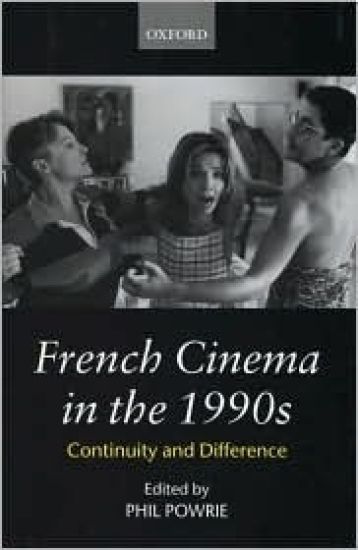
French Cinema in the 1990s

French Cinema in the 1990s

Oxford University Press
1999
nidottu
Following on from Phil Powrie's French Cinema in the 1980s: Nostalgia and the Crisis of Masculinity (Clarendon Press, 1997), this collection of essays, which brings together scholars in the UK and the USA, is the first on French films in the 1990s. The collection focuses on continuity with the 1980s in terms of genres and preoccupations, such as definitions of a national cinema, the heritage film, gay/lesbian issues, and ethnic issues. But it also focuses on key differences: new types of heritage film, whether postcolonial or heritage pastiche; the newly-emerging genre of cinéma de banlieue; and the focus on community and political reflection. Films examined in detail are Les Amants du Pont-Neuf, Le Bonheur est dans le pré, Bye Bye, Chacun cherche son chat, Le Cinquième élément, Douce France, Etat des lieux, Gazon maudit, Germinal, La Haine, Indochine, Irma Vep, Jai pas sommeil, Krim, Merci la vie, Métisse, Mon Père ce héros, Les Nuits fauves, RaÏ, Ridicule, Romuald et Juliette, Les Roseaux sauvages, Trois Couleurs: Blanc, Trois Couleurs: Bleu, Trois Couleurs: Rouge, Un héros très discret, Les Visiteurs. This collection of closely-argued essays will help students and film lovers alike to understand where French cinema has been going in the 1990s.
French Cinema in the 1990s

French Cinema in the 1990s

Oxford University Press
1999
sidottu
Following on from Phil Powrie's French Cinema in the 1980s: Nostalgia and the Crisis of Masculinity (Clarendon Press, 1997), this collection of essays, which brings together scholars in the UK and the USA, is the first on French films in the 1990s. The collection focuses on continuity with the 1980s in terms of genres and preoccupations, such as definitions of a national cinema, the heritage film, gay/lesbian issues, and ethnic issues. But it also focuses on key differences: new types of heritage film, whether postcolonial or heritage pastiche; the newly-emerging genre of cinéma de banlieue; and the focus on community and political reflection. Films examined in detail are Les Amants du Pont-Neuf, Le Bonheur est dans le pré, Bye Bye, Chacun cherche son chat, Le Cinquième élément, Douce France, Etat des lieux, Gazon maudit, Germinal, La Haine, Indochine, Irma Vep, Jai pas sommeil, Krim, Merci la vie, Métisse, Mon Père ce héros, Les Nuits fauves, RaÏ, Ridicule, Romuald et Juliette, Les Roseaux sauvages, Trois Couleurs: Blanc, Trois Couleurs: Bleu, Trois Couleurs: Rouge, Un héros très discret, Les Visiteurs. This collection of closely-argued essays will help students and film lovers alike to understand where French cinema has been going in the 1990s.
French Opera at the Fin de Siècle

French Opera at the Fin de Siècle

Huebner Steven

Clarendon Press
1999
sidottu
This is the first book-length study of the rich operatic repertory written and performed in France during the last two decades of the nineteenth century. Steven Huebner gives an accessible and colourful account of such operatic favourites as Manon and Werther by Massenet, Louise by Charpentier, and lesser-known gems such as Chabrier's Le Roi malgré lui and Chausson's Le Roi Arthus. For the first time opera lovers have available under a single cover a survey of a repertory profoundly influenced by the music of Richard Wagner.
French Constitutional Law

French Constitutional Law

John Bell

Clarendon Press
1995
nidottu
French Constitutional Law provides the first systematic presentation in English of judicial review of legislation in contemporary France. Created by the Constitution of the Fifth Republic in 1958, the Conseil Constitutionnel has had an increasingly important place in French legal and political life, especially since 1981. Part One of the book is an introduction to the Conseil and to the principles it has developed on the allocation of law-making powers between Parliament and the Government, parliamentary procedure, fundamental freedoms, and equality. Part Two is a collection of key materials translated into English, including constitutional texts and leading decisions of the Conseil Constitutionnel.
French Administrative Law

French Administrative Law

Neville L. Brown; John S. Bell

Oxford University Press
1998
nidottu
This new edition of the leading English-language text provides a detailed profile of the Conseil and an up-to-date overview of le droit administratif, which is regarded, alongside the Code Napoléon, as the most notable achievement of French legal science. The book includes eleven expanded appendices, including statistics, model pleadings and other illustrations, providing an invaluable and accessible source of information on the French administrative courts, their procedure and case-load. Throughout the approach is comparative, with frequent references to developments in United Kingdom administrative law and in the EC institutions.
French Cinema in the 1980s

French Cinema in the 1980s

Phil Powrie

Clarendon Press
1997
sidottu
French Cinema in the 1980s is a set of critical essays on films which help to focus on a particular theme whose roots are in the 1970s, and which extends beyond the 1980s into the 1990s: the crisis of masculinity in contemporary French culture, and its interrelationship with nostalgia. After an introduction which gives a brief overview both of the crisis in the French film industry during the 1980s, and of the socio-political crisis of masculinity in the wake of 1970s feminism, there are three sections: the retro-nostalgic film, which emerged during the 1980s, and two more popular genres, the polar, or police thriller, and the comic film. Each section begins with a brief preface which highlights the major issues for the genre during the 1980s. The films discussed have all been distributed outside France, and are in many cases commercially available. The nostalgia section covers Un amour de Swann, Un dimanche à la campagne, Jean de Florette/Manon des Sources, and Coup de foudre. The section on the police thriller begins with Truffaut's last film, Vivement dimanche!, and includes a chapter on three thrillers by a variety of directors (La Balance, Police, Détective). Its main focus, however, is on thrillers by the directors of the cinéma du look (Diva, Subway, Mauvais sang). The last section on the comic film looks at three films which were successful both in France and abroad: Trois hommes et un couffin (remade in Hollywood as Three Men and a Baby), La Vie est un long fleuve tranquille and, finally, Depardieu's gamble at cross-dressing, Tenue de soirée.
French Cinema in the 1980s

French Cinema in the 1980s

Phil Powrie

Clarendon Press
1997
nidottu
French Cinema in the 1980s is a set of critical essays on films which help to focus on a particular theme whose roots are in the 1970s, and which extends beyond the 1980s into the 1990s: the crisis of masculinity in contemporary French culture, and its interrelationship with nostalgia. After an introduction which gives a brief overview both of the crisis in the French film industry during the 1980s, and of the socio-political crisis of masculinity in the wake of 1970s feminism, there are three sections: the retro-nostalgic film, which emerged during the 1980s, and two more popular genres, the polar, or police thriller, and the comic film. Each section begins with a brief preface which highlights the major issues for the genre during the 1980s. The films discussed have all been distributed outside France, and are in many cases commercially available. The nostalgia section covers Un amour de Swann, Un dimanche à la campagne, Jean de Florette/Manon des Sources, and Coup de foudre. The section on the police thriller begins with Truffaut's last film, Vivement dimanche!, and includes a chapter on three thrillers by a variety of directors (La Balance, Police, Détective). Its main focus, however, is on thrillers by the directors of the cinéma du look (Diva, Subway, Mauvais sang). The last section on the comic film looks at three films which were successful both in France and abroad: Trois hommes et un couffin (remade in Hollywood as Three Men and a Baby), La Vie est un long fleuve tranquille and, finally, Depardieu's gamble at cross-dressing, Tenue de soirée.