
Kirjahaku
Etsi kirjoja tekijän nimen, kirjan nimen tai ISBN:n perusteella.
1000 tulosta hakusanalla Friedrich

The Complete Works Of Friedrich Nietzsche
Friedrich Wilhelm Nietzsche; Oscar (EDT) Levy
Kessinger Pub
2007
pokkari

The Songs And Music Of Friedrich Froebel's Mother Play
Friedrich Froebel; Susan (TRN) Blow
Kessinger Pub
2007
pokkari

Dr. Friedrich Bleek's Lectures On The Apocalypse
Friedrich Bleek; Theodor (EDT) Hossbach; Samuel (EDT) Davidson
Kessinger Pub
2008
pokkari

Friedrich Wilhelm Krummacher: An Autobiography (1869)
F. W. Krummacher
KESSINGER PUBLISHING, LLC
2008
sidottu
Selections from Friedrich Schleiermacher's <i>Christian Ethics</i>
Friedrich Schleiermacher
Westminster/John Knox Press,U.S.
2010
pokkari
Brandt presents important selections from German theologian Schleiermacher's Christian Ethics, a work that moves beyond formal matters to offer a comprehensive analysis of ethical issues, including what constitutes moral action for individuals in relation to the family, the state, the school, the church, and society. This edition also includes James Brandt's in-depth introductory essay, describing the role of Christian Ethics in Schleiermacher's overall corpus, its place in the history of Christian ethical reflection, and its structure and character.
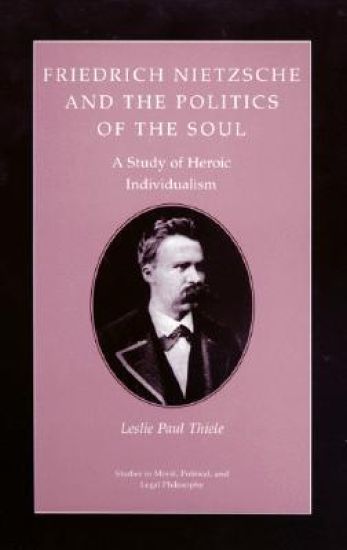
Friedrich Nietzsche and the Politics of the Soul
Leslie Paul Thiele
Princeton University Press
1990
pokkari
Reading Nietzsche's works as the "political biography of his soul," Leslie Thiele presents an original and accessible essay on the great thinker's attempt to lead a heroic life as a philosopher, artist, saint, educator, and solitary. He takes as his point of departure Nietzsche's conception of the soul as a multiplicity of conflicting drives and personae, and focuses on the task Nietzsche allotted himself "to make a cosmos out of his chaotic inheritance." This struggle to "become what you are" by way of a spiritual politics is demonstrated to be Nietzsche's foremost concern, which fused his philosophy with his life. The book offers a conversation with Nietzsche rather than a consideration of the secondary literature, yet it takes to task many prevalent approaches to his work, and contests especially the way we often restrict our encounter with him to conceptual analysis. All deconstructionist attempts to portray him as solely concerned with the destruction of the subject and the dispersion of the self, rather than its unification, are called into question. Often portrayed as the champion of nihilism, Nietzsche here emerges as a thinker who saw his primary task as the overcoming of nihilism through the heroic struggle of individuation.
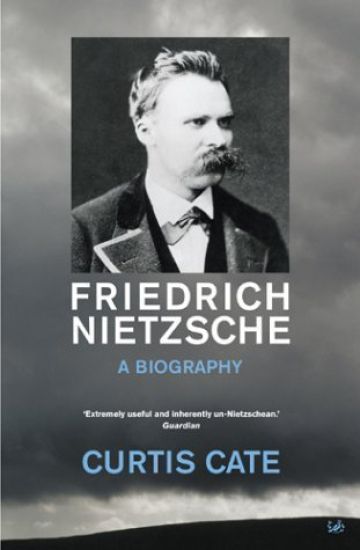
No modern philosopher has been more maligned and misunderstood or more cynically exploited than Friedrich Nietzsche. The wealth and diversity of Nietzsche's aphorisms and brief essays - close to 2,700 - make him the most seminal and provocative thinker of modern times.
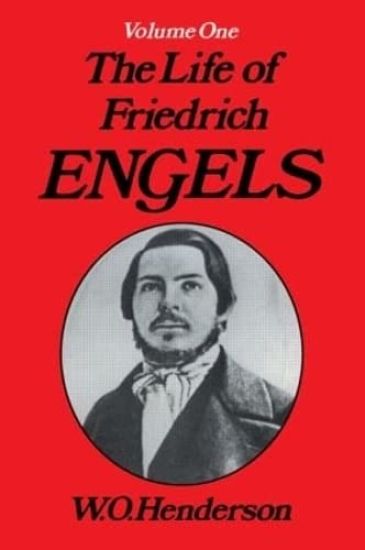
First published in 1976. The year 1970 saw the 150th anniversary of the birth of Friedrich Engels who was Karl Marx's most intimate friend and collaborator. Today the disciples of Marx and Engels are numbered in millions and the way of life of great states is based upon their doctrines. An understanding of the career and work of Friedrich Engels is essential to an appreciation of the origin and development of the Marxist form of socialism in the nineteenth century. This is the first volume in a set of two.
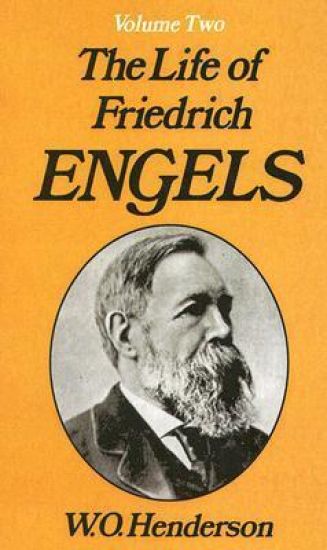
First Published in 1976. The first volume on this two-part biography traces Engels' carer from his youth in the Wupper valley, through his periods in Bremen and Berlin to the Manchester years and the beginning of his long collaboration with Marx. These early years are described against the background of the prevailing social unrest in Europe, culminating in the 1848 revolutions and portraits are included of many Marx's and Engels' friends and fellow communists.
Published in 2004, Friedrich List is a valuable contribution to the field of History. This study is based upon the material included in Friedrich List's collected works (cited as Werke) and upon the documents preserved in the List archives in Reutlingen. The most important biographies of List are those by Ludwig Hausser, Friedrich Lenz, Carl August Meissinger, Carl Brinkmann, and Hans Gehrig. List's early career has been examined by Karl Goeser and Paul Gehring, his services to the Union of Merchants by Hans-Peter Olshausen, his work as a journalist by Carl Schneider, and his activities in the United States by William Notz.
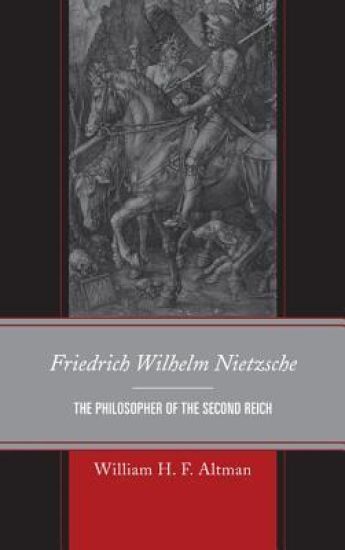
When careful consideration is given to Nietzsche’s critique of Platonism and to what he wrote about Bismarck, Kaiser Wilhelm, and to Germany’s place in “international relations” (die Große Politik), the philosopher’s carefully cultivated “pose of untimeliness” is revealed to be an imposture. As William H. F. Altman demonstrates, Nietzsche should be recognized as the paradigmatic philosopher of the Second Reich, the short-lived and equally complex German Empire that vanished in World War One. Since Nietzsche is a brilliant stylist whose seemingly disconnected aphorisms have made him notoriously difficult for scholars to analyze, Friedrich Wilhelm Nietzsche is presented in Nietzsche’s own style in a series of 155 brief sections arranged in five discrete “Books,” a structure modeled on Daybreak. All of Nietzsche’s books are considered in the context of the close and revealing relationship between “Friedrich Wilhelm Nietzsche” (named by his patriotic father after the King of Prussia) and the Second Reich. In “Preface to ‘A German Trilogy,’” Altman joins this book to two others already published by Lexington Books: Martin Heidegger and the First World War: Being and Time as Funeral Oration and The German Stranger: Leo Strauss and National Socialism.
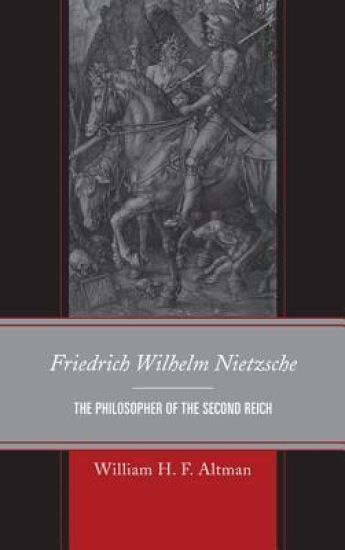
When careful consideration is given to Nietzsche’s critique of Platonism and to what he wrote about Bismarck, Kaiser Wilhelm, and to Germany’s place in “international relations” (die Große Politik), the philosopher’s carefully cultivated “pose of untimeliness” is revealed to be an imposture. As William H. F. Altman demonstrates, Nietzsche should be recognized as the paradigmatic philosopher of the Second Reich, the short-lived and equally complex German Empire that vanished in World War One. Since Nietzsche is a brilliant stylist whose seemingly disconnected aphorisms have made him notoriously difficult for scholars to analyze, Friedrich Wilhelm Nietzsche is presented in Nietzsche’s own style in a series of 155 brief sections arranged in five discrete “Books,” a structure modeled on Daybreak. All of Nietzsche’s books are considered in the context of the close and revealing relationship between “Friedrich Wilhelm Nietzsche” (named by his patriotic father after the King of Prussia) and the Second Reich. In “Preface to ‘A German Trilogy,’” Altman joins this book to two others already published by Lexington Books: Martin Heidegger and the First World War: Being and Time as Funeral Oration and The German Stranger: Leo Strauss and National Socialism.

Friedrich Nietzsche
Ashgate Publishing Limited
2009
sidottu
From his first readers to the present, Friedrich Nietzsche has found supporters and detractors on every point of the political spectrum. In the introduction to this volume, Tracy Strong analyzes the reasons for this diversity of reception. They are to be found, not only in modern social and political developments but, more importantly, in the purpose and style of Nietzsche's writing. The volume includes selections from all major interpretive schools, including some from the early part of the twentieth century, an appendix presenting a new translation of one of Nietzsche's most controversial writings, The Greek State, and a lengthy bibliography of writings on Nietzsche and politics. The essays gathered together in this volume are the work of the most seminal Nietzsche scholars and, taken together, provide a comprehensive study of Nietzsche's political thought.

Friedrich Nietzsche on the Philosophy of Right and the State
Nikos Kazantzakis
State University of New York Press
2007
pokkari
First English translation of Nikos Kazantzakis's 1909 doctoral dissertation on Nietzsche.This book represents the first English translation of Nikos Kazantzakis's 1909 dissertation on Friedrich Nietzsche's political and legal philosophy. Before Kazantzakis became one of the best-known modern Greek writers, he was an avid student of Nietzsche's thought, discovering Nietzsche while studying law in Paris from 1907 to 1909. This powerful assessment of Nietzsche's radical political thought is translated here from a restored and authentic recent edition of the original. Its deep insights are unencumbered by the encrustations that generations of Nietzsche's admirers and detractors have deposed on the original Nietzschean corpus. The book also offers a revealing glimpse into the formative stage of Kazantzakis's thought.
Friedrich Schlegel and the Emergence of Romantic Philosophy
Elizabeth Millán
State University of New York Press
2007
sidottu
The origins of early German Romanticism and the philosophical contributions of the movement's most important philosopher.This book addresses the philosophical reception of early German Romanticism and offers the first in-depth study in English of the movement's most important philosopher, Friedrich Schlegel, presenting his philosophy against the background of the controversies that shaped its emergence. Elizabeth Millán-Zaibert begins by distinguishing early German Romanticism from classical German Idealism, under which it has all too often been subsumed, and then explores Schlegel's romantic philosophy (and his rejection of first principles) by showing how he responded to three central figures of the post-Kantian period in Germany-Jacobi, Reinhold, and Fichte-as well as to Kant himself. She concludes with a comprehensive critique of the aesthetic and epistemological consequences of Schlegel's thought, with special attention paid to his use of irony.
Friedrich Schlegel and the Emergence of Romantic Philosophy
Elizabeth Millán
State University of New York Press
2008
pokkari
The origins of early German Romanticism and the philosophical contributions of the movement's most important philosopher. This book addresses the philosophical reception of early German Romanticism and offers the first in-depth study in English of the movement's most important philosopher, Friedrich Schlegel, presenting his philosophy against the background of the controversies that shaped its emergence. Elizabeth Millán-Zaibert begins by distinguishing early German Romanticism from classical German Idealism, under which it has all too often been subsumed, and then explores Schlegel's romantic philosophy (and his rejection of first principles) by showing how he responded to three central figures of the post-Kantian period in Germany-Jacobi, Reinhold, and Fichte-as well as to Kant himself. She concludes with a comprehensive critique of the aesthetic and epistemological consequences of Schlegel's thought, with special attention paid to his use of irony.
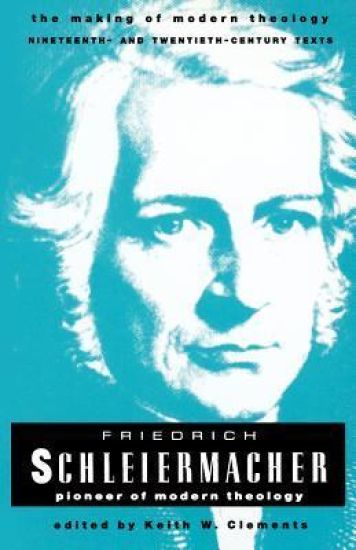
Friedrich Schleiermacher
Augsburg Fortress
1991
nidottu
Schleiermacher, a German theologian at the turn of the nineteenth century, is truly one of the masters of modern theology: he sought to rebuild Protestant theology in the wake of the Enlightenment and of Kant's destruction of traditional metaphysics. He was the founder of "liberal theology" with its emphasis on inner experience and the knowledge of God as mediated through history. This volume concentrates on the key texts and ideas in Schleiermacher's thought. It presents the essential Schleiermacher for students and the general reader. Keith Clements's introductory essay and notes on the selected texts set Schleiermacher in his historical context, chart the development of his thought and indicate the significance of this theology in the development of Christian theology as a whole. Substantial selections from Schleiermacher's work illustrate key themes: Religion as feeling and relationship The distinctiveness of Christianity: redemption through Jesus Christ The nature of theology as reflection and communication Hermeneutics: conversation with history God and the world The person and work of Christ Nation, Church and State Christianity and the religions
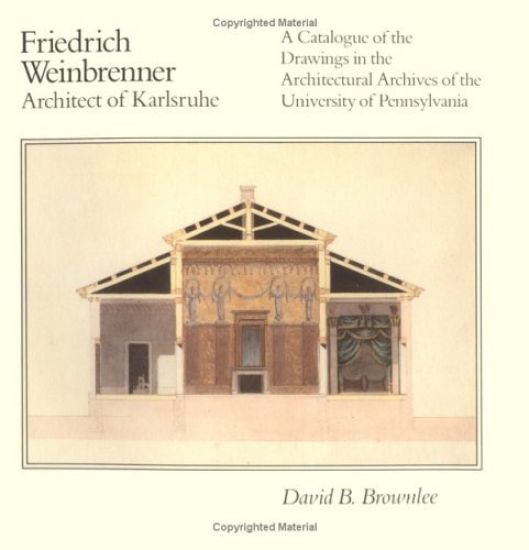
Friedrich Weinbrenner, Architect of Karlsruhe
David B. Brownlee
University of Pennsylvania Press
1986
pokkari
Friedrich Weinbrenner was the first internationally important German architect of the nineteenth century. His planning for the city of Karlsruhe-and his design of every imaginable type of structure, including palaces, churches, synagogue, government buildings, city gates, shops, fountains, theaters, armories, cemetery buildings and farms-is a remarkable achievement. This collection includes treatment of Weinbrenner's contributions to agricultural architecture. Based on new rationalist models that were greatly influenced by the scientific movement in the mideighteenth century.