Kirjojen hintavertailu. Mukana 11 627 425 kirjaa ja 12 kauppaa.

Kirjahaku

Etsi kirjoja tekijän nimen, kirjan nimen tai ISBN:n perusteella.

1000 tulosta hakusanalla Friedrich Rittelmeyer

Friedrich A. von Hayek
Hayek's reputation has gone through a remarkable cycle. An eminent exponent of the Austrian theory of business cycles in the 1930s, he was worsted in the controversy over Keynes' Treatise on Money (1930). Following this defeat, Hayek retreated into capital theory, an esoteric branch of economics in which few economists then took an active interest. He gave up economics altogether after the war and turned to psychology, political philosophy, philosophy of law and the history of ideas. However, in 1974 he won the Nobel Prize and returned to mainstream economics as a leading critic of Keynesianism and an advocate of free banking as the answer to inflation. Today Hayek reigns supreme as the kind of moral philosopher and political economist that economics has not seen since Adam Smith. Also forthcoming in this series is Paul A. Samuelson, 2nd Series (October 2004, 3 volumes, £425).
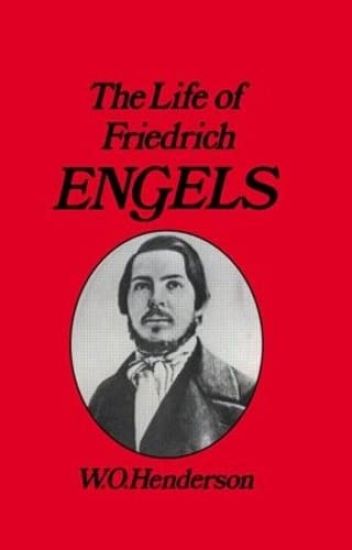
Friedrich Engels

Friedrich Engels

W. O. Henderson

Routledge
1976
muu
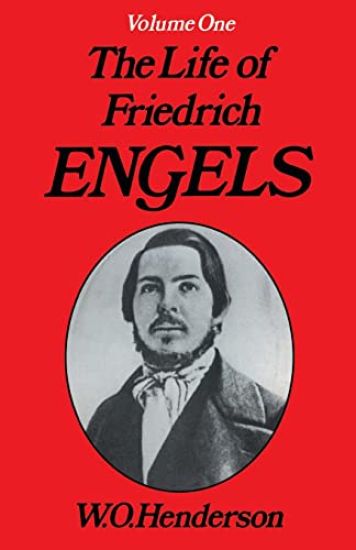
First published in 1976. The year 1970 saw the 150th anniversary of the birth of Friedrich Engels who was Karl Marx's most intimate friend and collaborator. Today the disciples of Marx and Engels are numbered in millions and the way of life of great states is based upon their doctrines. An understanding of the career and work of Friedrich Engels is essential to an appreciation of the origin and development of the Marxist form of socialism in the nineteenth century. This is the first volume in a set of two.
Friedrich List

Friedrich List

William Henderson

Routledge
2014
nidottu
Published in 2004, Friedrich List is a valuable contribution to the field of History. This study is based upon the material included in Friedrich List's collected works (cited as Werke) and upon the documents preserved in the List archives in Reutlingen. The most important biographies of List are those by Ludwig Hausser, Friedrich Lenz, Carl August Meissinger, Carl Brinkmann, and Hans Gehrig. List's early career has been examined by Karl Goeser and Paul Gehring, his services to the Union of Merchants by Hans-Peter Olshausen, his work as a journalist by Carl Schneider, and his activities in the United States by William Notz.
Friedrich Engels

Friedrich Engels

W.O. Henderson

Routledge
2013
nidottu
First published in 1976. The year 1970 saw the 150th anniversary of the birth of Friedrich Engels who was Karl Marx's most intimate friend and collaborator. Today the disciples of Marx and Engels are numbered in millions and the way of life of great states is based upon their doctrines. An understanding of the career and work of Friedrich Engels is essential to an appreciation of the origin and development of the Marxist form of socialism in the nineteenth century. This is the first volume in a set of two.
Friedrich Meinecke and German Politics in the Twentieth Century

Friedrich Meinecke and German Politics in the Twentieth Century

Robert A. Pois

University of California Press
2022
pokkari
Friedrich Meinecke and German Politics in the Twentieth Century examines the evolution of Friedrich Meinecke’s political thought against the backdrop of two world wars and the social and political upheavals in Germany. Meinecke, an influential historian and intellectual, witnessed and reflected on the monumental changes in his country during the early 20th century, navigating the aftermath of World War I, the rise of Nazism, and the eventual collapse of the Weimar Republic. His intellectual journey—from an advocate of statism in his early work Weltbürgertum und Nationalstaat (1907) to a postwar rejection of state absolutism—has been studied primarily through its ethical and philosophical implications. However, this work aims to explore Meinecke’s political responses to the crises of his time, specifically focusing on his views regarding Nazism, the Weimar Republic, and his relationship with the ideas of Friedrich Naumann. Meinecke's rejection of the unchecked statism of his youth, particularly in Weltbürgertum und Nationalstaat, ultimately prevented him from fully grasping the complex political realities that led to the rise of Nazi ideology. His devotion to a super-political cosmopolitanism, especially during the Weimar period, resulted in a failure to understand the deep cultural and political changes that shaped the modern German state. This essay highlights how Meinecke’s retreat into the idealized concept of Kultur (culture) created a chasm between his theoretical understanding and the political realities that faced his countrymen. Despite being positioned as part of the intellectual elite, Meinecke’s tendency to separate politics from cultural realities ultimately distanced him from the forces that fueled Nazi extremism. Through his examination of Meinecke’s political writings, the essay sheds light on the historical missteps of the German Bildungsbürgertum and its role in the wider tragedy of 20th-century German history. This title is part of UC Press's Voices Revived program, which commemorates University of California Press’s mission to seek out and cultivate the brightest minds and give them voice, reach, and impact. Drawing on a backlist dating to 1893, Voices Revived makes high-quality, peer-reviewed scholarship accessible once again using print-on-demand technology. This title was originally published in 1972.
Friedrich Meinecke and German Politics in the Twentieth Century

Friedrich Meinecke and German Politics in the Twentieth Century

Robert A. Pois

University of California Press
2022
sidottu
Friedrich Meinecke and German Politics in the Twentieth Century examines the evolution of Friedrich Meinecke’s political thought against the backdrop of two world wars and the social and political upheavals in Germany. Meinecke, an influential historian and intellectual, witnessed and reflected on the monumental changes in his country during the early 20th century, navigating the aftermath of World War I, the rise of Nazism, and the eventual collapse of the Weimar Republic. His intellectual journey—from an advocate of statism in his early work Weltbürgertum und Nationalstaat (1907) to a postwar rejection of state absolutism—has been studied primarily through its ethical and philosophical implications. However, this work aims to explore Meinecke’s political responses to the crises of his time, specifically focusing on his views regarding Nazism, the Weimar Republic, and his relationship with the ideas of Friedrich Naumann. Meinecke's rejection of the unchecked statism of his youth, particularly in Weltbürgertum und Nationalstaat, ultimately prevented him from fully grasping the complex political realities that led to the rise of Nazi ideology. His devotion to a super-political cosmopolitanism, especially during the Weimar period, resulted in a failure to understand the deep cultural and political changes that shaped the modern German state. This essay highlights how Meinecke’s retreat into the idealized concept of Kultur (culture) created a chasm between his theoretical understanding and the political realities that faced his countrymen. Despite being positioned as part of the intellectual elite, Meinecke’s tendency to separate politics from cultural realities ultimately distanced him from the forces that fueled Nazi extremism. Through his examination of Meinecke’s political writings, the essay sheds light on the historical missteps of the German Bildungsbürgertum and its role in the wider tragedy of 20th-century German history. This title is part of UC Press's Voices Revived program, which commemorates University of California Press’s mission to seek out and cultivate the brightest minds and give them voice, reach, and impact. Drawing on a backlist dating to 1893, Voices Revived makes high-quality, peer-reviewed scholarship accessible once again using print-on-demand technology. This title was originally published in 1972.
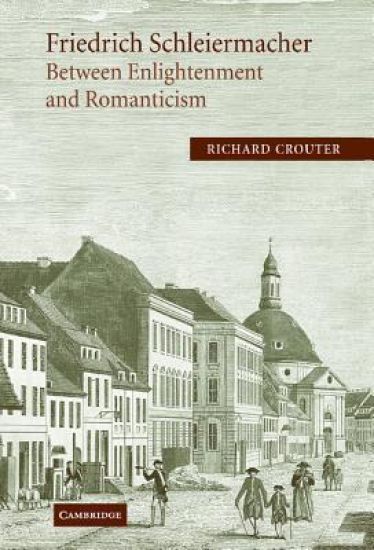
Friedrich Schleiermacher: Between Enlightenment and Romanticism
Friedrich Schleiermacher's groundbreaking work in theology and philosophy was forged in the cultural ferment of Berlin at the convergence of the Enlightenment and Romanticism. The three sections of this book include illuminating sketches of Schleiermacher's relationship to contemporaries (Mendelssohn, Hegel and Kierkegaard), his work as public theologian (dialogue on Jewish emancipation, founding the University of Berlin) as well as the formation and impact of his two most famous books, On Religion: Speeches to its Cultured Despisers and The Christian Faith. Richard Crouter examines Schleiermacher's stance regarding the status of doctrine, Church and political authority, and the place of theology among the academic disciplines. Dedicated to the Protestant Church in the line of Calvin, Schleiermacher was equally a man of the university who brought the highest standards of rationality, linguistic sensitivity and a sense of history to bear upon religion.
Friedrich Schiller

Friedrich Schiller

Lesley Sharpe

Cambridge University Press
2006
pokkari
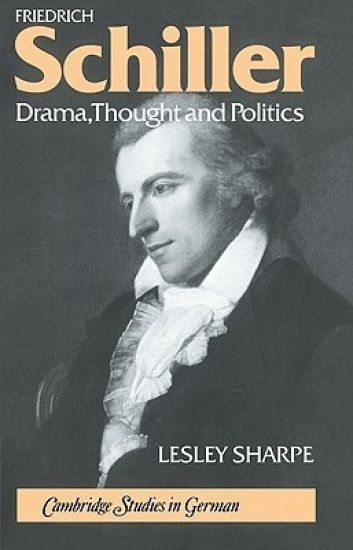
In this important study, Lesley Sharpe assesses Schiller's development as a dramatist, poet and thinker, and provides detailed discussions of all his major works, including his essays on aesthetics. His works are viewed against the social, political and literary background of the late eighteenth century. Spanning a period from the late 1770s to 1805 they explore the insistent themes of the age - the loss of tradition and authority, the individual's claim to self-expression and the search for stability. While the early works focus on the turbulent individual, Schiller later turns to the great public concerns of the French Revolutionary era - legitimacy and power, the exercise of freedom and the relationship between morality and politics. The aesthetic essays explore the vital role of art in integrating the aesthetic, moral and political realms.
Friedrich Froebel

Friedrich Froebel

Irene M. Lilley

Cambridge University Press
2010
pokkari
Friedrich Froebel (1782–1852) has long been known as a great educational reformer and the founder of kindergartens. Most of Froebel's works deal with young children. This selection, translated from the German for this volume, shows the development of his educational doctrines. The extracts are arranged by topic, with a brief introduction to each section. The first gives Froebel's impressions during his formative years and his reasons for choosing teaching as a vocation; the second presents his basic principles from his most important work, The Education of Man; and two remaining sections record his observations of children in their early years. A general introduction appraises Froebel's main beliefs and his influence, and a bibliography is included. To those concerned with child development and the history of education, this volume offers a concise readable account of the beliefs and achievements of a remarkable nineteenth-century educator given in his own words.
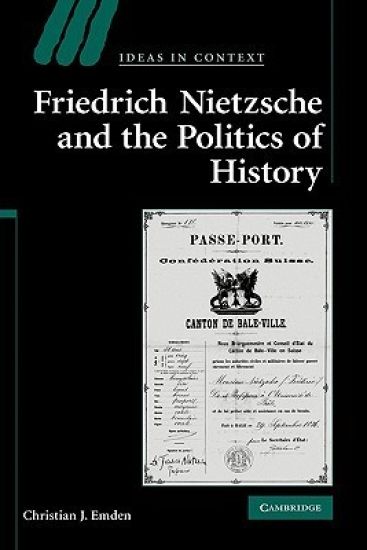
Friedrich Nietzsche and the Politics of History

Friedrich Nietzsche and the Politics of History

Christian J. Emden

Cambridge University Press
2011
pokkari
This book explores Friedrich Nietzsche's understanding of modern political culture and his position in the history of modern political thought. Surveying Nietzsche's entire intellectual career from his years as a student in Bonn and Leipzig during the 1860s to his genealogical project of the 1880s, Christian Emden contributes to a historically informed discussion of Nietzsche's response to the political predicaments of modernity, and sheds new light on the intellectual and political culture in Germany as the ideals of the Enlightenment gave way to the demands of the modern nation state. This is a distinguished addition to the series of Ideas in Context, and a major reassessment of a philosopher and aphorist whose stature among post-enlightenment European thinkers is now almost unrivalled.
Friedrich Schiller

Friedrich Schiller

Lesley Sharpe

Cambridge University Press
1991
sidottu
This is the first general study of Friedrich Schiller’s works to appear in English for over forty years. Lesley Sharpe assesses Schiller’s development as a dramatist, poet and thinker, and provides detailed discussions of all his major works, including his essays on aesthetics. His works are viewed against the social, political and literary background of the late eighteenth century. Spanning a period from the late 1770s to 1805 they explore the insistent themes of the age - the loss of tradition and authority, the individual's claim to self-expression and the search for stability. While the early works focus on the turbulent individual, Schiller later turns to the great public concerns of the French Revolutionary era - legitimacy and power, the exercise of freedom, and the relationship between morality and politics. The aesthetic essays explore the vital role of art in integrating the aesthetic, moral and political realms.
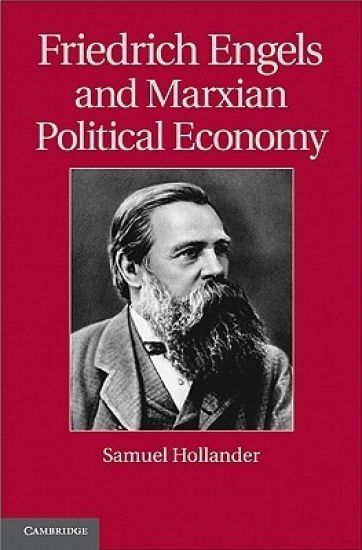
Friedrich Engels and Marxian Political Economy

Friedrich Engels and Marxian Political Economy

Samuel Hollander

Cambridge University Press
2011
sidottu
This book rejects the commonly encountered perception of Friedrich Engels as perpetuator of a 'tragic deception' of Marx, and the equally persistent body of opinion treating him as 'his master's voice'. Engels' claim to recognition is reinforced by an exceptional contribution in the 1840s to the very foundations of the Marxian enterprise, a contribution entailing not only the 'vision' but some of the building blocks in the working out of that vision. Subsequently, he proved himself to be a sophisticated interpreter of the doctrine of historical materialism and an important contributor in his own right. This volume serves as a companion to Samuel Hollander's The Economics of Karl Marx (Cambridge University Press, 2008).
Friedrich Schleiermacher: Between Enlightenment and Romanticism
Friedrich Schleiermacher's groundbreaking work in theology and philosophy was forged in the cultural ferment of Berlin at the convergence of the Enlightenment and Romanticism. The three sections of this book include illuminating sketches of Schleiermacher's relationship to contemporaries (Mendelssohn, Hegel and Kierkegaard), his work as public theologian (dialogue on Jewish emancipation, founding the University of Berlin) as well as the formation and impact of his two most famous books, On Religion: Speeches to its Cultured Despisers and The Christian Faith. Richard Crouter examines Schleiermacher's stance regarding the status of doctrine, Church and political authority, and the place of theology among the academic disciplines. Dedicated to the Protestant Church in the line of Calvin, Schleiermacher was equally a man of the university who brought the highest standards of rationality, linguistic sensitivity and a sense of history to bear upon religion.
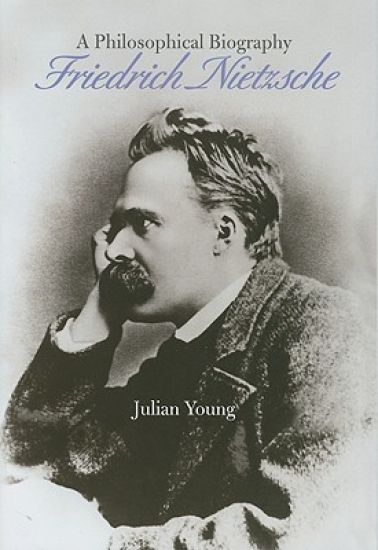
Friedrich Nietzsche

Friedrich Nietzsche

Julian Young

Cambridge University Press
2010
sidottu
In this beautifully written account, Julian Young provides the most comprehensive biography available today of the life and philosophy of the nineteenth-century German philosopher Friedrich Nietzsche. Young deals with the many puzzles created by the conjunction of Nietzsche's personal history and his work: why the son of a Lutheran pastor developed into the self-styled 'Antichrist'; why this archetypical Prussian came to loath Bismarck's Prussia; and why this enemy of feminism preferred the company of feminist women. Setting Nietzsche's thought in the context of his times - the rise of Prussian militarism, anti-Semitism, Darwinian science, the 'Youth' and emancipationist movements, as well as the 'death of God' - Young emphasises the decisive influence of Plato and of Richard Wagner on Nietzsche's attempted reform of Western culture.
Friedrich Nietzsche and the Politics of History

Friedrich Nietzsche and the Politics of History

Christian J. Emden

Cambridge University Press
2008
sidottu
This book explores Friedrich Nietzsche's understanding of modern political culture and his position in the history of modern political thought. Surveying Nietzsche's entire intellectual career from his years as a student in Bonn and Leipzig during the 1860s to his genealogical project of the 1880s, Christian Emden contributes to a historically informed discussion of Nietzsche's response to the political predicaments of modernity, and sheds new light on the intellectual and political culture in Germany as the ideals of the Enlightenment gave way to the demands of the modern nation state. This is a distinguished addition to the series of Ideas in Context, and a major reassessment of a philosopher and aphorist whose stature among post-enlightenment European thinkers is now almost unrivalled.