
Kirjahaku
Etsi kirjoja tekijän nimen, kirjan nimen tai ISBN:n perusteella.
1000 tulosta hakusanalla Fritz Heithecker
Fritz Leiber was a giant in the genre field. He won five Hugo Awards, three Nebula Awards, three world Fantasy Awards, and one Stoker Award and was a Science Fiction Writers of America Grand Master. His influence on science fiction, fantasy, and horror cannot be overstated. Included in this massive five hundred page plus anthology are 25 of Leiber's best stories. Stories included herein are: A Pail of Air Appointment in Tomorrow Coming Attraction The Moon Is Green Kreativity for Kats The Big Engine The Snowbank Orbit Lean Times in Lankhmar The Wolf Pack Damnation Morning No Great Magic The Ship Sails At Midnight The Night He Cried Mariana The Creature from Cleveland Depths The Green Millennium The Mind Spider The Unholy Grail The Cloud of Hate When The Sea-King's Away Bazaar of the Bizarre Schizo Jimmie The Casket-Demon Scream Wolf Yesterday House Later Than You Think

Fritz Leiber was a giant in the genre field. He won five Hugo Awards, three Nebula Awards, three world Fantasy Awards, and one Stoker Award and was a Science Fiction Writers of America Grand Master. His influence on science fiction, fantasy, and horror cannot be overstated. Included in this massive five hundred page plus anthology are 25 of Leiber's best stories. Stories included herein are: A Pail of Air Appointment in Tomorrow Coming Attraction The Moon Is Green Kreativity for Kats The Big Engine The Snowbank Orbit Lean Times in Lankhmar The Wolf Pack Damnation Morning No Great Magic The Ship Sails At Midnight The Night He Cried Mariana The Creature from Cleveland Depths The Green Millennium The Mind Spider The Unholy Grail The Cloud of Hate When The Sea-King's Away Bazaar of the Bizarre Schizo Jimmie The Casket-Demon Scream Wolf Yesterday House Later Than You Think

Leaving friends and moving to a new location is troubling for any child. For Fritz', adjusting to his new situation at first seemed impossible. "This is a pretty good place to live. I am starting to like it here" is Fritz' final thought in Fritz' Rover. The change in his attitude is teh result of his enjoyment of the activity on the river, the delight of his friends who come to visit, and finally, the surprise arrival of a special boat on the river. George Kertz began his writing career as a mathematics profesor. He wrote several papers on mathematics and college-level mathematics text books. His interest in children's stories began with telling bedtime stories to his grandchildren. Fritz' River started in this way.

Leaving friends and moving to a new location is troubling for any child. For Fritz', finding a new friend at first seemed impossible. "We can never be friends" was Fritz' thought when he met the boy who moved into the empty house next door. The new boy was disabled and somewhat scary to Friz. The story of Fritz' friend revolves around how the two boys became friends. Both boys were sad when they learned that one of them was leaving. George Kertz began his writing career as a mathematics professor. He wrote several papers on mathematics and college-level mathematics text books. His interest in children's stories began with telling bedtime stories to his grandchildren. The Fritz stories started in this way.
Fritz Fombie and the Frightful Feats of Courage
T. E. Antonino
Createspace Independent Publishing Platform
2016
nidottu
Fritz and Eric The Brother Crusoes
John Conroy Hutcheson
Createspace Independent Publishing Platform
2017
nidottu
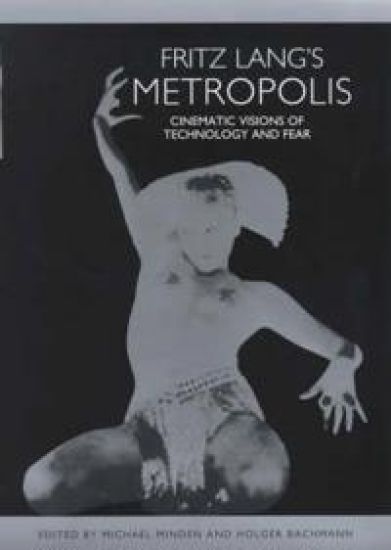
Fritz Lang's Metropolis
Camden House Inc
2002
pokkari
A collection of essays -- early seminal works as well as freshinterpretations -- on the famous German expressionist film,Metropolis. Fritz Lang's classic 1927 film Metropolis has justifiably become an icon for the complexities of Weimar culture. Among the important general issues it also raises are the relation between ideology and art, the status and authorship of the film text in the entertainment market, the city, the construction of gender, the relation between the human body and the machine in modernity, and the relation between mass and high culture. This volume provides abroad range of materials and resources for the study of Lang's film, including both well-known, previously published critical essays and contributions appearing for the first time here. The editors provide a two-part introductionthat furnishes context for what follows: Bachmann's part deals with the genesis, production, and contemporary reception of the film, while Minden's defines the problems posed by the text and reviews thesolutions to these problemsas proposed by later generations of critics.The first part of the book proper includes selected contemporaryreviews, commentary by Fritz Lang and others involved in the making ofthe film, and extracts from Thea von Harbou's original novel. In the second part, eight modern scholars provide fresh essays on the genesis, promotion, and reception of the film. Approximately half of the material in the volume has never before appeared in print. The volume will appealto students of German, film, cultural and intellectual history, and social theory. Michael Minden is University Lecturer in German at Cambridge University and a fellow of Jesus College. Holger Bachmann received hisPh.D. from Cambridge on Arthur Schnitzler and film.

Fritz Lang
University Press of Mississippi
2003
nidottu
The films of Fritz Lang depict an entrapping, claustrophobic world in which people are controlled by larger forces. His overriding theme is the struggle against fate and against the traits of human nature that doom us. His life and work spanned six decades of film history-from the silent era through the golden age of German Expressionism of the 1920s and the classic studio system in Hollywood to the rise of the international co-production. In Hollywood he worked for every major studio except Disney. He made blockbusters, modest B movies, and everything in between. Among his films are classics of German cinema-including Metropolis and M. In America he made some of the most notable crime movies (Fury), noir films (The Big Heat), and Westerns (The Return of Frank James) of the studio era. Despite the different time periods, nations, and genres in which he worked, his films remain stylistically consistent. Lang (1890-1976), a notoriously difficult interviewee, granted relatively few interviews apart from short publicity exchanges in the promotion of his films. Fully aware of his public persona, he was a canny self-promoter who carefully constructed half-truths and myths about himself. This fascinating collection covers his conversations about his life and his works over a period of forty years. They reveal how cinema for Lang was an intensely personal art. ""For me,"" he said, ""cinema is a vice. I love it intimately. I've often written that it is the art form of our century.""
The Creature from Cleveland Depths by Fritz Leiber, Science Fiction, Fantasy, Short Stories
Fritz Leiber
Aegypan
2009
pokkari
Leiber sets the tale in a future when "missiles are on the prowl," and most people live underground. George Gusterson is a writer with crazy ideas -- one being, he still lives on the surface. For another, he imagines a gizmo that would remind him of things like when to turn on the TV. George's mere whim inspires an actual gadget called the Tickler, just a "wire recorder and clock" at first, but then . . . it whispers constantly through an earphone. It instills positive thinking. It injects drugs. It makes decisions. It weights 28 pounds. And it won't get off. Only Gusterson understands what "the little fellow perched on your shoulder" is really saying, one word: Obey And only Gusterson knows what to say back, if it's not too late.
Awarded the Hugo Award during 1958, The Big Time is a story involving only a few characters, but with a vast, cosmic back story.You don't know about the Change War, but it's influencing your lives all the time and maybe you've had hints of it without realizing. Have you ever worried about your memory, because it doesn't seem to be bringing you exactly the same picture of the past from one day to the next? Have you ever been afraid that your personality was changing because of forces beyond your knowledge or control? Have you ever felt sure that sudden death was about to jump you from nowhere? Have you ever been scared of Ghosts -- not the story-book kind, but the billions of beings who were once so real and strong it's hard to believe they'll just sleep harmlessly forever? Have you ever wondered about those things you may call devils or Demons -- spirits able to range through all time and space, through the hot hearts of stars and the cold skeleton of space?
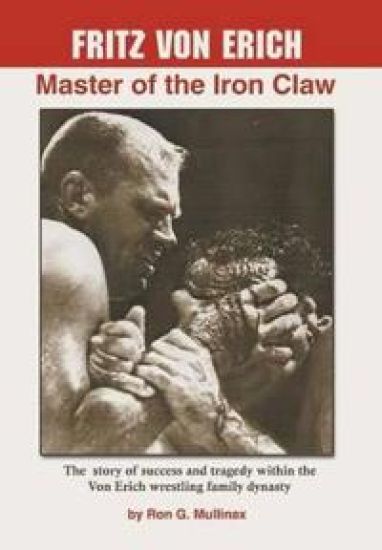
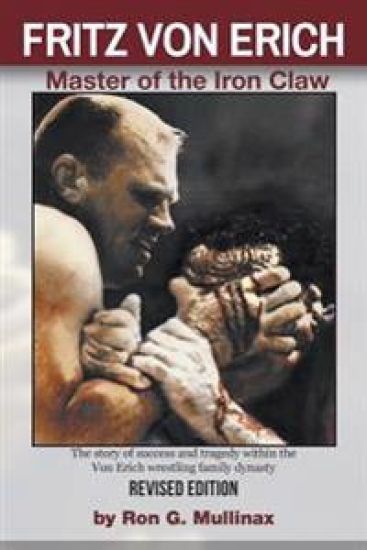
Fritz Von Erich: Master of the Iron Claw is the story about the life and times of Jack Adkisson, also known as pro wrestling legend Fritz Von Erich, and the famous Von Erich wrestling dynasty. "Not since the Kennedys of Massachusetts has an American family publicly suffered personal tragedy after personal tragedy like the Von Erichs of Denton County, Texas."While the Kennedy family became famous worldwide for their political accomplishments and the tragedies of their sons, the Von Erich family became famous worldwide for their athletic accomplishments and the tragedies in their family.Read how Fritz Von Erich and his five sons impacted the wrestling world with their family's show World Class Championship Wrestling, which at one time was syndicated in 66 U.S. television markets, Japan, Argentina, and the Middle East. The story, as told to Ron Mullinax by Jack Adkisson himself, follows his wrestling career and family tragedies beginning in the 1950s and continuing until his death in 1997.
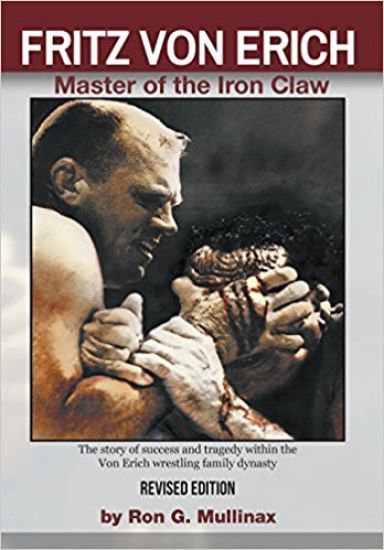
Fritz Von Erich: Master of the Iron Claw is the story about the life and times of Jack Adkisson, also known as pro wrestling legend Fritz Von Erich, and the famous Von Erich wrestling dynasty. "Not since the Kennedys of Massachusetts has an American family publicly suffered personal tragedy after personal tragedy like the Von Erichs of Denton County, Texas."While the Kennedy family became famous worldwide for their political accomplishments and the tragedies of their sons, the Von Erich family became famous worldwide for their athletic accomplishments and the tragedies in their family.Read how Fritz Von Erich and his five sons impacted the wrestling world with their family's show World Class Championship Wrestling, which at one time was syndicated in 66 U.S. television markets, Japan, Argentina, and the Middle East. The story, as told to Ron Mullinax by Jack Adkisson himself, follows his wrestling career and family tragedies beginning in the 1950s and continuing until his death in 1997.
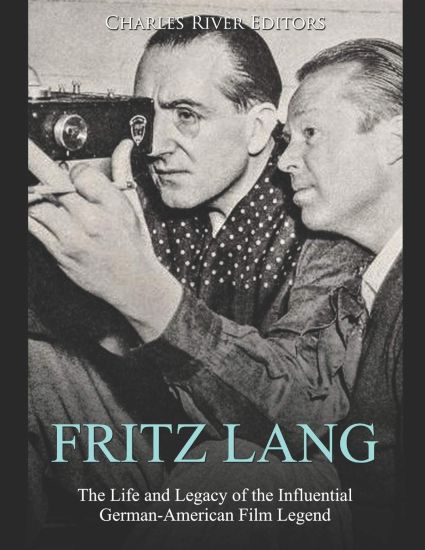
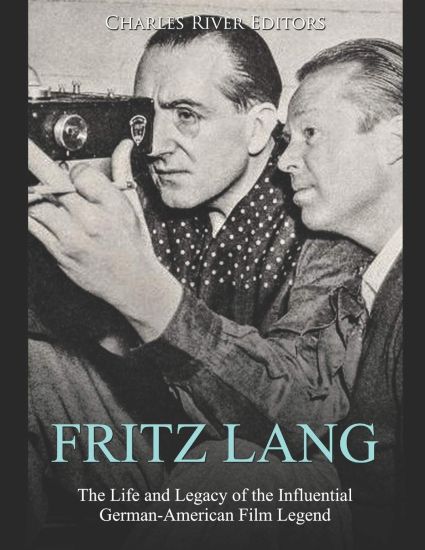
Fritz Lang: The Life and Legacy of the Influential German-American Film Legend
Charles River
Independently Published
2019
nidottu
*Includes pictures*Includes a bibliography for further reading"I was something that is always hated in Hollywood - a perfectionist; nobody likes a perfectionist, you know." - Fritz LangWhile it's easily forgotten today, during the early 20th century, various European countries had vibrant film industries, and even though Hollywood had already staked its claim as the forerunner of the international cinematic landscape by the 1920s, national cinemas in Sweden, Germany, and elsewhere throughout Western Europe enjoyed great power during this period. During that time, Germany's most renowned film directors were pioneering the genre known as Expressionism, and within it, Fritz Lang was known as the "Master of Darkness." Together with his eventual wife, Thea von Harbou, Lang wrote a number of acclaimed movies, including Dr. Mabuse the Gambler (1922), Die Nibelungen (1924), Metropolis (1927), and Woman in the Moon (1929). Eventually, a number of Europe's biggest movie stars and directors came to Hollywood, such as Greta Garbo, Ingrid Bergman, and Alfred Hitchcock, but Lang's course to America came under far different circumstances. As Adolf Hitler rose to power and strengthened the Nazis' grip over Germany, the party's coarse antisemitism took root across all segments of society. As Jews were further persecuted, German Jews from all walks of life went into exile, and the loss of so many bright minds has led historians to the conclusion that the exodus could have made the difference in World War II. As scientists like Albert Einstein made their way out of the country to safety, they served as further proof that in addition to being dogmatically racist, the Nazis were also incompetent and self-defeating.Coinciding with Hitler's rise, Lang was filming The Testament of Dr. Mabuse, and it was quickly viewed as a biting commentary on the Nazi Party. On March 30, 1933, the Nazi regime banned it, and Lang later claimed that propaganda minister Joseph Goebbels confided to him that he loved the movie. By then, Lang was known for noir films, especially M, a dark movie about a child murderer. Compelled to leave Germany, Lang made his way to Hollywood and quickly established himself there, leading to a career spanning 20 years. Continuing with the same themes as the ones he used in Germany, Lang helped establish noir as one of the most popular film genres of the 1950s in America, with influential works like Scarlett Street, and his most famous film, The Big Heat (1953). By 1960, however, his health began to decline, and thus so did his output, which was somewhat ironic because he brought the Mabuse series of films full circle with 1960's The Thousand Eyes of Dr. Mabuse, which revived interest in Mabuse and led to more films being made for the series. As fate would have it, though, those films would be produced by German producer Artur Brauner, not Lang himself.Fritz Lang: The Life and Legacy of the Influential German-American Film Legend chronicles his career in front of the camera and behind it. Along with pictures depicting important people, places, and events, you will learn about Lang like never before.
Fritz Lang: The Life and Legacy of the Influential German-American Film Legend
Charles River
Independently Published
2019
nidottu
*Includes pictures*Includes a bibliography for further reading"I was something that is always hated in Hollywood - a perfectionist; nobody likes a perfectionist, you know." - Fritz LangWhile it's easily forgotten today, during the early 20th century, various European countries had vibrant film industries, and even though Hollywood had already staked its claim as the forerunner of the international cinematic landscape by the 1920s, national cinemas in Sweden, Germany, and elsewhere throughout Western Europe enjoyed great power during this period. During that time, Germany's most renowned film directors were pioneering the genre known as Expressionism, and within it, Fritz Lang was known as the "Master of Darkness." Together with his eventual wife, Thea von Harbou, Lang wrote a number of acclaimed movies, including Dr. Mabuse the Gambler (1922), Die Nibelungen (1924), Metropolis (1927), and Woman in the Moon (1929). Eventually, a number of Europe's biggest movie stars and directors came to Hollywood, such as Greta Garbo, Ingrid Bergman, and Alfred Hitchcock, but Lang's course to America came under far different circumstances. As Adolf Hitler rose to power and strengthened the Nazis' grip over Germany, the party's coarse antisemitism took root across all segments of society. As Jews were further persecuted, German Jews from all walks of life went into exile, and the loss of so many bright minds has led historians to the conclusion that the exodus could have made the difference in World War II. As scientists like Albert Einstein made their way out of the country to safety, they served as further proof that in addition to being dogmatically racist, the Nazis were also incompetent and self-defeating.Coinciding with Hitler's rise, Lang was filming The Testament of Dr. Mabuse, and it was quickly viewed as a biting commentary on the Nazi Party. On March 30, 1933, the Nazi regime banned it, and Lang later claimed that propaganda minister Joseph Goebbels confided to him that he loved the movie. By then, Lang was known for noir films, especially M, a dark movie about a child murderer. Compelled to leave Germany, Lang made his way to Hollywood and quickly established himself there, leading to a career spanning 20 years. Continuing with the same themes as the ones he used in Germany, Lang helped establish noir as one of the most popular film genres of the 1950s in America, with influential works like Scarlett Street, and his most famous film, The Big Heat (1953). By 1960, however, his health began to decline, and thus so did his output, which was somewhat ironic because he brought the Mabuse series of films full circle with 1960's The Thousand Eyes of Dr. Mabuse, which revived interest in Mabuse and led to more films being made for the series. As fate would have it, though, those films would be produced by German producer Artur Brauner, not Lang himself.Fritz Lang: The Life and Legacy of the Influential German-American Film Legend chronicles his career in front of the camera and behind it. Along with pictures depicting important people, places, and events, you will learn about Lang like never before.

Fritz Wegner Archive
CV PUBLICATIONS
2015
nidottu

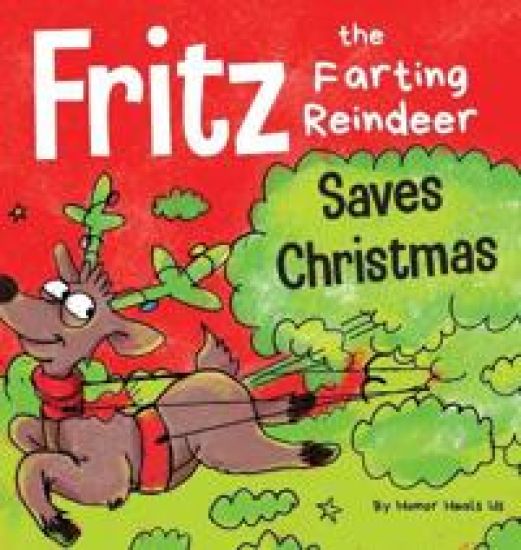
Fritz doesn't know it, but he's a big part of saving Christmas this year. Rudolph's red nose has stopped shining. Now, Santa has no light to guide him. How will he find his way to the children's homes? A children's beloved classic, this story will have kids rolling on the floor with laughter. Adults are permitted to laugh too. Perfect for Thanksgiving, Christmas, or anytime of the year Vote on new title names and receive freebies at humorhealsus.com