Kirjojen hintavertailu. Mukana 11 699 587 kirjaa ja 12 kauppaa.

Kirjahaku

Etsi kirjoja tekijän nimen, kirjan nimen tai ISBN:n perusteella.

1000 tulosta hakusanalla G.W. Patton

Covington/alleghany Highlands, G.w. & Jefferson National Forests

Covington/alleghany Highlands, G.w. & Jefferson National Forests

National Geographic Maps

National Geographic Maps
2012
kartta, viikattu
National Geographic's Trails Illustrated Maps are the most detailed and up-to-date topographic recreation maps available for US National Parks, National Forests and other popular outdoor recreation areas. A necessity for exploring the outdoors, each map is printed on waterproof, tear-resistant material. They also contain key safety and contact information, GPS and compass coordinates, Leave No Trace ethical guidelines and hundreds of points-of-interest, including scenic viewpoints, campgrounds, boat launches, swimming areas, marine sanctuaries and wildlife refuges.
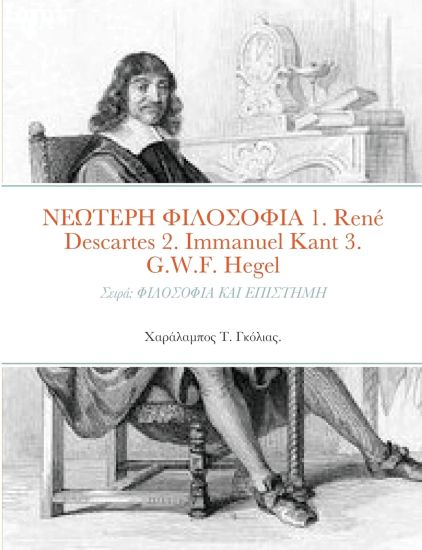
??O???? F???S?F?? 1. René Descartes (1596 - 1650) 2. Immanuel Kant (1724 - 1804) 3. G.W.F. Hegel (1770 - 1831)
PHILOSOPHY AND SCIENCE DESCRIPTION OF THE BOOK SERIES From the depths of the centuries, when man acquired an evolutionarily sufficient brain, the most developed brain of all other animals, in order to acquire self-consciousness, at one point he wondered: "Why do I exist? Why do I live? Why should I be born? Why should I die? " These questions remain unanswered to this day. There is no scientific answer from the rational animal "human", which, as we now know for sure with scientific knowledge, evolved from the Australopithecus. In 1924, British anthropologist Raymond Dart discovered a 2.8- to 3.8-million-year-old skull in an East African quarry. He named his find the Australopithecus because it was found in the southern regions (Austral) of East Africa. However, the study of other fossils found in various parts of Africa (such as Australopithecus bosei) showed that the Australopithecus is one of the direct ancestors of humans, as based on its characteristics it is placed in Humans, the family of Humans in which belongs to man. The only thing we can say with absolute certainty, that is, with sensory knowledge, is that life is an experience. However, religion, metaphysics, literature and fiction, with only the imagination, provide answers and solutions to the above problems and offer man expectations, hopes, life after death, paradise, hell, for god, devil, angels, soul, etc. each of them, in its own version. These, unfortunately, present the claim as knowledge, that is, as scientific knowledge unique to man. In this series of books, in general, the question flows what is philosophy, what is science and whether philosophy should be scientific, that is, to seek knowledge, truths, exclusively with the scientific method and the specialized scientific instruments, the scientific observation, experiment and calculation devices. In this series of books the question arises whether the only source of knowledge, truth, experience of life for man is the sensual, sensory, empirical scientific method.
Things Seen; Impressions of men, Cities, and Books. Selected and Edited by G.S. Street

Things Seen; Impressions of men, Cities, and Books. Selected and Edited by G.S. Street

William Ernest Henley; George Slythe Street; G W 1869-1900 Steevens

Sagwan Press
2018
pokkari
This work has been selected by scholars as being culturally important, and is part of the knowledge base of civilization as we know it. This work was reproduced from the original artifact, and remains as true to the original work as possible. Therefore, you will see the original copyright references, library stamps (as most of these works have been housed in our most important libraries around the world), and other notations in the work.This work is in the public domain in the United States of America, and possibly other nations. Within the United States, you may freely copy and distribute this work, as no entity (individual or corporate) has a copyright on the body of the work.As a reproduction of a historical artifact, this work may contain missing or blurred pages, poor pictures, errant marks, etc. Scholars believe, and we concur, that this work is important enough to be preserved, reproduced, and made generally available to the public. We appreciate your support of the preservation process, and thank you for being an important part of keeping this knowledge alive and relevant.