Kirjojen hintavertailu. Mukana 11 627 493 kirjaa ja 12 kauppaa.

Kirjahaku

Etsi kirjoja tekijän nimen, kirjan nimen tai ISBN:n perusteella.

1000 tulosta hakusanalla Gary M. Garrison

The Economics of Violence

The Economics of Violence

Gary M. Shiffman

Cambridge University Press
2020
sidottu
How do we understand illicit violence? Can we prevent it? Building on behavioral science and economics, this book begins with the idea that humans are more predictable than we like to believe, and this ability to model human behavior applies equally well to leaders of violent and coercive organizations as it does to everyday people. Humans ultimately seek survival for themselves and their communities in a world of competition. While the dynamics of 'us vs. them' are divisive, they also help us to survive. Access to increasingly larger markets, facilitated through digital communications and social media, creates more transnational opportunities for deception, coercion, and violence. If the economist's perspective helps to explain violence, then it must also facilitate insights into promoting peace and security. If we can approach violence as behavioral scientists, then we can also better structure our institutions to create policies that make the world a more secure place, for us and for future generations.
The Economics of Violence

The Economics of Violence

Gary M. Shiffman

Cambridge University Press
2020
pokkari
How do we understand illicit violence? Can we prevent it? Building on behavioral science and economics, this book begins with the idea that humans are more predictable than we like to believe, and this ability to model human behavior applies equally well to leaders of violent and coercive organizations as it does to everyday people. Humans ultimately seek survival for themselves and their communities in a world of competition. While the dynamics of 'us vs. them' are divisive, they also help us to survive. Access to increasingly larger markets, facilitated through digital communications and social media, creates more transnational opportunities for deception, coercion, and violence. If the economist's perspective helps to explain violence, then it must also facilitate insights into promoting peace and security. If we can approach violence as behavioral scientists, then we can also better structure our institutions to create policies that make the world a more secure place, for us and for future generations.
Colossians and Philemon

Colossians and Philemon

Gary M. Burge

Cambridge University Press
2026
sidottu
Paul's letter to the Colossian church addresses the challenges encountered by a Jewish community living in the Hellenistic world. Shaped by folk religion, Hellenistic mystery religions, Roman imperial cults, and other trends, the community lived in fear of turmoil and oppression if they did not placate the right gods and practice the correct rituals. Colossians is Paul's salvo into this context. More than a forceful response to a single church, it was a missive that addressed Hellenistic spiritual tendencies and how Christ confronts them. Gary Burge's study of this letter explores the Roman context for Colossians and demonstrates how Paul's gospel would overturn the religious beliefs that affected their lives. He also interrogates Paul's overlooked letter to Philemon, which accompanied Colossians and in which he instructs a Christian runaway slave to return to his Christian master. His novel interpretation offers new insights into this situation and how it enables us to understand slavery today.
Colossians and Philemon

Colossians and Philemon

Gary M. Burge

Cambridge University Press
2026
nidottu
Paul's letter to the Colossian church addresses the challenges encountered by a Jewish community living in the Hellenistic world. Shaped by folk religion, Hellenistic mystery religions, Roman imperial cults, and other trends, the community lived in fear of turmoil and oppression if they did not placate the right gods and practice the correct rituals. Colossians is Paul's salvo into this context. More than a forceful response to a single church, it was a missive that addressed Hellenistic spiritual tendencies and how Christ confronts them. Gary Burge's study of this letter explores the Roman context for Colossians and demonstrates how Paul's gospel would overturn the religious beliefs that affected their lives. He also interrogates Paul's overlooked letter to Philemon, which accompanied Colossians and in which he instructs a Christian runaway slave to return to his Christian master. His novel interpretation offers new insights into this situation and how it enables us to understand slavery today.
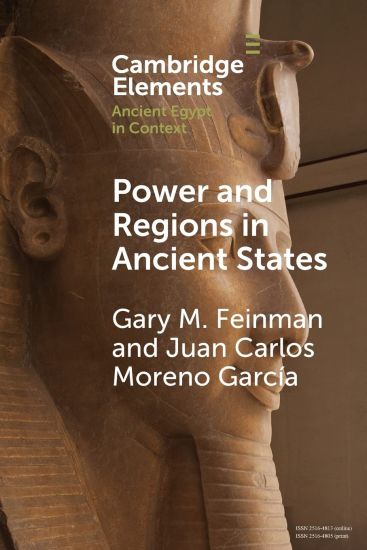
Power and Regions in Ancient States

Power and Regions in Ancient States

Gary M. Feinman; Juan Carlos Moreno García

Cambridge University Press
2022
pokkari
The aim of the Element is to provide a comprehensive comparison of the basic organization of power in Mesoamerica and Egypt. How power emerged and was exercised, how it reproduced itself, how social units (from households to cities) became integrated into political formation and how these articulations of power expanded and collapsed over time. The resilience of particular areas (Oaxaca, Middle Egypt), to the point that they preserved a highly distinctive cultural personality when they were included or not within states, may provide a useful guideline about the basics of integration, negotiation and autonomy in the organization of political formations.
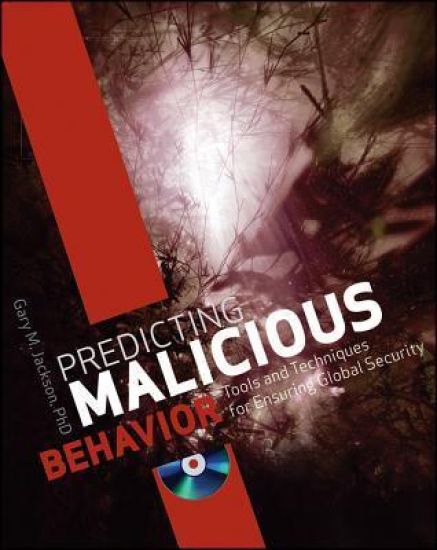
Predicting Malicious Behavior

Predicting Malicious Behavior

Gary M. Jackson

JOHN WILEY SONS INC
2012
muu
A groundbreaking exploration of how to identify and fight security threats at every level This revolutionary book combines real-world security scenarios with actual tools to predict and prevent incidents of terrorism, network hacking, individual criminal behavior, and more. Written by an expert with intelligence officer experience who invented the technology, it explores the keys to understanding the dark side of human nature, various types of security threats (current and potential), and how to construct a methodology to predict and combat malicious behavior. The companion CD demonstrates available detection and prediction systems and presents a walkthrough on how to conduct a predictive analysis that highlights proactive security measures. Guides you through the process of predicting malicious behavior, using real world examples and how malicious behavior may be prevented in the futureIllustrates ways to understand malicious intent, dissect behavior, and apply the available tools and methods for enhancing securityCovers the methodology for predicting malicious behavior, how to apply a predictive methodology, and tools for predicting the likelihood of domestic and global threatsCD includes a series of walkthroughs demonstrating how to obtain a predictive analysis and how to use various available tools, including Automated Behavior Analysis Predicting Malicious Behavior fuses the behavioral and computer sciences to enlighten anyone concerned with security and to aid professionals in keeping our world safer.
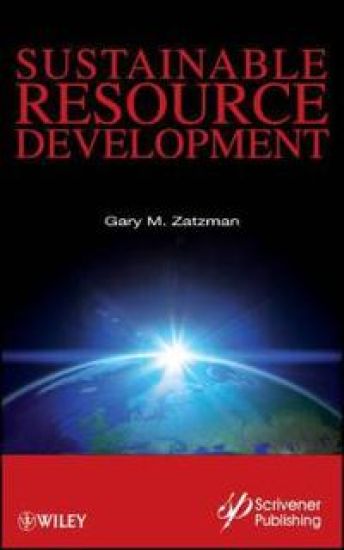
Sustainable Resource Development

Sustainable Resource Development

Gary M. Zatzman

John Wiley Sons Inc
2013
sidottu
Taking a fresh new look at the energy industry and how the Earth's resources are being developed, the aim of this book is to aid engineers and scientists in attaining sustainability in this field, both from an economic and environmental perspective. The author herein presents engineering research and practice that is focused on achieving energy sustainability from a global perspective, as is also outlined in other Scrivener books, such as The Greening of Petroleum Operations and the author's own recently published book, Sustainable Energy Pricing, the companion volume to this book. The author applies the principles of economic sustainability developed there to re-examine actual engineering practices in fossil fuel and alternative energy (such as wind and tidal power) exploration and development. One of the book’s unique features is its analysis of what is deficient in the thinking and analytical frameworks that inform engineering work done in the field. The book addresses the complex issues surrounding our quest for sustainability and the key causes of the challenges that face the energy industry and its resource development. From this standpoint, the book challenges the reasoning and conclusions drawn from the often-quoted theory of "peak oil".
Couples Therapy Homework Planner

Couples Therapy Homework Planner

Gary M. Schultheis; Steffanie Alexander O'Hanlon; Bill O'Hanlon; David J. Berghuis

John Wiley Sons Inc
2016
nidottu
Features new and updated assignments and exercises to meet the changing needs of mental health professionals The Couples Therapy Homework Planner, Second Edition provides you with an array of ready-to-use, between-session assignments designed to fit virtually every therapeutic mode. This easy-to-use sourcebook features: 71 ready-to-copy exercises covering the most common issues encountered by couples in therapy, such as financial conflict, infidelity, work/home role strain, and separation and divorceA quick-reference format—the interactive assignments are grouped by behavioral problems including improving communications, handling parenting problems, and resolving sexual issuesExpert guidance on how and when to make the most efficient use of the exercisesAssignments are cross-referenced to The Couples Psychotherapy Treatment Planner, Second Edition—so you can quickly identify the right exercise for a given situation or problemDownloadable content that contains all the exercises in a word-processing format—allowing you to customize them to suit you and your clients' unique styles and needs Additional resources in the PracticePlanners® series: Treatment Planners cover all the necessary elements for developing formal treatment plans, including detailed problem definitions, long-term goals, short-term objectives, therapeutic interventions, and DSMTM diagnoses. Progress Notes Planners contain complete, prewritten progress notes for each presenting problem in the companion Treatment Planners. For more information on our PracticePlanners® products, including our full line of Treatment Planners, visit us on the Web at: www.wiley.com/practiceplanners
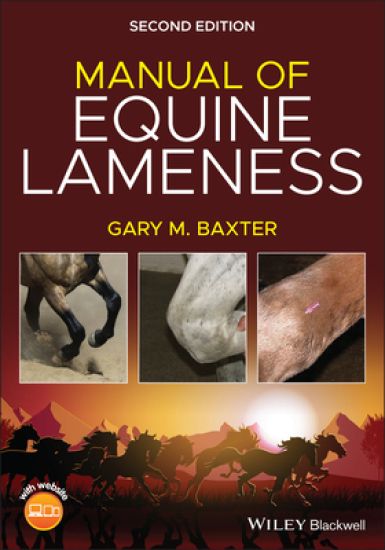
Manual of Equine Lameness

Manual of Equine Lameness

Gary M. Baxter

Wiley-Blackwell
2022
nidottu
MANUAL OF EQUINE LAMENESS Discover a concise and accessible guide to diagnosing and managing lameness in horses The revised Second Edition of Manual of Equine Lameness offers a concise and accessible manual of lameness diagnosis and treatment in horses. Perfect for use as a quick reference, this book provides straightforward access to the essentials of equine lameness, including the clinical assessment of the horse and commonly performed diagnostic nerve blocks and the most common conditions of the foot, forelimb, and hindlimb that may be contributing to the lameness. Current therapeutic options to treat lameness are also discussed, as well as guidance on how to manage musculoskeletal emergencies. The content has been distilled from the authoritative Seventh Edition of Adams and Stashak’s Lameness in Horses, and this new edition has been re-envisioned to be even quicker and easier to navigate than the previous version. Color photographs and illustrations support the text, which presents lameness information most relevant to equine general practitioners, mixed animal practitioners, and veterinary students. A companion website offers videos that focus on the clinical examination of the horse and select diagnostic blocks and relevant anatomy. Diagnostic and treatment material has been revised from the previous edition to include the most up-to-date information. Readers will find: A thorough introduction to the assessment of the lame horse, including history, visual exam, palpation, subjective and objective assessments of lameness, perineural anesthesia, and intrasynovial anesthesiaAn exploration of common conditions of the foot, including the navicular region and soft tissue injuries, coffin joint and distal phalanx conditions, and laminitis Discussions of the most common conditions of the forelimb, including the pastern, fetlock, metacarpus/metatarsus, carpus, antebrachium, elbow, and humerus, as well as the shoulder and scapulaDiscussions of common conditions of the hindlimb and axial skeletonA review of therapeutic options to treat lameness conditionsHow to manage musculoskeletal emergencies in the horse Ideal for veterinary students, early career equine practitioners, and mixed animal veterinarians, the Second Edition of Manual of Equine Lameness is an indispensable reference for any veterinarian seeking a concise one-stop reference for equine lameness.
Fundamentals of Discrete Structures

Fundamentals of Discrete Structures

Gary M. Weiss; Damian M. Lyons; Christina Papadakis-Kanaris

PEARSON
2012
nidottu
Normal 0 false false false EN-US X-NONE X-NONE Selecting a mathematics textbook that meets the needs of a diverse student body can be a challenge. Some have too much information for a beginner; some have too little. The authors of Fundamentals of Discrete Structures, frustrated by their search for the perfect text, decided to write their own. The result provides an excellent introduction to discrete mathematics that is both accessible to liberal arts majors satisfying their core mathematics requirements, and also challenging enough to engage math and computer science majors. To engage students who may not be comfortable with traditional mathematics texts, the book uses a light tone when introducing new concepts. While there is an emphasis on computation, it avoids mathematical formalism and formal proofs, thus making it easier for the average student to understand. Unlike other textbooks in this field, Fundamentals of Discrete Structures strikes just the right balance: it illuminates the essentials of discrete mathematics while still providing a comprehensive treatment of the subject matter.
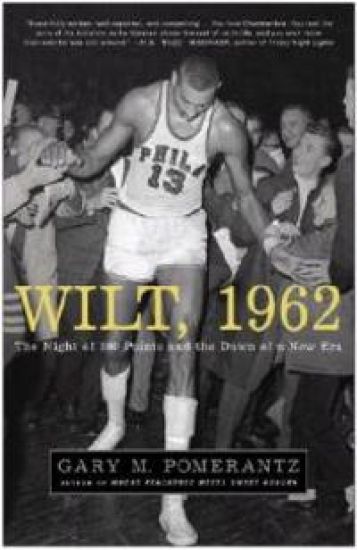
Wilt, 1962: The Night of 100 Points and the Dawn of a New Era

Wilt, 1962: The Night of 100 Points and the Dawn of a New Era

Gary M. Pomerantz

Crown Publishing Group (NY)
2006
nidottu
On the night of March 2, 1962, in Hershey, Pennsylvania, right up the street from the chocolate factory, Wilt Chamberlain, a young and striking athlete celebrated as the Big Dipper, scored one hundred points in a game against the New York Knickerbockers. As historic and revolutionary as the achievement was, it remains shrouded in myth. The game was not televised; no New York sportswriters showed up; and a fourteen-year-old local boy ran onto the court when Chamberlain scored his hundredth point, shook his hand, and then ran off with the basketball. In telling the story of this remarkable night, author Gary M. Pomerantz brings to life a lost world of American sports. In 1962, the National Basketball Association, stepchild to the college game, was searching for its identity. Its teams were mostly white, the number of black players limited by an unspoken quota. Games were played in drafty, half-filled arenas, and the players traveled on buses and trains, telling tall tales, playing cards, and sometimes reading Joyce. Into this scene stepped the unprecedented Wilt Chamberlain: strong and quick-witted, voluble and enigmatic, a seven-footer who played with a colossal will and a dancer's grace. That strength, will, grace, and mystery were never more in focus than on March 2, 1962. Pomerantz tracked down Knicks and Philadelphia Warriors, fans, journalists, team officials, other NBA stars of the era, and basketball historians, conducting more than 250 interviews in all, to recreate in painstaking detail the game that announced the Dipper's greatness. He brings us to Hershey, Pennsylvania, a sweet-seeming model of the gentle, homogeneous small-town America that was fast becoming anachronistic. We see the fans and players, alternately fascinated and confused by Wilt, drawn anxiously into the spectacle. Pomerantz portrays the other legendary figures in this story: the Warriors' elegant coach Frank McGuire; the beloved, if rumpled, team owner Eddie Gottlieb; and the irreverent p.a. announcer Dave "the Zink" Zinkoff, who handed out free salamis courtside. At the heart of the book is the self-made Chamberlain, a romantic cosmopolitan who owned a nightclub in Harlem and shrugged off segregation with a bebop cool but harbored every slight deep in his psyche. March 2, 1962, presented the awesome sight of Wilt Chamberlain imposing himself on a world that would diminish him. Wilt, 1962 is not only the dramatic story of a singular basketball game but a meditation on small towns, midcentury America, and one of the most intriguing figures in the pantheon of sports heroes. Also available as a Random House AudioBook
The Devil's Tickets: A Vengeful Wife, a Fatal Hand, and a New American Age
Kansas City, 1929: Myrtle and Jack Bennett sit down with another couple for an evening of bridge. As the game intensifies, Myrtle complains that Jack is a "bum bridge player." For such insubordination, he slaps her hard in front of their stunned guests and announces he is leaving. Moments later, sobbing, with a Colt .32 pistolin hand, Myrtle fires four shots, killing her husband. The Roaring 1920s inspired nationwide fads-flagpole sitting, marathon dancing, swimming-pool endurance floating. But of all the mad games that cheered Americans between the wars, the least likely was contract bridge. As the Barnum of the bridge craze, Ely Culbertson, a tuxedoed boulevardier with a Russian accent, used mystique, brilliance, and a certain madness to transform bridge from a social pastime into a cultural movement that made him rich and famous. In writings, in lectures, and on the radio, he used the Bennett killing to dramatize bridge as the battle of the sexes. Indeed, Myrtle Bennett's murder trial became a sensation because it brought a beautiful housewife-and hints of her husband's infidelity-from the bridge table into the national spotlight. James A. Reed, Myrtle's high-powered lawyer and onetime Democratic presidential candidate, delivered soaring, tear-filled courtroom orations. As Reed waxed on about the sanctity of womanhood, he was secretly conducting an extramarital romance with a feminist trailblazer who lived next door. To the public, bridge symbolized tossing aside the ideals of the Puritans-who referred derisively to playing cards as "the Devil's tickets"-and embracing the modern age. Ina time when such fearless women as Amelia Earhart, Dorothy Parker, and Marlene Dietrich were exalted for their boldness, Culbertson positioned his game as a challenge to all housebound women. At the bridge table, he insisted, a woman could be her husband's equal, and more. In the gathering darkness of the Depression, Culbertson leveraged his own ballyhoo and naughty innuendo for all it was worth, maneuvering himself and his brilliant wife, Jo, his favorite bridge partner, into a media spectacle dubbed the Bridge Battle of the Century. Through these larger-than-life characters and the timeless partnership game they played, The Devil's Tickets captures a uniquely colorful age and a tension in marriage that is eternal.
What Now?

What Now?

Gary M. Duke

Elm Hill Books
2020
nidottu
Not long after I began treating sex offenders, I learned of the many challenges faced by their family members. I felt their pain as I learned of their plight. One case brought a new perspective into my view. An offender had molested his fourteen-year-old daughter. As a result, all three of his children were placed in foster-care and adopted. His wife had nothing to do with the offense. Her crime was being married to the offender and continuing to love and support him.A secondary victim is someone who is negatively affected by the offense but not directly involved. The consequences of being the family member of a sex offender are many. Society sees them as co-defendants at worse or ignorant losers at best. After all, why would someone choose to support and accept a sex offender? The partners and children of offenders often live under the same scrutiny as the offender himself. Many of the laws and restrictions affect them also. Even worse, few people seem to care.Secondary victims suffer in silence. They are in my eyes "the forgotten ones". This is why I wrote this book. When a sex offense occurs in the home there are far more questions than answers. I imagined a wife or daughter of a sex offender whose world has been rocked by sexual assault reaching for answers. What Now? Understanding the Sexual Offense in Your Family is an attempt to bring some order and clarity to a home filled with chaos. It is filled with insight, answers, information and hope. In between the lines is a heart of passion beating for the men and women who society sees as expendable and the people that still love them in spite of it all.
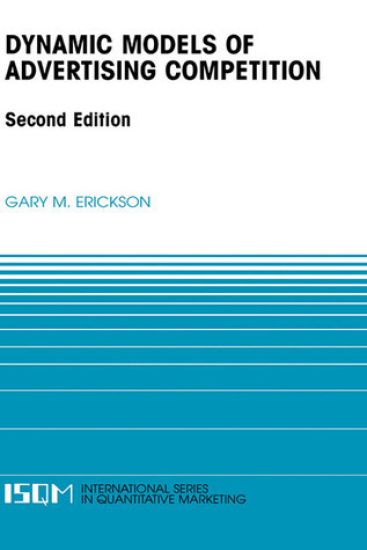
Dynamic Models of Advertising Competition

Dynamic Models of Advertising Competition

Gary M. Erickson

Springer-Verlag New York Inc.
2002
sidottu
I am gratified that there is sufficient interest in the subject matter so as to support the offering of a second edition of this monograph. The of differential games dynamic interpretation and game theoretic foundation form a powerful and vital methodology for helping us study and understand marketing competition. This second edition offers a blend of what proved to be successful with the first edition and new material. The first two chapters, reviewing empirical and modeling research, have been updated to include contributions in the last decade that have advanced the area. I have not changed the essential content in the duopoly analyses in chapters 3, 4, and 5. A notable addition to the present edition are the new chapters, 6, 7, and 8, which offer analysis of three triopoly models. In the final chapter, I offer my summary view of the area and hope for continued contributions. I want to express my appreciation for the support of Josh Eliashberg, editor of the International Series in Quantitative Marketing, as well as Zachary Rolnik, Director, and David Cella, Publishing Editor, of Kluwer. Their encouragement has provided crucial motivation in this endeavor.