In a 1995 interview, prolific Chicano writer Gary Soto noted, "Wonderment has always been a part of my life." This book surveys Soto's immense range of poems, stories, novels, essays and plays for audiences of prereaders to adults. Soto's world moves from the cotton and beet fields of the San Joaquin Valley to the blue-collar barrios of Fresno, and to urban and suburban settings in Oakland and Berkeley. Chapters analyze a wide variety of Soto titles, from his breakout works like 1977's The Elements of San Joaquin to the Chato the Cat illustrated books for children. With self-deprecating humor, particularly in his poems, Soto combines his wonderment with the trials and conflicts that beset him throughout life. In such novels as Jesse, Buried Onions and The Afterlife, and in his stories for YA readers, including Baseball in April and Petty Crimes, his broad array of characters confront the anxieties and annoyances of adolescence. Although he continues to motivate young Chicanos to read and write, Soto stakes his greatest claims to literary prominence through his poems, which are accessible to readers of all ages.
For the first time ever, this collection of short stories by Gary Troia brings together, in chronological order stories and memoirs from Spanish Yarns and Beyond, English Yarns and Beyond and A Bricklayer's Tales into one complete volume.Few have brought this world to life with such despair, black humour and indifference as Gary Troia. He paints a beautifully sad portrait of a truly messed up person with potential, struggling to keep his messed up mind from drowning in cheap wine and self-loathing. Ray's spirit is trapped in a world of endless grey mundanity.A Bricklayer's Tales is the ultimate "I hate this job" story, written as a collection of short stories and memoirs, each one revealing a snapshot in the life of Ray. Troia captures the tedium of working in a low paid, menial job and living hand to mouth. This book of short stories is sad and questions the reader to ask questions about their own life. This book achieves clarity without trying.Ray has three expensive hobbies: drinking, drugs, and running away. Without the income that Bricklaying provides, he would not be able to maintain his chosen lifestyle, so he compromises his principles and continues with his trade.A collection of short stories and memoirs that include: The Cuckoo's Egg. Boyhood antics lead to tragedy.My Grandfather's Shed. The making of an English keyNo Comb on the Cock. Gypsies, champion fighting cocks, and career choices.What I Did In My Summer Holidays In 1000 Words. Could having an idea ever be considered a criminal act?My Best Mate's Head. Did a weekend of boozing save Ray from certain death?The Shetland Isles. A trip to sunny Benidorm, a chance meeting with some Glaswegians, and a cold, miserable job in Lerwick.Pointing a House in Islington. Too much alcohol and cocaine don't mix well on building sites Angel Dust. The peculiar story of a man whose new life in America leads to conversations with Ancient Greek philosophersPeyote. Hippies, LSD and an idyllic refugeReturn Ticket. Handcuffed and ready for deportation. A sad departure from the StatesWhen I Joined a Cult. Sober dating as Ray discovers religion.Bilbao. How very, very English Teaching Other People. The grass is always greener-the escape from bricklaying.A Week in the Life of Ray Dennis. With the prospect of no money for food or alcohol this Christmas, Ray has to find work quickly.Catania. A meeting with a Sicilian fox, some Neapolitans, and a man with a camel haired coat.Advert In The Art Shop Window. Will a new building job in Spain be the start of a new life?Gaudi. A flight to Barcelona for a kebab, and a look at the Sagrada Familia.The Day My Soul Left Me. "To be or not to be? That is the question"How Not to Travel to The Alhambra. Hung-over, the wrong fuel, the car breaks down. Will they ever make it to Granada?The Road To Ronda. A terrifying drive to Ronda, was it worth it?Poking A Carob Tree. A new home and new neighbours, just in time for Christmas.Spain Reborn.No more commuting to London. Lets celebrate Home From Home. A parallel world where the Spanish have taken over Weymouth.Three Common Carp.An epic battle with a whale and marlin it is not.Mrs. McClintock. An absurd farce in which a Glaswegian couple retire to SpainSteak, Egg and Intensive Care. A harmless dinner leads to hospitalisation.The Unchangeable Chameleon. Can a leopard change it's spots?A Bricklayer's Tale. The story of a disillusioned, alcoholic bricklayer
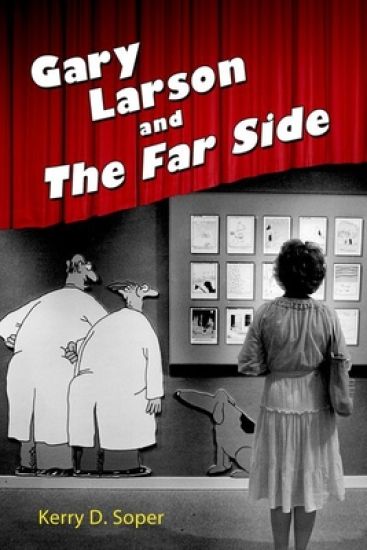
Kerry D. Soper reminds us of The Far Side's groundbreaking qualities and cultural significance in Gary Larson and ""The Far Side."" In the 1980s, Gary Larson (b. 1950) shook up a staid comics page by introducing a set of aesthetic devices, comedic tones, and philosophical frames that challenged and delighted many readers, even while upsetting and confusing others. His irreverent, single panels served as an alternative reality to the tame comedy of the family-friendly newspaper comics page, as well as the pervasive, button-down consumerism and conformity of the Reagan era.In this first full study of Larson's art, Soper follows the arc of the cartoonist's life and career, describing the aesthetic and comedic qualities of his work, probing the business side of his success, and exploring how The Far Side brand as a whole--with its iconic characters and accompanying set of comedic and philosophical frames--connected with its core readers. In effect, Larson reinvented his medium by creatively working within, pushing against, and often breaking past institutional, aesthetic, comedic, and philosophical parameters.Due to the comic's great success, it opened the door for additional alternative voices in comics and other popular mediums. With its intentionally awkward, minimalistic lines and its morbid humor, The Far Side expanded Americans' comedic palette and inspired up-and-coming cartoonists, comedians, and filmmakers. Soper re-creates the cultural climate and media landscape in which The Far Side first appeared and thrived, then assesses how it impacted worldviews and shaped the comedic sensibilities of a generation of cartoonists, comedy writers, and everyday fans.
Kerry D. Soper reminds us of The Far Side's groundbreaking qualities and cultural significance in Gary Larson and ""The Far Side."" In the 1980s, Gary Larson (b. 1950) shook up a staid comics page by introducing a set of aesthetic devices, comedic tones, and philosophical frames that challenged and delighted many readers, even while upsetting and confusing others. His irreverent, single panels served as an alternative reality to the tame comedy of the family-friendly newspaper comics page, as well as the pervasive, button-down consumerism and conformity of the Reagan era.In this first full study of Larson's art, Soper follows the arc of the cartoonist's life and career, describing the aesthetic and comedic qualities of his work, probing the business side of his success, and exploring how The Far Side brand as a whole--with its iconic characters and accompanying set of comedic and philosophical frames--connected with its core readers. In effect, Larson reinvented his medium by creatively working within, pushing against, and often breaking past institutional, aesthetic, comedic, and philosophical parameters.Due to the comic's great success, it opened the door for additional alternative voices in comics and other popular mediums. With its intentionally awkward, minimalistic lines and its morbid humor, The Far Side expanded Americans' comedic palette and inspired up-and-coming cartoonists, comedians, and filmmakers. Soper re-creates the cultural climate and media landscape in which The Far Side first appeared and thrived, then assesses how it impacted worldviews and shaped the comedic sensibilities of a generation of cartoonists, comedy writers, and everyday fans.
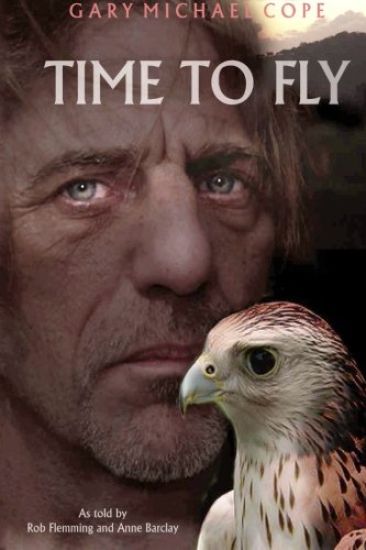
A pair of kestrels flying around an old church tower in the dappled evening sunshine mesmerised the young Gary Cope. The sights and sounds of those magical birds of prey sowed a seed that became a dream: to become a professional falconer. Determination, luck, enthusiasm, dedication. love of birds all played their part in his journey to achieve his goal. One could say that he achieved that goal when he became the resident falconer at Sudeley Castle in Gloucestershire, once home to King Henry VIII's sixth wife, Catherine Parr. Under the patronage of Lord Ashcombe, Sudeley's more recent owner, Gary's skills and experience took flight. Of course there were the thrilling flying displays (that sometimes went awry), the partridge hawking over the fields around Sudeley and flying falcons at grouse on the wild Yorkshire moors (complete with al fresco find dining). Then there was the business of breeding birds of prey which was totally new territory but attracted interest from a member of the Saudi royal family. And so, at the flip of an errant wing, Gary Cope found himself in the employ of HRH Prince Khalid ibn Abdullah al Saud as Royal Professional Falconer. Indeed, from flying a kestrel as a knave, he flew falcons for a Prince. But that wasn't quite the end.Time to Fly maybe the memoirs of Gary Cope, Professional Falconer but his story reads more like a novel than a dry account. This is the tale of his journey to achieve his dream but it's far more than that. It's also about the peaks and troughs of life, about people and relationships, failure and success, dark dramas and comic events. Herein lie a multitude of cameos, strung together like pearls on a necklace. Or should that be - like the feathers of a falcon's wing, each with its individual style and form, contributing to a thing of beauty and power? Perhaps.
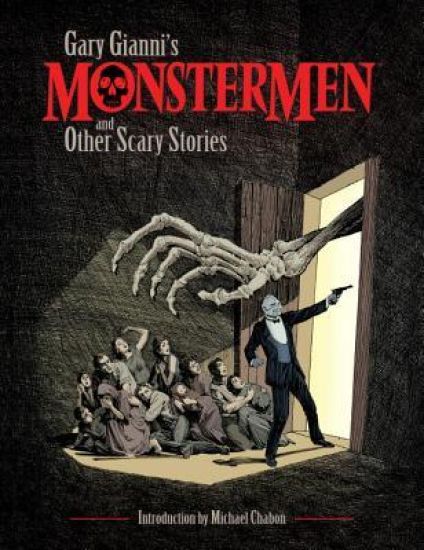
Hot off the success of Hellboy: Into the Silent Sea, Gianni's original masterpiece returns in paperback Gary Gianni created one of the strangest occult detective teams in comics history: millionaire filmmaker Lawrence St. George and his associate, Benedict, of the venerable guild of Corpus Monstrum. They navigate a peculiar and deadly world plagued by squid pirates, zombie cowboys, abominable snowmen, mustachioed skulls, and fat, flying demons.Gianni's meticulous and evocative art combined with his haunting but often hilarious writing create a horror comic unlike anything else on the stands. This book also includes classic prose stories by Robert E. Howard, Clark Ashton Smith, and more, illustrated by Gianni. "These are (along with a few issues of Stan and Jack's Fantastic Four) my all time favorite comic book stories."--Mike Mignola "Gianni is a master--The MonsterMen leaves no doubt: the dude knows how to rock a comic book page."--Michael Chabon