

Kirjahaku
Etsi kirjoja tekijän nimen, kirjan nimen tai ISBN:n perusteella.
250 tulosta hakusanalla Gaubert





Eclecticismo en la dirección empresarial
Guberto Cánovas Riverón; Néstor A Loredo C
Editorial Academica Espanola
2019
pokkari
La direcci n como proceso social acompa a al hombre a lo largo de la historia. A inicios del siglo XX la direcci n comienza a tener un significativo desarrollo buscando dar respuestas a las exigencias del sistema capitalista. A medida que aparec an nuevas situaciones, se desarrollaban teor as para darles respuestas a las mismas y aunque no lograban resolver plenamente la situaci n, creaban las bases para su propia superaci n. A partir de aqu se desarroll un sinn mero de teor as. Casi la totalidad de ellas se han desarrollado en pa ses capitalistas altamente desarrollados, con el fin de perfeccionar el mecanismo econ mico establecido. Estas teor as fueron consideradas en su momento como paradigmas de la ciencia de la direcci n, y aplicadas en cualquier contexto socioecon mico y cultural, a pesar de las diferencias que pudiera tener con el territorio de origen en cuanto a sistema social, desarrollo econ mico, cultura e idiosincrasia. Resulta interesante conocer c mo se han aplicado estas teor as en un entorno tan diferente como el sistema empresarial cubano y los resultados obtenidos.

Eklektizismus in der Unternehmensführung
Guberto Cánovas Riverón; Nestor A Loredo C
Verlag Unser Wissen
2023
nidottu

Eclecticism in business management
Guberto Cánovas Riverón; Nestor A Loredo C
Our Knowledge Publishing
2023
nidottu

L'éclectisme dans la gestion des entreprises
Guberto Cánovas Riverón; Nestor A Loredo C
Editions Notre Savoir
2023
nidottu

L'eclettismo nella gestione aziendale
Guberto Cánovas Riverón; Nestor A Loredo C
Edizioni Sapienza
2023
nidottu

Ecletismo na gestão de empresas
Guberto Cánovas Riverón; Nestor A Loredo C
Edições Nosso Conhecimento
2023
nidottu

Jeklektika w uprawlenii biznesom
Guberto Kanowas Riweron; Nestor A Loredo C
Sciencia Scripts
2023
nidottu
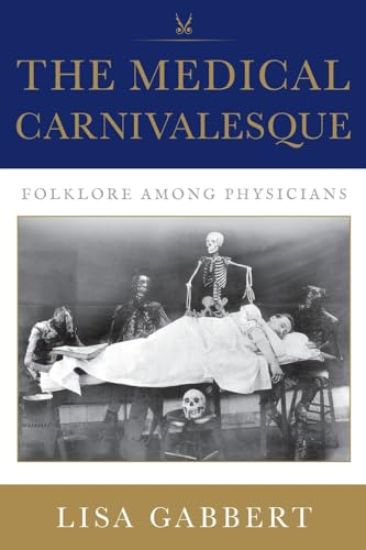
The practice of medicine is immersed in issues of life, death, and suffering in relation to the mortal body. Because of this, the medical profession is a fertile arena for folklore that serves to address these topics among physicians. In The Medical Carnivalesque, Lisa Gabbert argues that this extraordinarily difficult work context has led to the development of an occupational corpus of folklore, backstage talk, and humor that she calls the medical carnivalesque. Gabbert argues that suffering is not only something experienced by patients, but that the organization, practice, and ethos of medicine can induce suffering in physicians themselves. Featuring topics such as the institutionalized nature of physician suffering, death-related humor and talk, stories about patient bodies, and parodies of medical specialties, The Medical Carnivalesque shows us how the culture of contemporary medicine uses travesty, humor, and inversion to address the sometimes painful and often transgressive aspects of doctoring. The Medical Carnivalesque connects patient and physician suffering to laughter; acknowledges suffering as an essential component of life; and constitutes a way in which some physicians address the core philosophical and existential issues with which they regularly engage as they go about their daily work.

The practice of medicine is immersed in issues of life, death, and suffering in relation to the mortal body. Because of this, the medical profession is a fertile arena for folklore that serves to address these topics among physicians. In The Medical Carnivalesque, Lisa Gabbert argues that this extraordinarily difficult work context has led to the development of an occupational corpus of folklore, backstage talk, and humor that she calls the medical carnivalesque. Gabbert argues that suffering is not only something experienced by patients, but that the organization, practice, and ethos of medicine can induce suffering in physicians themselves. Featuring topics such as the institutionalized nature of physician suffering, death-related humor and talk, stories about patient bodies, and parodies of medical specialties, The Medical Carnivalesque shows us how the culture of contemporary medicine uses travesty, humor, and inversion to address the sometimes painful and often transgressive aspects of doctoring. The Medical Carnivalesque connects patient and physician suffering to laughter; acknowledges suffering as an essential component of life; and constitutes a way in which some physicians address the core philosophical and existential issues with which they regularly engage as they go about their daily work.

"Terror, disaster, memory, selfhood, happiness . . . leave it to a poet to tackle the unthinkable so wisely and so wittily."* A literary guide to life in the pre-apocalypse, The Unreality of Memory collects profound and prophetic essays on the Internet age's media-saturated disaster coverage and our addiction to viewing and discussing the world's ills. We stare at our phones. We keep multiple tabs open. Our chats and conversations are full of the phrase "Did you see?" The feeling that we're living in the worst of times seems to be intensifying, alongside a desire to know precisely how bad things have gotten--and each new catastrophe distracts us from the last. The Unreality of Memory collects provocative, searching essays on disaster culture, climate anxiety, and our mounting collective sense of doom. In this new collection, acclaimed poet and essayist Elisa Gabbert explores our obsessions with disasters past and future, from the sinking of the Titanic to Chernobyl, from witch hunts to the plague. These deeply researched, prophetic meditations question how the world will end--if indeed it will--and why we can't stop fantasizing about it. Can we avoid repeating history? Can we understand our moment from inside the moment? With The Unreality of Memory, Gabbert offers a hauntingly perceptive analysis of our new ways of being and a means of reconciling ourselves to this unreal new world. "A work of sheer brilliance, beauty and bravery." *--Andrew Sean Greer, author of Less

Contagiously curious essays on reading, art, and the life of the mind, from the acclaimed author of The Unreality of Memory. Who are we when we read? When we journal? Are we more ourselves alone or with friends? Right now or in memory? How does time transform us and the art we love? In sixteen dazzling, expansive essays, the acclaimed essayist and poet Elisa Gabbert explores a life lived alongside books of all kinds: dog-eared and destroyed, cherished and discarded, classic and cliched, familiar and profoundly new. She turns her witty, searching mind to the writers she admires, from Plath to Proust, and the themes that bind them--chance, freedom, envy, ambition, nostalgia, and happiness. She takes us to the strange edges of art and culture, from hair metal to surf movies to party fiction. Any Person Is the Only Self is a love letter to literature and to life, inviting us to think alongside one of our most thrilling and versatile critics.

Louis XIV and Twenty Million Frenchmen: A New Approach, Exploring the Interrelationship Between the People of a Country and the Power of Its King
Pierre Goubert
VINTAGE
1972
nidottu
Louis XIV is one of history's most notorious rulers. Ruling for three quarters of a century, the King of France had the longest reign in European history, and the effects of his rule would create the conditions that would lead to the French Revolution. Written by an authority on 17th century Europe, Pierre Goubert not only outlines the life the famous "Sun King." but the millions of subjects under his rule, and the effects his choices had on the them. Praise for Louis XIV and Twenty Million Frenchman " . . . It is safe to recommend the work as the best book available on the subject for the educated layman."--Kirkus Reviews "This masterful work . . . should serve a generation of student and general readers as the essential introduction to the France of Louis XIV."--The American Historical Review "In this field M. Goubert is a past master, and his subtle portrayal of the great social trends of the age deserves to be widely read."--Times Literary Supplement

This stimulating one-volume history traces the social and economic evolution of France as a nation from the founding of the monarchy in 987, to the present day. Against a background of structural change, Goubert etches a vivid account of key events and personalities. His perspective is a popular one, and his main interest is in how political events and famous people affect the nation as a whole. The book incorporates the findings and perspectives of recent monographic studies with clarity and precision, but it is Goubert's own judgements, direct, forceful and iconoclastic, which make this an invaluable text.

The French Peasantry in the Seventeenth Century
Pierre Goubert
Cambridge University Press
1986
pokkari
Pierre Goubert is perhaps the foremost contemporary historian of the French peasantry, and in this book he synthesises the work of a lifetime to produce a vivid, readable, and uniquely accessible account of rural life in seventeenth-century France. Much of the very latest scholarship is incorporated in Professor Goubert’s survey, which examines not only such crucial external relationships as those between peasant and priest, that existed within the peasantry themselves. In clear and uncondescending prose Professor Goubert paints a broad picture of peasant life as it was lived from the cradle to the grave, and depicts above all the multi-faceted variety (whether regional, social, or economic) of pre-modern France. As a further aid to students this English-language edition also contains a new supplementary bibliography.
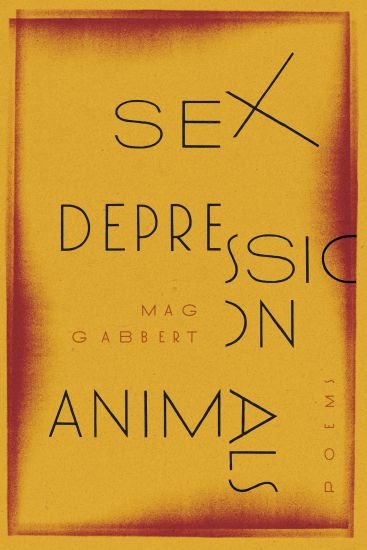
In SEX DEPRESSION ANIMALS, Mag Gabbert redefines the bestiary in fiery, insistent, and resistant terms. These poems recast the traumas of her adolescence while charting new paths toward linguistic and bodily autonomy as an adult. Using dreamlike, shimmering imagery, she pieces together a fractured portrait of femininity--one that electrifies the confessional mode with its formal play and rich curiosity. Gabbert examines the origin of shame, the role of inheritance, and what counts as a myth, asking, "What's the opposite of a man? / A woman? A wound? The devil's image?"