Kirjojen hintavertailu. Mukana 12 390 323 kirjaa ja 12 kauppaa.

Kirjahaku

Etsi kirjoja tekijän nimen, kirjan nimen tai ISBN:n perusteella.

1000 tulosta hakusanalla George B. Cheever

The Young Napoleon: The Life and Legacy of George B. McClellan

The Young Napoleon: The Life and Legacy of George B. McClellan

Charles River

Createspace Independent Publishing Platform
2017
nidottu
*Includes pictures of McClellan and other important people, places, and events in his life. *Includes maps of battles like Antietam. "McClellan is to me one of the mysteries of the war." - Ulysses S. Grant Over the last 150 years, historians and Americans have endlessly debated over the Civil War, including its causes and the best and worst generals. Nowhere has there been a sharper debate than over the career and legacy of George McClellan, with a majority viewing him as the North's biggest goat and a small but vocal minority insisting that McClellan was a very good general who was made a scapegoat by the Lincoln Administration and its supporters. Many members of the "McClellan Society" continue to assert that McClellan would have ended the war in 1862 without the Administration's interference. In 1861, McClellan was looked upon as a hero and even possibly a savior. Dubbed "The Young Napoleon", the 35 year old had been a prodigy at West Point, finishing in second place in the Academy's most famous class, the Class of 1846. After earning praise for his service in the Mexican-American War, McClellan had a short but successful career in the railroad industry and had been a foreign observer at the siege of Sevastopol.during the Crimean War. At the outbreak of the Civil War, there was no question that McClellan was one of the brightest and most experienced of the North's generals. Ultimately, of course, McClellan went from hero to goat, at least in the eyes of President Lincoln, who famously wrote that McClellan "has the slows". It was a sharp critique of McClellan's cautious movements, but McClellan was also faulted for conservative battlefield leadership in the Peninsula Campaign and at Antietam. McClellan also constantly overestimated his opponent's manpower, at times thinking the Confederates had double his Army of the Potomac when the exact opposite was the case. It was after Antietam and his bickering with the War Department over why he wasn't chasing Lee's battered Army of Northern Virginia that Lincoln finally sacked him, effectively ending his Civil War career. McClellan is best remembered for 1862, but he was also a Governor of New Jersey, Lincoln's opponent in the 1864 presidential election, and a writer seeking to reestablish his reputation before his untimely death. The Young Napoleon addresses the controversies and battles McClellan fought both on and off the field, but it also humanizes a man who was almost universally loved by the veterans of the Army of the Potomac and who wrote his most candid remarks to his wife. Along with pictures of McClellan and other important people, places and events in his life, you will learn about the "Young Napoleon" like you never have before, in no time at all.
The Young Napoleon: The Life and Legacy of George B. McClellan

The Young Napoleon: The Life and Legacy of George B. McClellan

Charles River

Createspace Independent Publishing Platform
2017
nidottu
*Includes pictures of McClellan and other important people, places, and events in his life. *Includes maps of battles like Antietam. "McClellan is to me one of the mysteries of the war." - Ulysses S. Grant Over the last 150 years, historians and Americans have endlessly debated over the Civil War, including its causes and the best and worst generals. Nowhere has there been a sharper debate than over the career and legacy of George McClellan, with a majority viewing him as the North's biggest goat and a small but vocal minority insisting that McClellan was a very good general who was made a scapegoat by the Lincoln Administration and its supporters. Many members of the "McClellan Society" continue to assert that McClellan would have ended the war in 1862 without the Administration's interference. In 1861, McClellan was looked upon as a hero and even possibly a savior. Dubbed "The Young Napoleon", the 35 year old had been a prodigy at West Point, finishing in second place in the Academy's most famous class, the Class of 1846. After earning praise for his service in the Mexican-American War, McClellan had a short but successful career in the railroad industry and had been a foreign observer at the siege of Sevastopol.during the Crimean War. At the outbreak of the Civil War, there was no question that McClellan was one of the brightest and most experienced of the North's generals. Ultimately, of course, McClellan went from hero to goat, at least in the eyes of President Lincoln, who famously wrote that McClellan "has the slows". It was a sharp critique of McClellan's cautious movements, but McClellan was also faulted for conservative battlefield leadership in the Peninsula Campaign and at Antietam. McClellan also constantly overestimated his opponent's manpower, at times thinking the Confederates had double his Army of the Potomac when the exact opposite was the case. It was after Antietam and his bickering with the War Department over why he wasn't chasing Lee's battered Army of Northern Virginia that Lincoln finally sacked him, effectively ending his Civil War career. McClellan is best remembered for 1862, but he was also a Governor of New Jersey, Lincoln's opponent in the 1864 presidential election, and a writer seeking to reestablish his reputation before his untimely death. The Young Napoleon addresses the controversies and battles McClellan fought both on and off the field, but it also humanizes a man who was almost universally loved by the veterans of the Army of the Potomac and who wrote his most candid remarks to his wife. Along with pictures of McClellan and other important people, places and events in his life, you will learn about the "Young Napoleon" like you never have before, in no time at all.
Homesick for a World Unknown: The Life of George B. Schaller
In this riveting portrait of George B. Schaller, the world's leading field biologist, Miriam Horn captures the seventy years he spent living among wild animals in the world's remotest regions, forever altering how we see--and save--the natural world In 1959, though just twenty-six years old and a graduate student, George B. Schaller shrugged off warnings of mortal danger and set off for the Belgian Congo to do what no other scientist had dared: study mountain gorillas, the real King Kong, by living alongside them. Boldly refusing arms and retinue, Schaller and his wife, Kay, established a home in the jungle and came to share the apes' rhythms and rules. After more than two years of immersive research--a groundbreaking methodology he would spend his life honing--Schaller transformed how the world viewed gorillas; they were not murderous brutes but tender creatures, and more like humans than any twentieth-century scientist had recognized. His mission to revolutionize our perceptions of wild animals would propel him across four continents and inspire generations of scientists. In Homesick for a World Unknown, Miriam Horn draws on thousands of pages from Schaller's journals and letters, globe-spanning interviews, and two journeys into the field with the legendary scientist himself to trace his emergence as the founding father of modern wildlife conservation. She probes what drives him to know Earth's wildest places and most fearsome creatures, beginning with a childhood upended by displacement and atrocity. Born in Berlin in 1933 to an American socialite married to a Nazi diplomat, the young Schaller was moved from one occupied country to another before finally arriving with his mother in the U.S. in 1947, as an enemy alien. It was in the Missouri woods that teenage George found a place of respite and at the University of Alaska that he found both his calling and a lifelong partner in Kay. In the decades following his work in the Congo, Schaller went on to conduct the earliest studies of Indian tigers, Serengeti lions, Brazilian jaguars, Chinese pandas, and Tibetan brown bears, meticulously cataloging their private lives. He navigated acute danger, violent conflict, and treacherous politics in pursuit of empathy for and preservation of creatures big and small. It was Schaller who first guided Jane Goodall on her chimp study in Tanzania and led Peter Matthiessen into Nepal in search of the snow leopard. And while remaking wildlife science, his impact went further still: he spurred the creation of vast national parks and partnered with local communities to protect the homes they share with these animals. A vivid and captivating account of the adventurous life of George B. Schaller, here is the definitive portrait of the man who dared to challenge us to rethink our place in the natural world.
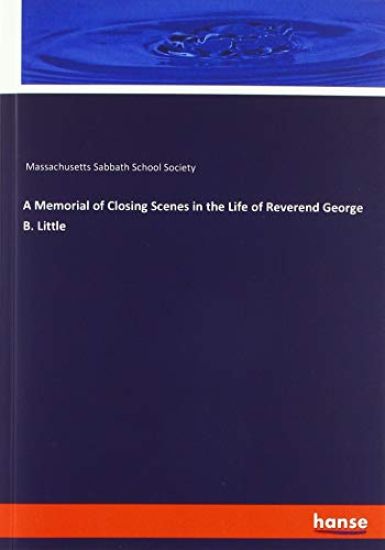
A Memorial of Closing Scenes in the Life of Rev. George B. Little

A Memorial of Closing Scenes in the Life of Rev. George B. Little

Massachusetts Sabbath School Society

Hansebooks
2019
pokkari
A Memorial of Closing Scenes in the Life of Rev. George B. Little is an unchanged, high-quality reprint of the original edition of 1865. Hansebooks is editor of the literature on different topic areas such as research and science, travel and expeditions, cooking and nutrition, medicine, and other genres. As a publisher we focus on the preservation of historical literature. Many works of historical writers and scientists are available today as antiques only. Hansebooks newly publishes these books and contributes to the preservation of literature which has become rare and historical knowledge for the future.
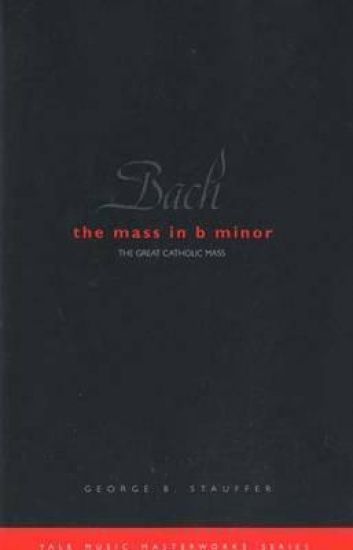
Bach: The Mass in B Minor

Bach: The Mass in B Minor

George B. Stauffer

Yale University Press
2004
pokkari
In this book George B. Stauffer explores the music and complex history of Bach’s last and possibly greatest masterpiece. Stauffer examines the B-Minor Mass in greater detail than ever before, demonstrating for the first time Bach’s reliance on contemporary models from the Dresden Mass repertory and his brilliantly innovative methods of unifying his immense composition. Musicians, music scholars, students, and music lovers will find in this engagingly written book a wealth of information about Bach’s extraordinary choral work.Stauffer surveys the roots of the Mass Ordinary text and its treatment in settings known to Bach. He looks at the events that led to the writing of the B-Minor Mass and places the work within the context of the composer’s late style. In three deeply informed chapters, Stauffer considers the individual sections of the Mass—the Kyrie and Gloria, the Credo, and the Sanctus and Agnus Dei. The book also traces the history of the work after Bach’s death, addresses specific issues of performance practice, and investigates the qualities that give the B-Minor Mass its universal appeal.