Kirjojen hintavertailu. Mukana 12 459 402 kirjaa ja 12 kauppaa.

Kirjahaku

Etsi kirjoja tekijän nimen, kirjan nimen tai ISBN:n perusteella.

1000 tulosta hakusanalla George H. Atkinson

The Rock of Chickamauga: The Life and Career of General George H. Thomas

The Rock of Chickamauga: The Life and Career of General George H. Thomas

Charles River

Createspace Independent Publishing Platform
2018
nidottu
*Includes pictures of Thomas and important people, places, and events in his life. *Includes maps of battles like Chickamauga and Franklin *Includes a bibliography for further reading. " Ulysses S. Grant and George H. Thomas deserve] monuments like those of Nelson and Wellington in London, well worthy to stand side by side with the one which now graces our capitol city of 'George Washington.'" - William Tecumseh Sherman Despite the fact that the Civil War began over 150 years ago, it remains one of the most widely discussed topics in America today, with Americans arguing over its causes, reenacting its famous battles, and debating which general was better than others. Americans continue to be fascinated by the Civil War icons who made the difference between victory and defeat in the war's great battles. One of the most unique and effective generals of the Civil War also happens to be one of the most overlooked. While there is a never ending stream of acclaim going to generals like Grant, Lee, and Sherman, General George H. Thomas has managed to fly under the radar, despite having an unusual background as a Southerner fighting for the Union and scoring almost inconceivable successes at Missionary Ridge, Franklin, and Nashville. Thomas also skillfully fought at Perryville, Stones River, and in Sherman's Atlanta Campaign. Despite all of those successes, however, Thomas is best remembered as "The Rock of Chickamauga". On September 19, 1863, a Union gaffe created a quarter-mile gap in the Union center, directly in the path of an eight-brigade (15,000 man) force led by Confederate General James Longstreet, which subsequently drove a third of the Union army from the field. While commanding general William Rosecrans retreated with those men, Thomas rallied the remaining parts of the army and formed an impromptu defensive stand on Horseshoe Ridge, holding off a series of well-executed (albeit costly) assaults until nightfall. Thomas's heroics prevented the destruction of the Union army and allowed it to successfully retreat to Chattanooga. Thomas had one of the most stellar records of any officer in the war, was instrumental in the Union's ultimate victory in the Western theater, and scored the kinds of decisive victories that eluded more celebrated generals like Lee. So why does Thomas fly under the radar? A stern military man, Thomas eschewed self-promotion and aggrandizement, and though his methodical generalship was almost always successful, it sometimes annoyed General Ulysses S. Grant. With Grant's star rising as his relationship with Thomas was cooling, Thomas was on the wrong end of history. And when he died in 1870, Thomas had burned his papers and had not written memoirs or an account of his participation in the war, missing his final opportunity to directly leave his mark instead of having others write it for him. The Rock of Chickamauga: The Life and Career of General George H. Thomas chronicles the life and career of one of the Union's most indispensable generals, humanizing the methodical military man who roomed with Sherman at West Point and was known as "Slow Trot Thomas" by his men, who came to respect and admire him. Along with pictures of important people, places, and events in his life, you will learn about George H. Thomas like you never have before, in no time at all.

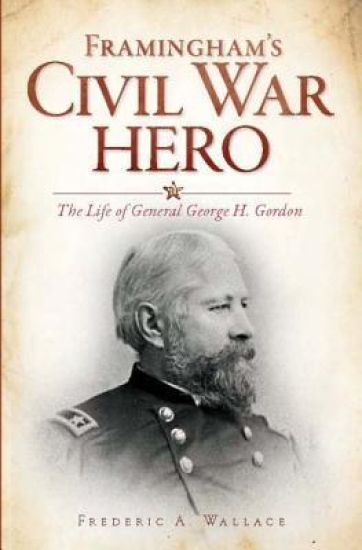
Framingham's Civil War Hero: The Life of General George H. Gordon
George Henry Gordon, who moved to Framingham, Massachusetts, at the age of five, attended the U.S. Military Academy at West Point, where his attitudes toward the country were shaped alongside classmates George McClellan, Thomas Stonewall Jackson and Ulysses S. Grant. Gordon went on to hold political and military offices in the North, and as a general in the Union army, he led his troops against Jackson in the Valley Campaign, at Antietam and at the Siege of Charleston. Join historian Frederic A. Wallace as he recounts the largely untold story of General George H. Gordon, Framingham's favorite son, with personal diary entries and letters that reveal a man of integrity and honor whose actions displayed an outright love for his country.
The Reminiscences of Rear Adm. George H. Miller, USN (Ret.)
Following graduation from the Naval Academy in 1924, Miller spent two years in the crew of the battleship USS California (BB-44) before going to flight training. As an aviator, he initially was in the battleship USS West Virginia (BB-48) and carrier USS Langley (CV-1). He served as a scout plane pilot from the Navy’s last two rigid airships, the USS Akron (ZRS-4) and Macon (ZRS-5). His memoir includes a description of the Macon’s loss in 1935. After floatplane duty in cruisers, Miller served with Patrol Squadron 16 in Alaska and commanded Patrol Squadron Five in Panama. He subsequently was on the staff of Rear Admiral Arthur Bristol, Commander Support Force, Atlantic Fleet. In 1942-43 Miller headed the Training Literature section of the Bureau of Aeronautics, commanding a talented group of artists, writers, and photographers. After a stint as naval attaché in London, he headed the public relations staff of Admiral Chester Nimitz in the Pacific in 1944-45, then was spot-promoted to rear admiral to serve as the Director of Public Information for the entire Navy. After retirement in 1946, Miller served in public relations capacities for TWA, the American Petroleum Institute, Pan American, and Hofstra University.
Anti-american Terrorism: From Eisenhower To Trump - A Chronicle Of The Threat And Response: Volume Ii: The Reagan And George H. W. Bush Administrations
'This is a truly magisterial work of scholarship. By pulling all this material together in one place, and by organizing it so accessibly, Pluchinsky has performed an invaluable service for researchers and counter-terrorism practitioners alike … the real selling point is the factual content. Pluchinsky has written the definitive contextual history of US counter-terrorism policy and these volumes, and I confidently expect the two companion volumes still to come, deserve a place in every serious library of terrorism.'Critical Studies on TerrorismVolume I examined the policies and actions in the Eisenhower, Kennedy, and Johnson administrations that contributed to the creation of anti-American grievances which in turn fueled the rise of anti-American terrorism overseas and domestically during the Nixon, Ford, and Carter administrations. Volume II chronicles the high-water mark of anti-American terrorism overseas that occurred during the Reagan administration. The litany of terrorist attacks on US targets overseas during this period is well known and unmatched in American history: 1983 suicide attack on US Embassy Beirut, 1983 suicide attack on US Marine Barracks Beirut, 1983 suicide attack on US Embassy Kuwait, 1984 suicide attack on US Embassy Beirut, 1985 assault on the TWA counter at Rome airport, 1985 hijacking of TWA 847, 1986 mid-air bombing of TWA 840, 1988 mid-air bombing of Pan Am 103, and the 1982-1988 kidnappings of 18 Americans in Lebanon. This wave of anti-American terrorist attacks demanded an appropriate response. The Reagan administration proceeded to construct the most ambitious and costly counter-terrorism program in the pre-9/11 era. Although the terrorist threat was perceived to be in decline during the George H W Bush administration, it still had to deal with the potential terrorist threat emanating from the first Gulf War in 1990-1991, two assassination attempts on the president, and the ramifications of the Pan Am 103 bombing.
Anti-american Terrorism: From Eisenhower To Trump - A Chronicle Of The Threat And Response: Volume Ii: The Reagan And George H. W. Bush Administrations
'This is a truly magisterial work of scholarship. By pulling all this material together in one place, and by organizing it so accessibly, Pluchinsky has performed an invaluable service for researchers and counter-terrorism practitioners alike … the real selling point is the factual content. Pluchinsky has written the definitive contextual history of US counter-terrorism policy and these volumes, and I confidently expect the two companion volumes still to come, deserve a place in every serious library of terrorism.'Critical Studies on TerrorismVolume I examined the policies and actions in the Eisenhower, Kennedy, and Johnson administrations that contributed to the creation of anti-American grievances which in turn fueled the rise of anti-American terrorism overseas and domestically during the Nixon, Ford, and Carter administrations. Volume II chronicles the high-water mark of anti-American terrorism overseas that occurred during the Reagan administration. The litany of terrorist attacks on US targets overseas during this period is well known and unmatched in American history: 1983 suicide attack on US Embassy Beirut, 1983 suicide attack on US Marine Barracks Beirut, 1983 suicide attack on US Embassy Kuwait, 1984 suicide attack on US Embassy Beirut, 1985 assault on the TWA counter at Rome airport, 1985 hijacking of TWA 847, 1986 mid-air bombing of TWA 840, 1988 mid-air bombing of Pan Am 103, and the 1982-1988 kidnappings of 18 Americans in Lebanon. This wave of anti-American terrorist attacks demanded an appropriate response. The Reagan administration proceeded to construct the most ambitious and costly counter-terrorism program in the pre-9/11 era. Although the terrorist threat was perceived to be in decline during the George H W Bush administration, it still had to deal with the potential terrorist threat emanating from the first Gulf War in 1990-1991, two assassination attempts on the president, and the ramifications of the Pan Am 103 bombing.
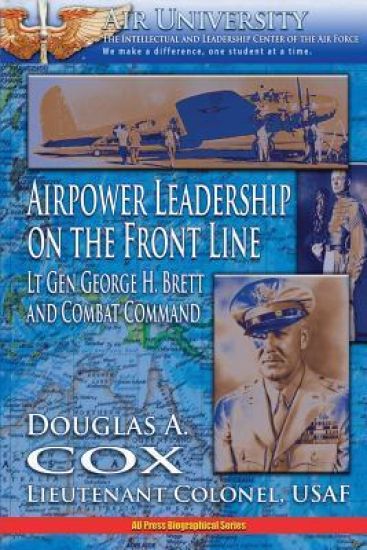
Air Power Leadership on the Front Line - Lt. Gen. George H. Brett and Combat Command

Air Power Leadership on the Front Line - Lt. Gen. George H. Brett and Combat Command

Douglas a. Cox

Createspace Independent Publishing Platform
2012
nidottu
With Airpower Leadership on the Front Line: Lt Gen George H. Brett and Combat Command, Douglas Cox makes a singular contribution to American airpower biography. Books abound on personalities that reach high rank and whose careers culminate in great success. These studies often glean keen insight about leadership style, and some are vocationally valuable as examples of effective command. But the analysis of history's great winners yields something less than a full dimensional sense of leader- ship. The examination of those men and women who do not quite reach exalted status can flesh out the lessons of effective leadership. This is what Cox does here. George H. Brett certainly reached high rank, and only the most cynical and uninformed observer would judge his career a failure. Yet World War II did not propel him along the same career trajectory of a Curtis LeMay or a Hoyt Vandenberg or a Jimmy Doolittle. Why? For all kinds of reasons; some of which were good, some bad, some within Brett's control, and others entirely outside his purview. Through a careful examination of primary and secondary sources, as well as his own acumen as a sharp officer, Cox uses Brett's life to illuminate those factors that at first sped Brett through the ranks and then those variables that appeared to block his further advancement. Cox reminds us of what we often know intuitively but often for- get intellectually: that success has many fathers, including personal luck and fortuitous circumstance. Airpower Leadership on the Front Line pulls no punches regarding Brett's limitations, but it also acknowledges broader factors at play in his career. In the end, Cox delineates those factors that make for successful leaders; and, more importantly, suggests which among those variables are within a person's control and hence worthy of attention and energy. As much as studies of commanders who grabbed the brass ring, this examination of George H. Brett adds Insight into the makings of effective leadership and successful command.
The Top 5 Greatest Civil War Generals: Robert E. Lee, Stonewall Jackson, Ulysses S. Grant, William Tecumseh Sherman, and George H. Thomas
*Includes pictures and maps of battles. *Includes a bibliography of every general. With the exception of George Washington, perhaps the most famous general in American history is Robert E. Lee, despite the fact he led the Confederate Army of Northern Virginia against the Union in the Civil War. His most famous subordinate, Stonewall Jackson, is one of the most famous generals of the war, but it's still unclear whether that was a compliment for standing strong or an insult for not moving his brigade, but the nickname stuck for the brigade and the general itself. While all eyes were fixed on the Eastern theater at places like Manassas, Richmond, the Shenandoah Valley and Antietam, Ulysses S. Grant went about a steady rise up the ranks through a series of successes in the West. Grant eventually came east to face Lee in 1864. Synonymous with barbarity in the South, William Tecumseh Sherman is lauded as a war hero in the North, and modern historians consider him the harbinger of total war. Military historian B. H. Liddell Hart famously declared that Sherman was "the first modern general." While there is a never ending stream of acclaim going to generals like Grant, Lee, and Sherman, General George H. Thomas has managed to fly under the radar. Thomas scored almost inconceivable successes at Missionary Ridge, Franklin, and Nashville. Thomas also skillfully fought at Perryville, Stones River, and in Sherman's Atlanta Campaign, but he's best remembered as "The Rock of Chickamauga". Thomas' heroics prevented the destruction of the Union army at that battle and allowed it to successfully retreat to Chattanooga.