Kirjojen hintavertailu. Mukana 11 717 486 kirjaa ja 12 kauppaa.

Kirjahaku

Etsi kirjoja tekijän nimen, kirjan nimen tai ISBN:n perusteella.

1000 tulosta hakusanalla Gerard

Gerard Manley Hopkins and the Poetry of Religious Experience
This nuanced yet accessible study is the first to examine the range of religious experience imagined in Hopkins's writing. By exploring the shifting way in which Hopkins imagines religious belief in individual history, Martin Dubois contests established views of his poetry as a unified project. Combining detailed close readings with extensive historical research, Dubois argues that the spiritual awareness manifest in Hopkins's poetry is varied and fluctuating, and that this is less a failure of his intellectual system than a sign of the experiential character of much of his poetry's thought. Individual chapters focus on biblical language and prayer, as well as on the spiritual ideal seen in the figures of the soldier and the martyr, and on Hopkins's ideas of death, judgement, heaven and hell. Offering fresh interpretations of the major poems, this volume reveals a more diverse and exploratory poet than has been recognised.

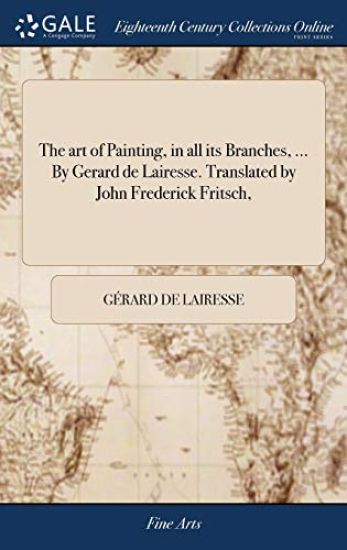
The art of Painting, in all its Branches, ... By Gerard de Lairesse. Translated by John Frederick Fritsch,
The 18th century was a wealth of knowledge, exploration and rapidly growing technology and expanding record-keeping made possible by advances in the printing press. In its determination to preserve the century of revolution, Gale initiated a revolution of its own: digitization of epic proportions to preserve these invaluable works in the largest archive of its kind. Now for the first time these high-quality digital copies of original 18th century manuscripts are available in print, making them highly accessible to libraries, undergraduate students, and independent scholars.The eighteenth-century fascination with Greek and Roman antiquity followed the systematic excavation of the ruins at Pompeii and Herculaneum in southern Italy; and after 1750 a neoclassical style dominated all artistic fields. The titles here trace developments in mostly English-language works on painting, sculpture, architecture, music, theater, and other disciplines. Instructional works on musical instruments, catalogs of art objects, comic operas, and more are also included. ++++The below data was compiled from various identification fields in the bibliographic record of this title. This data is provided as an additional tool in helping to insure edition identification: ++++British LibraryT129111Titlepage in red and black.London: printed for S. Vandenbergh; Messrs. Payne; White; Robson and Co.; Walter; and Sewell, 1778. 20],504p., plates; 4
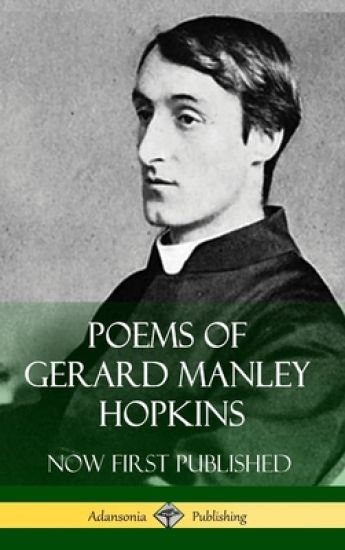
Poems of Gerard Manley Hopkins - Now First Published (Classic Works of Poetry in Hardcover)
This compendium of poems by Gerard Manley Hopkins includes his most famous works, together with a careful selection of his most critically acclaimed verses. Hopkins is one of the Victorian era's best appreciated poets, gaining much of his fame for his unique and religiously inspired subjects. A committed Jesuit, his poems were notable for including a technique of Hopkins' own invention named sprung rhythm. This connotes verse which is designed to imitate the patterns and pace of typical human speech. By 1918, when this collection of Hopkins' poetry first appeared, he had gained much renown. To emphasise that several of the entries had never been published previously, the subtitle of 'Now First Published' was appended. This and other anthologies helped introduce the talents of Hopkins to a wider audience, cementing his status in England's literary pantheon.
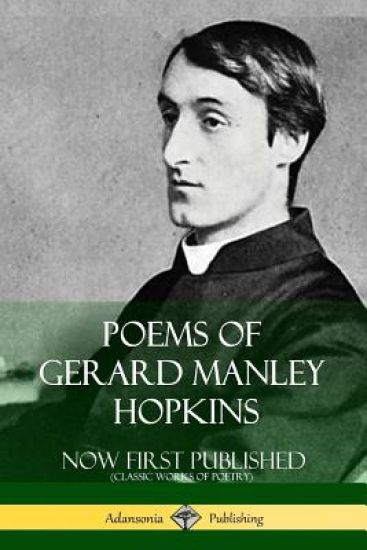
Poems of Gerard Manley Hopkins - Now First Published (Classic Works of Poetry)
This compendium of poems by Gerard Manley Hopkins includes his most famous works, together with a careful selection of his most critically acclaimed verses.Hopkins is one of the Victorian era's best appreciated poets, gaining much of his fame for his unique and religiously inspired subjects. A committed Jesuit, his poems were notable for including a technique of Hopkins' own invention named sprung rhythm. This connotes verse which is designed to imitate the patterns and pace of typical human speech. By 1918, when this collection of Hopkins' poetry first appeared, he had gained much renown. To emphasise that several of the entries had never been published previously, the subtitle of 'Now First Published' was appended. This and other anthologies helped introduce the talents of Hopkins to a wider audience, cementing his status in England's literary pantheon.
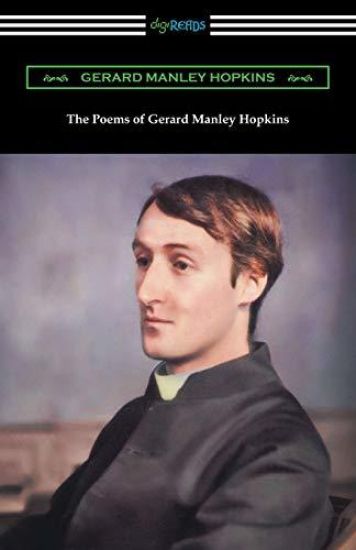
The Poems of Gerard Manley Hopkins

The Poems of Gerard Manley Hopkins

Gerard Manley Hopkins

Digireads.com
2018
pokkari
Relatively unknown in his own lifetime, Gerard Manley Hopkins is the now accredited as the author of some of the finest and most complex poems in the English language. As a Victorian poet, Roman Catholic convert, and Jesuit priest, Hopkins pioneered a revolutionary form of meter he termed "sprung rhythm" in his first major work, "The Wreck of the Deutschland." This poem, like most of Hopkins' work, reflects both his belief in the doctrine that human beings were created to praise God as well as his commitment to the Jesuit practices of meditation and spiritual self-examination. Hopkins' poetry is unconventional in its sensitivity to alliteration, assonance and consonance, as well as its characteristic diction and phrasing. This volume includes some of his most famous works: "Spring," "Pied Beauty," "God's Grandeur," "The Starlight Night," "Spelt from Sibyl's Leaves," and his most famous sonnet, "The Windhover." This edition is printed on premium acid-free paper.
Gerard Manley Hopkins

Gerard Manley Hopkins

Todd K. Bender

Johns Hopkins University Press
2020
pokkari
Originally published in 1966. In his lifetime, Gerard Manley Hopkins was known as a poet only by a small circle of his friends. More than any other major Victorian writer, he was recovered and presented as a poet to modern readers by editors and scholars of the first half of the twentieth century. This book analyzes how and to what extent the presuppositions of these critics have dictated the modern conception of Hopkins's work. Bender seeks to dispel, once and for all, the notion that Hopkins was a naïf poet. He provides an analysis of classical Greek and Latin rhetoric relative to the classical background of Hopkins's style and the structure in his poetry. He maintains that especially in Hopkins's more extreme work, such as "The Wreck of the Deutschland," there are precedents for the structure of the poem itself, the structure of the sentences within the poem, and its sensual and obscure imagery in the classical literature that Hopkins knew so well.Bender's study suggests two highly controversial positons: first, that although Hopkins is one of the most original voices in English, his poetry is within a tradition insufficiently recognized by modern critics; and second, that the effect of careful and sympathetic study of classical literature can induce quite the opposite of a neoclassical style in English.
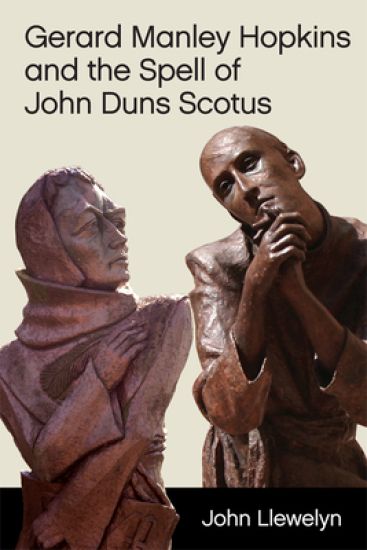
Gerard Manley Hopkins and the Spell of John Duns Scotus

Gerard Manley Hopkins and the Spell of John Duns Scotus

John Llewelyn

Edinburgh University Press
2015
sidottu
The early medieval Scottish philosopher and theologian John Duns Scotus shook traditional doctrines of universality and particularity by arguing for a metaphysics of 'formal distinction'. Hundreds of years later, why did the 19th century poet and self-styled philosopher Gerard Manley Hopkins find this revolutionary teaching so appealing? John Llewelyn answers this question by casting light on various neologisms introduced by Hopkins and reveals how Hopkins endorses Scotus' claim that being and existence are grounded in doing and willing. Drawing on modern responses to Scotus made by Heidegger, Peirce, Arendt, Leibniz, Hume, Reid, Derrida and Deleuze, Llewelyn's own response shows why it would be a pity to suppose that the rewards of reading Scotus and Hopkins are available only to those who share their theological presuppositions.
Gerard Manley Hopkins and the Spell of John Duns Scotus

Gerard Manley Hopkins and the Spell of John Duns Scotus

John Llewelyn

EDINBURGH UNIVERSITY PRESS
2021
nidottu
The early medieval Scottish philosopher and theologian John Duns Scotus shook traditional doctrines of universality and particularity by arguing for a metaphysics of 'formal distinction'. Why did the nineteenth-century poet and self-styled philosopher Gerard Manley Hopkins find this revolutionary teaching so appealing? John Llewelyn answers this question by casting light on various neologisms introduced by Hopkins and reveals how Hopkins endorses Scotus claim that being and existence are grounded in doing and willing. Drawing on modern responses to Scotus made by Heidegger, Peirce, Arendt, Leibniz, Hume, Reid, Derrida and Deleuze, Llewelyn's own response shows by way of bonus why it would be a pity to suppose that the rewards of reading Scotus and Hopkins are available only to those who share their theological presuppositions.