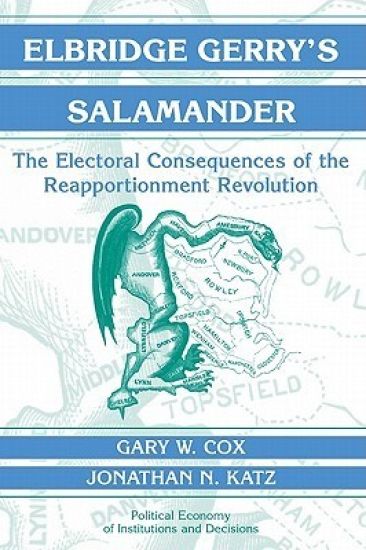
The Supreme Court’s reapportionment decisions, beginning with Baker v. Carr in 1962, had far more than jurisprudential consequences. They sparked a massive wave of extraordinary redistricting in the mid-1960s. Both state legislative and congressional districts were redrawn more comprehensively - by far - than at any previous time in America’s history. Moreover, they changed what would happen at law should a state government fail to enact a new districting plan when one was legally required. We provide the first detailed analysis of how judicial partisanship affected redistricting outcomes in the 1960s, arguing that the reapportionment revolution led indirectly to three fundamental changes in the nature of congressional elections: the abrupt eradication of a 6% pro-Republican bias in the translation of congressional votes into seats outside the south; the abrupt increase in the apparent advantage of incumbents; and the abrupt alteration of the two parties’ success in congressional recruitment and elections.
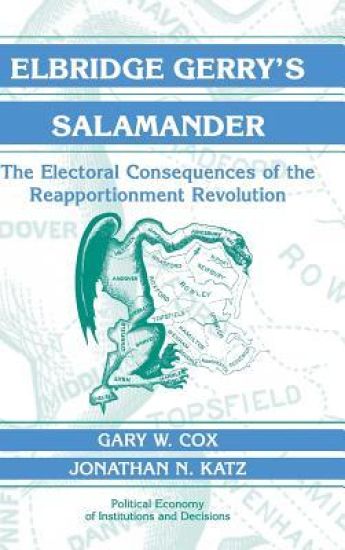
The Supreme Court's reapportionment decisions, beginning with Baker v. Carr in 1962, had far more than jurisprudential consequences. They sparked a massive wave of extraordinary redistricting in the mid-1960s. Both state legislative and congressional districts were redrawn more comprehensively - by far - than at any previous time in America's history. Moreover, they changed what would happen at law should a state government fail to enact a new districting plan when one was legally required. This book provides a detailed analysis of how judicial partisanship affected redistricting outcomes in the 1960s, arguing that the reapportionment revolution led indirectly to three fundamental changes in the nature of congressional elections: the abrupt eradication of a 6% pro-Republican bias in the translation of congressional votes into seats outside the south; the abrupt increase in the apparent advantage of incumbents; and the abrupt alteration of the two parties' success in congressional recruitment and elections.
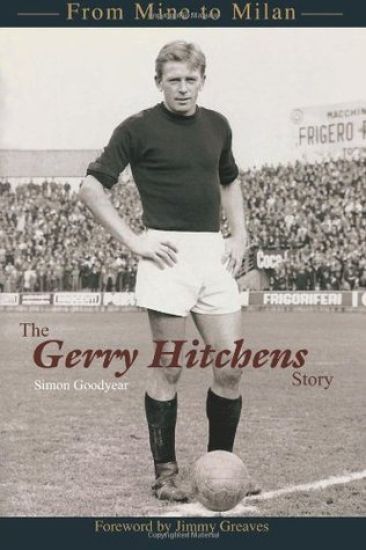
Gerry Hitchens was an uncomplicated footballer with obvious natural ability and virtues. This title offers tribute to a great footballer who was 'born to play'.
"Just Gerry" by Christine Chaundler is a captivating coming-of-age novel that encapsulates the essence of British literature. Set against the backdrop of adolescence, friendship, and family drama, Chaundler's novel follows Gerry on a transformative journey through school, navigating the complexities of identity and romance. As Gerry grapples with the challenges of growing up, readers are drawn into a world filled with relatable teenage experiences and moments of profound growth. Chaundler skillfully explores themes of friendship and family dynamics, capturing the nuances of adolescent relationships with sensitivity and depth. Through Gerry's narrative, the novel offers a poignant reflection on the trials and triumphs of youth, as well as the universal quest for self-discovery and acceptance. Set within the context of British society, "Just Gerry" provides readers with a glimpse into the cultural landscape of the time, enriching the story with elements of nostalgia and authenticity. Filled with heartfelt moments and memorable characters, "Just Gerry" is a timeless tale of adolescence and the pursuit of identity, resonating with readers of all ages as they embark on their own journeys of growth and self-realization.
'The best book on football ever written'. No, that is not some copy-writer's hyperbole, it is the judgement of Franz Beckenbauer, winner of the World Cup as both player and manager. In Football Memories, Brian Glanville himself writes, 'The central character, Garry, was a Scottish inside-forward based on Danny Blanchflower. This, largely because the footballer had to be untypically intelligent and aware, as well as an accomplished performer. Danny, so fluent, so original, and in certain ways so flawed, seemed an ideal model. Yet he, or his surrogate, could not carry the whole book. I used various voices. His wife's. My own.' From J. B. Priestley's pre-publication endorsement - 'I enjoyed this highly original novel' - praise has been constant: 'This is a brilliant novel. Any footballer can see a little of himself in Gerry Logan, as I did when I first read it. The book tells what the pressures are like in the game, the temptations to which successful players are exposed and yet the human qualities tell us much about society and human nature in general.' Derek Dougan 'The best novel on soccer I have ever read.' Daily Herald 'Soars into first class fiction.' The Spectator 'An acid fable of our age, solid with expertise about football and its seamier secrets.' Daily Mail 'The whole world of big time soccer, with its glamour and bitter feuds, made very real.' Sunday Telegraph
Daisy's Adventures is a collection of stories about an orphan adopted in the United States during WWII.Daisy's teacher organizes a classroom exercise about American history. Daisy's boredom turns to alert attention when Teacher informs the class about "gerrymandering". During the exercise, the students untangle the complex logic of redrawing voting districts. Will the students be able to explain gerrymandering to their parents before the grown-ups head to the polls to vote?For the full 9 title set plus lesson plan guide book (10 books total), please see ISBN-13: 978-1-7184-0000-9 or ISBN-10: 1-7184-0000-4
Gerry Joe Weise was born in 1959, on April 23rd in Sydney, Australia. He is an award winning visual artist, who has lived and worked in Australia, France, Germany, Switzerland and the United States. He has exhibited in over 80 solo and group exhibitions across the globe. He is a professional photographer and an accomplished video-maker, all for the sole purpose to further his artwork, which he has exhibited since 1980. He is also a musician, and has performed professionally at musical concerts since 1976. He is best known for the following categories: Environmental Art, Earth Art, Land Art, Installation Art, and "In Situ". His drawings, paintings, sculptures and photography; can be found in many galleries, museums, cultural centers, private and public collections, around the world. Weise often uses natural materials such as earth, sand, mineral, stone, vegetation, and pigments. Choosing to situate his work among inspiring landscapes, he transforms the way we behold and view a land site. Causing us to pay more attention to minute detail, of certain forms and perspectives that make up an environment. His aim is to be in total harmony, and serve as a compliment to the natural surroundings. Never disrupting, but forever paying tribute to this green blue planet. Weise's artwork outside, in forests, at beaches, among rocky shores, or on green grass, often fall subject to the cycle of seasons. The tides, wind, rain, sunlight, and decay, all serve to transform and erode his work. Ephemeral Art has captivated him for a very long time, as he finds it is another way of gauging time, from past to present to the future. Some of his tidal works with Sand Drawings disappear within less than 12 hours, but that does not stop the production of photography and printing. There are also the preliminary sketches and drawings before the act of creating an installation outdoors. For most of his themes and concepts, there is a body of work capturing the before, during, and after process. Weise's Environmental Art is never as fragile as we might expect. He has said his artwork can be summed up as, "expressionistic earthworks on land environments". Environmental Art branched out from Land Art during the late 1960s. Both are parallel movements that question the power and authority of museums, art institutions and galleries. Historically in the past, museums and galleries have always controlled the production, exhibitions, and sale of artworks. By creating Environmental Art at outdoor locations, in sympathy with nature while blending in with surrounding landscapes, can only lead to unique and surprising results. The artist removes the power from art dealers and the general art market. The emphasis is (always) on the process of creation, and the artist's concept. The artworks are often ephemeral (but not always), and an immediate audience is not necessary, as most artists prefer to work alone with and in nature. A one-on-one harmony and artistic experience. What survives is documentation, mainly photography of the site. Maps, videos and other media can be added too, as the Environmental artist becomes an archivist for the created outdoor installation. (Description by Albert L. Sandberg)