
Kirjahaku
Etsi kirjoja tekijän nimen, kirjan nimen tai ISBN:n perusteella.
1000 tulosta hakusanalla Giselle Stuart
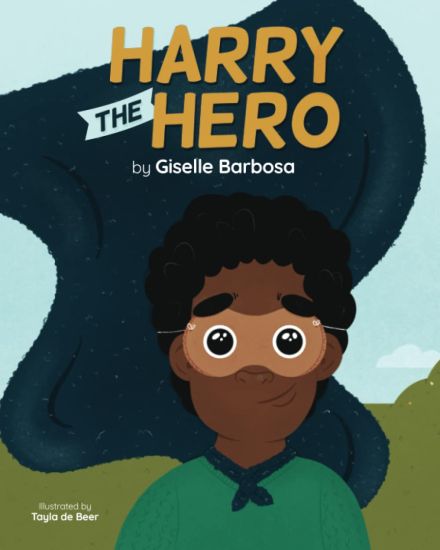
Sitting in the classroom Harry begins to notice something that makes him very upset... Snickers, tears, teasing, and crying. Taking matters into his own hands, Harry embarks on a superheroes journey to rid the classroom of bullies once and for all Along his journey, he makes new friends and encourages people to embrace themselves and to embrace others. Harry thought his mission was complete once he saved those from being bullied. However, he realised that there was more work to be done, and that perhaps it was the bullies themselves that also needed saving... Harry the Hero is a mental health comic-style book about kindness, self-acceptance, and empowerment. Hopefully once your child has embarked on these heroic adventures with Harry and the other characters, they too can become their own superheroes and pass the mask onto others.
Culturally Sensitive Narrative Interventions for Immigrant Children and Adolescents
Giselle B. Esquivel; Geraldine V. Oades-Sese; Marguerite L. Jarvis
University Press of America
2010
nidottu
This book provides scholarly and applied perspectives on culturally sensitive narrative interventions for culturally diverse and immigrant children and adolescents. A resilience model and strengths-based approach form the basis for responding to stressors of migration and the acculturation process through the use of narrative, storytelling, drawings, and puppetry techniques. The authors emphasize and illustrate the need to incorporate evidence-based approaches and cultural understanding when developing and implementing narrative educational and therapeutic interventions.
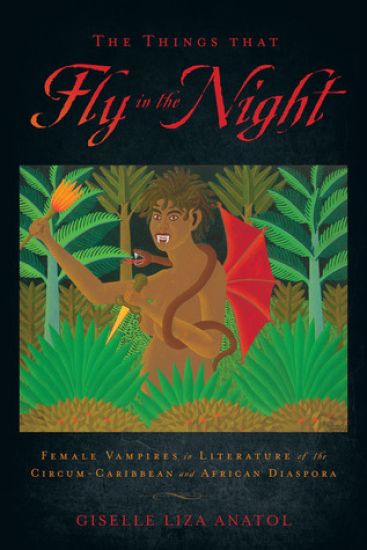
The Things That Fly in the Night explores images of vampirism in Caribbean and African diasporic folk traditions and in contemporary fiction. Giselle Liza Anatol focuses on the figure of the soucouyant, or Old Hag—an aged woman by day who sheds her skin during night’s darkest hours in order to fly about her community and suck the blood of her unwitting victims. In contrast to the glitz, glamour, and seductiveness of conventional depictions of the European vampire, the soucouyant triggers unease about old age and female power. Tracing relevant folklore through the English- and French-speaking Caribbean, the U.S. Deep South, and parts of West Africa, Anatol shows how tales of the nocturnal female bloodsuckers not only entertain and encourage obedience in pre-adolescent listeners, but also work to instill particular values about women’s “proper” place and behaviors in society at large. Alongside traditional legends, Anatol considers the explosion of soucouyant and other vampire narratives among writers of Caribbean and African heritage who in the past twenty years have rejected the demonic image of the character and used her instead to urge for female mobility, racial and cultural empowerment, and anti colonial resistance. Texts include work by authors as diverse as Nobel Laureate Toni Morrison, U.S. National Book Award winner Edwidge Danticat, and science fiction/fantasy writers Octavia Butler and Nalo Hopkinson.This book is available as an audio book (https://www.abantuaudio.com/books/1197052/The-Things-That-Fly-in-the-Night).

The Correspondence of Sarah Morgan and Francis Warrington Dawson, with Selected Editorials Written by Sarah Morgan for the Charleston News and Courier
Giselle Roberts
University of Georgia Press
2004
sidottu
The private and public writings in this volume reveal the early relationship between renowned Civil War diarist Sarah Morgan (1842-1909) and her future husband, Francis Warrington Dawson (1840-1889). Gathered here is a selection of their letters along with various articles that Morgan wrote anonymously for the Charleston News and Courier, which Dawson owned and edited.In January 1873 Morgan met Frank Dawson, an English expatriate, Confederate veteran, and newspaperman. By then Morgan had left her native Louisiana and was living near Columbia, South Carolina, with her younger brother, James Morris Morgan. When Sarah Morgan and Frank Dawson met, he was mourning the recent death of his first wife. She, in turn, was still grieving over her family’s many wartime losses.The couple’s relationship came to encompass both the personal and the professional. To free Morgan from an unhappy dependence on her brother, Dawson urged her to write professionally for his paper. During 1873 Morgan wrote more than seventy pieces on such topics as French and Spanish politics, race relations, the insanity plea, funerals, and fashion gossip—-editorials that caused a sensation in Charleston.Only after attaining financial independence through her secret newspaper career did Morgan marry Frank Dawson, in 1874. Morgan’s commentary gives us a candid portrayal of the way one southern woman viewed her postwar world—-even as she struggled to find her place in it.

During the American Civil War, a new patriotic womanhood superseded the antebellum feminine ideal. It demanded that Confederate women sacrifice everything for their beloved cause of privilege, that they give up their men, their homes, their fine dresses and social occasions to ensure the establishment of a separate nation and the preservation of elite ideas about race, class, and gender. However, as men answered their call to arms, and southern matrons redefined their role as mothers and wives, Southern belles, having been prepared for lives founded on the attainment and expression of gentility, perceived the shortages, the loss of slaves, and the other repercussions of Federal invasion as an assault on the honor and status of their homeland. In The Confederate Belle, Giselle Roberts examines the lives of these young, elite, white women in Mississippi and Louisiana during the Civil War. Unlike their mothers, the belles were limited in their participation in household and community affairs. Aside from fancy needlework or embroidery, young women had little experience of heavy-duty sewing and knitting. Nor were they interested in politics, preferring to devote their time to visiting, music, reading, manners, society, and beaux. After being prepared for a delightful ""bellehood,"" the young women were suddenly forced to reassess their traditional rite of passage into womanhood and to compromise their understanding of femininity at a pivotal time in their lives. They found themselves caught between antebellum traditions and wartime reality. Rather than simply sacrificing their socialization for patriotic womanhood, the belles drew upon the conceptual framework of Southern honor to strengthen their understanding of themselves as young Confederate women. They used honor to shape and legitimize their obligations to the wartime household. They used honor to fashion their role as patriotic women. They even used honor to establish their relationship to the cause. By drawing on this concept, the belles ensured the basic preservation of an ideology of privilege. The Confederate Belle is one of the first works to examine the importance of Southern honor in defining and shaping the wartime lives of young Confederate women. Using diaries, letters, and memoirs to uncover the unique wartime experiences of young ladies in the South, Roberts looks beyond the romance and fanfare of war so often associated with young women to explore the real life of the Southern belle.

Focusing on the works of bishop Gregory of Tours (539-594) and the poet-hagiographer Venantius Fortunatus (540-c.604), in later life bishop of Poitiers, Dr de Nie gives in these innovative studies a new understanding of the miracle stories around which much of their writing revolves, but whose bizarre dynamics appear to defy sense, which has often resulted in their dismissal as useless to the historian. These authors' perceptions of miracles - and their renderings of the human self-awareness through which miracles are perceived and happen - are analysed as attempts, mostly rooted in models from the Bible, to adjust the early Christian tradition so as to make sense of, and protect themselves in, the highly insecure environment of 6th-century Frankish Gaul. Drawing on modern anthropological and psychological studies, notably in the area of spiritual healing practices, as well as on philosophical and theological reflections about verbal and mental imagery, she demonstrates how these can be used to throw fresh light on late antique society and its spirituality, exploring views of mind, affectivity, body, sensory phenomena, symbols, and the perception of women as well as of the qualities of images, verbal language and texts. The volume includes five essays not previously published in English.
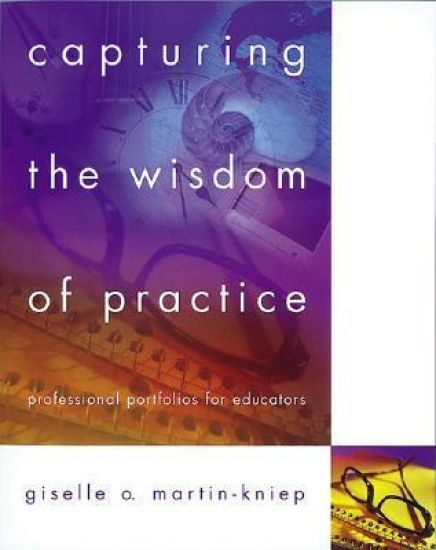
Capturing the Wisdom of Practice
Giselle O. Martin-Kniep
Association for Supervision Curriculum Development
1999
nidottu
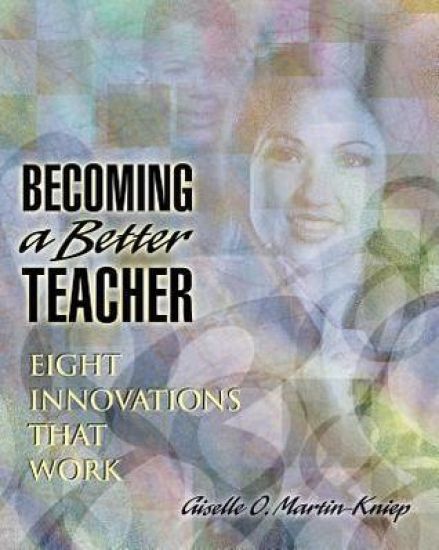

In her latest collection of poems, Giselle Steele has brought together new and selected poetry that speaks to the resilience of the human spirit after a devastating loss such as a wildfire. Highlighting the process that occurs with the fire lily flower that is known to grow from the ashes of ruins, it is her hope that with this collection each reader will be inspired to find their personal inner peace and hope for the future.

In this day and age, one would believe that skin color does not matter, but in this coming-of-age novel, Sandra Ray learns that it still matters in a painful way. Although she is twenty-three, attends college full-time, and works as a sales associate, she has a little growing up to do. Sandy realizes she can't live with her sister and brother-in-law forever and is angry and bitter for feeling powerless over what happens in her life. When her sister and brother-in-law try to set her up with a successful pediatrician, she resists with all her might. It's the one thing she believes she can control, or can she?
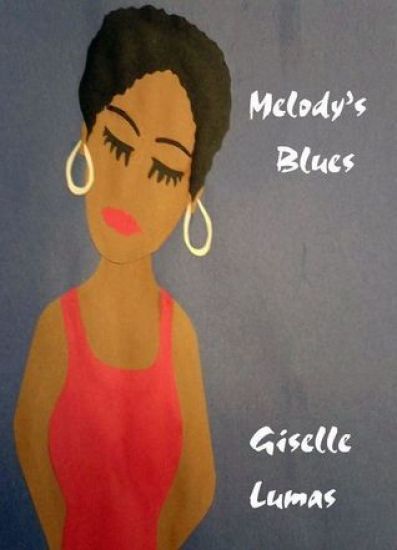

Malique Laveaux is a fifteen-year-old misfit with multi-toned skin. He's an orphan and often spends time alone until one day he runs into a flower shop. There, he meets the owner, Sokie Roberts, and her ten-year-old niece, Lani. He feels connected to them somehow. As time progresses, Lani informs Malique she has dreams about him. One of the dreams includes him aboard a ship being manhandled by two burly men demanding he take his shirt off so they can see the map on his back. Then strange things start to happen. One of the most beautiful girls from school, Clarissa Jones, suddenly takes notice of Malique. Even a Professor of History turns up on his doorstep, claiming to be an old friend of his biological mother. The professor also insists that his sister is still alive.Is his sister truly alive? Could the pattern on Malique's skin actually be a map?

Supermodel Cheyenne Gauthier returns to Beach City, California after ten years of living in the glamorous life. She is eager to get back home and be reunited with her childhood friends. Her friends though aren't so easily to be persuaded to pick up where they left off. Particularly, Mark Robinson, her very best friend. He has some wounds from her run away that needs to heal. Ironically, she is the only one who can heal them.Memories of their childhood flash across Cheyenne's mind, on her twelfth birthday, her friends played a game of truth or dare. She recalled Mark daring her to ask him to marry her on his thirtieth birthday. Was he serious?

The Break Room Crew (Claire, Roberta, and James) at Robinson's Software and Design have placed a bet during the Holiday season. Mostly, because Claire has decided it is her mission to help her boss, Sarah Alexander, find love. Well, the reality is she wants to set her boss up with her brother, Jeremy Buchanan, in hopes to make her boss a little more perkier during the holiday season. James doesn't think Sarah is capable of love. Roberta thinks Claire may be on to something.Will Sarah go on a date and kiss Jeremy by Thanksgiving? Will Jeremy propose to Sarah by Christmas Day? Claire is betting and determined to win.
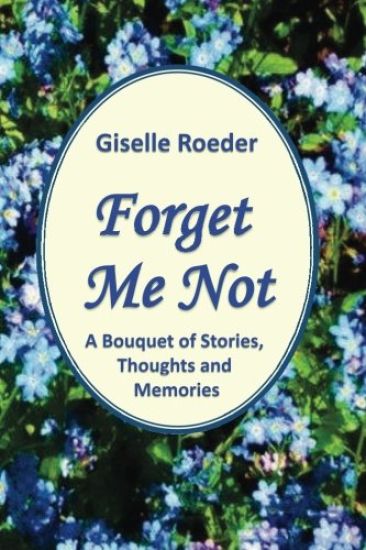
Forget Me Not: A Bouquet of Stories, Thoughts and Memories
Giselle Roeder
Roeder Publishing
2016
nidottu

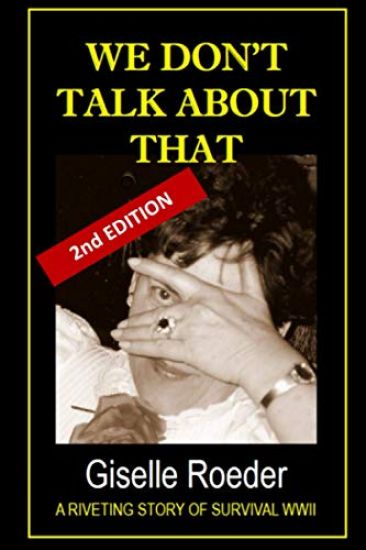
We Don't Talk About That: A Riveting Story of Survival WWII
Giselle Roeder
Giselle Roeder
2020
nidottu
This story is more like a history rather than a memoir. It starts after WWI and outlines the changes in many European countries' social makeup, particularly in post-war Germany. Unemployment and staggering inflation where half a loaf of bread cost billions and two beers a mere one-hundred billion led to the rise of Adolf Hitler, an Austrian man. He promised work and bread and kept his promises. The following years brought a tremendous upswing in life but also carried Germany into WWII. Six years of war devastated great cities, and millions of people lost their lives. The invasion of eastern Germany by the Russian army brought horror through unspeakable atrocities to the ordinary people. While most survivors' attitude is "we don't talk about that," the author has found the courage to place her memories on record.Growing up in a rural village in Pomerania, which became part of Poland after the war, the authors' (Gila) tranquil life turned tragic when the fighting approached her neighbourhood. The Russians took her father and all 16 to 60-year-old healthy people, men and women, to Siberia while her mother and siblings were evicted and became displaced persons. They joined the trek of thousands 'on the road to nowhere.' Gila was witness to gruesome acts of violence quickly ageing her beyond her years. She barely survived diphtheria, and later, recovering from typhoid fever, she took responsibility for her three younger siblings while her mother worked. Despite her interrupted schooling through circumstances beyond her control, Gila's determination empowered her to become a Physical Education teacher and successful competitive kayaker. Gila lived the first ten years of her life under the Nazis and her teenage years under communist rule. Germany's final division into East and West with its political ramifications caused her to escape to West Germany. Here she was able to fulfill an old dream despite facing new challenges, including an unwanted affair. Gila's story is one of heartache, courage, pain, love, liberation and reclaiming life.


Giselle Makinde Pereira Gonçalves is a chef and storyteller who believes food can bring people and cultures together. She was born and raised in Brazil, and like the dishes she cooks, she’s a mix of many influences: Portuguese, African and Indigenous. She is proud of that blend, and it influences everything she does. Samba is Giselle Makinde’s love letter to Brazilian food and a way to share its soul, history and creativity with a new audience.