Kirjojen hintavertailu. Mukana 12 083 983 kirjaa ja 12 kauppaa.

Kirjahaku

Etsi kirjoja tekijän nimen, kirjan nimen tai ISBN:n perusteella.

1000 tulosta hakusanalla Graham Greene

Religious Paradigms in the Novels of Graham Greene and Brian Moore
This is a sumptuous buffet of modern life presented by the British novelist Graham Greene and his Irish counterpart Brian Moore. Though the book follows a comparative framework, it is flavored by the critical tools of Reader Response as well as The Gestalt literary criticism to sift out the Genuine humanity it argues for, from the comic appearances of life that are founded on sand and are floundered at the mere waves of life.
Erinnerung und erzählerische Aspekte in Graham Greenes "Das Ende der Affäre"
Das Buch reflektiert eine reine Studie ber Erinnerung und Erz hlung, James Olney legt den Finger auf einen der illustrativen Aspekte der Schriftsteller des zwanzigsten Jahrhunderts. Er behauptet, "dass die gequ lte Suche nach dem Selbst durch die wechselseitig reflexiven Akte der Erinnerung und des Erz hlens, begleitet von der qu lenden Angst, dass es von Anfang an unm glich ist, aber auch unm glich, es aufzugeben, das eigentliche Emblem unserer Zeit ist" (Olney 1998: xiv-xv). Olneys ist eine Studie ber das Genre der Autobiographie, und so mag es abwegig erscheinen, dieses Zitat als Ausgangspunkt f r eine Diskussion von Graham Greenes Roman Das Ende der Aff re zu verwenden. Als Roman weist Das Ende der Aff re jedoch viele Elemente auf, die gemeinhin dem Genre der Autobiographie zugerechnet werden, und als solches glaube ich, dass es Olneys Anspruch gerecht wird. Das Projekt und die Zwangslage, die Olney akzentuiert, fangen die Stimmung und Atmosph re des hier zu untersuchenden Romans auf sehr pr gnante Weise ein. Das Hauptziel dieser Arbeit wird sein, zu untersuchen und hoffentlich zu erhellen, wie Erinnerung und Erz hlung als zwei m chtige Komplexe in diesem Roman am Werk sind. Der 1904 geborene Greene wurde in ein Milieu hineingeworfen, das zumindest nach allgemeiner Auffassung
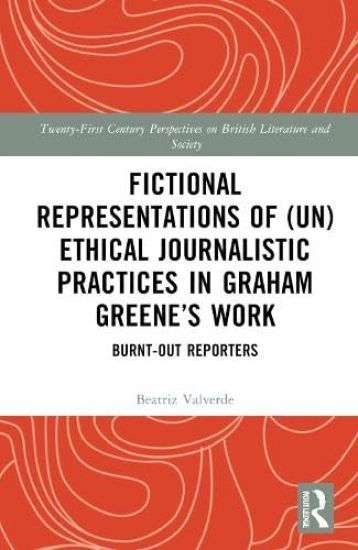
Fictional Representations of (Un)ethical Journalistic Practices in Graham Greene’s Work
British author Graham Greene pursued a professional career as a journalist before becoming a full-time writer. After that, he continued taking on reporting assignments as a correspondent for a variety of publications. Greene knew the profession inside out, and the role of the media in shaping the public’s views through information gathering and dissemination—a topic insufficiently researched by criticism—was among his main concerns. Greene’s fictional work features an array of journalists, and the representation of (un)ethical practices of the profession is a constant reference in his narrative. In this book, I intend to fill this research gap in Greenean studies, focusing on three main topics: the author’s reflection on the journalistic practice in connection with the classic paradigm of objectivity versus empathy; his questioning of the misuse of power when gathering and disseminating information by journalists, editors and news corporation owners; and finally, the relationship between journalists and their readership’s expectations, as well as the importance of fostering critical readers that make informed trustworthy decisions regarding journalism performance.
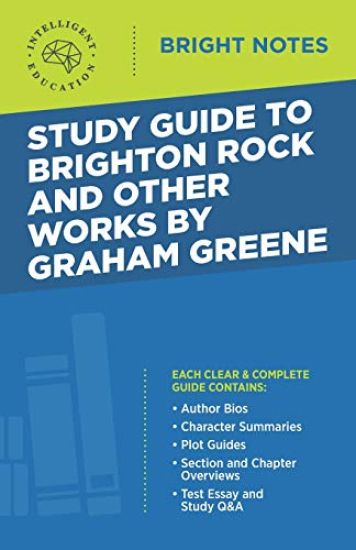
Study Guide to Brighton Rock and Other Works by Graham Greene
A comprehensive study guide offering in-depth explanation, essay, and test prep for selected works by Graham Greene, winner of Britain's Order of Merit and the Shakespeare Prize. Titles in this study guide include Brighton Rock, The Power and the Glory, The Heart of the Matter, The Quiet American, Burnt-Out Case, The Comedians, The Little Train, The Potting Shed, The Lawless Roads, The Lost Childhood, Stamboul Train, The Third Man, The Confidential Agent, Our Man in Havana, and The End of the Affair. As one of the leading English novelists of the twentieth-century, Greene's writings assisted in shaping contemporary catholic literature. Moreover, his thriller novels included philosophical and religious themes in order to explore the moral and political issues of the modern world. This Bright Notes Study Guide explores the context and history of Graham Greene's classic work, helping students to thoroughly explore the reasons they have stood the literary test of time. Each Bright Notes Study Guide contains: - Introductions to the Author and the Work - Character Summaries - Plot Guides - Section and Chapter Overviews - Test Essay and Study Q&As The Bright Notes Study Guide series offers an in-depth tour of more than 275 classic works of literature, exploring characters, critical commentary, historical background, plots, and themes. This set of study guides encourages readers to dig deeper in their understanding by including essay questions and answers as well as topics for further research.
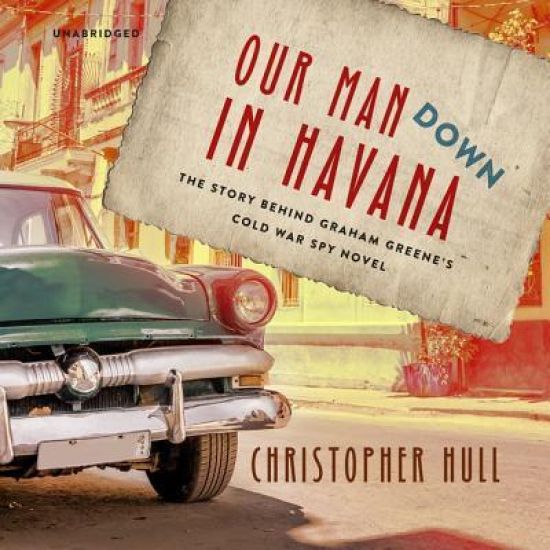
Our Man Down in Havana: The Story Behind Graham Greene's Cold War Spy Novel
Exploring the backstory that led to the writing of Graham Greene's beloved satirical spy novel, Our Man Down in Havana evokes this pivotal time and place in the author's life.When US immigration authorities deported Graham Greene from Puerto Rico in 1954, the British author made an unplanned visit to Havana and discovered that "every vice was permissible and every trade possible" in a Caribbean fleshpot of mafia-run casinos and nude revues. The former MI6 officer had stumbled upon the ideal setting for a comic espionage story. Three years later, he returned in the midst of Fidel Castro's guerrilla insurgency against a US-backed dictator to begin writing his iconic novel Our Man in Havana. Twelve weeks after its publication, the Cuban Revolution triumphed in January 1959, soon transforming a capitalist playground into a communist stronghold.Combining biography, history, and politics, Our Man Down in Havana investigates the real story behind Greene's fictional one. This includes his many visits to a pleasure island that became a revolutionary island, turning his chance involvement into a political commitment. His Cuban novel describes an amateur agent who dupes his intelligence chiefs with invented reports about "concrete platforms and unidentifiable pieces of giant machinery." With eerie prescience, Greene's satirical tale had foretold the Cold War's most perilous episode, the 1962 Cuban Missile Crisis.Exploiting a wealth of archival material and interviews with key protagonists, Our Man Down in Havana delves into the story behind and beyond the author's prophetic Cuban tale, focusing on one slice of Greene's manic life: a single novel and its complex history.
Mémoire et aspects narratifs dans "La fin de l'affaire" de Graham Greene
Le livre refl te une tude pure sur la m moire et le r cit, James Olney met le doigt sur l'un des aspects les plus illustratifs des crivains du vingti me si cle. Il affirme "qu'une recherche angoiss e du soi, travers les actes mutuellement r flexifs de la m moire et de la narration, accompagn e de la crainte obs dante que ce soit impossible d s le d but mais aussi impossible abandonner, est l'embl me m me de notre poque" (Olney 1998: xiv-xv). L' tude d'Olney porte sur le genre de l'autobiographie, et il pourrait donc sembler loign d'appliquer cette citation comme point de d part d'une discussion sur le roman de Graham Greene, The End of the Affair. Cependant, en tant que roman, The End of the Affair pr sente de nombreux l ments que l'on consid re g n ralement comme appartenant au genre de l'autobiographie et, en tant que tel, je pense qu'il est conforme l'affirmation d'Olney. Le projet et la situation difficile qu'Olney met en avant capturent l'humeur et l'atmosph re du roman tudi ici de mani re tr s succincte. L'objectif principal de cette th se sera d' tudier et, esp rons-le, d' clairer la mani re dont la m moire et la narration sont pr sent es comme deux complexes puissants l'oeuvre dans ce roman. N en 1904, Greene a t projet dans ce qui est largement consid r , du moins en ce qui concerne la litt rature, comme l'une des plus grandes r ussites de l'histoire.
Memoria e aspetti narrativi in "The End of the Affair" di Graham Greene
Il libro riflette uno studio puro su Memoria e Narrativa, James Olney mette il dito su uno degli aspetti illustrativi degli scrittori del ventesimo secolo. Egli sostiene "che una ricerca agonizzante del s , attraverso gli atti reciprocamente riflessivi della memoria e della narrazione, accompagnata dall'ossessionante paura che sia impossibile fin dall'inizio ma anche impossibile da abbandonare, l'emblema stesso del nostro tempo" (Olney 1998: xiv-xv). Quello di Olney uno studio sul genere dell'autobiografia, e quindi potrebbe sembrare remoto applicare questa citazione come punto di partenza in una discussione sul romanzo di Graham Greene The End of the Affair. Come romanzo, tuttavia, The End of the Affair mostra molti elementi che sono comunemente pensati come appartenenti al genere dell'autobiografia, e come tale credo che sia in linea con l'affermazione di Olney. Il progetto e il predicament che Olney accentua catturano in modo molto succinto lo stato d'animo e l'atmosfera del romanzo qui in esame. L'obiettivo principale di questa tesi sar quello di indagare, e si spera illuminare, come la memoria e la narrazione si presentano come due potenti complessi all'opera in questo romanzo. Nato nel 1904, Greene stato gettato in quello che ampiamente considerato, almeno
Memória e aspectos narrativos no "The End of the Affair" de Graham Greene
O livro reflecte um estudo puro sobre Mem ria e Narrativa, James Olney coloca o dedo num dos aspectos ilustrativos dos escritores do s culo XX. Ele afirma "que uma busca agonizada do eu, atrav s dos actos mutuamente reflexivos da mem ria e da narrativa, acompanhada pelo medo assombroso de que imposs vel desde o in cio mas tamb m imposs vel de ceder, o pr prio emblema do nosso tempo" (Olney 1998: xiv-xv). Olney's um estudo do g nero de autobiografia, pelo que pode parecer remoto aplicar esta cita o como ponto de partida numa discuss o do romance de Graham Greene O fim do caso. Como romance, por m, O Fim do Caso mostra muitos elementos que s o geralmente considerados como pertencentes ao g nero da autobiografia, e como tal creio que est de acordo com a afirma o de Olney. O projecto e a situa o dif cil de Olney acentua de forma muito sucinta o estado de esp rito e a atmosfera do romance aqui em investiga o. O principal objectivo desta tese ser investigar, e espera-se que ilumine, como a mem ria e a narrativa s o apresentadas como dois poderosos complexos em ac o neste romance. Nascido em 1904, Greene foi atirado para o que amplamente considerado, pelo menos
Mönster i grönt. Graham Greene och 1900-talslitteraturens villkor
Historieskrivningen om Graham Greene utgår ofta från en handfull av hans romaner, trots att han under sju decennier också skrev noveller, essäer, dramatik, barnböcker, filmmanus – och dessutom var en ton­givande kritiker och förläggare. Hur blev det så? Hur kom ett livslångt författarskap att sammanfattas med några boktitlar? I Mönster i grönt utforskar Oscar Jansson hur förståelsen av Greenes författarskap tagit form, från debuten på 1920-talet fram till vår tid. Bilden som framträder visar en mångfacetterad författare som på en gång gynnats och begränsats av komplexiteten i 1900-talslitteraturens villkor: av bokmarknadens internationalisering, av ett alltmer varierat medialt landskap och av litteraturkritikens professionalisering.
Der Roman Noir Und Die Populaere Unterwelt Moderner Literatur: Dashiell Hammett, William Faulkner Und Graham Greene
Der hartgesottene Detektiv, die Femme fatale, der Gangster - Figuren, die uns aus Hollywoods Schwarzer Serie bestens bekannt sind. Seit den fruhen zwanziger Jahren bevoelkerten sie jedoch bereits die Seiten amerikanischer Pulp-Magazine und fanden ihren Weg in das aus diesen Heften hervorgegangene Genre des Roman Noir. Dabei entwickelte sich die literarische Gattung mit ihren Protagonisten und Plots, aber auch mit ihrer Stilistik uberraschenderweise in gegenseitiger Beeinflussung mit einer oft als anspruchsvoller empfundenen "Hochliteratur". Das Ziel dieser Untersuchung ist eine Analyse der Schnittstelle eines oft elitaren erzahlerischen Modernismus und der zum Teil sensationalistischen Massenware der zwanziger und dreissiger Jahre. In diesem Zeitalter eines ausgesprochen filmischen Erzahlens auf Papier und Leinwand koennen zudem andere mediale Kontexte wie heute vergessene Filmzyklen vor der Etablierung des Motion Picture Production Code nicht als Bezugspunkte ausgeblendet werden. Unter dieser Fragestellung erscheint Dashiell Hammett nicht mehr als zufallig schreibender Pinkerton-Detektiv, sondern als bewusster Kunstler. William Faulkner, der grosse Experimentator und Erneuerer der amerikanischen Literatur, liess sich offenbar starker als bisher angenommen von popularen Genres inspirieren, und Graham Greenes Brighton Rock kann man mit Gewinn als eine britische und noch dazu anglo-katholische Antwort auf die amerikanischen Pionierleistungen des Genres lesen. Dabei zeigen sich in den Texten gewisse Ressentiments, die von dem ungewissen kulturellen Status des Roman Noir in der Literaturkritik zeugen.
Power and the Glory, the (Greene)

Power and the Glory, the (Greene)

Dennis Cannan; Pierre Bost; Graham Greene

Samuel French Ltd
2011
nidottu
TragedyDenis Cannan and Pierre Bost, adapted from Graham Greene.Characters: 28 male, 9female, extrasUnit set, frags., travellers.In the revolutionary days of Mexico a priest decides to stay with his people in disguise rather than escape. It is little consolation, however. For wherever the priest goes with the Mass and the Sacraments, the police are sure to follow executing those who harbored him. Though he is a humanly weak priest, with a past of ma
It's A Battlefield

It's A Battlefield

Graham Greene

Vintage Publishing
2002
pokkari
Drover, a Communist bus driver, is in prison, sentenced to death for killing a policeman during a riot at Hyde Park Corner. A battle for a reprieve with many participants ensues: the Assistant Commissioner, high-principled and over-worked; pretty, promiscuous Kay - all have a part to play in his fate.