Kirjojen hintavertailu. Mukana 11 244 527 kirjaa ja 12 kauppaa.

Kirjahaku

Etsi kirjoja tekijän nimen, kirjan nimen tai ISBN:n perusteella.

1000 tulosta hakusanalla Grass Timothy

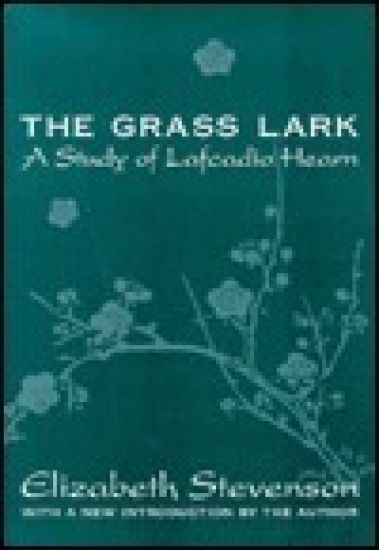
Grass Lark

Grass Lark

Elizabeth Stevenson

Transaction Publishers
1998
nidottu
It is remarkable how persistent a "minor" writer may be. He may lack the large vision and universal message of the great writer, but instead possess a clear, true, intense view of particular places, peoples, and situations that renders his work unique and irreplacable. Lafcadio Hearn (1850-1904) is such a figure in American literature. Best known as a scholar of Japanese culture, Hearn was a remarkable journalist, translator, travel writer, and perhaps second only to Poe in the literature of the macabre and supernatural. Hearn's life, as strange and colorful as his work, is brilliantly recounted in Elizabeth Stevenson's sensitive and sympathetic biography.The range of Hearn's writing is reflected in the peripatetic course of his life. The son of an Irish father and a Greek mother, he was born on the Ionian island of Leucadia, was raised in Dublin, and came to America at the age of nineteen. His early career was spent as a journalist. Without a trace of condescension or pity he entered into the lives of the dock workers of Cincinnati, the Creoles of New Orleans and Martinique, and later the common villagers of Japan, describing how they lived and worked and what they believed. No mere seeker after the exotic, Hearn's immersion in Japanese culture following his emigration in 1890 was born of a profound affinity of mind and sensibility. In Japan, the clarity and force of his expression matured. Here Hearn found a beautifully ordered, artistically sensitive society, but one indifferent to individualism. In later years, he saw a society also increasingly susceptible to modern forces of authoritarianism, militarism, and xenophobia. Horrified by the dehumanizing potential of these forces, in East and West alike, Hearn remained acutely sensitive to the most minute experience. His study of Japanese folklore and his retelling of its tales and ghost stories combine insight into the universals of the larger human world with an exquisite appreciation of how small things matter.Elizabeth Stevenson's book is as much about the writer as the man. While giving an accurate measure of the scale of Hearn's achievement, she makes a compelling case for its artistry. Her reading demonstrates that his writings are not mere aids to the understanding of various cultures but ends in themselves. Hearn did not just translate the folklore of other cultures, he recreated it. The Grass Lark will interest literary scholars, American studies specialists, and folklorists.
Grass-Roots Socialism

Grass-Roots Socialism

James R. Green

Louisiana State University Press
1978
nidottu
Grass-Roots Socialism answers two of the most intriguing questions in the history of American radicalism: why was the Socialist party stronger in Oklahoma than in any other state, and how was the party able to build powerful organisations in nearby rural southwestern areas?Many of the same grievances that had created a strong Populist movement in the region provided the Socialists with potent political issues, the railroad monopoly, the crop lien system, and political corruption. With these widely felt grievances to build on, the Socialists led the class-conscious farmers and workers to a radicalism that was far in advance of that advocated by the earlier People's party. Examined in this broadly based study of the movement are popular leaders like Oklahoma's Oscar Ameringer (""The Mark Twain of American Socialism""), ""Red Tom"" Hickey of Texas, and Kate Richards O'Hare, who was second only to Eugene Debs as a Socialist orator. Included also is information on the party's propaganda techniques, especially those used in the lively newspapers which claimed fifty thousand subscribers in the Southwest by 1913, and on the attractive summer camp meetings which drew thousands of poor white tenant farmers to week-long agitation and education sessions.
Grass Roots Reconstruction in Texas, 1865-1880

Grass Roots Reconstruction in Texas, 1865-1880

Randolph B. Campbell

Louisiana State University Press
1998
sidottu
Although many historians have studied Reconstruction, few have sought to determine how the turbulent era of reunification and readjustment after the Civil War was played out on a local level. In this groundbreaking work, award-winning historian Randolph B. Campbell examines six Texas counties during that period, revealing a diversity of experience that challenges popular generalizations.The counties Campbell explores, Dallas, Colorado, Harrison, Jefferson, McLennan, and Nueces, represent the various regions of Texas and thus its considerable geographic, economic, and demographic diversity. He ponders how the major post-Civil War policies, shaped in Washington and Austin, were interpreted in these outlying areas and thoughtfully measures the degree of change they brought to the lives of all residents, conservative whites, Republicans, and freedmen. Reconstruction at the grass roots in Texas, Campbell asserts, varied greatly from county to county, depending on such factors as demography, economic growth, and the extent of federal intervention. In the case of Texas, and possibly other states as well, Campbell concludes, assumptions about Reconstruction need to be qualified to recognise the distinct ways in which various localities experienced the period. Campbell also dispels common conceptions about Reconstruction, maintaining that whites were hurt far less than is often claimed and that at least one generation of African Americans bene-fitted a good deal more than is often recognised. Campbell's compelling work is the first systematic examination of Reconstruction at the county level. It provides convincing evidence for useful, general conclusions about how local conditions determined the way in which most citizens dealt with Reconstruction and its pivotal issues that forever shaped their state's politics and society.
Grass Roots History

Grass Roots History

Theodore C. Blegen

University of Minnesota Press
1947
nidottu
Grass Roots History was first published in 1947. Minnesota Archive Editions uses digital technology to make long-unavailable books once again accessible, and are published unaltered from the original University of Minnesota Press editions.The pivot of history is not the uncommon, but the usual, and the true makers of history are "the people, yes."Theodore C. Blegen, writing with discernment and vigor, explores in his book the simple essence of grass roots history, the colors and forms and the processes of our daily life and civilization. He uses diaries and letters, songs and ballads of the immigrants and pioneers, everyday speech, and newspaper advertisements to show clearly and sharply the exciting sources of "the literature of the unlettered," to reveal the spirit of the day, and to reconstruct for the reader a segment of the American past."We have need to dig into the folk story of America if we are to bring out the pattern of American development and American culture in all its color and richness of texture and design. Grass roots history is an avenue to that 'social awareness' which the natural scientists, more boldly than the social scientists, have declared to be the most urgent and compelling need of our day."This is the author's own statement of the significance of grass roots history.
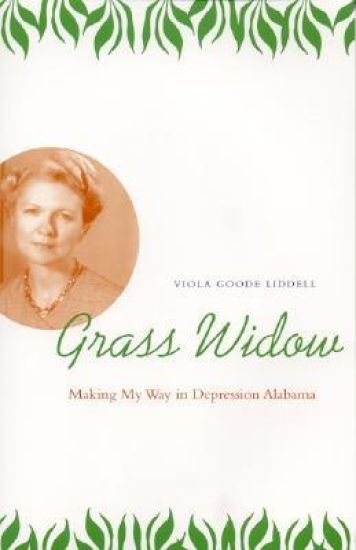
Grass Widow

Grass Widow

Viola Goode Liddell

The University of Alabama Press
2004
nidottu
Viola Goode Liddell's short memoir tells the story of her return to Alabama in search of a husband and a new life. Thirty years old and recently divorced, Liddell comes back to her home state - with her young son - determined to survive, during the depths of the Depression. Liddell narrates the obstacles she faces as a single mother in the 1930s Deep South with self-deprecating humor and a confessional tone that reveal both her intelligence and her unapologetic ambitions. Unable to earn, borrow, or beg enough money to support herself and her child, Liddell uses her family connections to secure a teaching position in Camden, Alabama. Even though an older sister's status within the community helps her land the job, Liddell is warned that she must be very careful as she navigates the tricky social terrain of small town life, particularly when it comes to men. A commentary on the plight of women of the time is woven into the narrative as Liddell recounts her experience of being refused a loan at the local bank by her own brother-in-law. Despite all the restrictions on her behavior and the crushing reality that she has become ""the biggest nuisance in the family"" because of her past, Liddell cheerfully and successfully builds a new life of respectability and hope.
Grass Roots Politics

Grass Roots Politics

Richard Jensen

Praeger Publishers Inc
1983
sidottu
Richard Jensen offers a new interpretation of the last 180 years of American political history--one seen from the grass roots perspective. He is concerned with the individual voter's relationship to the party, the issues, and the campaigns. He explores the evolution of American political parties in terms of their appeal to individual voters, of the issues selected, and campaign strategies. He examines different voter coalitions that formed and dissolved during the past 175 years and explains the dynamics of group affiliation with one or the other party. He demonstrates how the electorate has modernized over time and assesses the issues raised, and the values challenged by the process of political modernization. Jensen offers his own theory of campaign strategy, sketching its evolution from army-like organization to modern advertising. The second half of the book is a collection of documents describing important political issues and political coalitions through the years. These readings reveal how politicians at the grass roots level thought, what tactics they used, and how the average voter responded to their appeals.
Grass for Dairy Cattle

Grass for Dairy Cattle

CABI Publishing
1998
sidottu
With the current interest in the environmental and economic sustainability of dairy farming, grass forage crops have emerged as a potential solution to some of the nutrient management problems now encountered on intensively managed dairy farms. The expansion and reintegration of grass-based systems into the mainstream of dairying systems will require a major paradigm shift involving economic, social and ecological, as well as biological factors. This book examines the role of grass in milk production in sustainable agricultural ecosystems. It provides a current summary of the role of grass in dairy cattle systems, including the breeding, management, storage, feeding and economics of grass for both lactating and dry dairy cows. Written by leading specialists from Australia, Europe, New Zealand, North and South America, this is an essential reference source for researchers, dairy industry professionals and advanced students of forage and dairy cattle nutrition.
Grass Fires

Grass Fires

Gerber Dan

Michigan State University Press
2003
nidottu
The varied inhabitants of Brainard, Michigan, examine their lives and losses in very distinct, matter-of-fact voices. A heart attack victim crashes into his brother-in-law’s funeral parlour in the title story; the deaf-mute of “Conversation” begins his tale with the simple sentence, “I don’t think I’ve really had a conversation with anyone since my father died”.Dan Gerber’s characters are capable of extraordinary compassion and everyday cruelty, and reveal themselves in an unnerving series of layers.
Grass Roots

Grass Roots

Nick Johnson

Oregon State University
2017
nidottu
Marijuana legalization is unfolding across the American West, but cultivation of the cannabis plant is anything but green. Unregulated outdoor grows are polluting ecosystems, high-powered indoor grows are churning out an excessive carbon footprint, and the controversial crop is becoming an agricultural boon just as the region faces an unprecedented water crisis.To understand how we got here and how the legal cannabis industry might become more environmentally sustainable, Grass Roots looks at the history of marijuana growing in the American West, from early Mexican American growers on sugar beet farms to today’s sophisticated greenhouse gardens. Over the past eighty years, federal marijuana prohibition has had a multitude of consequences, but one of the most important is also one of the most overlooked—environmental degradation. Grass Roots argues that the most environmentally negligent farming practices—such as indoor growing—were borne out of prohibition. Now those same practices are continuing under legalization.Grass Roots uses the history of cannabis as a crop to make sense of its regulation in the present, highlighting current efforts to make the marijuana industry more sustainable. In exploring the agricultural history of cannabis, There are many social and political histories of cannabis, but in considering cannabis as a plant rather than as a drug, Grass Roots offers the only agriculturally focused history to date.
Grass Systematics

Grass Systematics

Texas A M University Press
2006
nidottu
First published in 1969, this book was originally designed to serve as a guide and source of information for undergraduate courses in agrostology. Experience has shown, however, that its documentation of facts, theories, and hypotheses and its literature citations also make it eminently suitable for graduate studies and systematic grass research. Principal emphasis has been placed on the structure and growth of the grass plant and on the characteristics of the grass genera of the United States. Discussion of tribes and subfamilies relates particularly to grasses of subtropical and temperate North America, but reference is also made to worldwide representatives of these groups. The listings of genera and higher taxa are in phylogenetic sequence, and the key to U.S. genera is based on the most readily observable characters of the inflorescence. Information has been brought up to date in this edition, and studies in biochemical development of grasses, C3 and C4 relationships, and taxonomy have been included to reflect changes in agrostology since the original edition was written.
Grass Productivity

Grass Productivity

Andre Voisin

Island Press
1988
nidottu
Grass Productivity is a prodigiously documented textbook of scientific information concerning every aspect of management where the cow and grass meet. Andre Voisin's rational grazing method maximizes productivity in both grass and cattle operations.
Grass Roots

Grass Roots

Dale Rosengarten; Theodore Rosengarten; Enid Schildkrout

Museum for African Art,U.S.
2008
sidottu
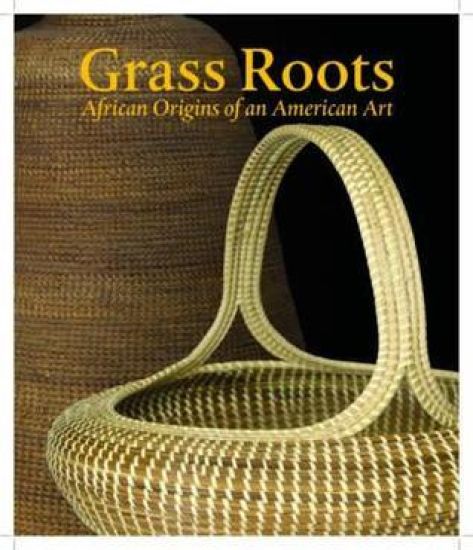
Through the prism of America's most enduring African-inspired art form, the Lowcountry basket, Grass Roots guides readers across 300 years of American and African history. In scholarly essays and beautiful photographs, Grass Roots follows the coiled basket along its transformation on two continents from a simple farm tool once used for processing grain to a work of art and a central symbol of African and African American identity. Featuring images of the stunning work of contemporary basket makers from South Carolina to South Africa, as well as historic photographs that document the artistic heritage of the southern United States, Grass Roots appears at a moment when public recognition of the Gullah/Geechee heritage is encouraging a reexamination of Africa's contribution to American civilization.Working with basket makers from Charleston and Mt. Pleasant, South Carolina, historian Dale Rosengarten has been studying African-American baskets for over 20 years and brings her research up-to-date with interviews of artists and the results of recent historical inquiry. Anthropologist Enid Schildkrout draws on her research in West Africa and museum collections around the world to explore the African antecedents of Lowcountry basketry. Geographer Judith A. Carney discusses the origins of rice in Africa and reveals how enslaved Africans brought to America not only rice seeds but, just as important, the technical know-how that turned southern coastal forests and swamps into incredibly profitable rice plantations. Historian Peter H. Wood discusses the many skills that enslaved Africans contributed to the settlement of the Old South and at the same time used to resist the conditions of their servitude. John Michael Vlach, a leading authority on African American folk art, discusses the history of visual depictions of plantation life. Fath Davis Ruffins, a specialist on the imagery of popular culture, sheds light on the history embedded in old photographs of African Americans in the Charleston area. Cultural historian Jessica B. Harris explores the tradition of rice in American cooking and the enduring African influences in the southern kitchen. Anthropologist and art historian Sandra Klopper sketches the history of coiled basketry in South Africa, illuminating its evolution from utilitarian craft to fine art, parallel to developments in America. Anthropologist J. Lorand Matory traces the changing meanings of Gullah/Geechee identity and discusses its appearance as a significant force on the American cultural scene today.
Grass Roots

Grass Roots

Dale Rosengarten; Theodore Rosengarten; Enid Schildkrout

Museum for African Art,U.S.
2008
pokkari
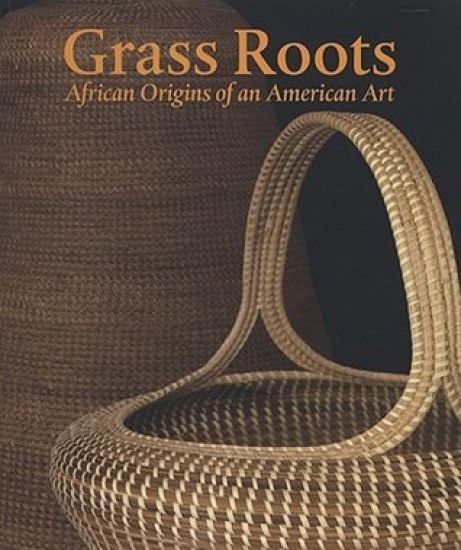
Through the prism of America's most enduring African-inspired art form, the Lowcountry basket, Grass Roots guides readers across 300 years of American and African history. In scholarly essays and beautiful photographs, Grass Roots follows the coiled basket along its transformation on two continents from a simple farm tool once used for processing grain to a work of art and a central symbol of African and African American identity. Featuring images of the stunning work of contemporary basket makers from South Carolina to South Africa, as well as historic photographs that document the artistic heritage of the southern United States, Grass Roots appears at a moment when public recognition of the Gullah/Geechee heritage is encouraging a reexamination of Africa's contribution to American civilization.Working with basket makers from Charleston and Mt. Pleasant, South Carolina, historian Dale Rosengarten has been studying African-American baskets for over 20 years and brings her research up-to-date with interviews of artists and the results of recent historical inquiry. Anthropologist Enid Schildkrout draws on her research in West Africa and museum collections around the world to explore the African antecedents of Lowcountry basketry. Geographer Judith A. Carney discusses the origins of rice in Africa and reveals how enslaved Africans brought to America not only rice seeds but, just as important, the technical know-how that turned southern coastal forests and swamps into incredibly profitable rice plantations. Historian Peter H. Wood discusses the many skills that enslaved Africans contributed to the settlement of the Old South and at the same time used to resist the conditions of their servitude. John Michael Vlach, a leading authority on African American folk art, discusses the history of visual depictions of plantation life. Fath Davis Ruffins, a specialist on the imagery of popular culture, sheds light on the history embedded in old photographs of African Americans in the Charleston area. Cultural historian Jessica B. Harris explores the tradition of rice in American cooking and the enduring African influences in the southern kitchen. Anthropologist and art historian Sandra Klopper sketches the history of coiled basketry in South Africa, illuminating its evolution from utilitarian craft to fine art, parallel to developments in America. Anthropologist J. Lorand Matory traces the changing meanings of Gullah/Geechee identity and discusses its appearance as a significant force on the American cultural scene today.
Grass, Our Greatest Crop

Grass, Our Greatest Crop

Sarah Regal 1902- Riedman

Hassell Street Press
2021
sidottu
This work has been selected by scholars as being culturally important and is part of the knowledge base of civilization as we know it.This work is in the public domain in the United States of America, and possibly other nations. Within the United States, you may freely copy and distribute this work, as no entity (individual or corporate) has a copyright on the body of the work.Scholars believe, and we concur, that this work is important enough to be preserved, reproduced, and made generally available to the public. To ensure a quality reading experience, this work has been proofread and republished using a format that seamlessly blends the original graphical elements with text in an easy-to-read typeface.We appreciate your support of the preservation process, and thank you for being an important part of keeping this knowledge alive and relevant.
Grass or Gullies; 593

Grass or Gullies; 593

Ernest de Witt 1887- Walker; Ralph Carroll Hay

Hassell Street Press
2021
nidottu
This work has been selected by scholars as being culturally important and is part of the knowledge base of civilization as we know it.This work is in the public domain in the United States of America, and possibly other nations. Within the United States, you may freely copy and distribute this work, as no entity (individual or corporate) has a copyright on the body of the work.Scholars believe, and we concur, that this work is important enough to be preserved, reproduced, and made generally available to the public. To ensure a quality reading experience, this work has been proofread and republished using a format that seamlessly blends the original graphical elements with text in an easy-to-read typeface.We appreciate your support of the preservation process, and thank you for being an important part of keeping this knowledge alive and relevant.
Grass Roots Party Leadership; a Case Study of King County, Washington
This work has been selected by scholars as being culturally important and is part of the knowledge base of civilization as we know it.This work is in the public domain in the United States of America, and possibly other nations. Within the United States, you may freely copy and distribute this work, as no entity (individual or corporate) has a copyright on the body of the work.Scholars believe, and we concur, that this work is important enough to be preserved, reproduced, and made generally available to the public. To ensure a quality reading experience, this work has been proofread and republished using a format that seamlessly blends the original graphical elements with text in an easy-to-read typeface.We appreciate your support of the preservation process, and thank you for being an important part of keeping this knowledge alive and relevant.