Kirjojen hintavertailu. Mukana 11 244 527 kirjaa ja 12 kauppaa.

Kirjahaku

Etsi kirjoja tekijän nimen, kirjan nimen tai ISBN:n perusteella.

1000 tulosta hakusanalla Gregory Claeys

Gregory the Great

Gregory the Great

University of Notre Dame Press
2001
nidottu
A group of renowned North American scholars gathered at the University of Notre Dame in 1993 for a symposium on Pope Gregory the Great (550-604). The essays collected in this volume are arranged in the order in which they were delivered, and several additional contributions are included as well. In these essays Gregory emerges as a figure both interpreting and interpreted: interpreting the past, receiving, synthesizing, and developing the teachings of earlier writers, and, by this very process, presenting a persuasive theological and pastoral agenda which itself inspires ongoing projects of interpretation and development in later periods up to and including our own.
Gregory the Great

Gregory the Great

George E. Demacopoulos

University of Notre Dame Press
2015
nidottu
Gregory the Great (bishop of Rome from 590 to 604) is one of the most significant figures in the history of Christianity. His theological works framed medieval Christian attitudes toward mysticism, exegesis, and the role of the saints in the life of the church. The scale of Gregory's administrative activity in both the ecclesial and civic affairs of Rome also helped to make possible the formation of the medieval papacy. Gregory disciplined malcontent clerics, negotiated with barbarian rulers, and oversaw the administration of massive estates that employed thousands of workers. Scholars have often been perplexed by the two sides of Gregory—the monkish theologian and the calculating administrator. George E. Demacopoulos's study is the first to advance the argument that there is a clear connection between the pontiff's thought and his actions. By exploring unique aspects of Gregory's ascetic theology, wherein the summit of Christian perfection is viewed in terms of service to others, Demacopoulos argues that the very aspects of Gregory's theology that made him distinctive were precisely the factors that structured his responses to the practical crises of his day. With a comprehensive understanding of Christian history that resists the customary bifurcation between Christian East and Christian West, Demacopoulos situates Gregory within the broader movements of Christianity and the Roman world that characterize the shift from late antiquity to the early Middle Ages. This fresh reading of Gregory's extensive theological and practical works underscores the novelty and nuance of Gregory as thinker and bishop.
Gregory the Great

Gregory the Great

George E. Demacopoulos

UNIVERSITY OF NOTRE DAME PRESS
2022
sidottu
Gregory the Great (bishop of Rome from 590 to 604) is one of the most significant figures in the history of Christianity. His theological works framed medieval Christian attitudes toward mysticism, exegesis, and the role of the saints in the life of the church. The scale of Gregory's administrative activity in both the ecclesial and civic affairs of Rome also helped to make possible the formation of the medieval papacy. Gregory disciplined malcontent clerics, negotiated with barbarian rulers, and oversaw the administration of massive estates that employed thousands of workers. Scholars have often been perplexed by the two sides of Gregory—the monkish theologian and the calculating administrator. George E. Demacopoulos's study is the first to advance the argument that there is a clear connection between the pontiff's thought and his actions. By exploring unique aspects of Gregory's ascetic theology, wherein the summit of Christian perfection is viewed in terms of service to others, Demacopoulos argues that the very aspects of Gregory's theology that made him distinctive were precisely the factors that structured his responses to the practical crises of his day. With a comprehensive understanding of Christian history that resists the customary bifurcation between Christian East and Christian West, Demacopoulos situates Gregory within the broader movements of Christianity and the Roman world that characterize the shift from late antiquity to the early Middle Ages. This fresh reading of Gregory's extensive theological and practical works underscores the novelty and nuance of Gregory as thinker and bishop.
Gregory Peck

Gregory Peck

Gerard Molyneaux

Greenwood Press
1995
sidottu
Born in 1916 in La Jolla, California, Gregory Peck took up acting in college on a lark that would lead to a career. In his early years, he appeared in a series of summer stock engagements and Broadway shows. He became a star within a year after arriving in Hollywood during World War II, and he won an Academy Award nomination for his second film. From the 1940s to the present, he has played some of film's most memorable and admired characters.This volume provides complete information about Gregory Peck's work in film, television, radio, and the stage. Entries are included for all of his performances, with each entry providing cast and credit information, a plot summary, excerpts from reviews, and critical commentary. A biography and chronology highlight significant events in his life, while a listing of his honors and awards summarizes the recognition he has received over the years. For researchers seeking additional information, the book includes descriptions of special collections holding material related to Peck's work, along with an extensive bibliography of books and articles.
Gregory of Nyssa

Gregory of Nyssa

Michael Glerup

Readhowyouwant
2012
pokkari
As part of the Classics in Spiritual Formation, the sermons of Gregory of Nyssa offer a contemporary rendering of ancient spiritual wisdom for today's readers. Includes an introduction, paraphrase by Michael Glerup of the text from the original languages, and helpful callouts that show how the work relates to your personal spiritual formation.
Gregory of Nyssa

Gregory of Nyssa

Anthony Meredith

Routledge
1999
sidottu
Gregory of Nyssa provides a concise and accessible introduction to the thought of this early church father with new translations of key selections of his writings. Anthony Meredith presents a diverse range of Gregory's writings:his contribution to the debates of the period about the nature of God in argument with a form of extreme Arianismhis discussion of the nature and work of the Holy Ghost, against the so-called 'Spirit fighters'his defence of the humanity of Christ against those who denied it (notably Apollinarius)the nature of fate and other philosophical issues.
Gregory of Nyssa

Gregory of Nyssa

Anthony Meredith

Routledge
1999
nidottu
Gregory of Nyssa provides a concise and accessible introduction to the thought of this early church father with new translations of key selections of his writings. Anthony Meredith presents a diverse range of Gregory's writings:his contribution to the debates of the period about the nature of God in argument with a form of extreme Arianismhis discussion of the nature and work of the Holy Ghost, against the so-called 'Spirit fighters'his defence of the humanity of Christ against those who denied it (notably Apollinarius)the nature of fate and other philosophical issues.
Gregory of Nazianzus

Gregory of Nazianzus

Brian Daley

Routledge
2006
sidottu
This book brings together a new, original survey of the significance of Gregory's life and work with translations of eight beautiful and profound orations. Gregory of Nazianzus portrays a vivid picture of a fascinating character of vital importance who deserves to be regarded as the first true Christian humanist. The eight orations, each representing a different aspect of his writing, are examined alongside a selection of his shorter poems in verse translation, letters, and a translation of Gregory's own will. Author Brian Daley offers extensive commentary on the works translated and an ample bibliography.With an extensive introduction to Gregory's life, thought and writings, and including detailed notes, this study places Gregory in his correct historical context, and gives students access to a deeper understanding of this fascinating figure from the past.
Gregory of Nazianzus

Gregory of Nazianzus

Brian Daley

Routledge
2006
nidottu
This book brings together a new, original survey of the significance of Gregory's life and work with translations of eight beautiful and profound orations. Gregory of Nazianzus portrays a vivid picture of a fascinating character of vital importance who deserves to be regarded as the first true Christian humanist. The eight orations, each representing a different aspect of his writing, are examined alongside a selection of his shorter poems in verse translation, letters, and a translation of Gregory's own will. Author Brian Daley offers extensive commentary on the works translated and an ample bibliography.With an extensive introduction to Gregory's life, thought and writings, and including detailed notes, this study places Gregory in his correct historical context, and gives students access to a deeper understanding of this fascinating figure from the past.
Gregory the Great

Gregory the Great

John Moorhead

Routledge
2005
sidottu
Gregory's life culminated in his holding the office of pope (590 - 604). He is generally regarded as one of the outstanding figures in the long line of popes, and by the late ninth century had come to be known as 'the Great'. Along with Ambrose, Jerome and Augustine, he played a critical role in the history of his time, while during the middle ages his intellectual influence was second only to that of Augustine. This volume provides a biographical and intellectual context to Gregory the Great, and new translations of his most influential writings.
Gregory the Great

Gregory the Great

John Moorhead

Routledge
2005
nidottu
Gregory's life culminated in his holding the office of pope (590 - 604). He is generally regarded as one of the outstanding figures in the long line of popes, and by the late ninth century had come to be known as 'the Great'. Along with Ambrose, Jerome and Augustine, he played a critical role in the history of his time, while during the middle ages his intellectual influence was second only to that of Augustine. This volume provides a biographical and intellectual context to Gregory the Great, and new translations of his most influential writings.
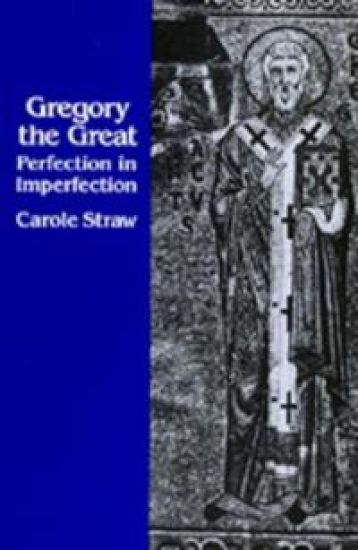
Gregory the Great

Gregory the Great

Carole Straw

University of California Press
1991
pokkari
Gregory I (590-604) is often considered the first medieval pope and the first exponent of a truly medieval spirituality. Carole Straw places Gregory in his historical context and considers the many facets of his personality--monk, preacher, and pope--in order to elucidate the structure of his thought and present a unified, thematic interpretation of his spiritual concerns.
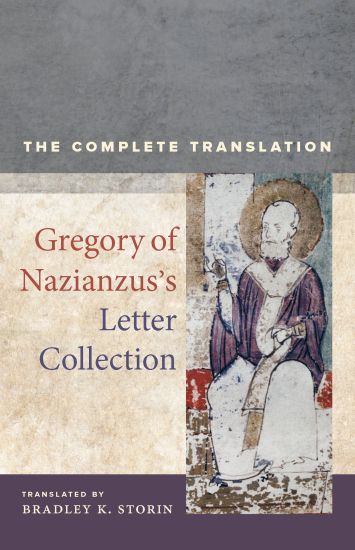
Gregory of Nazianzus’s Letter Collection

Gregory of Nazianzus’s Letter Collection

Gregory of Nazianzus; Bradley K. Storin

University of California Press
2019
sidottu
Saint Gregory of Nazianzus, also known as Gregory the Theologian, lived an illustrious life as an orator, poet, priest, and bishop. Until his death, he wrote scores of letters to friends and colleagues, clergy members and philosophers, teachers of rhetoric and literature, and high-ranking officials at the provincial and imperial levels, many of which are preserved in his self-designed letter collection. Here, for the first time in English, Bradley K. Storin has translated the complete collection, offering readers a fresh view on Gregory’s life, social and cultural engagement, leadership in the church, and literary talents. Accompanying the translation are an introduction, a prosopography, and annotations that situate Gregory’s letters in their biographical, literary, and historical contexts. This translation is an essential resource for scholars and students of late antiquity and early Christianity.
Gregory of Nazianzus's Letter Collection

Gregory of Nazianzus's Letter Collection

Gregory of Nazianzus

University of California Press
2019
pokkari
Saint Gregory of Nazianzus, also known as Gregory the Theologian, lived an illustrious life as an orator, poet, priest, and bishop. Until his death, he wrote scores of letters to friends and colleagues, clergy members and philosophers, teachers of rhetoric and literature, and high-ranking officials at the provincial and imperial levels, many of which are preserved in his self-designed letter collection. Here, for the first time in English, Bradley K. Storin has translated the complete collection, offering readers a fresh view on Gregory’s life, social and cultural engagement, leadership in the church, and literary talents. Accompanying the translation are an introduction, a prosopography, and annotations that situate Gregory’s letters in their biographical, literary, and historical contexts. This translation is an essential resource for scholars and students of late antiquity and early Christianity.
Gregory of Nazianzus

Gregory of Nazianzus

Gregory of Nazianzus

Cambridge University Press
2005
pokkari
The autobiographical poems of Gregory of Nazianzus, fourth-century Father of the Greek church, are remarkable not only for a highly individual picture of the Byzantine world but also for moments that are intimate, passionate, and moving. The book contains Greek text and facing English translation of a selection from his one hundred or so surviving poems. Gregory is best known for the five orations he gave in Constantinople but, De Vita Sua apart, his poems can only be read in a nineteenth-century Greek edition and have never before been translated into English. The selected poems highlight Gregory's spiritual outlook and also his poetics; Gregory shows his expertise in a variety of metres and literary dialects, deriving from his knowledge of classical Greek literature. The substantial introduction provides biographical information against which to set the poems, focusing particularly on the years which Gregory spent in Constantinople.
Gregory's Girl

Gregory's Girl

Forsyth Bill

Cambridge University Press
1983
pokkari
Gregory’s Girl is more than just a funny story. Its painfully accurate observation of teenage romance avoids the traditional assumptions which dominate most teenage fiction. Althought carefully restructured to allow for a manageable stage presentation, this version will give great pleasure to all those who revelled in the film and introduce those who did not to the delightful world of Gregory and his girls.
Gregory of Nazianzus

Gregory of Nazianzus

Gregory of Nazianzus

Cambridge University Press
1996
sidottu
The autobiographical poems of Gregory of Nazianzus, fourth-century Father of the Greek church, are remarkable not only for a highly individual picture of the Byzantine world but also for moments that are intimate, passionate, and moving. The book contains Greek text and facing English translation of a selection from his one hundred or so surviving poems. Gregory is best known for the five orations he gave in Constantinople but, De Vita Sua apart, his poems can only be read in a nineteenth-century Greek edition and have never before been translated into English. The selected poems highlight Gregory’s spiritual outlook and also his poetics; Gregory shows his expertise in a variety of metres and literary dialects, deriving from his knowledge f classical Greek literature. The substantial introduction provides biographical information against which to set the poems, focusing particularly on the years which Gregory spent in Constantinople.
Gregory the Great and his World

Gregory the Great and his World

R. A. Markus

Cambridge University Press
1997
sidottu
Markus's new and accessible work is the first full study of Gregory the Great since that of F. H. Dudden (1905) to deal with both Gregory's life and work as well as with his thought and spirituality. With his command of Gregory's works, Markus portrays vividly the daily problems of one of the most attractive characters of the age. Gregory's culture is described in the context of the late Roman educational background and in the context of previous patristic tradition. Markus seeks to understand Gregory as a cultivated late Roman aristocrat converted to the ascetic ideal, caught in the tension between his attraction to the monastic vocation and his episcopal ministry, at a time of catastrophic change in the Roman world. The book deals with every aspect of his pontificate: as bishop of Rome, as landlord of the Church lands, in his relations to the Empire, and to the Western Germanic kingdoms in Spain, Gaul, and, especially, his mission to the English.
Gregory the Great and his World

Gregory the Great and his World

R. A. Markus

Cambridge University Press
1997
pokkari
Markus’s new and accessible work is the first full study of Gregory the Great since that of F. H. Dudden (1905) to deal with both Gregory’s life and work as well as with his thought and spirituality. With his command of Gregory’s works, Markus portrays vividly the daily problems of one of the most attractive characters of the age. Gregory’s culture is described in the context of the late Roman educational background and in the context of previous patristic tradition. Markus seeks to understand Gregory as a cultivated late Roman aristocrat converted to the ascetic ideal, caught in the tension between his attraction to the monastic vocation and his episcopal ministry, at a time of catastrophic change in the Roman world. The book deals with every aspect of his pontificate: as bishop of Rome, as landlord of the Church lands, in his relations to the Empire, and to the Western Germanic kingdoms in Spain, Gaul, and, especially, his mission to the English.