Kirjojen hintavertailu. Mukana 11 717 486 kirjaa ja 12 kauppaa.

Kirjahaku

Etsi kirjoja tekijän nimen, kirjan nimen tai ISBN:n perusteella.

1000 tulosta hakusanalla Gregory L. Matloff

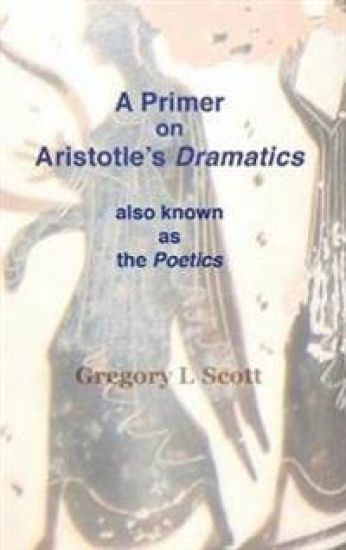
Aristotle's "Not to Fear" Proof for the Necessary Eternality of the Universe
Aristotle's Unmoved Mover of Metaphysics Lambda, often called God, still convinces some non-believers to become theists, despite its paradoxical nature. One recent case is the British philosopher, Antony Flew, co-author of There is a God: How the World's Most Notorious Atheist Changed His Mind (2007). As Pure Actuality, the Mover has no potentiality, matter or physicality of any sort whatsoever and exists forever, with no potential therefore of not existing. It somehow guarantees the eternal existence of the contingent universe that could disappear but, because of the Mover, does not. Moreover, It thinks of itself thinking, always, like a hyper-intellectual Narcissus.With derision, Cicero rejected the doctrine; Franz Brentano (1838-1917), a teacher of Sigmund Freud and Edmund Husserl, called it "prattle without all sense and reason"; and Werner Jaeger (1888-1961), a renowned specialist of Aristotle, asserted that the Greek from Stagira in Northern Greece renounced the doctrine as he matured, became more empirical, and gained distance from his Athenian mentor Plato. However, none of these thinkers provided the reasons for the Stagirite for how the universe necessarily lasts forever. Scott does.All classicists know that Aristotle accepted the infinite past. Revising and extending the ground-breaking scholarship of Jaakko Hintikka and Sarah Broadie, this book demonstrates that Aristotle also held indubitably the Principle of Plenitude--"for infinite things, what may be, will be"--and that he even held it in modified form for finite things: "In infinite time, any (sort of genuine) possibility is actualized." Since every (sort of) real possibility has already been fulfilled in infinite (past) time and since the universe still exists, Aristotle concludes in Metaphysics Theta 8 that there is no fear that the heavens will ever stop moving. For additional reasons based on a profound understanding of necessity and possibility that no scholar until now has seen in this precise context, and with no recourse to the Unmoved Mover, he asserts that this eternal motion is necessary.Because the universe is not contingent, Aristotle can, and does, drop the doctrine of Pure Actuality, all of which solves another perennial problem in ancient Greek philosophy: The Peripatetics in Aristotle's Lyceum and the other, later schools of philosophy like the Stoics never argued against the Unmoved Mover, even though they contested any important doctrine they found implausible. Scott's interpretation finally explains this. These Greek thinkers knew that the mature Aristotle accepted the inherent necessity of the eternal universe, and they all embraced that doctrine, too, in spite of variations in details.
Aristotle's "Not to Fear" Proof for the Necessary Eternality of the Universe
Aristotle's Unmoved Mover of Metaphysics Lambda, often called God, still convinces some non-believers to become theists, despite its paradoxical nature. One recent case is the British philosopher, Antony Flew, co-author of There is a God: How the World's Most Notorious Atheist Changed His Mind (2007). As Pure Actuality, the Mover has no potentiality, matter or physicality of any sort whatsoever and exists forever, with no potential therefore of not existing. It somehow guarantees the eternal existence of the contingent universe that could disappear but, because of the Mover, does not. Moreover, It thinks of itself thinking, always, like a hyper-intellectual Narcissus.With derision, Cicero rejected the doctrine; Franz Brentano (1838-1917), a teacher of Sigmund Freud and Edmund Husserl, called it "prattle without all sense and reason"; and Werner Jaeger (1888-1961), a renowned specialist of Aristotle, asserted that the philosopher from Stagira in Northern Greece renounced the doctrine as he matured, became more empirical, and gained distance from his Athenian mentor Plato. However, none of these thinkers provided the reasons for the Stagirite for how the universe necessarily lasts forever. Scott does.All classicists know that Aristotle accepted the infinite past. Revising and extending the ground-breaking scholarship of Jaakko Hintikka and Sarah Broadie, this book demonstrates that Aristotle also held indubitably the Principle of Plenitude--"for infinite things, what may be, will be"--and that he even held it in modified form for finite things: "In infinite time, any (sort of genuine) possibility is actualized." Since every (sort of) real possibility has already been fulfilled in infinite (past) time and since the universe still exists, Aristotle concludes in Metaphysics Theta 8 that there is no fear that the heavens will ever stop moving. For additional reasons based on a profound understanding of necessity and possibility that no scholar until now has seen in this precise context, and with no recourse to the Unmoved Mover, he asserts that this eternal motion is necessary.Because the universe is not contingent, Aristotle can, and does, drop the doctrine of Pure Actuality, all of which solves another perennial problem in ancient Greek philosophy: The Peripatetics in Aristotle's Lyceum and the other, later schools of philosophy like the Stoics never argued against the Unmoved Mover, even though they contested any important doctrine they found implausible. Scott's interpretation finally explains this. These Greek thinkers knew that the mature Aristotle accepted the inherent necessity of the eternal universe, and they all embraced that doctrine, too, in spite of variations in details.
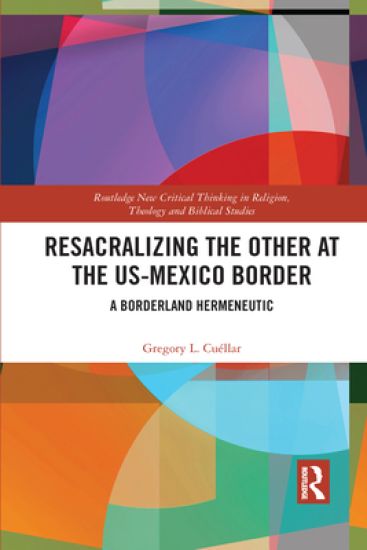
Resacralizing the Other at the US-Mexico Border

Resacralizing the Other at the US-Mexico Border

Gregory L. Cuéllar

Taylor Francis Ltd
2021
nidottu
This book focuses on the themes of border violence; racial criminalization; competing hermeneutics of the sacred; and State-sponsored modes of desacralizing black and brown-bodied people, all in the context of the US-Mexico borderlands. It provides a much-needed substantive response to the State’s use of sacrilization to justify its acts of violence and offers new ways of theologizing the acceptance of the "other" in its place. As a counter-hermeneutic of the sacred, the ultimate objective of the book is to offer an alternative epistemological, theoretical and practical framework that resacralizes the other. Rejecting the State-driven agenda of othering border-crossers, it follows Gloria Anzaldúa’s healing move to the Sacred Other and creates a new hermeneutic of the sacred at the borderlands. One that resacralizes those deemed by the State as the non-sacred human other anywhere in the world. This is an important and topical book that addresses one of the key issues of our time. As such, it will be of keen interest to any scholar of Religious Studies and Liberation Theology as well as religion’s interaction with migration, race and contemporary politics.
Turning Point

Turning Point

Gregory L Prince

Friesenpress
2023
pokkari
Runkus Black and some of his teammates obtain scholarships and are enrolled at Kingston Metropolitan University (KMU). At KMU, the sporting arrangements are not what they thought it would be, plus the University is not known for its prowess in the intercollegiate football championship. KMU's Students' Guild, however, has some influence with football arrangements, but their limited support forces Runkus and his peers to become engaged in activities that senior students normally take on. Surprisingly, Runkus's old nemesis Kennedy Edward Stephenson III (KES-III)-and his teammates from Castleton Academy are also attending KMU. For the first time, both sets of boys attend the same institution. Overzealous senior football players, and the freshmen vie for a place on the football team. Old rivalries, fraternities, jealousies, politics, seniority, and grudges are hurdles that stand in the way of unity. Underhanded tactics are employed, battles are waged, and sparks begin to fly. How do these issues get resolved?
Turning Point

Turning Point

Gregory L Prince

Friesenpress
2023
sidottu
Runkus Black and some of his teammates obtain scholarships and are enrolled at Kingston Metropolitan University (KMU). At KMU, the sporting arrangements are not what they thought it would be, plus the University is not known for its prowess in the intercollegiate football championship. KMU's Students' Guild, however, has some influence with football arrangements, but their limited support forces Runkus and his peers to become engaged in activities that senior students normally take on. Surprisingly, Runkus's old nemesis Kennedy Edward Stephenson III (KES-III)-and his teammates from Castleton Academy are also attending KMU. For the first time, both sets of boys attend the same institution. Overzealous senior football players, and the freshmen vie for a place on the football team. Old rivalries, fraternities, jealousies, politics, seniority, and grudges are hurdles that stand in the way of unity. Underhanded tactics are employed, battles are waged, and sparks begin to fly. How do these issues get resolved?
MCToon Clown Prince of Gravity

MCToon Clown Prince of Gravity

Gregory L Garrett

IngramSpark
2022
pokkari
Michael Toon wants his Flat Earth Gravity Challenge contestants to waltz into a methodological boondoggle so that he can reject any data that does not subscribe to the unscientific methodologies and pseudo-scientific technologies that he subscribes to. For this reason, Michael Toon amounts to yet another uninformed and biased Scientism Priest who waggishly struts around like a leather queen, pontificating The Gospel of Scientism from his pulpit, complete with NASA play-toy rocket in the background. He'll dance around any real scientific data and do mental back handsprings like a court jester, brandishing his copy of, Lee McIntyre's juvenile, How to Talk to a Science Denier, in one hand, and random abstracts from the gatekeepers of peer-review in the other. This is what happens when myopic science flunkies get a You Tube Channel...and it ain't good.In brief, Michael Toon's entire Flat Earth Gravity Challenge contest is a desperately biased attempt at railroading the contestant into the forgone conclusion that Gravity is measured by Gravimeter readings. It is a Scientism snare set for the unsuspecting participant. Toon's research contingencies are methodologically biased, incomplete, and only applicable if you already assume Gravity exists, and that testing for Gravity with Gravimeters is a viable means of confirming Gravity's existence, which after researching Gravimetry, and it's internal inconsistencies, interpolative assumptions, and interpretive inaccuracies, one can scarcely believe.Gravimetry is a study in Measurement Interpretation Bias and Experimental Confirmation Bias since regardless of what vibrations or movements Gravimeters measure, those who read the measurements will simply label the reading as a confirmation of Gravity because that is what they are testing for. If they were testing for electromagnetism, then they would catalogue their readings as confirmation of electromagnetism, etc... Measurement Interpretation Bias and Experimental Confirmation Bias is a huge problem amongst those studying Gravity because the epistemological stakes are so high for Gravity Fan Boys to demonstrate that Gravity exists, that they get sloppy in their analysis and refuse to adequately and properly consider any other causal antecedents to their test results other than mythical, invisible Gravity.Lastly, an Argument from Authority (argumentum ab auctoritate), also called an Appeal to Authority, or argumentum ad verecundiam, is a form of argument in which the opinion of an authority on a topic is used as evidence to support an argument. Some consider that it is used in a cogent form if all sides of a discussion agree on the reliability of the authority in the given context, and others consider it to always be a fallacy to cite the views of an authority on the discussed topic as a means of supporting an argument. With Michael Toon, as well as similarly philosophically unskilled thinkers as Toon, there is the tendency to make grandiose appeals to authority as if to say. "See, I agree with these guys over there, and I think they are super smart, and so I am right "The logical fallacy of the Appeal to Authority is rampant right now. Everywhere you look online they have tried to redefine this term to mean "Legitimate" Authority, "Qualified" Authority, and of course, the magical appeal to "Peer-Reviewed" Authority, as if a person's word can prove something true as long as he has enough letters after his name or degrees behind him, as allotted by epistemological cartels anchored in the preachings of The Royal Society of London.
The Fear of the Almighty

The Fear of the Almighty

Gregory L. Madison

Independently Published
2019
nidottu
Ask anybody on the street, and they will tell you that they are a God-fearing person People look up to someone who is God-fearing. When in need of help, we would all be inclined to first seek the aid of a God-fearing person. God-fearing people are known for being kind, merciful, understanding, forgiving, just and fair. And so it is, that The Fear of the Almighty begins with how the fear of the Lord is manifest in this world in chapter two, just after an explanation of the origin of the fear of the Lord in chapter one. Though it is hard to imagine, the fear of the Lord, or the lack thereof, is the silent motive beyond our every action. And within this reverence that we have for God there must be pure motives. Should we, merely, reverence God for whatever benefits we may gain? Isn't God wise enough to see how genuine and pure our reverence is? So, why do we reverence God? This is covered in chapter three under the basis of our reverence. Chapter nine through twelve explain the rewards of God in response to our reverence for Him. Do you want to grow in your reverence for God? Just as with our maturity, there are levels of reverence. Just as when we measure heat by degrees of intensity, there are degrees of reverence. One of the vehicles that causes our reverence to increase is commitment. The Fear of the Almighty is a study that demands commitment. This is the discipleship that Jesus demands in stating that if anyone comes after Him "they must deny themselves" (Luke 9:23). And so, while chapter four through six address the scope and the range of our reverence for God, chapter seven explains how reverence was exemplified by different Bible characters. Where there are examples of those who reverenced God and were thus rewarded, there are those who despised God and suffered grave consequences. Chapter eight gives us a list of the Bible characters who are specifically noted for their irreverent disposition. The scriptures explain the source of their irreverent disposition by its root and the outcome of their irreverence by it fruit. So, what kind of fruit do you want to bear? Do you not know that the fruit that you bear will become a legacy for your children? The fear of the Lord builds houses, governments, and nations. If society is built on institutions, then we need the fear of the Lord for those institutions to stand. The fear of the Lord is a matter of national security. A nation is not safe without a healthy number of true, God-fearing people. In his book, Shaping History Through Prayer and Fasting, Derek Prince said that the only reason God does not destroy a nation the size of the United States is because of 250,000 God-fearing individuals (the ratio that Prince deduced from the offer that God made to Abraham in holding back His wrath upon Sodom and Gomorrah). Some may wrestle with "the fear of the Lord" as an old English phase. As there is no other like God, there is no other fear like the fear of the Almighty. I consider the phrase to be no more obsolete than Mr. Beaver's explanation of how Aslan was to be revered (the lion of The Narnia Chronicles that portrayed Christ)."Aslan is a lion- the Lion, the great Lion." "Ooh" said Susan. "I'd thought he was a man. Is he-quite safe? I shall feel rather nervous about meeting a lion.""Safe?" said Mr. Beaver "Who said anything about safe? Course he isn't safe. But he's good. He's the King, I tell you."
Hitting the Wall

Hitting the Wall

Gregory L Truman

Lulu.com
2012
pokkari
A layman's comedic rant on the state of our domestic ignorance, global pitfalls, and the excessive, compulsive behavior of the North American culture. The book was written to challenge mankind's fundamental understanding and antiquated concepts of our political systems, religious teachings governed by 2000 year old propaganda and our misguided understanding of mankind's place in the biodiversity of our planet.
Small and Short-Range Radar Systems

Small and Short-Range Radar Systems

Gregory L. Charvat

CRC Press
2017
nidottu
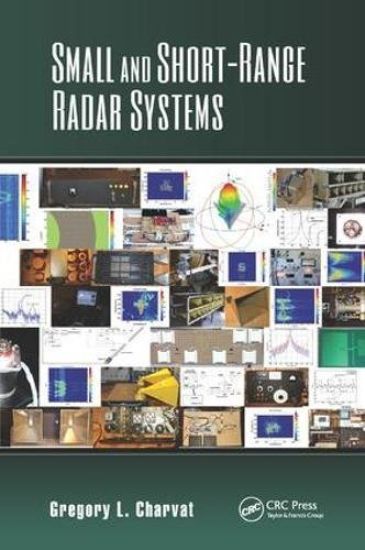
Radar Expert, Esteemed Author Gregory L. Charvat on CNN and CBSAuthor Gregory L. Charvat appeared on CNN on March 17, 2014 to discuss whether Malaysia Airlines Flight 370 might have literally flown below the radar. He appeared again on CNN on March 20, 2014 to explain the basics of radar, and he explored the hope and limitations of the technology involved in the search for Flight 370 on CBS on March 22, 2014.Get His Book NowCoupling theory with reality, from derivation to implementation of actual radar systems, Small and Short-Range Radar Systems analyzes and then provides design procedures and working design examples of small and short-range radar systems. Discussing applications from automotive to through-wall imaging, autonomous vehicle, and beyond, the practical text supplies high-level descriptions, theoretical derrivations, back-of-envelope calculations, explanations of processing algorithms, and case studies for each type of small radar system covered, including continuous wave (CW), ultrawideband (UWB) impulse, linear frequency modulation (FM), linear rail synthetic aperture radar (SAR), and phased array. This essential reference: Explains how to design your own radar devicesDemonstrates how to process data from small radar sensorsProvides real-world, measured radar data to test algorithms before investing development timeComplete with downloadable MATLAB® scripts and actual radar measurements, Small and Short-Range Radar Systems empowers you to rapidly develop small radar technology for your application.
The Semantics and Pragmatics of Preposing
First published in 1988, this book examines the aspects of pragmatic competence involving the class of preposing constructions in English. By limiting the scope of investigation to particular grammatical categories, the author argues previous studies have failed to capture significant pragmatic generalisations. The author asserts what distinguishes one preposing type from another are the semantic and pragmatic properties of the referent of that constituent. After a review of the past literature on preposing, the book goes on to present a pragmatic theory in which two discourse functions of preposing are proposed. It then provides a functional taxonomy of the various preposing types which the theory is designed to account for. One type of preposing, Topicalization, and two of its subtypes, Proposition Affirmation and Ironic Preposing, are discussed in detail in the subsequent chapters before the book concludes with a summary along with directions for future research.
The Semantics and Pragmatics of Preposing
First published in 1988, this book examines the aspects of pragmatic competence involving the class of preposing constructions in English. By limiting the scope of investigation to particular grammatical categories, the author argues previous studies have failed to capture significant pragmatic generalisations. The author asserts what distinguishes one preposing type from another are the semantic and pragmatic properties of the referent of that constituent. After a review of the past literature on preposing, the book goes on to present a pragmatic theory in which two discourse functions of preposing are proposed. It then provides a functional taxonomy of the various preposing types which the theory is designed to account for. One type of preposing, Topicalization, and two of its subtypes, Proposition Affirmation and Ironic Preposing, are discussed in detail in the subsequent chapters before the book concludes with a summary along with directions for future research.