Kirjojen hintavertailu. Mukana 12 016 292 kirjaa ja 12 kauppaa.

Kirjahaku

Etsi kirjoja tekijän nimen, kirjan nimen tai ISBN:n perusteella.

1000 tulosta hakusanalla H Peter Englert

The Thirty Years War

The Thirty Years War

Peter H. Wilson

Red Globe Press
2010
nidottu
An edited and annotated collection of translated documents on the Thirty Years War, providing students with accessible source material on this destructive conflict. Covering all aspects of the war from a variety of contemporary perspectives, it brings together an exciting range of material from treaties to literature to eyewitness accounts.
Expressive Forms in Brahms's Instrumental Music

Expressive Forms in Brahms's Instrumental Music

Peter H. Smith

Indiana University Press
2005
sidottu
"This book is a substantial and timely contribution to Brahms studies. Its strategy is to focus on a single critical work, the C-Minor Piano Quartet, analyzing and interpreting it in great detail, but also using it as a stepping-stone to connect it to other central Brahms works in order to reach a new understanding of the composer's technical language and expressive intent. It is an original and worthy contribution on the music of a major composer." —Patrick McCreless Expressive Forms in Brahms's Instrumental Music integrates a wide variety of analytical methods into a broader study of theoretical approaches, using a single work by Brahms as a case study. On the basis of his findings, Smith considers how Brahms's approach in this piano quartet informs analyses of similar works by Brahms as well as by Beethoven and Mozart. Musical Meaning and Interpretation—Robert S. Hatten, editor
Technological Nature

Technological Nature

Peter H. Kahn Jr.

MIT Press
2011
sidottu
Why it matters that our relationship with nature is increasingly mediated and augmented by technology.Our forebears may have had a close connection with the natural world, but increasingly we experience technological nature. Children come of age watching digital nature programs on television. They inhabit virtual lands in digital games. And they play with robotic animals, purchased at big box stores. Until a few years ago, hunters could "telehunt"-shoot and kill animals in Texas from a computer anywhere in the world via a Web interface. Does it matter that much of our experience with nature is mediated and augmented by technology? In Technological Nature, Peter Kahn argues that it does, and shows how it affects our well-being.Kahn describes his investigations of children's and adults' experiences of cutting-edge technological nature. He and his team installed "technological nature windows" (50-inch plasma screens showing high-definition broadcasts of real-time local nature views) in inside offices on his university campus and assessed the physiological and psychological effects on viewers. He studied children's and adults' relationships with the robotic dog AIBO (including possible benefits for children with autism). And he studied online "telegardening" (a pastoral alternative to "telehunting").Kahn's studies show that in terms of human well-being technological nature is better than no nature, but not as good as actual nature. We should develop and use technological nature as a bonus on life, not as its substitute, and re-envision what is beautiful and fulfilling and often wild in essence in our relationship with the natural world.
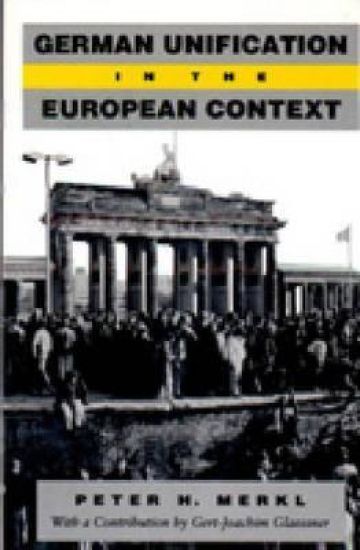
German Unification in the European Context

German Unification in the European Context

Peter H. Merkl

Pennsylvania State University Press
1993
sidottu
The collapse of the Communist regime in East Germany and the subsequent unification of East and West Germany were events of extraordinary historical importance, the ramifications of which will take years to unfold. A leading U.S. expert on West German politics, Peter Merkl, had the good fortune to be a visiting professor at the University of Göttingen in 1990 and was able to witness this incredible transition firsthand. While teaching at the Free University in Berlin in 1991, Merkl enlisted the cooperation of a leading East German expert, Gert-Joachim Glaessner, to contribute a chapter on the GDR. The result is a work that offers a careful and comprehensive account of the process of unification and its implications for the future of European and international politics. Merkl begins by laying out the historical German Question and placing the divided state in the international context of the Cold War and its consequences. He then analyzes the generational differences between Germans over fifty who rallied to the challenge with enthusiasm and the less nationalistic younger generation who feared that the pursuit of unification would preempt such goals as a better life for West Germans and a livable environment. Gert-Joachim Glaessner describes in detail the spectacular unraveling of the East German communist regime that ultimately led to the fall of the Berlin Wall amidst the disintegration of the other Communist regimes, arguing that they did not fall on their own nor as a result of West German or Western initiatives alone. Merkl analyzes the process of political unification, the several elections of the year 1990, and the agreements made between East and West Germany. He also discusses the international objections to German unification and the many obstacles that were and will need to be overcome to make German unity a reality. He examines the attitudes of East and West Germans towards each other and their sense of national identity, the transformation of institutions and constitutions, and the immense problems and expense of rebuilding the East German infrastructure and economy and of privatizing state-owned operations. Finally, he maps out the international significance of the great changes of the post-Wall and post-Communist world that will define the future role of united Germany vis-à-vis Germany's neighbors, the European community, the United States, and the world. The book ends with a glimpse of how Germans envision themselves in the year 2000.
German Unification in the European Context

German Unification in the European Context

Peter H. Merkl

Pennsylvania State University Press
1993
pokkari
The collapse of the Communist regime in East Germany and the subsequent unification of East and West Germany were events of extraordinary historical importance, the ramifications of which will take years to unfold. A leading U.S. expert on West German politics, Peter Merkl, had the good fortune to be a visiting professor at the University of Göttingen in 1990 and was able to witness this incredible transition firsthand. While teaching at the Free University in Berlin in 1991, Merkl enlisted the cooperation of a leading East German expert, Gert-Joachim Glaessner, to contribute a chapter on the GDR. The result is a work that offers a careful and comprehensive account of the process of unification and its implications for the future of European and international politics. Merkl begins by laying out the historical German Question and placing the divided state in the international context of the Cold War and its consequences. He then analyzes the generational differences between Germans over fifty who rallied to the challenge with enthusiasm and the less nationalistic younger generation who feared that the pursuit of unification would preempt such goals as a better life for West Germans and a livable environment. Gert-Joachim Glaessner describes in detail the spectacular unraveling of the East German communist regime that ultimately led to the fall of the Berlin Wall amidst the disintegration of the other Communist regimes, arguing that they did not fall on their own nor as a result of West German or Western initiatives alone. Merkl analyzes the process of political unification, the several elections of the year 1990, and the agreements made between East and West Germany. He also discusses the international objections to German unification and the many obstacles that were and will need to be overcome to make German unity a reality. He examines the attitudes of East and West Germans towards each other and their sense of national identity, the transformation of institutions and constitutions, and the immense problems and expense of rebuilding the East German infrastructure and economy and of privatizing state-owned operations. Finally, he maps out the international significance of the great changes of the post-Wall and post-Communist world that will define the future role of united Germany vis-à-vis Germany's neighbors, the European community, the United States, and the world. The book ends with a glimpse of how Germans envision themselves in the year 2000.
Precious Metal

Precious Metal

Peter H. Christensen

Pennsylvania State University Press
2022
sidottu
With its incorporation into architecture on a grand scale during the long nineteenth century, steel forever changed the way we perceive and inhabit buildings. In this book, Peter H. Christensen shows that even as architects and engineers were harnessing steel’s incredible properties, steel itself was busy transforming the natural world.Precious Metal explores this quintessentially modernist material—not for the heroic structural innovations it facilitated but for a deeper understanding of the role it played in the steady change of the earth. Focusing on the formative years of the architectural steel economy and on the corporate history of German steel titans Krupp and Thyssen, Christensen investigates the ecological interrelationship of artificial and natural habitats, mediated by steel. He traces steel through six distinct phases: birth, formation, display, dispersal, construction, and return. By following the life of steel from the collection of raw minerals to the distribution and disposal of finished products, Christensen challenges the traditional narrative that steel was simply the primary material responsible for architectural modernism.Based on the premise that building materials are as much a part of the natural world as they are of a building, this groundbreaking book rewrites an important chapter of architectural history. It will be welcomed by specialists in architectural history, nineteenth-century studies, environmental history, German studies, modernist studies, and the Anthropocene.
Precious Metal

Precious Metal

Peter H. Christensen

Pennsylvania State University Press
2024
pokkari
With its incorporation into architecture on a grand scale during the long nineteenth century, steel forever changed the way we perceive and inhabit buildings. In this book, Peter H. Christensen shows that even as architects and engineers were harnessing steel’s incredible properties, steel itself was busy transforming the natural world.Precious Metal explores this quintessentially modernist material—not for the heroic structural innovations it facilitated but for a deeper understanding of the role it played in the steady change of the earth. Focusing on the formative years of the architectural steel economy and on the corporate history of German steel titans Krupp and Thyssen, Christensen investigates the ecological interrelationship of artificial and natural habitats, mediated by steel. He traces steel through six distinct phases: birth, formation, display, dispersal, construction, and return. By following the life of steel from the collection of raw minerals to the distribution and disposal of finished products, Christensen challenges the traditional narrative that steel was simply the primary material responsible for architectural modernism.Based on the premise that building materials are as much a part of the natural world as they are of a building, this groundbreaking book rewrites an important chapter of architectural history. It will be welcomed by specialists in architectural history, nineteenth-century studies, environmental history, German studies, modernist studies, and the Anthropocene.
Leaving the Adventist Ministry

Leaving the Adventist Ministry

Peter H. Ballis

Praeger Publishers Inc
1999
sidottu
More than 180 pastors exited the Seventh-Day Adventist ministry in Australia and New Zealand between 1980 and 1988—a loss that is equivalent to 40 percent of the total annual Adventist ministerial workforce in those two countries. This volume examines the processes whereby conservative and committed sectarian pastors began to entertain doubts concerning the sectarian cause, questioned their occupational calling, and turned their backs on the ministry. Using the data gathered from in-depth interviews with 43 expastors and from other sources, the author develops detailed case study profiles, which highlight the personal, organizational, and social factors involved in their decision, and the types of experiences they associate with leaving the ministry. The first study of clergy fallout from a sectarian community, this volume makes a significant contribution to our understanding of exiting.
Hypoxia: Into the Next Millennium

Hypoxia: Into the Next Millennium

Peter H. Hackett; P. D. Wagner; Robert C. Roach

Kluwer Academic/Plenum Publishers
1999
sidottu
Introduction: Dedication to Herb Hultgren. Preface. Acknowledgements. Contributors. Table of Contents. Mountain Medicine: 1. Herb Hultgren in Peru: What Causes High Altitude Pulmonary Edema? D. Rennie. 2. High Altitude Cerebral Edema and Acute Mountain Sickness: A Pathophysiology Update; P.H. Hackett. 3. Lung Disease at High Altitude; R.B. Schoene. 4. Commuting to High Altitude; J.B. West. 5. The Pregnant Altitude Visitor; S. Niermeyer. High Altitude Pulmonary Edema: 6. High Altitude Edema: Introduction; P. B rtsch. 7. Pulmonary Hemodynamics: Implications for High Altitude Pulmonary Edema (HAPE); J. Simon, R. Gibbs. 8. High-Altitude Pulmonary Edema: From Exaggerated Pulmonary Hypertension to a Defect in Transepithelial Sodium Transport; U. Scherrer, et al. Frontiers in Neuroscience: The Blood-Brain Barrier: 9. Frontiers in Neuroscience: Introduction; J.A. Krasney. 10. What is the Blood-Brain Barrier? A Molecular Perspective; L.R. Drewes. 11. Mediators of Cerebral Edema; L. Schilling; M. Wahl. Frontiers in Neuroscience: The Hypoxic Brain: 12. The Hypoxic Brain: Introduction; T.F. Hornbein. 13. High Altitude Headache; M. Sanchez del Rio, M.A. Moskowitz. 14. The Hypoxic Brain: Insights from Ischemia; K.-A. Hossmann. 15. Food for Thought: Altitude versus Normal Brain Function; M.E. Raichle. Hypoxia and Lactate: New Insights: 16. Are Arterial, Muscle and Working Limb Lactate Exchange Data Obtained on Men at Altitude Consistent with the Hypothesis of anIntracellular Lactate Shuttle? G.A. Brooks. 17. Role of Pyruvate Dehydrogenase in Lactate Production in Exercising Human Skeletal Muscle; G.J.F. Heigenhauser, M.L. Parolin. 18. Cross-Species Studies of Glycolytic Function; P.W. Hochachka. Hypoxia and Regulation of Vascular Growth: 19. Hypoxia Induces Cell-Specific Changes in Gene Expression in Vascular Wall Cells: Implications for Pulmonary Hypertension; K.R. Stenmark, et al. 20. Oxygen and Placental Vascular Development; J.C.P. Kingdom, P. Kaufmann. 21. Vascular Growth in Hypoxic Skeletal Muscle; H. Hoppeler. Human Physiology in Extreme Hypoxia: 22. Recent Advances in Human Physiology at Extreme Altitude; J.B. West. 23. Operation Everest III (COMEX '97); J.-P. Richalet, et al. 24. Dynamic Cerebral Autoregulation at High Altitude; B.D. Levine, et al. 25. Kangchenjunga 1998; A. Nickol, D. Collier. 26. Why Does the Exercise Cardiac Output Fall During Altitude Residence and Is It Important? J.T. Reeves. Chronic Mountain Sickness Consensus Group: 27. International Consensus Group on Chronic Mountain Sickness; F. Leon-Velarde, J.T. Reeves. Tribute to Niels Lassen: 28. Niels Lassen; J.W. Severinghaus. Abstracts: 29. Abstracts from the 11th International Hypoxia Symposium. Subject Index. Author Index.
Expectations for the Millennium

Expectations for the Millennium

Peter H. Buckingham

Praeger Publishers Inc
2002
sidottu
Early in the twentieth century, American socialists dared to dream of a future based on cooperation rather than competition. Socialism was a movement broad enough to encompass many points of view regarding the Red millennium. Socialist women, novelists, newspaper editors, and civil rights advocates, Christian socialists and Wobblies strained their eyes to see a future cooperative Commonwealth.Edward Bellamy portrayed socialism in the year 2000 for millions of readers in his novels as applied Christianity. Bellamy and other utopian novelists, including Jack London and Charlotte Perkins Gilman, tried to imagine the role of women in the expected new order. Christian socialists put their faith in a future Kingdom of God on earth that honored the ideas of Karl Marx. Radical newspaper editors in Kansas, Missouri, and Texas attempted to lay out the imagined transition to socialism to their readers in simple, straightforward language that made the goal seem readily obtainable. Mormons, disappointed in the changing nature of their faith, pondered a possible socialist future. Others, such as William English Walling, worked for a time ahead that was both socialist and colorblind. Challenging the notion that they had no concrete vision, this book of essays examines the many ways in which early 20th century American socialists imagined their future.
Celiac Disease, An Issue of Gastroenterology Clinics of North America

Celiac Disease, An Issue of Gastroenterology Clinics of North America

Peter H. R. Green; Benjamin Lebwohl

Elsevier - Health Sciences Division
2019
sidottu
Dr. Alan Buchman, Consulting Editor, selected world renown experts on celiac disease, Dr. Green and Dr. Lebwohl, to update the topic for gastroenterology readers. They have secured expert authors from top institutions to contribute articles with high clinical utility on the diagnosis, treatment, and management of celiac disease. These clinical reviews are devoted to the following topics: Clinical features and diagnosis of celiac disease; The gluten-free diet; Histopathology of celiac disease; Epidemiology and risk factors for celiac disease; Enteroscopy and capsule endoscopy in celiac disease; Measuring symptoms and other outcomes in celiac disease; Celiac disease in Asia; The microbiome and celiac disease; Follow-up of celiac disease; Refractory celiac disease; Non-dietary therapies for celiac disease; and Non-Celiac gluten or wheat sensitivity. Readers will come away with the most current clinical information they need to inform clinical decisions to improve patient outcomes.
Courts And Transition In Russia

Courts And Transition In Russia

Peter H. Solomon; Todd Foglesong

Routledge
2019
sidottu
It is hardly a revelation to say that in the Soviet Union, law served not as the foundation of government but as an instrument of rule, or that the judiciary in that country was highly dependent upon political authority. Yet, experience shows that effective democracies and market economies alike require courts that are independent and trusted. In Courts and Transition in Russia, Solomon and Foglesong analyze the state and operation of the courts in Russia and the in some ways remarkable progress of their reform since the end of Soviet power. Particular attention is paid to the struggles of reformers to develop judicial independence and to extend the jurisdiction of the courts to include constitutional and administrative disputes as well as supervision of pretrial investigations. The authors then outline what can and should be done to make courts in Russia autonomous, powerful, reliable, efficient, accessible and fair. The book draws upon extensive field research in Russia, including the results of a lengthy questionnaire distributed to district court judges throughout Russian Federation.Written in a clear and direct manner, Courts and Transition in Russia should appeal to anyone interested in law, politics, or business in Russia ? scholars and practitioners alike ? as well as to students of comparative law, legal transition, and courts in new democracies.
The Waterside Ape

The Waterside Ape

Peter H. Rhys Evans

CRC Press
2019
nidottu
Why are humans so fond of water? Why is our skin colour so variable?Why aren’t we hairy like our close ape relatives?A savannah scenario of human evolution has been widely accepted primarily due to fossil evidence; and fossils do not offer insight into these questions. Other alternative evolutionary scenarios might, but these models have been rejected. This book explores a controversial idea – that human evolution was intimately associated with watery habitats as much or more than typical savannahs. Written from a medical point of view, the author presents evidence supporting a credible alternative explanation for how humans diverged from our primate ancestors. Anatomical and physiological evidence offer insight into hairlessness, different coloured skin, subcutaneous fat, large brains, a marine-type kidney, a unique heat regulation system and speech. This evidence suggests that humans may well have evolved, not just as savannah mammals, as is generally believed, but with more affinity for aquatic habitats – rivers, streams, lakes and coasts.Key Features:Presents the evidence for a close association between riparian habitats and the origin of humansReviews the "savannah ape" hypothesis for human originsDescribes various anatomical adaptations that are associated with hypotheses of human evolution Explores characteristics from the head and neck such as skull and sinus structures, the larynx and ear structures and functions
The Waterside Ape

The Waterside Ape

Peter H. Rhys Evans

CRC Press
2019
sidottu
Why are humans so fond of water? Why is our skin colour so variable?Why aren’t we hairy like our close ape relatives?A savannah scenario of human evolution has been widely accepted primarily due to fossil evidence; and fossils do not offer insight into these questions. Other alternative evolutionary scenarios might, but these models have been rejected. This book explores a controversial idea – that human evolution was intimately associated with watery habitats as much or more than typical savannahs. Written from a medical point of view, the author presents evidence supporting a credible alternative explanation for how humans diverged from our primate ancestors. Anatomical and physiological evidence offer insight into hairlessness, different coloured skin, subcutaneous fat, large brains, a marine-type kidney, a unique heat regulation system and speech. This evidence suggests that humans may well have evolved, not just as savannah mammals, as is generally believed, but with more affinity for aquatic habitats – rivers, streams, lakes and coasts.Key Features:Presents the evidence for a close association between riparian habitats and the origin of humansReviews the "savannah ape" hypothesis for human originsDescribes various anatomical adaptations that are associated with hypotheses of human evolution Explores characteristics from the head and neck such as skull and sinus structures, the larynx and ear structures and functions
Latin America In Comparative Perspective
This book, the inaugural publication in a multivolume series entitled Latin America in Global Perspective, highlights the necessity and feasibility of analyzing Latin American society and politics within broad comparative frameworks.The rapidly changing agenda for social science research on the region calls for the rigorous application of new conce
Understanding Regression Analysis

Understanding Regression Analysis

Peter H. Westfall; Andrea L. Arias

CRC Press
2020
sidottu
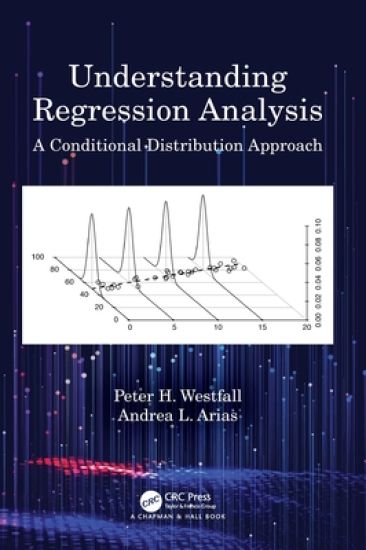
Understanding Regression Analysis unifies diverse regression applications including the classical model, ANOVA models, generalized models including Poisson, Negative binomial, logistic, and survival, neural networks, and decision trees under a common umbrella -- namely, the conditional distribution model. It explains why the conditional distribution model is the correct model, and it also explains (proves) why the assumptions of the classical regression model are wrong. Unlike other regression books, this one from the outset takes a realistic approach that all models are just approximations. Hence, the emphasis is to model Nature’s processes realistically, rather than to assume (incorrectly) that Nature works in particular, constrained ways.Key features of the book include: Numerous worked examples using the R software Key points and self-study questions displayed "just-in-time" within chapters Simple mathematical explanations ("baby proofs") of key concepts Clear explanations and applications of statistical significance (p-values), incorporating the American Statistical Association guidelines Use of "data-generating process" terminology rather than "population" Random-X framework is assumed throughout (the fixed-X case is presented as a special case of the random-X case) Clear explanations of probabilistic modelling, including likelihood-based methods Use of simulations throughout to explain concepts and to perform data analysesThis book has a strong orientation towards science in general, as well as chapter-review and self-study questions, so it can be used as a textbook for research-oriented students in the social, biological and medical, and physical and engineering sciences. As well, its mathematical emphasis makes it ideal for a text in mathematics and statistics courses. With its numerous worked examples, it is also ideally suited to be a reference book for all scientists.
Understanding Regression Analysis

Understanding Regression Analysis

Peter H. Westfall; Andrea L. Arias

TAYLOR FRANCIS LTD
2022
nidottu
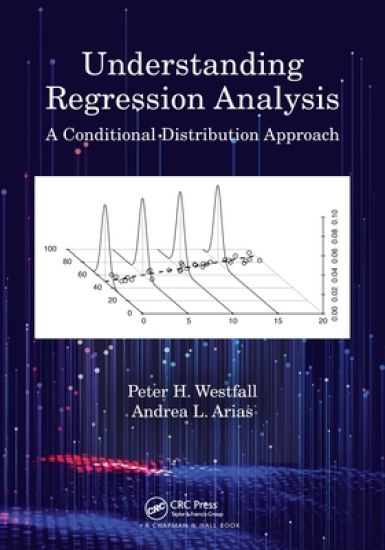
Understanding Regression Analysis unifies diverse regression applications including the classical model, ANOVA models, generalized models including Poisson, Negative binomial, logistic, and survival, neural networks, and decision trees under a common umbrella -- namely, the conditional distribution model. It explains why the conditional distribution model is the correct model, and it also explains (proves) why the assumptions of the classical regression model are wrong. Unlike other regression books, this one from the outset takes a realistic approach that all models are just approximations. Hence, the emphasis is to model Nature’s processes realistically, rather than to assume (incorrectly) that Nature works in particular, constrained ways.Key features of the book include: Numerous worked examples using the R software Key points and self-study questions displayed "just-in-time" within chapters Simple mathematical explanations ("baby proofs") of key concepts Clear explanations and applications of statistical significance (p-values), incorporating the American Statistical Association guidelines Use of "data-generating process" terminology rather than "population" Random-X framework is assumed throughout (the fixed-X case is presented as a special case of the random-X case) Clear explanations of probabilistic modelling, including likelihood-based methods Use of simulations throughout to explain concepts and to perform data analysesThis book has a strong orientation towards science in general, as well as chapter-review and self-study questions, so it can be used as a textbook for research-oriented students in the social, biological and medical, and physical and engineering sciences. As well, its mathematical emphasis makes it ideal for a text in mathematics and statistics courses. With its numerous worked examples, it is also ideally suited to be a reference book for all scientists.
Transnational Mobility and Global Health
Transnational Mobility and Global Health spotlights the powerful and dynamic intersections of human movement, inequality, and health. The book explores the interacting political, economic, social, cultural, and climatic drivers of health and migration, proposing innovative ways to enhance global health and care provision in an era of transnational mobility. As health security continues to rise up the agenda in international politics, the book also analyses the political determinants of health and migration.Within the framework of key drivers of unequal mobilities, this book treats interconnected health and migration themes not covered elsewhere under one cover: health tourism, conflict-induced and other vulnerable-population movements, humanitarian crises, human rights, the health-development linkage, migrant health-care, and health-competency education. The book also considers global health vulnerabilities in the wake of climate change, and the biomedical, ethical, and governance challenges of emerging and reemerging infectious diseases. Finally, the book suggests ways of evaluating mobility-influenced health outcomes and equity impacts, and explores how the global circulation of health expertise could help to rectify care-provider shortages.The challenges to global health considered in this book are only likely to become more intense as the 21st-Century surge in transnational migration continues. Readers will gain interdisciplinary appreciation for the relevance of health for migration and of migration for global health. Researchers, students, practitioners, and policy makers interested in individual and population health, sustainable development, and migration studies will find this book a useful and inspiring guide to contemporary global challenges.