Kirjojen hintavertailu. Mukana 11 244 527 kirjaa ja 12 kauppaa.

Kirjahaku

Etsi kirjoja tekijän nimen, kirjan nimen tai ISBN:n perusteella.

447 tulosta hakusanalla Hadrian F. Cook

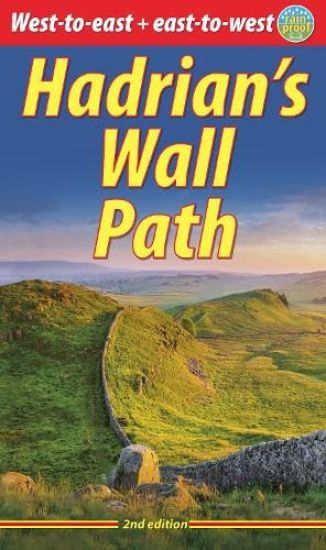
Hadrian's Wall Path

Hadrian's Wall Path

Jacquetta Megarry; Gordon Simm

RUCKSACK READERS
2011
kierre
Hadrians Wall Path runs for 85 miles from coast to coast along the line of the Roman Wall completed in AD122 under the Emperor Hadrian. This National Trail crosses northern England from Irish Sea to North Sea and offers many chances to look at the forts, milecastles and interpretation centres within this UNESCO World Heritage Site. This guidebook contains all you need to plan and enjoy a classic week's walking. The route is clearly waymarked and well supported by public transport. This guidebook is almost unique in giving equal priority to walking the route from west-to-east as east-to-west. It explains clearly the pros and cons of each direction. This book provides all you need to plan and enjoy a classic week's walking in a compact package: detailed west-to-east and east-to-west route descriptions updated in mid-2025detailed mapping at 1:50,000 with miles numbered in both directionshistory and anatomy of the Wall, with details of forts and visitor centreswildlife explained and illustrated for the various habitatsinformation about public transport and travellavishly illustrated, with 100 colour photoson rainproof paper.
Hadrian's Wall and its People

Hadrian's Wall and its People

Geraint Osborn

Bristol Phoenix Press
2006
nidottu
Hadrian’s Wall – one of the most prominent monuments of the Roman period in Britain – has a special place in the public imagination. It offers a tangible reminder of our ancient past and a concrete link with the Roman occupation. Visitors can stand amid the remains, knowing that they tread in the footsteps of the soldiers who garrisoned the province. Guides to the Wall have tended to concentrate on the archaeological record, on the Wall’s construction and on military organisation. This book folds these aspects into a wider historical, social and economic perspective, providing the general reader with an analysis of how Hadrian’s Wall functioned. It describes the impact it had on the lives of both Rome’s soldiers and the native population, dealing with the contentious issue of ‘Romanisation’. It looks, too, at what happened in Christian communities of the Wall area after the Roman army’s departure. Geraint Osborn utilises archaeological evidence, including the content of the remarkable Vindolanda tablets, to give a rounded picture of military life on the Wall. He also considers the role of the monument in the context of Victorian England, a time when parallels were frequently drawn between the Roman and British empires, and how this in turn affected the excavation, preservation and modern presentation of Hadrian’s Wall.
Hadrian's Lover

Hadrian's Lover

Patricia Marie Budd

Legend Press Ltd
2013
pokkari
"Hadrian's Lover is a stunning novel about a dystopian society disguised as a utopian one...it raises difficult questions about right and wrong, government control, and an individual's right to express himself freely and be accepted for his sexual preference, regardless of what it is." - Tyler R. Tichelaar, PH.D. and author of the award-winning Narrow LivesWhat if you lived in a world where homosexuality was the norm and all forms of heterosexual behavior were illegal?In the near future the human population has grown to such excess that the earth is no longer able to sustain humanity's astronomical numbers. Poverty, starvation, and disease are rampant. Only the country of Hadrian seems able to defend itself against the ravages of overpopulation by restricting its growth and encasing its country behind a defensive wall. Procreation does not happen by chance in Hadrian. There are no unwanted pregnancies. No accidents. All pregnancies occur through in vitro fertilization, and every citizen is responsible for rearing one of Hadrian's children.Heterosexuality is deemed the ill that has led humanity to the brink. In Hadrian, no one dares to express interest in the opposite sex; to do so would result in exile or reeducation.Hadrian's Lover tells the story of Todd Middleton, a teenage boy struggling to keep the secret of his heterosexuality. Read on, and feel with him as he suffers the indignities of a society determined to "cure" him of his plight.Patricia Marie Budd is a high school English teacher living in northern Alberta, Canada. She has been a safe zone for her LGBT* students throughout her twenty year career. Hadrian's Lover is her third novel.
Hadrian's Wall

Hadrian's Wall

David J. Breeze

John Donald Short Run Press
2016
sidottu
Brothers Henry, Charles and Thomas Richardson painted nearly 80 views of Hadrian's Wall between 1838 and the 1880s. Most were created by Henry Burdon Richardson, who accompanied author John Collingwood Bruce on his tour of Hadrian's Wall in 1848. Only 17 were reproduced as engravings in Bruce's books; very few have ever been published as paintings. They form a valuable record of the Roman frontier as it was during an important stage in its history, before the advent of the modern world. New theories and interpretations were coming to light, as described in Bruce's first book The Roman Wall, published in 1851. John Clayton, town clerk of Newcastle upon Tyne, had begun buying land along the Wall, aiming to preserve the remains, creating in effect an archaeological park. The production of the Richardson paintings, Bruce's contribution to Wall studies and the achievement of John Clayton in conserving the Wall, are all explored, providing a fascinating background story. Over 70 of the Richardsons' paintings are published in the book, most with Bruce's original description and a commentary by the author.
Hadrian's Wall Path Trailblazer walking guide

Hadrian's Wall Path Trailblazer walking guide

Henry Stedman

TRAILBLAZER PUBLICATIONS
2023
pokkari
All the information you need to enjoy your hiking adventure along Hadrian's Wall Path in this fully revised 7th edition. Hadrian's Wall Path, 84 miles from end to end, follows the course of northern Europe's largest surviving Roman monument, a 2nd-century fortification built - in the border country between England and Scotland - on the orders of the Emperor Hadrian in AD122. Opened in 2003, the path crosses the beautiful border country between England and Scotland. It is the first National Trail to follow the course of a UNESCO World Heritage Site. This week-long walk is regarded as one of the least challenging National Trails. This 7th edition has been re-walked and fully updated. 8 town plans and 59 large-scale walking maps - at just under 1:20,000 - showing route times, places to stay, points of interest and much morePlus 8 stage maps and 2 overview mapsItineraries for all walkers - whether walking the route in its entirety over seven to eight days or sampling the highlights on day walks and short breaksPractical information for all budgetsWhere to stay with reviews - camping, bunkhouses, hostels, B&Bs, pubs and hotelsWhere to eat with reviews - cafes, pubs, tea-shops, restaurants, takeaways and shops/supermarketsWhat to see - historical, cultural, geographical informationDetailed street plansComprehensive public transport information - for all access points on the Hadrian's Wall PathFlora and fauna - four page full colour flower guide, plus an illustrated section on local wildlifeGreen hiking - understanding the local environment and minimizing our impact on itNewcastle city guideGPS waypoints. These are also downloadable from the Trailblazer websiteIncludes extra colour sections: 16pp colour introduction and 16pp of colour mapping for stage sections (one stage per page) with trail profiles.
Hadrian's Wall Path

Hadrian's Wall Path

Jacquetta Megarry; Gordon Simm

RUCKSACK READERS
2025
pokkari
This popular National Trail follows the line of the Roman Wall from coast to coast across northern England, with many forts and milecastles in the World Heritage Site; background on the history, geology and wildlife, with detailed route descriptions for west-to-east and east-to-west and 100 photos; all you need for a week's walking holiday.
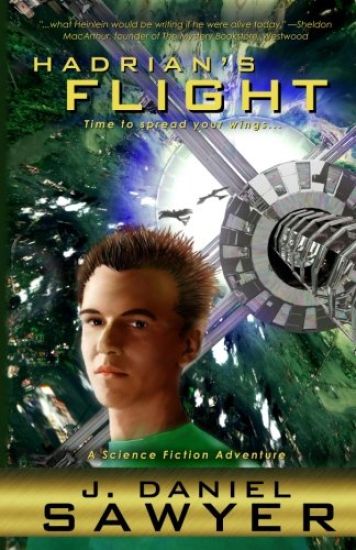
Hadrian's Flight

Hadrian's Flight

J. Daniel Sawyer

Artisticwhispers Books
2018
nidottu
Hadrian Jin. Skyguard. Refugee. Twelve times a day, this sixteen-year-old proprietor of Luna City's best orn-suit shop fits the wings, and jumps out into the open air to soar with the grace of an eagle. For forty dollars an hour, he can teach any groundhog how to fly bird-fashion in the moon's low gravity. But when the tramp of military boots on the road to his home forces him to flee, he finds himself adrift between planets, on the run from government agents, without hope of home. Out of his depth and thrust into danger for which he's ill-prepared, Hadrian must learn the true reason for his exile, and finally spread his own wings...
Hadrian and the Christians
The Second Century occupies a central place in the development of ancient Christianity. The aim of the book is to examine how in the cultural, social, and religious efflorescence of the Second Century, to be witnessed in phenomena such as the Second Sophistic, Christianity found a peculiar way of integrating into the more general transformation of the Empire and how this allowed the emerging religion to establish and flourish in Graeco-Roman society. Hadrian’s reign was the starting point of that process and opened new possibilities of self-definition and external self-presentation to Christianity, as well as to other social and religious agencies. Differently from Judaism, however, Christianity fully seized the opportunity, thus gaining an increasing place in Graeco-Roman society, which ultimately led to the first Christian peace under the Severan emperors. The point at issue is examined from a multi-disciplinary perspective (including archaeology, cultural, religious, and political history) to challenge well-established, but no longer satisfactory, historical and hermeneutical paradigms. The contributors aim to examine institutional issues and sociocultural processes in their different aspects, as they were made possible on Hadrian’s initiative and resulted in the merge of early Christianity into the Roman Empire.
Hadrian VI.

Hadrian VI.

Francesco Ruffi

tredition GmbH
2024
pokkari
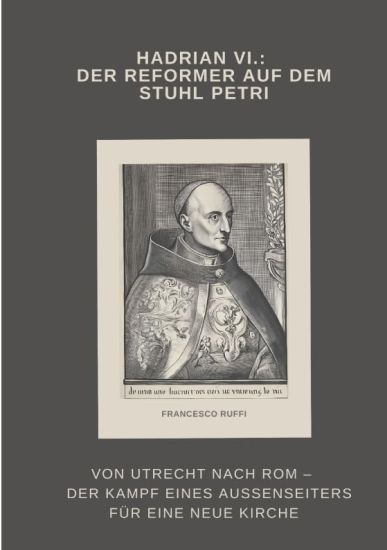
Hadrian VI., der einzige niederl ndische Papst der Geschichte, bestieg in einer Zeit tief-greifender kirchlicher und politischer Krisen den Heiligen Stuhl. Vom Sohn eines Zimmermanns aus Utrecht zum obersten Pontifex - seine Reise ist die eines Au enseiters, der die katholische Kirche reformieren und gegen Korruption sowie Machtmissbrauch ank mpfen wollte. Francesco Ruffi beleuchtet den beeindruckenden Lebensweg dieses unvergessenen Reformpapstes, dessen Visionen den Weg f r sp tere Ver nderungen ebneten. Mit einem scharfen Blick auf die gesellschaftlichen und theologischen Herausforderungen seiner Zeit zeigt dieses Buch, wie Hadrian VI. gegen Widerst nde in der r mischen Kurie und die politischen Intrigen der M chte Europas k mpfte. Erleben Sie die faszinierende Geschichte eines Mannes, der trotz seiner kurzen Amtszeit bleibende Spuren hinterlie - ein mutiger Geist, der die Werte von Bescheidenheit, Glauben und Reform in einer turbulenten ra verk rperte. Dieses Werk verbindet historische Tiefe mit einer lebendigen Erz hlweise und l dt ein, die wenig bekannte, aber bedeutungsvolle Epoche Hadrians VI. neu zu entdecken.
Hadrian VI.

Hadrian VI.

Francesco Ruffi

tredition GmbH
2024
sidottu
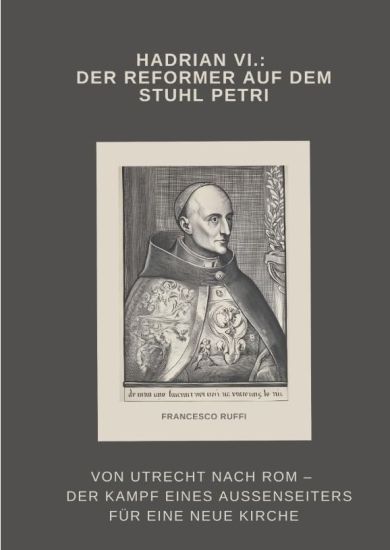
Hadrian VI., der einzige niederl ndische Papst der Geschichte, bestieg in einer Zeit tief-greifender kirchlicher und politischer Krisen den Heiligen Stuhl. Vom Sohn eines Zimmermanns aus Utrecht zum obersten Pontifex - seine Reise ist die eines Au enseiters, der die katholische Kirche reformieren und gegen Korruption sowie Machtmissbrauch ank mpfen wollte. Francesco Ruffi beleuchtet den beeindruckenden Lebensweg dieses unvergessenen Reformpapstes, dessen Visionen den Weg f r sp tere Ver nderungen ebneten. Mit einem scharfen Blick auf die gesellschaftlichen und theologischen Herausforderungen seiner Zeit zeigt dieses Buch, wie Hadrian VI. gegen Widerst nde in der r mischen Kurie und die politischen Intrigen der M chte Europas k mpfte. Erleben Sie die faszinierende Geschichte eines Mannes, der trotz seiner kurzen Amtszeit bleibende Spuren hinterlie - ein mutiger Geist, der die Werte von Bescheidenheit, Glauben und Reform in einer turbulenten ra verk rperte. Dieses Werk verbindet historische Tiefe mit einer lebendigen Erz hlweise und l dt ein, die wenig bekannte, aber bedeutungsvolle Epoche Hadrians VI. neu zu entdecken.
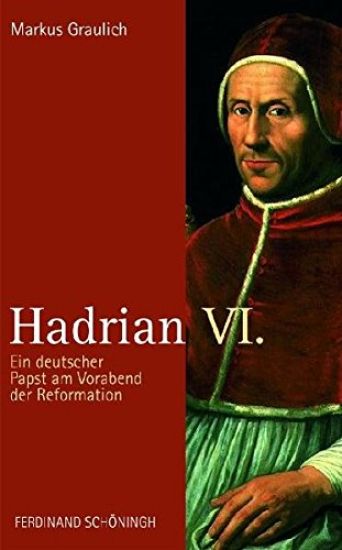
Hadrian VI.: Ein Deutscher Papst Am Vorabend Der Reformation
1459 in Utrecht geboren, das zum Gebiet des Heiligen R mischen Reich deutscher Nation geh rte, wurde Adrian Florensz 1522 in einer f r die katholische Kirche h chst brisanten Epoche zum Papst gew hlt. Sowohl die aufkeimende Reformation als auch die Bedrohung des Westens durch die islamischen T rken und innerkirchliche Widerst nde lie en sein kurzes Pontifikat, das aus heutiger Sicht als Vorl ufer einer pastoralen Auffassung des Petrusamtes betrachtet wird, zu seinen Lebzeiten wenig erfolgreich sein. Zum 450. Geburtstag Papst Hadrian VI. zeichnet diese Biografie die Stationen seines Lebens als Professor in L wen, Erzieher und sp terer Mitarbeiter Kaiser Karl V. und schlie lich als Papst nach. Im Anhang findet sich der vollst ndige Text des ber hmten Schuldbekenntnisses, das Hadrian vor dem Reichstag in N rnberg ablegen lie .
Hadrian Und Antinoos

Hadrian Und Antinoos

Corina Winkler

Grin Verlag Gmbh
2007
nidottu
Hauptseminararbeit aus dem Jahr 2003 im Fachbereich Geschichte - Frühgeschichte, Antike, einseitig bedruckt, Note: 2,3, Universität Leipzig (Institut für Geschichte, Kunst- und Orientwissenschaften), Veranstaltung: Hauptseminar: Hadrian- Spanier, Philhellene und Judenfreund, 32 Eintragungen im Literaturverzeichnis, Sprache: Deutsch, Anmerkungen: Bis heute gilt das Verhältnis zwischen dem römischen Kaiser Hadrian und seinem jungen Geliebten Antinoos als Mysterium um Liebe und Tod. Welches Faszinosum von Antinoos ausging, für den Hadrian posthum eine Stadt errichten ließ und welcher Art ihre Beziehung war, soll in der Arbeit untersucht werden. Fragen nach der Herkunft des Jünglings, über das erste Treffen mit dem Kaiser, bis hin zu seinem mysteriösen Tod sollen Hauptaugenmerke sein. , Abstract: Hadrian baute Antinoos zu Ehren nicht nur eine Stadt mit seinem Namen sondern erhob ihn sogar zum neuen Gott, dem er unzählige Kultbilder und Kulttraditionen einrichtete. Ehrungen dieser Größenordnung, für eine Person, die weder Mitglied der kaiserlichen Familie noch ein verdienter Beamter gewesen war, hatte es vorher nicht gegeben. Weinerlich "wie ein Weib" soll Hadrian gewesen sein, nachdem sein Antinoos unter myteriösen Umständen 130 n. Chr. im Nil ertrunken war. Selbst für seine, einige Jahre später verstorbene Schwester soll er bei weitem nicht so viel Anteilnahme gezeigt haben. Unweigerlich drängt sich die Frage auf, welches Faszinosum von Antinoos ausging, dass den Kaiser zu solch gottgleichen Ehren bewegte. Welche Beziehung hatte er zu dem Mann, für den er posthum eine Stadt errichten ließ. Diesen beiden Fragen auf den Grund zu gehen, soll für die folgende Arbeit maßgebend sein. Wichtig dabei soll die Suche nach Herkunft, Bildung und Wesen Antinoos sein, da sie Rückschlüsse auf seine Rolle in der Beziehung geben könnten. Hatte er vielleicht Einfluss auf politische Entscheidungen Hadrians und gab es Auswirkungen auf die Ehe mit Sabina? Basierte die Beziehung nur auf erotischer Anzieh-ung oder war es tiefbindende Liebe? Lässt sie sich mit der idealisierten Knabenliebe der Griechen vergleichen, die seit der klassischen Zeit mit einem festen Regelwerk und einer Kulturtradition ausgestattet war? Welches Echo auf die Beziehung ist aus den Quellen ersichtlich und welche Rückschlüsse ergeben sich daraus auf die Akzeptanz dieser Liebe am Hof und im Volk? Um die Fragen zu klären, stehen verhältnismäßig wenig Quellen zur Verfügung. Hinweise zu Antinoos selbst können meist nur späteren oder christlichen Schriften entnommen werden, wobei diese aufgrund anderer Moralvorstellungen meist polemisierend und daher nur mit Vorsicht zu genießen sind. Die archäologischen Zeugnisse für Antinoos sind wiederum äußerst zahlreich. Über 100 Statuen und 140 Münztypen sind erhalten, die allerdings zu einem Großteil den idealisierten Gott, nicht den Menschen Antinoos darstellen. Die Quellenlage zum Verhältnis an sich ist ebenfalls äußerst dürftig. In der Forschung entwickelten sich daher, abhängig von jeweiligem Zeitgeist und Moralvorstellung, unterschiedliche Theorien.