Kirjojen hintavertailu. Mukana 11 244 527 kirjaa ja 12 kauppaa.

Kirjahaku

Etsi kirjoja tekijän nimen, kirjan nimen tai ISBN:n perusteella.

1000 tulosta hakusanalla Harriet Pyne Grove

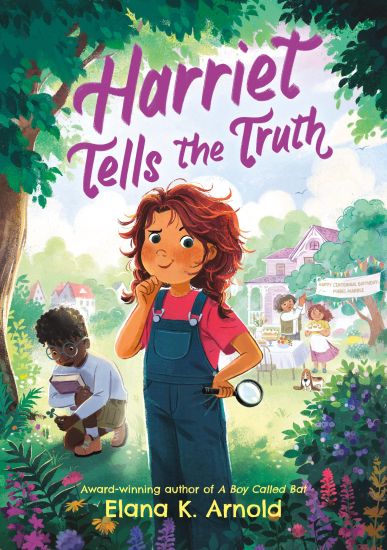
Harriet Tells the Truth

Harriet Tells the Truth

Elana K. Arnold

Walden Pond Press
2024
sidottu
Sid Fleischman Humor Award WinnerHarriet sets out to solve a poisoning on Marble Island in the third book in the acclaimed cozy mystery series from award-winning author Elana K. Arnold.There are some things you should know about Harriet Wermer: She used to lie a lot, but not anymore.Seriously, she only tells the truth now.Even though she hadn't wanted to come to Marble Island in the first place, now she doesn't want to leave.It's the truth. With her mom and new baby brother home from the hospital, it's almost time for Harriet to pack up and head home from Marble Island and all the friends she's made. But Harriet doesn't have time to think about that--not when she discovers that Moneypenny, her Nanu's adorable basset hound, has been poisoned Harriet suspects the culprit is one of the guests staying at Nanu's bed-and-breakfast, and she and her best friend, Clarence, are once again on the case. But when someone else falls ill, Harriet's going to have to sleuth harder, spy sneakier, and be willing to see that sometimes the truth is more complicated than it seems.
Harriet Tells the Truth

Harriet Tells the Truth

Elana K. Arnold

Walden Pond Press
2025
nidottu
Sid Fleischman Humor Award WinnerHarriet sets out to solve a poisoning on Marble Island in the third book in the acclaimed cozy mystery series from award-winning author Elana K. Arnold.There are some things you should know about Harriet Wermer: She used to lie a lot, but not anymore.Seriously, she only tells the truth now.Even though she hadn't wanted to come to Marble Island in the first place, now she doesn't want to leave.It's the truth. With her mom and new baby brother home from the hospital, it's almost time for Harriet to pack up and head home from Marble Island and all the friends she's made. But Harriet doesn't have time to think about that--not when she discovers that Moneypenny, her Nanu's adorable basset hound, has been poisoned Harriet suspects the culprit is one of the guests staying at Nanu's bed-and-breakfast, and she and her best friend, Clarence, are once again on the case. But when someone else falls ill, Harriet's going to have to sleuth harder, spy sneakier, and be willing to see that sometimes the truth is more complicated than it seems.
Harriet, You'll Drive Me Wild!

Harriet, You'll Drive Me Wild!

Mem Fox

HOUGHTON MIFFLIN
2003
nidottu
Harriet doesn't mean to be pesky. Sometimes she just is. And her mother doesn't mean to lose her temper. Sometimes she just does. But Harriet and her mother know that even when they do things they wish they hadn't, they still love each other very much.
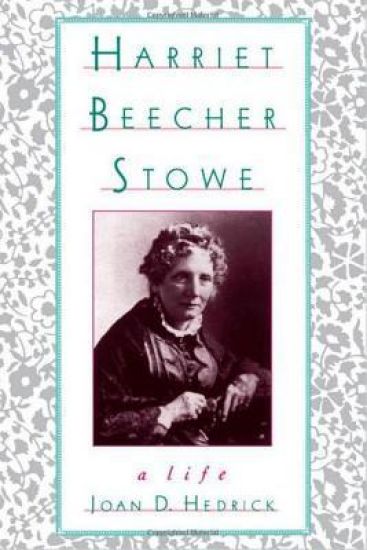
Harriet Beecher Stowe

Harriet Beecher Stowe

Joan D. Hedrick

Oxford University Press Inc
1995
nidottu
"Up to this year I have always felt that I had no particular call to meddle with this subject....But I feel now that the time is come when even a woman or a child who can speak a word for freedom and humanity is bound to speak." Thus did Harriet Beecher Stowe announce her decision to begin work on what would become one of the most influential novels ever written. The subject she had hesitated to "meddle with" was slavery, and the novel, of course, was Uncle Tom's Cabin. Still debated today for its portrayal of African Americans and its unresolved place in the literary canon, Stowe's best-known work was first published in weekly installments from June 5, 1851 to April 1, 1852. It caused such a stir in both the North and South, and even in Great Britain, that when Stowe met President Lincoln in 1862 he is said to have greeted her with the words, "So you are the little woman who wrote the book that created this great war!" In this landmark book, the first full-scale biography of Harriet Beecher Stowe in over fifty years, Joan D. Hedrick tells the absorbing story of this gifted, complex, and contradictory woman. Hedrick takes readers into the multilayered world of nineteenth century morals and mores, exploring the influence of then-popular ideas of "true womanhood" on Stowe's upbringing as a member of the outspoken Beecher clan, and her eventful life as a writer and shaper of public opinion who was also a mother of seven. It offers a lively record of the flourishing parlor societies that launched and sustained Stowe throughout the 44 years of her career, and the harsh physical realities that governed so many women's lives. The epidemics, high infant mortality, and often disastrous medical practices of the day are portrayed in moving detail, against the backdrop of western expansion, and the great social upheaval accompanying the abolitionist movement and the entry of women into public life. Here are Stowe's public triumphs, both before and after the Civil War, and the private tragedies that included the death of her adored eighteen month old son, the drowning of another son, and the alcohol and morphine addictions of two of her other children. The daughter, sister, and wife of prominent ministers, Stowe channeled her anguish and her ambition into a socially acceptable anger on behalf of others, transforming her private experience into powerful narratives that moved a nation. Magisterial in its breadth and rich in detail, this definitive portrait explores the full measure of Harriet Beecher Stowe's life, and her contribution to American literature. Perceptive and engaging, it illuminates the career of a major writer during the transition of literature from an amateur pastime to a profession, and offers a fascinating look at the pains, pleasures, and accomplishments of women's lives in the last century.
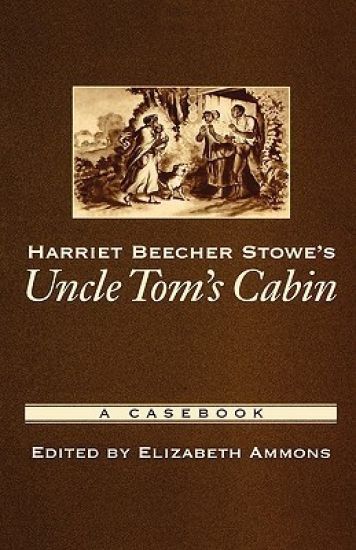
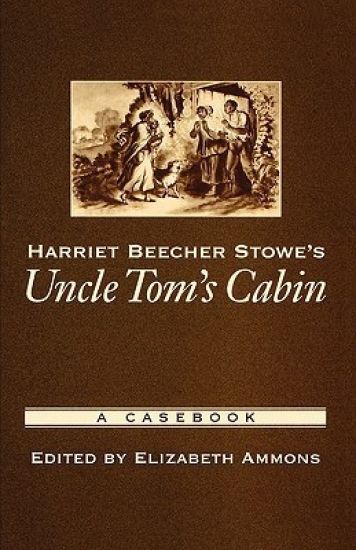
Harriet Beecher Stowe's Uncle Tom's Cabin
General for the Series: The Casebooks in Criticism introduce readers to the essential criticism on landmark works of literature and film. For each volume, a distinguished scholar who is an authority on the text has collected the most elucidating and distinctive scholarly essays on that work and added key supporting materials. Each volume includes a substantial introduction which considers the key features of the work, describes its publication history, and contextualizes its cultural import and contemporary reputation while also surveying the major approaches which have informed the works critical history. A condensed bibliography offers suggestions for further reading. The compact volumes provide a critical survey and suggest provocative ways to engage with their texts. They are ideally suited to those interested in developing a deeper understanding of a works history and significance. Specific for this book: Most of the best criticism on Stowe's landmark novel is fairly recent. Until the combined impact of the civil rights and women's movements changed the focus of the academic ciriculum, Uncle Tom's Cabin seldom appeared in classrooms or as the subject of published scholarship. However, from the mid-1970 forward, the book has been widely written about and taught. Today, Uncle Toms Cabin is a stable, important part of the nineteenth-centruy American literature canon and has generated a rich body of new critical work. This casebook collects the best of the new scholarship as well as the most influencial older essays. Included in this volume are letters by Harriet Beecher Stowe and articles by James Baldwin, Leslie Fiedler, Jane Tompkins, Gillian Brown, Robert Stepto, and Elizabeth Ammons.
Harriet Beecher Stowe's Uncle Tom's Cabin
General for the Series: The Casebooks in Criticism introduce readers to the essential criticism on landmark works of literature and film. For each volume, a distinguished scholar who is an authority on the text has collected the most elucidating and distinctive scholarly essays on that work and added key supporting materials. Each volume includes a substantial introduction which considers the key features of the work, describes its publication history, and contextualizes its cultural import and contemporary reputation while also surveying the major approaches which have informed the works critical history. A condensed bibliography offers suggestions for further reading. The compact volumes provide a critical survey and suggest provocative ways to engage with their texts. They are ideally suited to those interested in developing a deeper understanding of a works history and significance. Specific for this book: Most of the best criticism on Stowe's landmark novel is fairly recent. Until the combined impact of the civil rights and women's movements changed the focus of the academic ciriculum, Uncle Tom's Cabin seldom appeared in classrooms or as the subject of published scholarship. However, from the mid-1970 forward, the book has been widely written about and taught. Today, Uncle Toms Cabin is a stable, important part of the nineteenth-centruy American literature canon and has generated a rich body of new critical work. This casebook collects the best of the new scholarship as well as the most influencial older essays. Included in this volume are letters by Harriet Beecher Stowe and articles by James Baldwin, Leslie Fiedler, Jane Tompkins, Gillian Brown, Robert Stepto, and Elizabeth Ammons.
Harriet Rubin's Mother's Wooden Hand

Harriet Rubin's Mother's Wooden Hand

Susan Hahn

University of Chicago Press
1991
sidottu
Redolent of Chicago's ethnic culture, Susan Hahn's intensely personal lyrics emerge from the world of an extended Jewish family and its neighbors. The voices of these immigrants are imbued with the profound effects and memories of the journey "From a patrolled town in the Ukraine/to Baltimore on a boat, then a train to Chicago." Hahn's poetry is about love and the lack of love, about rejection, and about other forces—generational, political, social, and sexual—that overwhelm individuals and cause them to limit themselves both physically and psychologically.
Harriet Rubin's Mother's Wooden Hand

Harriet Rubin's Mother's Wooden Hand

Susan Hahn

University of Chicago Press
1991
nidottu
Redolent of Chicago's ethnic culture, Susan Hahn's intensely personal lyrics emerge from the world of an extended Jewish family and its neighbors. The voices of these immigrants are imbued with the profound effects and memories of the journey "From a patrolled town in the Ukraine/to Baltimore on a boat, then a train to Chicago." Hahn's poetry is about love and the lack of love, about rejection, and about other forces—generational, political, social, and sexual—that overwhelm individuals and cause them to limit themselves both physically and psychologically.
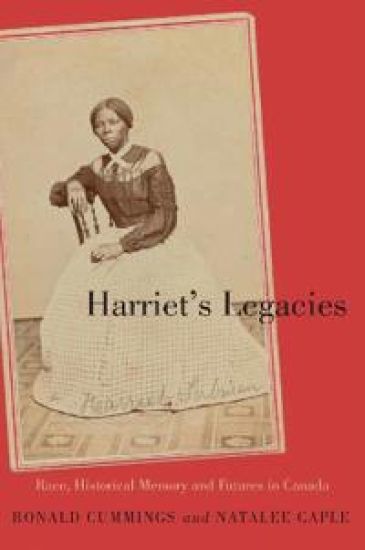
Harriet’s Legacies

Harriet’s Legacies

MCGILL-QUEEN'S UNIVERSITY PRESS
2022
sidottu
Historic freedom fighter and conductor of the Underground Railroad Harriet Tubman risked her life to ferry enslaved people from America to freedom in Canada. Her legacy instigates and orients this exploration of the history of Black lives and the future of collective struggle in Canada.Harriet’s Legacies recuperates the significance of Tubman’s time in Canada as more than just an interlude in her American narrative: it is a new point from which to think about Black diasporic mobilities, possibilities, and histories. Through essays and creative works this collection articulates new territory for Tubman in relation to the Black Atlantic archive, connecting her legacies of survival, freedom, and cultural expression within a transnational framework. Contributors take up the question of legacy in ways that remap discourses of genealogy and belonging, positioning Tubman as an important part of today’s freedom struggles. Integrating scholarship with creative and curatorial practices, the volume expands conversations about culture and expression in African Canadian life across art, literature, performance, politics, and public pedagogy.Considering questions of culture, community, and futures, Harriet’s Legacies explores what happened in the wake of Tubman’s legacy and situates Canada as a key part of that dialogue.
Harriet the Strongest Girl in the World

Harriet the Strongest Girl in the World

Ben Lerwill

Penguin Random House Children's UK
2023
nidottu
A vibrant, joyful, and powerful story about a little girl with a LOT of strength trying to find her place in the world.Harriet isn't just strong - she's the strongest girl in the whole world! And though her super-strength is mostly wonderful, it does make things like bouncing on trampolines, mixing cake batter, and putting the cap on the toothpaste a bit, well... tricky.So when the Seriously Strong Touring Circus comes to town, Harriet thinks she might POP with excitement to see other people just like her! Hans the Hairy and Betty Biceps show her that being strong should be celebrated - and when Muscleman Max prepares to break a world record, Harriet suddenly finds herself taking a starring role in the performance- one she could never have dreamed of...This humorous and empowering read features a brilliant cast of larger-than-life characters, and a heroine that you can't help but root for. A true celebration of strength, difference, and finding a place where you truly belong.
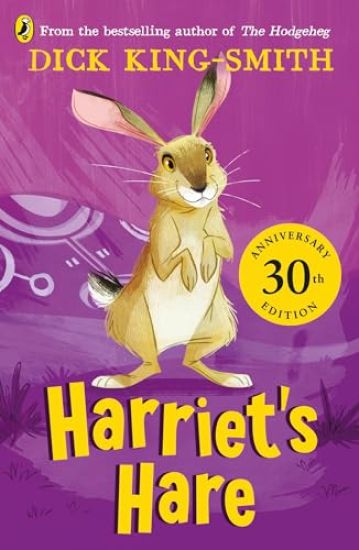
Harriet's Hare

Harriet's Hare

Dick King-Smith

Penguin Random House Children's UK
2024
pokkari
Puffin Classics: the definitive collection of timeless stories, for every child.Rediscover the Puffin Classics collection and bring the best-loved classics to a new generation - including this special 30th anniversary edition of Harriet's Hare.Hares don't talk. Everyone knows that. But the hare Harriet meets in a corn circle on Longhanger Farm is a very unusual hare.'He's a wizard, that's what he is. 'Wiz,' she said.' Wiz is a Partian, native to the distant planet Pars, and not only can he talk, he can speak any language, change into any shape, and even dance! Harriet and Wiz spend the summer galloping around the Farm together, but as his holiday on Earth comes to an end . . .Will Wiz want to go home?
Harriet Homes and The Celts Book of Spells
'Harriet, are you sure you left it here' asked her one and only friend Carole, 'because if you did then it's not here now, is it' 'Blind I'm not, so if it's not here then someone must have either borrowed it or we have a no-good thief in our midst, so who do you think that could be' was what Harriet wanted to know. So what was it and would they find it before they and the entire universe went boom-bang-boom.
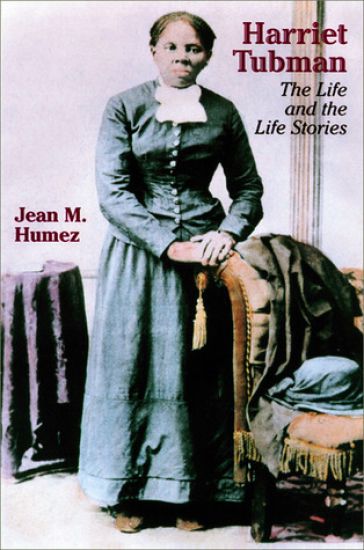
Harriet Tubman

Harriet Tubman

Jean Humez

University of Wisconsin Press
2005
nidottu
Harriet Tubman’s name is known world-wide and her exploits as a self-liberated Underground Railroad heroine are celebrated in children’s literature, film, and history books, yet no major biography of Tubman has appeared since 1943. Jean M. Humez’s comprehensive Harriet Tubman is both an important biographical overview based on extensive new research and a complete collection of the stories Tubman told about her life—a virtual autobiography culled by Humez from rare early publications and manuscript sources. This book will become a landmark resource for scholars, historians, and general readers interested in slavery, the Underground Railroad, the Civil War, and African American women.Born in slavery in Maryland in or around 1820, Tubman drew upon deep spiritual resources and covert antislavery networks when she escaped to the north in 1849. Vowing to liberate her entire family, she made repeated trips south during the 1850s and successfully guided dozens of fugitives to freedom. During the Civil War she was recruited to act as spy and scout with the Union army. After the war she settled in Auburn, New York, where she worked to support an extended family and in her later years founded a home for the indigent aged. Celebrated by her primarily white antislavery associates in a variety of private and public documents from the 1850s through the 1870s, she was rediscovered as a race heroine by woman suffragists and the African American women’s club movement in the early twentieth century. Her story was used as a key symbolic resource in education, institutional fundraising, and debates about the meaning of “race” throughout the twentieth century.Humez includes an extended discussion of Tubman’s work as a public performer of her own life history during the nearly sixty years she lived in the North. Drawing upon historiographical and literary discussion of the complex hybrid authorship of slave narrative literature, Humez analyzes the interactive dynamic between Tubman and her interviewers. Humez illustrates how Tubman, though unable to write, made major unrecognized contributions to the shaping of her own heroic myth by early biographers like Sarah Bradford. Selections of key documents illustrate how Tubman appeared to her contemporaries, and a comprehensive list of primary sources represents an important resource for scholars.
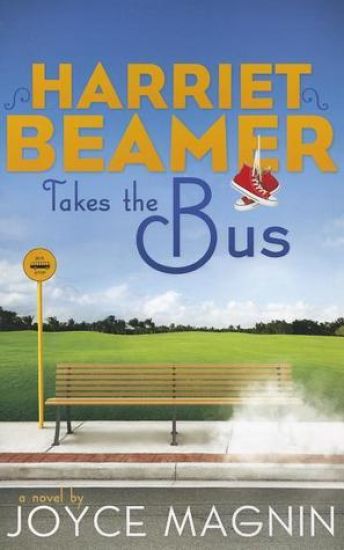
Harriet Beamer Takes the Bus

Harriet Beamer Takes the Bus

Joyce Magnin

Zondervan
2012
nidottu
Aging and recent widow Harriet Beamer insists she’s getting along fine with her dog Humphrey in Philadelphia … until she falls for the fourth time, injuring her ankle, and causing her son and daughter-in-law to cry foul. Insisting Harriet move in with them in California, they make a bet that her ankle is broken, and she foolishly promises to move if they’re right. Four x-rays later, Harriet’s ankle—and her heart—are broken. She packs up, ships her huge salt and pepper collection to California, and prepares to move away from the only life she knows. The only catch? She’s doing it her way. Just wait till her daughter-in-law hears Harriet will travel cross country only by public transportation and alternate means. What follows is a hilarious, heartwarming journey by train, metro bus, ferry, and motorcycle. Along the way, Harriet discovers that although her family thinks it’s time for her to be put out to pasture—God has a different plan.
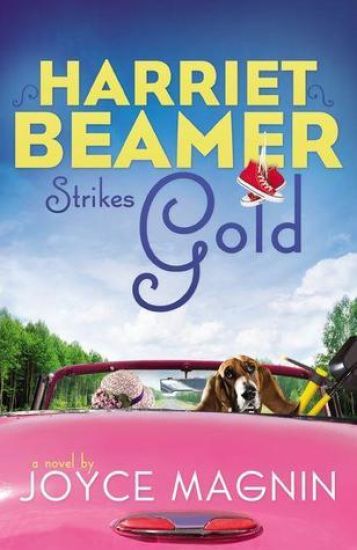
Harriet Beamer Strikes Gold

Harriet Beamer Strikes Gold

Joyce Magnin

Zondervan
2013
nidottu
After a whirlwind cross-country move, Harriet and her donut-loving basset hound, Humphrey, have settled into a new life in Grass Valley, California. When Harriet learns that she’s going to be a grandma for the first time and get a new suite with room for her salt-and-pepper shaker collection, she can’t wait for her best friend, Martha, to come visit so she can share her good news.But adventure is never far away when Harriet is around. After listening to the pleas of a desperate teen whose daddy needs money right away—and happens to have a gold mine to lease—Harriet falls hook, line, and sinker into the venture. Although she’s nervous about her investment, Harriet chooses to keep it a secret from her son, Henry, and his wife. She can only imagine what she’ll do if this turns out to be her ticket to a golden windfall.When suspicions arise, though, it becomes clear that Harriet may never see an ounce of gold. But will she continue to trust and risk losing everything? The fate of the young teen and a family emergency show Harriet where her true treasure lies.
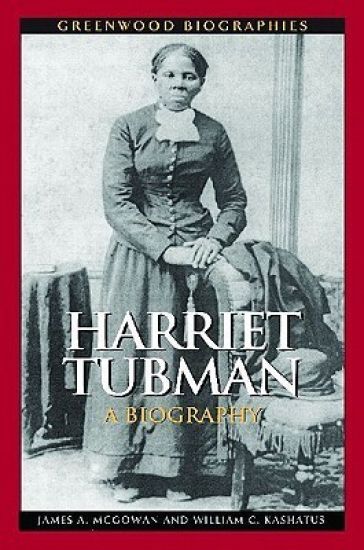
Harriet Tubman

Harriet Tubman

James A. McGowan; William C. Kashatus

Greenwood Press
2011
sidottu
This concise biography of Harriet Tubman, the African American abolitionist, explores her various roles as an Underground Railroad conductor, Civil War scout and nurse, and women's rights advocate.The legendary Moses of the Underground Railroad, Harriet Tubman was a fiery and tenacious abolitionist who organized and led African American military operations deep in the Confederacy. Harriet Tubman: A Biography relates the life story of this extraordinary woman, standing as a testament to her tenacity, drive, intelligence, and courage.In telling the remarkable story of Tubman's life, the biography examines her early years as Araminta Ross (her birth name), her escape from slavery, her activities as an Underground Railroad conductor, her involvement in the Civil War, and her role as a champion of women's rights. The book places its heroine in the broad context of her time and the movements in which she was involved, and the narrative shifts between the contextual and the personal to give the reader a strong understanding of Tubman as a woman who was shaped by, and helped to shape, the time in which she lived.
Harriet Tubman

Harriet Tubman

Catherine Clinton

Back Bay Books
2005
pokkari
A definitive full-scale biography of the legendary fugitive slave turned "conductor" on the Underground Railroad describes Tubman's youth in the antebellum South, her escape to Philadelphia, her successful efforts to liberate slaves, and her work as a scout, spy, and nurse for the Union Army during the Civil War. Reprint. 25,000 first printing.
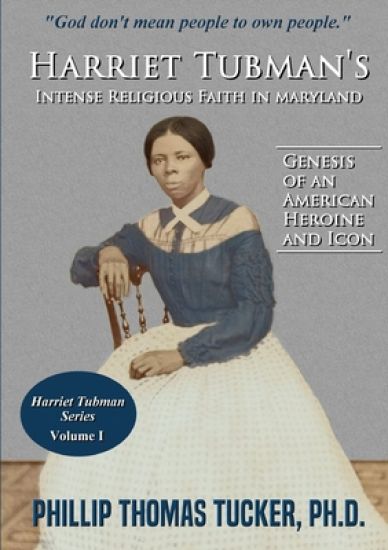
Harriet Tubman's Intense Religious Faith in Maryland
Harriet Tubman has gained iconic status as a true American heroine worthy of celebration today, not only in the United States, but also around the world. But many myths and legends have obscured this remarkable woman of courage and faith. Therefore, to truly understand the "Black Moses," it is now time to take a closer look at the real person, and this can best be achieved by exploring her religious life and experiences in Maryland, before she escaped slavery. This book is the first-ever volume dedicated to what was most important to Harriet Tubman, a freedom fighter and lover of liberty, and it motivated her to achieve herculean tasks that continue to be celebrated today, a powerful and intense religious faith.
Harriet Tubman's Revenge and a New Birth of Freedom
Famed freedom fighter and former leader of the Underground Railroad, Harriet Tubman truly came of age and reached her zenith during the Civil War years. And Tubman's peak during the Civil War years came when she set the stage and guided the bold Union raid up the Combahee River on June 2, 1863. This is the dramatic story of this courageous and remarkable woman who played a key role in one of the most audacious raids of the Civil War.