This night at the pub will be his last . . . A classic whodunit starring the “affable Scotland Yarder” (Publishers Weekly). Harry Dodd needs a ride home from the pub—but it’s not because he’s schnockered. He’s actually been stabbed. Unfortunately, no one realizes it until it’s too late. Who would want to kill such a well-liked fellow? Inspector Littlejohn is called in, and his investigation reveals a recent woeful turn in Dodd’s life, the ambitious family that cast him out, and a cesspit of jealousy, greed, and tawdry secrets. Then another body turns up, and another . . . Praise for the Inspector Littlejohn mysteries “Solid and ingenious.” —The New York Times “Littlejohn achieves his goal spectacularly and successfully.” —Kirkus Reviews “When you get a George Bellairs story you get something worth reading.” —Norfolk Ledger-Dispatch
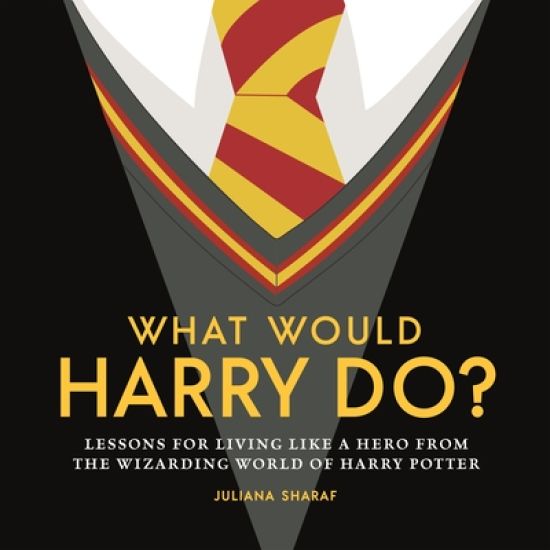
For 25 years, since first being published in 1998, Harry Potter and the rest of his Wizarding World companions have presented us with high drama, action, life, death and even a little romance. The things that Harry and his friends experienced, as well as the lessons taught to them by allies, mentors and even opponents, can give us all a little guidance when it comes to addressing life's everyday challenges, both big and small. Presenting more than 40 life lessons inspired by the Wizarding World series, this book addresses matters such reinventing oneself, believing that you can achieve victory over unimaginable odds, having faith in the face of crisis, learning to let your friends help, venturing into parts unknown without fear and much more. Readers will also find quotes and images that inspire them to take heart and comfort no matter what they may face. With references to the books, films, stage play and more, What Would Harry Do? provides answers to the questions we all face with magical insight and wizardly wisdom.
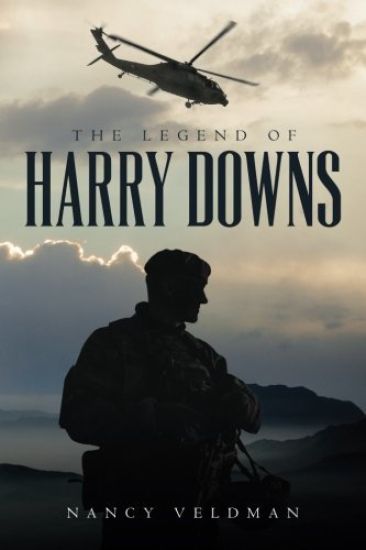
Harry Downs was an unspoken hero. On the outside he was tall, dark, and handsome. But he was mostly a wounded warrior who just couldn't put the sword down. Called at an early age to be a Marine, he and his best friend, Max McIntyre, were versed in counter intel and were two of the best snipers in the Marines. Harry was basically blown to smithereens on a mission, and the doctors basically pasted him back together. With bold determination and a grit that no one could explain, Harry overcame his disabilities and trained to return to war. On the shirttail of that dream, Harry discovered a lost love from his past on Facebook one evening, and danced her back into a relationship that held it's own dark secrets. War has a grip on those who serve. There lies the conundrum to this love story. A modern day David and Goliath, only this time there was no slingshot. Every emotion you have will be exploited in the pages of this book. But you still won't want it to come to an end.
Because he grew up in a Navy family, Train was imbued from childhood with the goal of attending the Naval Academy. His career as a midshipman included playing center on the football team that played to a notable tie against West Point in 1948. After graduation in 1949, Train served as a junior officer in the destroyer USS Harold J. Ellison (DD-864) in the Atlantic and Mediterranean and in the destroyer USS Harry E. Hubbard (DD-748), which was reactivated for Korean War service. After submarine school in 1951, Train served in the submarine USS Wahoo (SS-565), whose skippers, Dennis Wilkinson and Bill Anderson, both later commanded the USS Nautilus (SSN-571). After duty in 1957-58 on the Joint Staff, Train was executive officer of the submarine USS Entemedor (SS-340) and submarine placement officer in the Bureau of Naval Personnel. In 1962-64, after resisting Admiral Hyman G. Rickover's efforts to draft him into the nuclear program, he was commanding officer of the diesel submarine USS Barbel (SS-580). After that he was administrative aide to Secretary of the Navy Paul Nitze and developed a close working relationship with Nitze's EA, Elmo Zumwalt. Subsequently, Train commanded the guided missile destroyer USS Conyngham (DDG-17) in the Med, served briefly on the Second Fleet staff, and then was executive assistant to Admiral Thomas Moorer during Moorer's duty as CNO and Chairman of the Joint Chiefs of Staff. As a flag officer, Train commanded Cruiser-Destroyer Flotilla Eight, headed the systems analysis division of OpNav, and was involved in Incidents at Sea negotiations with the Soviet Union. After service in 1974-76 as director of the Joint Staff, he spent two years as Commander Sixth Fleet, and then served from 1978 to 1982 as Supreme Allied Commander Atlantic; Commander in Chief, Atlantic Command; and Commander in Chief, U.S. Atlantic Fleet. Admiral Train's oral history also includes his analysis of the 1982 Falklands War and discussion of his activities following retirement from the Navy, from hiking the Appalachian Trail to running his own defense consulting firm to serving in a variety of nonprofit pursuits.
The first volume covers career up to assignment as CinCPac in 1958. Served five years in battleships and destroyers. In 1929 was designated naval aviator and served with Scouting Squadron Three in the Lexington. Was nearby when Pearl Harbor was attacked. Transferred to the Saratoga and as air group commander participated in first offensive action of the war at Guadalcanal. After a year in Moscow as a member of the U.S. Military Mission to the Soviet Union, returned to the Pacific in command of the escort aircraft carrier USS Chenango (CVE-28) and participated in the Okinawa campaign and occupation of Japan. After war served on CNO's staff; commanded the Franklin D. Roosevelt; was commander, Middle East Force in Persian Gulf; Carrier Division 15, Carrier Division Three, and the Sixth Fleet. Upon promotion to four stars, he was Vice Chief of Naval Operations The second volume covers Admiral Felt's recollections during the years 1958-1964 when he served as Commander in Chief, Pacific. Among the subjects discussed are: Chinese bombardment of Quemoy and Matsu; goodwill trips in the Far East; dealings with Military Assistance Groups; strategic location of troops in the Pacific; early involvement in Vietnam; establishment of joint strategic planning staff at SAC headquarters in Omaha; SEATO; political upheaval in Laos, 1959-1961; Taiwan Defense Command; relationship of U.S. and Nationalist Chinese in Taiwan; U.S. military assistance in the Philippines. Some personal notes pertaining to Admiral Felt's command in the Pacific and to developments in Vietnam are in the appendices.
The first volume covers career up to assignment as CinCPac in 1958. Served five years in battleships and destroyers. In 1929 was designated naval aviator and served with Scouting Squadron Three in the Lexington. Was nearby when Pearl Harbor was attacked. Transferred to the Saratoga and as air group commander participated in first offensive action of the war at Guadalcanal. After a year in Moscow as a member of the U.S. Military Mission to the Soviet Union, returned to the Pacific in command of the escort aircraft carrier USS Chenango (CVE-28) and participated in the Okinawa campaign and occupation of Japan. After war served on CNO's staff; commanded the Franklin D. Roosevelt; was commander, Middle East Force in Persian Gulf; Carrier Division 15, Carrier Division Three, and the Sixth Fleet. Upon promotion to four stars, he was Vice Chief of Naval Operations The second volume covers Admiral Felt's recollections during the years 1958-1964 when he served as Commander in Chief, Pacific. Among the subjects discussed are: Chinese bombardment of Quemoy and Matsu; goodwill trips in the Far East; dealings with Military Assistance Groups; strategic location of troops in the Pacific; early involvement in Vietnam; establishment of joint strategic planning staff at SAC headquarters in Omaha; SEATO; political upheaval in Laos, 1959-1961; Taiwan Defense Command; relationship of U.S. and Nationalist Chinese in Taiwan; U.S. military assistance in the Philippines. Some personal notes pertaining to Admiral Felt's command in the Pacific and to developments in Vietnam are in the appendices.
The first volume covers career up to assignment as CinCPac in 1958. Served five years in battleships and destroyers. In 1929 was designated naval aviator and served with Scouting Squadron Three in the Lexington. Was nearby when Pearl Harbor was attacked. Transferred to the Saratoga and as air group commander participated in first offensive action of the war at Guadalcanal. After a year in Moscow as a member of the U.S. Military Mission to the Soviet Union, returned to the Pacific in command of the escort aircraft carrier USS Chenango (CVE-28) and participated in the Okinawa campaign and occupation of Japan. After war served on CNO's staff; commanded the Franklin D. Roosevelt; was commander, Middle East Force in Persian Gulf; Carrier Division 15, Carrier Division Three, and the Sixth Fleet. Upon promotion to four stars, he was Vice Chief of Naval Operations The second volume covers Admiral Felt's recollections during the years 1958-1964 when he served as Commander in Chief, Pacific. Among the subjects discussed are: Chinese bombardment of Quemoy and Matsu; goodwill trips in the Far East; dealings with Military Assistance Groups; strategic location of troops in the Pacific; early involvement in Vietnam; establishment of joint strategic planning staff at SAC headquarters in Omaha; SEATO; political upheaval in Laos, 1959-1961; Taiwan Defense Command; relationship of U.S. and Nationalist Chinese in Taiwan; U.S. military assistance in the Philippines. Some personal notes pertaining to Admiral Felt's command in the Pacific and to developments in Vietnam are in the appendices.
The first volume covers career up to assignment as CinCPac in 1958. Served five years in battleships and destroyers. In 1929 was designated naval aviator and served with Scouting Squadron Three in the Lexington. Was nearby when Pearl Harbor was attacked. Transferred to the Saratoga and as air group commander participated in first offensive action of the war at Guadalcanal. After a year in Moscow as a member of the U.S. Military Mission to the Soviet Union, returned to the Pacific in command of the escort aircraft carrier USS Chenango (CVE-28) and participated in the Okinawa campaign and occupation of Japan. After war served on CNO's staff; commanded the Franklin D. Roosevelt; was commander, Middle East Force in Persian Gulf; Carrier Division 15, Carrier Division Three, and the Sixth Fleet. Upon promotion to four stars, he was Vice Chief of Naval Operations The second volume covers Admiral Felt's recollections during the years 1958-1964 when he served as Commander in Chief, Pacific. Among the subjects discussed are: Chinese bombardment of Quemoy and Matsu; goodwill trips in the Far East; dealings with Military Assistance Groups; strategic location of troops in the Pacific; early involvement in Vietnam; establishment of joint strategic planning staff at SAC headquarters in Omaha; SEATO; political upheaval in Laos, 1959-1961; Taiwan Defense Command; relationship of U.S. and Nationalist Chinese in Taiwan; U.S. military assistance in the Philippines. Some personal notes pertaining to Admiral Felt's command in the Pacific and to developments in Vietnam are in the appendices.
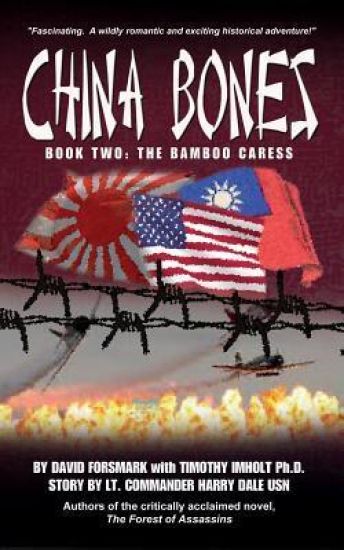
Critics Praise the Novels of Forsmark and Imholt: A unique combination of startling fact and gripping fiction...Must-read on every page." ----THOMAS FLEMING: Author of A Disease in the Public Mind: A New Understanding of the Civil War A great read, a novel as good as the best journalism, with vivid and accurate details driving a tale of danger and deception and betrayal .... This book doesn't just feel researched, it feels lived. --ROBERT FERRIGNO, NY Times best-selling novelist, Prayers for the Assassin As real as fiction gets. A non-stop ride into combat told with perfection. --BOB HAMER, veteran FBI undercover agent and the author of The Last Undercover An excellent Historical Novel, an action tale and a mystery...a book that you will enjoy from cover to cover. PETER INGEMI--- Datechguy.com I enjoyed every minute of it. Both entertaining and enlightening... -- CHRIS QUEEN, PJ Media A real page-turner MARK TAPSON, Frontpage Magazine CHINA BONES is the story of a young American Marine in China through the Sino-Japanese War, World War II and the ultimate fall of Shanghai to the Communists in 1949. Zack Cameron finds love and fortune in Shanghai, loses his fortune, and survives a brutal Japanese prison camp only to face even more danger. In a race against time, Zack is forced to put together a desperate treasure hunt amid the confusion of civil war and the Communist takeover of China. CHINA BONES is also the story of the great city of Shanghai. It begins with the old China - the International Settlement where allies and enemies ruled side by side in uneasy tension, while the very rich, the very poor, soldiers, diplomats, business tycoons and gunboat diplomacy. CHINA BONES guides readers through how the city suffered under a brutal occupation by the invading Japanese, only to then turn herself over to perhaps the most brutal dictatorship the world has ever known. Equal parts thrilling historical adventure, passionate wartime romance, and gripping war story, CHINA BONES will appeal to fans of the adventure novels of Wilbur Smith, the military novels of WEB Griffin, as well as those fascinated by the examination of China and Chinese life in the novels of Amy Tan.