

Kirjahaku
Etsi kirjoja tekijän nimen, kirjan nimen tai ISBN:n perusteella.
1000 tulosta hakusanalla Helen Fielding

Helen
VDM Publishing House
2010
nidottu
Observera att förlaget som ger ut denna produkt baserar innehållet i sina produkter på fria källor som Wikipedia. Boken är med stor sannolikhet endast ett utdrag ur dessa informationskällor, alltså inte en vanlig bok i den bemärkelsen.

National Geographic Primary Readers is a high-interest series of beginning reading books that have been developed in consultation with education experts. The books pair magnificent National Geographic photographs with lively text by skilled children’s book authors across four reading levels. Readers will be inspired by the amazing story of Helen Keller in this informative biography. They will learn all about her life, her achievements, and the challenges she faced along the way. Level 3: Becoming independentBest suited to kids who are ready for complex sentences and more challenging vocabulary, but still draw on occasional support from adults. They are ideal for readers of Purple and Gold books.

Learn about the inspiring life of Helen Keller in this early reader biography.When Helen Keller was a baby, she became sick and lost her ability to see and hear. Although many people doubted her ability to persevere, Helen did not let any obstacle stop her from achieving many things in her amazing life.This book covers some of the well-known and inspiring milestones of Keller’s life—it’s a great supplement for book reports on this iconic historical figure. It also covers some of the lesser-known fun facts—did you know that Helen Keller was a long-time dog lover?This biography reader includes a timeline, historical photographs, and information about Braille. Helen Keller: The World at her Fingertips is a Level Two I Can Read, geared for kids who read on their own but still need a little help. Whether shared at home or in a classroom, the engaging stories, longer sentences, and language play of Level Two books are proven to help kids take their next steps toward reading success.

Acclaimed author Margaret George tells the story of the legendary Greek woman whose face "launched a thousand ships" in this New York Times bestseller. The Trojan War, fought nearly twelve hundred years before the birth of Christ, and recounted in Homer's Iliad, continues to haunt us because of its origins: one woman's beauty, a visiting prince's passion, and a love that ended in tragedy. Laden with doom, yet surprising in its moments of innocence and beauty, Helen of Troy is an exquisite page-turner with a cast of irresistible, legendary characters--Odysseus, Hector, Achilles, Menelaus, Priam, Clytemnestra, Agamemnon, as well as Helen and Paris themselves. With a wealth of material that reproduces the Age of Bronze in all its glory, it brings to life a war that we have all learned about but never before experienced.

The astonishing and imaginative debut novel about Helen Keller and the man she loved What comes to mind when you think of Helen Keller? Is it the deaf-mute wild child at the water pump outside her Tuscumbia, Alabama, home portrayed in The Miracle Worker or the adult activist for the rights of the disabled and women, the socialist who vehemently opposed war? Rosie Sultan's debut novel imagines an intimate part of Keller's life she rarely spoke or wrote about: her one and only love affair. Peter Fagan, a reporter from Boston, steps in as her secretary when her companion Annie Sullivan falls ill. The world this opens up for her is not the stuff of grade school biographies. Their affair meets with stern disapproval from Annie and from Helen's mother, and when the lovers plot to elope, Helen is trapped between their expectations and her innermost desires. Sultan's courageous novel insists on Helen's right to desire, to human frailty--to be fully and completely alive.
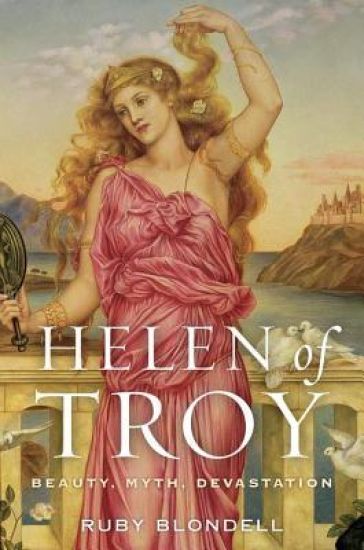
Ancient Greek culture is pervaded by a profound ambivalence regarding female beauty. It is an awe-inspiring, supremely desirable gift from the gods, essential to the perpetuation of a man's name through reproduction; yet it also grants women terrifying power over men, posing a threat inseparable from its allure. The myth of Helen is the central site in which the ancient Greeks expressed and reworked their culture's anxieties about erotic desire. Despite the passage of three millennia, contemporary culture remains almost obsessively preoccupied with all the power and danger of female beauty and sexuality that Helen still represents. Yet Helen, the embodiment of these concerns for our purported cultural ancestors, has been little studied from this perspective. Such issues are also central to contemporary feminist thought. Helen of Troy engages with the ancient origins of the persistent anxiety about female beauty, focusing on this key figure from ancient Greek culture in a way that both extends our understanding of that culture and provides a useful perspective for reconsidering aspects of our own. Moving from Homer and Hesiod to Sappho, Aeschylus, and Euripides, Ruby Blondell offers a fresh examination of the paradoxes and ambiguities that Helen embodies. In addition to literary sources, Blondell considers the archaeological record, which contains evidence of Helen's role as a cult figure, worshipped by maidens and newlyweds. The result is a compelling new interpretation of this alluring figure.
Ancient Greek culture is pervaded by a profound ambivalence regarding female beauty. It is an awe-inspiring, supremely desirable gift from the gods, essential to the perpetuation of a man's name through reproduction; yet it also grants women terrifying power over men, posing a threat inseparable from its allure. The myth of Helen is the central site in which the ancient Greeks expressed and reworked their culture's anxieties about erotic desire. Despite the passage of three millennia, contemporary culture remains almost obsessively preoccupied with all the power and danger of female beauty and sexuality that Helen still represents. Yet Helen, the embodiment of these concerns for our purported cultural ancestors, has been little studied from this perspective. Such issues are also central to contemporary feminist thought. Helen of Troy engages with the ancient origins of the persistent anxiety about female beauty, focusing on this key figure from ancient Greek culture in a way that both extends our understanding of that culture and provides a useful perspective for reconsidering aspects of our own. Moving from Homer and Hesiod to Sappho, Aeschylus, and Euripides, Ruby Blondell offers a fresh examination of the paradoxes and ambiguities that Helen embodies. In addition to literary sources, Blondell considers the archaeological record, which contains evidence of Helen's role as a cult figure, worshipped by maidens and newlyweds. The result is a compelling new interpretation of this alluring figure.

This biography of Helen Keller tells the story of the controversial and turbulent relationship between Helen and her teacher, Annie Sullivan. It chronicles Helens doomed love affair, her struggles to earn a living, her triumphs at Radcliffe College and her work as an advocate for the disabled. Helen Keller has been venerated as a saint or damned as a fraud, this book shows her as a beautiful, intelligent, high-strung and passionate woman whose life was transformed not only by her disabilities but also by the people on whose help and friendship she relied.

This reference traces in fascinating detail the exceptionally long career of Helen Hayes, the First Lady of the American Theatre. In addition to a biography of the actress, which charts the development of her unique talent and the successes and tragedies of her personal life, the book supplies a chronology which provides quick access to the major events which shaped both her character and her career. In sections devoted individually to Stage, Film, Television, and Radio, the actress' work in each of these media is charted. Cast lists, plot synopses, reviews, and commentary bring vivid immediacy to these records. Additional material in the Appendices provides information on her aural/video recordings as well as her stunning list of Awards and Honors. Included is the program from a gala salute to her 50th Anniversary on the stage. A detailed index concludes the work.

This is the first book-length study of Helen Keller's public speaking. It contains rhetorical analysis about how a person who was sightless but seen, deaf but heard learned to communicate, and how she gave public speeches for nearly 80 years inspiring others with her vision for a better tomorrow. The analysis, texts of various speeches on a broad range of subjects, a chronology of her speeches, and bibliography will be helpful to students and teachers of speech and all those interested in Helen Keller.
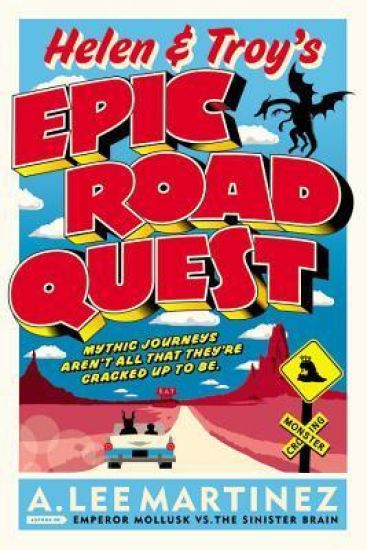
Witness the epic battle of the cyclops Visit the endangered dragon preserve Please, no slaying. Solve the mystery of The Mystery Cottage, if you dare Buy some knick knacks from The Fates They might come in handy later. On a road trip across an enchanted America, Helen and Troy will discover all this and more. If the curse placed upon them by an ancient god doesn't kill them or the pack of reluctant orc assassins don't catch up to them, Helen and Troy might reach the end their journey in one piece, where they might just end up destroying the world. Or at least a state or two. A minotaur girl, an all-American boy, a three-legged dog, and a classic car are on the road to adventure, where every exit leads to adventure. Whether they like it or not.

Bestselling author Margaret George brings to life the beguiling tale of Helen of Troy, a pivotal figure in Greek mythology whose beauty ignited the fabled Trojan War.George uncovers the complexity of Helen's character, as her mortal and divine identities intertwined – flesh and blood certainly, but also immortal, as the daughter of Zeus. Her beauty, is so overwhelming and dangerous that, as a child, she is protected from seeing her reflection. Both enchanting and hazardous, it garnered her the attention of powerful men, leading to unforeseen alliances and monumental adversities.Kings and princes compete for her hand in marriage. When she falls for Paris of Troy it is assumed that he has taken her by force, when her actions are far more complex. But so the Trojan War begins – the most pivotal event in the history of ancient Greece.Exploiting meticulous research, Helen of Troy is an intoxicating, tragic and passionate saga of the individuals who shaped ancient Greek history.‘An epic novel . . . If only history lessons had been like this’ – Cosmopolitan

From the age of a year and a half, Helen Keller could not hear. She could not see, and she did not speak. She lived in a dark and lonely world--until Annie Sullivan came to teach her. Annie traced letters and words in Helen's hand, and made Helen realize she could "talk" to people. Eager to make up for lost time, Helen threw herself into her studies. She decided to teach others about the special training deaf and blind children need. Helen traveled all over the globe and raised money to start up schools for deaf and blind children. Her courage and her determination to help others conquer the odds against them earned her the respect and admiration of the world.

Helen of Troy's story is well known. Hers was the "face that launched a thousand ships", started a ten-year war and brought about Troy's destruction. But Helen had a sister.In a world where women were submissive, she ruled.In a world where women were loyal, she was unfaithful.In a world where honour and blood feuds abound, she exacted the ultimate revenge.Born into the Royal House of Sparta, her courageous spirit, passionate love and lust for life make her a unique heroine. Her character and her choices have fascinated people for centuries. Her story is one of betrayal, murder, adultery and revenge, set in ancient Greece at the time of the Trojan war.She is Clytemnestra, High Queen of Mycenae.
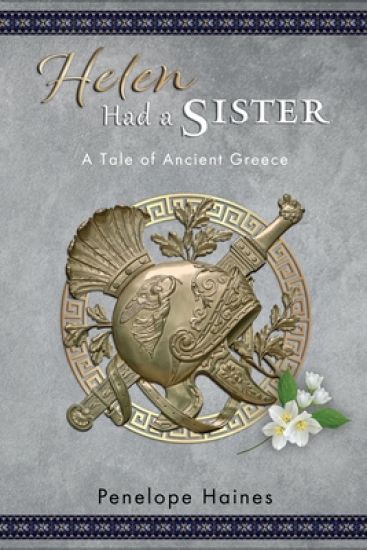
Helen of Troy's story is well known. Hers was the "face that launched a thousand ships", started a ten-year war and brought about Troy's destruction. But Helen had a sister. In a world where women were submissive, she ruled.In a world where women were loyal, she was unfaithful.In a world where honour and blood feuds abound, she exacted theultimate revenge. She is Clytemnestra, High Queen of Mycenae.

The first ever critical biography of Helen Chadwick, who died tragically young but is now revered as a pioneering feminist artist. Helen Chadwick (1953–1996) embraced the sensuous aspects of the natural world, breaking taboos of the ‘traditional’ or ‘beautiful’. Her sculpture, performance and photography is radical, provocative and often steeped in humour, and employs unusual, sometimes grotesque materials – bodily fluids, meat, flowers, chocolate and compost among them. She quickly became a leading figure amongst Britain’s post-war avant-garde, becoming one of the first women to be nominated for the Turner Prize. A dedicated teacher, she mentored the majority of the Young British Artists and is now known as the ‘mother of the YBAs’. She was also involved in the artistic community at Beck Road, Hackney, whose residents included Maureen Paley, Richard Deacon and Genesis P-Orridge. Although she was widely exhibited during her lifetime, attention to Chadwick’s work declined following her unexpected death in 1996, and it is only relatively recently that the significance of her work has been acknowledged afresh. Coinciding with a major touring retrospective, this publication spans the breadth of her practice, from her renowned MA degree show In the Kitchen (1977) through to her seminal Piss Flowers (1991–2). Merging art and life, with a focus on Chadwick’s interdisciplinary interests and engagement with education, music and politics, as well as an in-depth study of her art and ideas, the book is a fitting tribute to her vital impact on social and cultural history.

Helen Levitt
Joshua Chang; Joel Sternfeld; Elizabeth Gand; Lauren Graves; Monica Bravo; Freya Field-Donovan; Anne Bertrand
THAMES HUDSON LTD
2025
sidottu