Kirjojen hintavertailu. Mukana 12 390 323 kirjaa ja 12 kauppaa.

Kirjahaku

Etsi kirjoja tekijän nimen, kirjan nimen tai ISBN:n perusteella.

1000 tulosta hakusanalla Helene Cixous

Abstracts and Brief Chronicles of the Time
Hélène Cixous has dreamed for years of "The Book-I-Don't-Write," but each time she approaches it, it withdraws. The-Book-I-Don't-Write is always just out of reach. When Jacques Derrida told her the Book would get written one day, but differently, Cixous tells us she would see it "shining behind a veil, its indecipherable back, upright on heaven's bookshelf, its elegant silhouette, utterly foreign, utterly familiar, of future revenant. I've always thought it would come, naturally. When? After all my deaths? Just before, or just after, the last of my deaths."One day, when she is no longer expecting it, the Book turns up: "Quickly, without taking my eyes off it, I copied it down, staying scrupulously close to its notations, its rhythms, its moments of silence. I found it. Just as you see it." She calls it Los, meaning "loose, detached" in German, her mother's tongue. Or Los like Carlos, the Latin American friend whose unexpected death in May 2014 takes her back to a life they shared and a time the Book will reconstitute in the present, abolishing time: "Suddenly, that morning, I saw the universe of The-Book-I-Don't-Write: it is an infinity of presents."Los, A Chapter is a marvelous exploration of time and relationships. It reimagines scenes from Paris in the late sixties: its cafés, its debates, its political turmoil. Both playful and serious, it is a book in a long line of novels ? from Balzac to Proust ? that create worlds both philosophical and concrete. In Los a lost time is regained.
Abstracts and Brief Chronicles of the Time
Hélène Cixous has dreamed for years of "The Book-I-Don't-Write," but each time she approaches it, it withdraws. The-Book-I-Don't-Write is always just out of reach. When Jacques Derrida told her the Book would get written one day, but differently, Cixous tells us she would see it "shining behind a veil, its indecipherable back, upright on heaven's bookshelf, its elegant silhouette, utterly foreign, utterly familiar, of future revenant. I've always thought it would come, naturally. When? After all my deaths? Just before, or just after, the last of my deaths."One day, when she is no longer expecting it, the Book turns up: "Quickly, without taking my eyes off it, I copied it down, staying scrupulously close to its notations, its rhythms, its moments of silence. I found it. Just as you see it." She calls it Los, meaning "loose, detached" in German, her mother's tongue. Or Los like Carlos, the Latin American friend whose unexpected death in May 2014 takes her back to a life they shared and a time the Book will reconstitute in the present, abolishing time: "Suddenly, that morning, I saw the universe of The-Book-I-Don't-Write: it is an infinity of presents."Los, A Chapter is a marvelous exploration of time and relationships. It reimagines scenes from Paris in the late sixties: its cafés, its debates, its political turmoil. Both playful and serious, it is a book in a long line of novels ? from Balzac to Proust ? that create worlds both philosophical and concrete. In Los a lost time is regained.
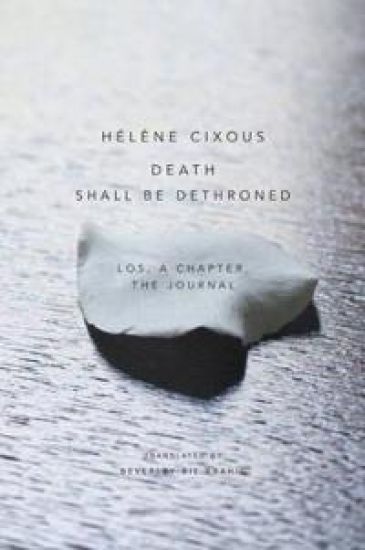
Death Shall Be Dethroned

Death Shall Be Dethroned

Hélène Cixous

Polity Press
2016
sidottu
Death Shall Be Dethroned is the “shadow book” of Los, a Chapter, Hélène Cixous tells us. It came along after Los, but it was always there "hidden" in her notebooks, in the Beethoven notebook, say, the one Jacques Derrida gave her. But when it tapped at the window, she ignored it until the day she had to let it in. This is just of one the enigmas Death explores as it probes an old relationship between the narrator and “Carlos.” Another is her discovery on the Internet that Carlos’s archives were at Princeton, and that the archive containing their correspondence was closed to the public: “Bluebeard’s closet. The fruit on the tree of Good and Evil. You shall not open.” Death Shall Be Dethroned is the logbook of Los, a Chapter. It owes its life to the death of a lover.
Death Shall Be Dethroned

Death Shall Be Dethroned

Hélène Cixous

Polity Press
2016
nidottu
Death Shall Be Dethroned is the “shadow book” of Los, a Chapter, Hélène Cixous tells us. It came along after Los, but it was always there "hidden" in her notebooks, in the Beethoven notebook, say, the one Jacques Derrida gave her. But when it tapped at the window, she ignored it until the day she had to let it in. This is just of one the enigmas Death explores as it probes an old relationship between the narrator and “Carlos.” Another is her discovery on the Internet that Carlos’s archives were at Princeton, and that the archive containing their correspondence was closed to the public: “Bluebeard’s closet. The fruit on the tree of Good and Evil. You shall not open.” Death Shall Be Dethroned is the logbook of Los, a Chapter. It owes its life to the death of a lover.
Manhattan

Manhattan

Hélène Cixous

FORDHAM UNIVERSITY PRESS
2023
pokkari
Manhattan is the tale of a young French scholar who travels to the United States in 1965 on a Fulbright Fellowship to consult the manuscripts of beloved authors. In Yale University's Beinecke Library, tantalized by the conversational and epistolary brilliance of a fellow researcher, she is lured into a picaresque and tragic adventure. Meanwhile, back in France, her children and no-nonsense mother await her return. A young European intellectual's first contact with America and the city of New York are the background of this story. The experience of Manhattan haunts this labyrinth of a book as, over a period of thirty-five years, its narrator visits and revisits Central Park and a half-buried squirrel, the Statue of Liberty and a never again to be found hotel in the vicinity of Morningside Heights: a journey into memory in which everything is never the same. Traveling from library to library, France to the United States, Shakespeare to Kafka to Joyce, Manhattan deploys with gusto all the techniques for which Cixous's fiction and essays are known: rapid juxtapositions of time and place, narrative and description, analysis and philosophical reflection. It investigates subjects Cixous has spent her life probing: reading, writing, and the "omnipotence-other" seductions of literature; a family's flight from Nazi Germany and postcolonial Algeria; childhood, motherhood, and, not least, the strange experience of falling in love with a counterfeit genius.
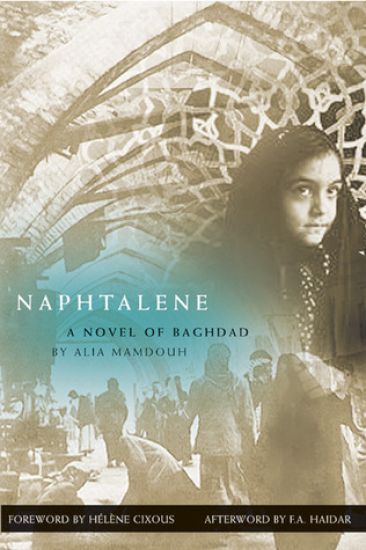
Naphtalene

Naphtalene

Helene Cixous

Feminist Press at The City University of New York
2006
nidottu
"This first novel by an Iraqi woman to be published in English in the United States is a hallucinatory incantation...an ode to a city...(with) its private courtyards and public baths where the women in Huda's life rage and pray and love and scream."--"Ms. Magazine"Now in paperback, "Naphtalene" captures a fierce and defiant young girl as she struggles to form her identity in 1950s Baghdad amid a world of unfulfilled women and family tragedies.Iraqi exile Alia Mamdouh is a journalist, essayist, and novelist living in Paris who received the Naguib Mahfouz Prize for Literature in 2004.
Rêvoir

Rêvoir

Hélène Cixous

SEAGULL BOOKS LONDON LTD
2024
sidottu
A genre-defying account of confinement and its literary echoes through history. As the pandemic sweeps through Paris in March 2020, the writer HC faces a choice: stay in Paris or flee to the countryside? The weight of historical responses bears down on her—those of her ancestors and Jewish writers during moments of persecution. Still uncertain, she flees to the country at the last moment, with her cats and her daughter, with her diaries and notebooks. What will she do here? Write? What will she write about? Can she write about the experience of being confined? She will write about her cats; every day she will observe their lives and take notes about how they cope with being housebound, and later, in the spring, with the outdoors. Thucydides, Defoe, Camus, Kafka—she will compare her experiences with those of others who have been confined by malady or persecution. She will write of her mother, who fled impending disaster on many occasions and always kept a suitcase ready. She too will endure. The important thing is to have a good death, surrounded by those she loves, not locked down in a hospital.
Mdeilmm

Mdeilmm

Hélène Cixous

SEAGULL BOOKS LONDON LTD
2025
sidottu
Weaving together history, literature, and personal experience, this recent book from a master of literature crafts a mesmerizing exploration of language, loss, and the enduring power of the spirit world. The strange word “Mdeilmm” was reported to have been uttered by the spirit of Shakespeare when called up during a séance in 1854 at the instigation of the French poet Victor Hugo. Hugo was then living in exile on the island of Jersey where he took part in several such séances. Hélène Cixous weaves this scene into a rich tapestry that draws from many corners of her world, both real and fictional: Dostoevsky’s Idiot, Hugo’s Last Day of a Condemned Man, Poe’s story “The Gold Bug,” but also film footage of the assassination of Itzhak Rabin and many layers of memories of her Algerian childhood. Transcribed communications from spirits of the departed, her father and grandfather among them, provide a fascinating glimpse into past spiritual practices. Cixous’s unique narrative style enhances the book’s enchanting quality, ensuring that readers are not only engaged by the content but also captivated by the beauty of the prose. Meanwhile, the reader falls under the spell of the author’s incomparable “mole speech,” the language in which poets communicate.
1938, netter

1938, netter

Hélène Cixous

Solum Bokvennen
2021
sidottu
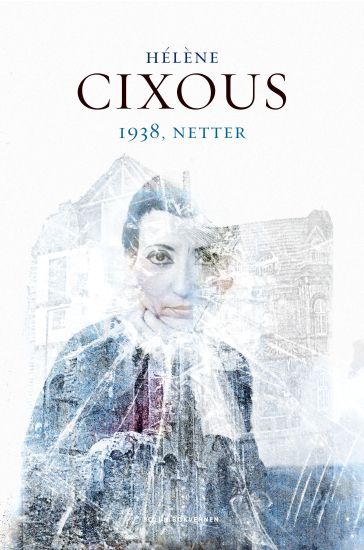
I «1938, netter» returnerer H. Cixous til Osnabrück, der morens familie bodde. Hun forsøker å forstå hvorfor bestemoren og brødrene forble der i 1938 selv om de visste at jødene var i fare. I sin søken følger hun i fotsporene til Siegfried K, en venn av moren som på krystallnatten i 1938 var 25 år gammel og hadde akkurat levert en doktorgrad i medisin. Hélène Cixous (f. 1937) er en hyllet fransk forfatter, feminist, poet, litteraturviter, dramatiker, professor og filosof. En rekke av hennes bøker er utgitt på norsk.
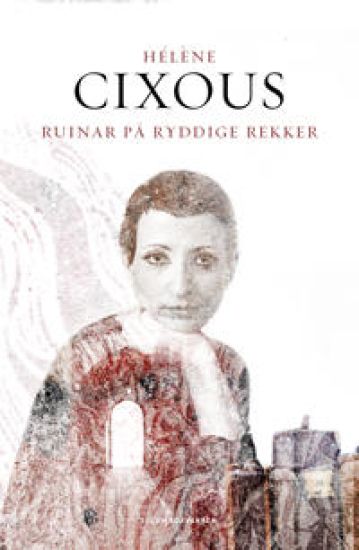
Ruinar på ryddige rekker

Ruinar på ryddige rekker

Hélène Cixous

Solum Bokvennen
2023
sidottu
- Kvar skal vi? Til byen Osnabrück. Og vi skal til mange tider, til fjerne og nyare fortider og vi skal til samtida, ofte samstundes. Osnabrück er byen til Ève, mor til forteljaren. Denne mora døydde i 2013, 103 år gamal, men her er ho like sprek og lett til beins som ho alltid har vore, det er ho som viser veg. «Medan vi går over plassen framfor Katedralen med stadig raskare steg, ser vi bilar som minnest at dei har vore hestar.» Dei levande minna er både knytte til familien og til det kollektive. I alle epokar er det forfølgjing og flukt, fengsel og tortur. Her er det heksejakt på 1500-talet, jødar som blir verande eller flyktar på 1930-talet og Ève som blir fenglsa i Algerie i 1962. Erfaringar, minne, levde liv. I denne teksten blir håp og opningar sett opp mot hat og øydelegging. Osnabrück er byen der freden i Westfahlen blei underskriven i 1648, ein fredsavtale som avslutta den gruvsame 30-årskrigen og gav håp for det moderne Europa. I same by blei synagoga fullstendig øydelagt Krystallnatta i november 1938. Byen har prøvd å reparere fortida si ved å sette opp eit minnesmerke over synagoga. Steinar frå denne bygningen er stabla på ryddige rekker bak eit gitter ... Omsett av Grete Kleppen. Ruinar på ryddige rekker er den åttande boka av Hélène Cixous som er omsett til norsk av Grete Kleppen. Dei sju første er Osnabrück (2003), Blendverk (2006), Gull, breva frå far min (2008), Sypress - så nær (2010), Hyperdraum (2012), Mor Homer er død (2016) og 1938, Netter (2021). For omsetjinga av Blendverk fekk Kleppen Bastianprisen 2007.
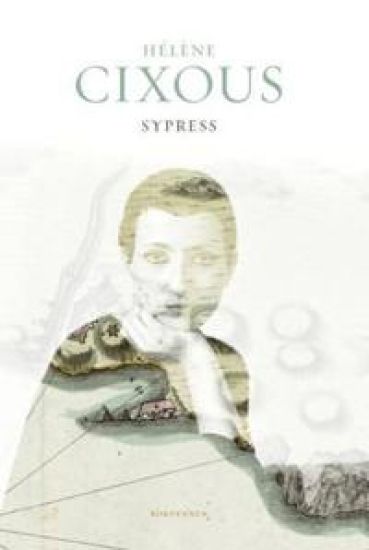
Sypress

Sypress

Hélène Cixous

Bokvennen
2010
sidottu
Mora til bokas forteljar, Hélene, blei fordreve frå Algerie i 1971. No vil Hélene dra tilbake til Algerie der ho blei født og tilbragte barndommen og ungdomstida. Tilbakereisa blir et sterkt møte med fortida.
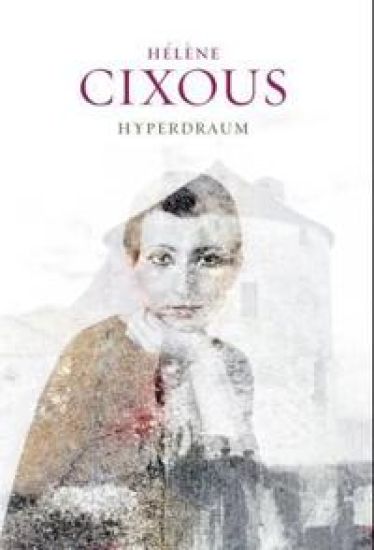
Hyperdraum

Hyperdraum

Hélène Cixous

Bokvennen
2012
sidottu
Hyperdraum handlar mellom anna om tid og tap. Notida saman med den gamle mora og ei tenkt framtid utan henne. Notida utan venen Jacques Derrida og likevel med han. "Eg er i dei aller siste tidene, no veit eg det ut frå eit fråvær av viten men eg veit det med alle sansane mine. Desse tidene deler seg i to utstrekningar av tider i rørsle, ustadige som to gjennomsiktige kontinent som slår seg saman og går over i kvarandre, blandar seg og skil seg frå kvarandre slik som dei to tårna våre som er eit einaste tosjela tårn i kroppen vår." Teksten rører seg mellom filosofiske refleksjonar rundt døden, litteraturtårnet til Montaigne, kvardagsliv med forunderlege innslag, venskap, minne, draumar - og ein sengebotn som familien har hatt i alle år. Først no får forteljaren vite at mora kjøpte denne sengbotnen av Walter Benjamin i 1932. "Der han sjølv la ned draumane sine om draumar, håpa sine og fryktene sine, tekstene sine som spraka i sterke fargar av angst, knallblått eldrødt kvitt."
Mor Homer er død

Mor Homer er død

Hélène Cixous

Bokvennen
2016
sidottu
I Mor Homer er død skildrar Hélène Cixous den siste levetida til mor si, Ève Cixous (1910-2013). Mora bur heime hos dottera medan livet går sakte mot slutten, det er ei svært lang reise. «Ein kjenner målet men veit ikkje kor lenge ferda vil vare, om det går år etter år, makteslause år, det er ein odyssé som ikkje skal ende med eit nostos men med ei nedstiging i den underjordiske grotta, eller nei, kanskje slutten blir ei gjenfinning?» Mora har alltid stått på livet si side, ikkje minst som jordmor i Algerie der ho hjelpte tusenvis av nyfødte til verda. I Mor Homer er død er denne grunnleggande livsenergien illustrert med innslag av dei handskrivne råda frå jordmora, Fødsel utan smerter. Døden er ein fødsel av eit anna slag, han er både konkret og samtidig eit mysterium. Den fysiske svekkinga er tydeleg og forandringane er brutale. Siste akt er kroppsleg, men kjærleiken til den elska mora endrar seg ikkje. Mor og dotter opplever den siste tida saman, og boka er ifølge forfatteren skriven av begge to. Mor Homer er død er også ein poetisk-filosofisk refleksjon over livet og døden. Mor Homer er død er den sjette boka av Hélène Ciouxs som er omsett til norsk av Grete Kleppen. Dei fem første er Osnabrück (2003), Blendverk (2006), Gull, breva frå far min (2008), Sypress (2010) og Hyperdraum (2012). For omsetjinga av Blendverk fekk Kleppen Bastianprisen 2007.
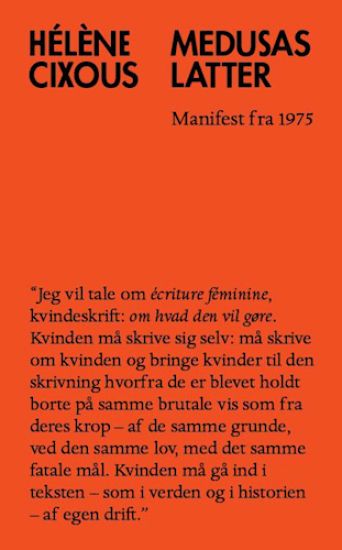
Medusas latter

Medusas latter

Hélène Cixous

Forlaget Mindspace
2025
pokkari
Essayet Medusas latter fra 1975 indvarslede en ny tilgang til spørgsmål om køn, kønnede forskelle og seksualitet, der opstod i forbindelse med feminismen og kvindekampen i 1970'erne. Det er en filosofisk refleksion, et poetisk skrift og politisk manifest med en afgørende virkningshistorie. Hélène Cixous (født 1937) er fransk forfatter og professor i kvindestudier. @font-face {font-family:"Cambria Math"; panose-1:2 4 5 3 5 4 6 3 2 4; mso-font-charset:0; mso-generic-font-family:roman; mso-font-pitch:variable; mso-font-signature:-536870145 1107305727 0 0 415 0;}@font-face {font-family:Calibri; panose-1:2 15 5 2 2 2 4 3 2 4; mso-font-charset:0; mso-generic-font-family:swiss; mso-font-pitch:variable; mso-font-signature:-469750017 -1040178053 9 0 511 0;}@font-face {font-family:Garamond; panose-1:2 2 4 4 3 3 1 1 8 3; mso-font-charset:0; mso-generic-font-family:roman; mso-font-pitch:variable; mso-font-signature:647 2 0 0 159 0;}@font-face {font-family:"Open Sans"; panose-1:2 11 6 4 2 2 2 2 2 4; mso-font-charset:0; mso-generic-font-family:swiss; mso-font-pitch:variable; mso-font-signature:-536870161 1073750107 40 0 415 0;}p.MsoNormal, li.MsoNormal, div.MsoNormal {mso-style-unhide:no; mso-style-qformat:yes; mso-style-parent:""; margin:0cm; mso-pagination:widow-orphan; font-size:12.0pt; font-family:"Calibri",sans-serif; mso-ascii-font-family:Calibri; mso-ascii-theme-font:minor-latin; mso-fareast-font-family:Calibri; mso-fareast-theme-font:minor-latin; mso-hansi-font-family:Calibri; mso-hansi-theme-font:minor-latin; mso-bidi-font-family:"Times New Roman"; mso-bidi-theme-font:minor-bidi; mso-font-kerning:1.0pt; mso-ligatures:standardcontextual; mso-fareast-language:EN-US;}span.sentence-text {mso-style-name:sentence-text; mso-style-unhide:no;}.MsoChpDefault {mso-style-type:export-only; mso-default-props:yes; font-family:"Calibri",sans-serif; mso-ascii-font-family:Calibri; mso-ascii-theme-font:minor-latin; mso-fareast-font-family:Calibri; mso-fareast-theme-font:minor-latin; mso-hansi-font-family:Calibri; mso-hansi-theme-font:minor-latin; mso-bidi-font-family:"Times New Roman"; mso-bidi-theme-font:minor-bidi; mso-fareast-language:EN-US;}div.WordSection1 {page:WordSection1;}