Kirjojen hintavertailu. Mukana 12 390 323 kirjaa ja 12 kauppaa.

Kirjahaku

Etsi kirjoja tekijän nimen, kirjan nimen tai ISBN:n perusteella.

1000 tulosta hakusanalla Henry Fielding

The history of the adventures of Joseph Andrews and his friend Mr Abraham Adams. By: Henry Fielding ( NOVEL )
Joseph Andrews, or The History of the Adventures of Joseph Andrews and of his Friend Mr. Abraham Adams, was the first published full-length novel of the English author and magistrate Henry Fielding, and indeed among the first novels in the English language. Published in 1742 and defined by Fielding as a "comic epic poem in prose", it is the story of a good-natured footman's adventures on the road home from London with his friend and mentor, the absent-minded parson Abraham Adams. The novel represents the coming together citation needed] of the two competing aesthetics of eighteenth-century literature: the mock-heroic and neoclassical (and, by extension, aristocratic) approach of Augustans such as Alexander Pope and Jonathan Swift; and the popular, domestic prose fiction of novelists such as Daniel Defoe and Samuel Richardson. The novel draws on a variety of inspirations. Written "in imitation of the manner of Cervantes, the author of Don Quixote" (see title page on right), the work owes much of its humour to the techniques developed by Cervantes, and its subject-matter to the seemingly loose arrangement of events, digressions and lower-class characters to the genre of writing known as picaresque. In deference to the literary tastes and recurring tropes of the period, it relies on bawdy humour, an impending marriage and a mystery surrounding unknown parentage, but conversely is rich in philosophical digressions, classical erudition and social purpose.
The history of Tom Jones, a foundling. By: Henry Fielding (vOLUME I ): Comic novel

The history of Tom Jones, a foundling. By: Henry Fielding (vOLUME I ): Comic novel

Henry Fielding

Createspace Independent Publishing Platform
2017
nidottu
The History of Tom Jones, a Foundling, often known simply as Tom Jones, is a comic novel by the English playwright and novelist Henry Fielding. The novel is both a Bildungsroman and a picaresque novel. First published on 28 February 1749 in London, Tom Jones is among the earliest English prose works describable as a novel, and is the earliest novel mentioned by W. Somerset Maugham in his 1948 book Great Novelists and Their Novels among the ten best novels of the world. Totaling 346,747 words, it is divided into 18 smaller books, each preceded by a discursive chapter, often on topics unrelated to the book itself. It is dedicated to George Lyttleton. Though lengthy, the novel is highly organised; S. T. Coleridge argued that it has one of the "three most perfect plots ever planned". Although critic Samuel Johnson took exception to Fielding's "robust distinctions between right and wrong", it became a best seller, with four editions being published in its first year alone. Tom Jones is generally regarded as Fielding's greatest book, and as a very influential English novel. The novel's events occupy eighteen books. The kindly and wealthy Squire Allworthy and his sister Bridget are introduced in their wealthy estate in Somerset. Allworthy returns from London after an extended business trip and finds an abandoned baby sleeping in his bed. He summons his housekeeper, Mrs Deborah Wilkins, to take care of the child. After searching the nearby village, Mrs Wilkins is told about a young woman called Jenny Jones, servant of a schoolmaster and his wife, as the most likely person to have committed the deed. Jenny is brought before them and admits being the baby's mother but refuses to reveal the father's identity. Mr Allworthy mercifully removes Jenny to a place where her reputation will be unknown. Furthermore, he promises his sister to raise the boy, whom he names Thomas, in his household. Two brothers, Dr Blifil and Captain Blifil, regularly visit the Allworthy estate. The doctor introduces the captain to Bridget in hopes of marrying into Allworthy's wealth. The couple soon marry. After the marriage, Captain Blifil begins to show a coldness to his brother, who eventually feels obliged to leave the house for London where he soon dies "of a broken heart". Captain Blifil and his wife start to grow cool towards one another, and the former is found dead from apoplexy one evening after taking his customary evening stroll prior to dinner. By then he has fathered a boy, who grows up with the bastard Tom. Tom grows into a vigorous and lusty, yet honest and kind-hearted, youth. His first love is Molly, gamekeeper Black George's second daughter and a local beauty. She throws herself at Tom; he gets her pregnant and then feels obliged to offer her his protection. After some time, however, Tom finds out that Molly is somewhat promiscuous. He then falls in love with a neighbouring squire's lovely daughter, Sophia Western. Tom's status as a bastard causes Sophia's father and Allworthy to oppose their love; this criticism of class friction in society acted as a biting social commentary. The inclusion of prostitution and sexual promiscuity in the plot was also original for its time, and the foundation for criticism of the book's "lowness".... Henry Fielding (22 April 1707 - 8 October 1754) was an English novelist and dramatist best known for his rich, earthy humour and satirical prowess, and as the author of the novel Tom Jones. Additionally, he holds a significant place in the history of law enforcement, having used his authority as a magistrate to found (with his half-brother John) what some have called London's first police force, the Bow Street Runners. His younger sister, Sarah, also became a successful writer
Henry Fielding

Henry Fielding

Thomas R. Cleary

Wilfrid Laurier University Press
1984
nidottu
An accurate and comprehensive study of the political aspects of Fielding's art has been sorely needed. As a result of decades of work by literary scholars and a series of great historians, such a study is finally possible. This volume addresses that need, and, in the light of a recent revival of interest in Fielding's work, it arrives most opportunely. The author offers here a wide-ranging focus and a firm grip on the shifting complexities of Fielding's political situations--the loyalties and enmities, factional alignments and fractious rhetoric--that allow the satisfactory understanding of Fielding's political writing. Political writing in Fielding's day, as in ours, was topical, concerned with evanescent problems and day-to-day needs that were familiar to contemporaries, but that are now recaptured only with greatest difficulty. This study constitutes a thorough reconstruction of Fielding's political context and extricates from the context Fielding's own political endeavours. Cleary's work will make many of Fielding's previously unstudied works accessible to students and scholars of eighteenth-century English literature. A necessary point of reference to both literary specialists and historians concerned with eighteenth-century England.
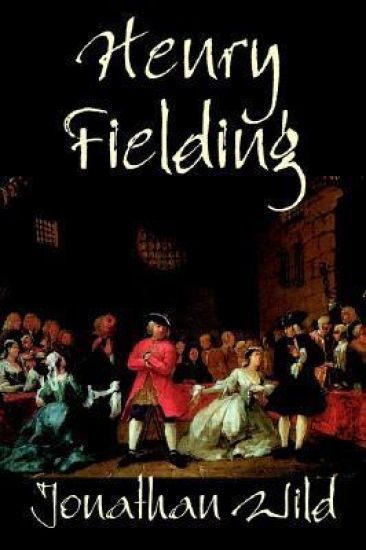
Jonathan Wild by Henry Fielding, Fiction, Classics, Literary
HENRY FIELDING COMPARES JONATHAN WILD, HIGHWAY BANDIT WITH CAESAR -- AND FINDS CAESAR WANTING ." . . .when the mighty Caesar, with wonderful greatness of mind, had destroyed the liberties of his country, and with all the means of fraud and force had placed himself at the head of his equals, had corrupted and enslaved the greatest people whom the sun ever saw, we are reminded, as an evidence of his generosity, of his largesses to his followers and tools, by whose means he had accomplished his purpose, and by whose assistance he was to establish it. . . . Now, who doth not see that such sneaking qualities as these are rather to be bewailed as imperfections than admired as ornaments in these great men; rather obscuring their glory, and holding them back in their race to greatness, indeed unworthy the end for which they seem to have come into the world, viz. of perpetrating vast and mighty mischief?" -- from Henry Fielding's tongue-in-cheek classic, Jonathan Wild
Henry Fielding, Tom Jones

Henry Fielding, Tom Jones

Henry Fielding

Createspace Independent Publishing Platform
2018
nidottu
The story consist of three main parts. The first begins with the discovery of an infant - Tom - in the bed of Squire Allworthy, a rich and benevolent gentlemen who lives in Somerset. Tom's origin is mysterious, but Mr Allworthy takes pity on him and brings him up with his own nephew, Blifil, who constantly seeks to harm the generous, open-hearted Tom. The two boys receive the same education, but while Blifil remains a mean and odious hypocrite, Tom grows into a brave, manly and likeable young man, sometimes impulsive and too pasionate, whose impetuousness often leads him into trouble. He falls in love with Sophia Western, daugther of a neighbouring squire, but he is socially inferior and so a marriage between them is impossibile. Moreover, the jealous Blifil's machinations against him lead to Tom's banishment from Mr Allworthy house. The second part records Tom's adventures on the road, in which a host of new characters are encountered each of whom introduces the story of his own experiences.The third and last part set in London, where Tom has established, and where Sophia flees to avoid a marriage to Blifil. The major characters are brought together and, through revelation and recognition, they achieve the d nouement. Betrayal and macchinations are unmasked, and it turns out that Tom is the illegitimate child of Bilfil's own mother - Mr Allworthy's sister.He is thus recognised as Mr Allworthy's heir, and his marriage to Sophia meets with no opposition.
Henry Fielding

Henry Fielding

Paul Stapfer

BoD - Books on Demand
2024
pokkari
V ritable plong e dans l'univers litt raire du XVIIIe si cle, "Le Grand Classique du Roman Anglais: Henry Fielding" de Paul Stapfer est un ouvrage incontournable pour comprendre l'oeuvre et l'influence de l'un des pionniers du roman moderne. Publi en 1890 dans la Revue des Deux Mondes, ce texte fondateur explore la vie et les crits de Henry Fielding, figure embl matique de l'Augustan Age. Fielding, n en 1707 dans une famille de militaires et de juristes, se distingue d'abord comme dramaturge et satiriste, avant de se tourner vers le roman. Avec des oeuvres comme "Joseph Andrews" (1742), "Tom Jones" (1749) et "Amelia" (1751), il fonde le roman r aliste anglais, caract ris par des personnages de tous les rangs sociaux et des intrigues tiss es dans le tissu de la vie quotidienne. Stapfer met en lumi re la culture classique de Fielding, qui lui permet de faire parade de citations savantes tout en restant accessible un large public. Son style, marqu par la clart et l'ironie, est celui d'un crivain qui refuse les ambigu t s et les pr tendues beaut s litt raires obscures. Mais "Le Grand Classique du Roman Anglais" est aussi une biographie critique qui retrace le parcours de Fielding, de ses d buts Eton jusqu' sa mort Lisbonne en 1754. Stapfer souligne son engagement politique et social, ainsi que son influence sur la litt rature anglaise, en faisant de Fielding un des fondateurs du roman moderne aux c t s de Samuel Richardson. Un classique de la critique litt raire, ce texte reste une r f rence essentielle pour tous ceux qui s'int ressent l'histoire du roman anglais et la pens e de l'Augustan Age.