Race, politics, and opera production during apartheid South Africa intersect in this historiographic work on the Eoan Group, a “coloured” cultural organization that performed opera in the Cape. The La Traviata Affair charts Eoan’s opera activities from the group’s inception in 1933 until the cessation of their productions by 1980. It explores larger questions of complicity, compromise, and compliance; of assimilation, appropriation, and race; and of “European art music” in situations of “non-European” dispossession and disenfranchisement. Performing under the auspices of apartheid, the group’s unquestioned acceptance of and commitment to the art of opera could not redeem it from the entanglements that came with the political compromises it made. Uncovering a rich trove of primary source materials, Hilde Roos presents here for the first time the story of one of the premier cultural agencies of apartheid South Africa.
Race, politics, and opera production during apartheid South Africa intersect in this historiographic work on the Eoan Group, a “coloured” cultural organization that performed opera in the Cape. The La Traviata Affair charts Eoan’s opera activities from the group’s inception in 1933 until the cessation of their productions by 1980. It explores larger questions of complicity, compromise, and compliance; of assimilation, appropriation, and race; and of “European art music” in situations of “non-European” dispossession and disenfranchisement. Performing under the auspices of apartheid, the group’s unquestioned acceptance of and commitment to the art of opera could not redeem it from the entanglements that came with the political compromises it made. Uncovering a rich trove of primary source materials, Hilde Roos presents here for the first time the story of one of the premier cultural agencies of apartheid South Africa.
In this original study, Hilde Hasselgård discusses the use of adverbials in English, through examining examples found in everyday texts. Adverbials - clause elements that typically refer to circumstances of time, space, reason and manner - cover a range of meanings and can be placed at the beginning, in the middle or at the end of a sentence. The description of the frequency of meaning types and discussion of the reasons for selecting positions show that the use of adverbials differs across text types. Adverbial usage is often linked to the general build-up of a text and part of its content and purpose. In using real texts, Hasselgård identifies a challenge for the classification of adjuncts, and also highlights that some adjuncts have uses that extend into the textual and interpersonal domains, obscuring the traditional divisions between adjuncts, disjuncts and conjuncts.
Geza Vermes is a household name within the study of the historical Jesus, and his work is associated with a significant change within mainstream Jesus research, typically labelled 'the third quest'. Since the publication of Jesus the Jew in 1973, many notable Jesus scholars have interacted with Vermes's ideas and suggestions, yet their assessments have so far remained brief and ambiguous. Hilde Brekke Moller explores the true impact of Vermes's Jesus research on the perceived change within Jesus research in the 1980s, and also within third quest Jesus research, by examining Vermes's work and the reception of his work by numerous Jesus scholars.Moller looks in particular depth at the Jewishness of Jesus, the Son-of-Man problem, and Vermes's suggestion that Jesus was a Hasid, all being aspects of Vermes's work which have attracted the most scholarly attention. Moller's research-historical approach focuses not only on the leading scholars of the field such as E.P. Sanders, J.D. Crossan, J.P. Meier and C.A. Evans, but also sheds light on underplayed aspects of previous research, and responds to the state of affairs for recent research by challenging the rhetoric of current historical Jesus scholarship.
Geza Vermes is a household name within the study of the historical Jesus, and his work is associated with a significant change within mainstream Jesus research, typically labelled 'the third quest'. Since the publication of Jesus the Jew in 1973, many notable Jesus scholars have interacted with Vermes's ideas and suggestions, yet their assessments have so far remained brief and ambiguous. Hilde Brekke Moller explores the true impact of Vermes's Jesus research on the perceived change within Jesus research in the 1980s, and also within third quest Jesus research, by examining Vermes's work and the reception of his work by numerous Jesus scholars.Moller looks in particular depth at the Jewishness of Jesus, the Son-of-Man problem, and Vermes's suggestion that Jesus was a Hasid, all being aspects of Vermes's work which have attracted the most scholarly attention. Moller's research-historical approach focuses not only on the leading scholars of the field such as E.P. Sanders, J.D. Crossan, J.P. Meier and C.A. Evans, but also sheds light on underplayed aspects of previous research, and responds to the state of affairs for recent research by challenging the rhetoric of current historical Jesus scholarship.
First published more than twenty years ago, with almost 150,000 copies sold, The Golden Cage is still the classic book on anorexia nervosa, for patients, parents, mental health trainees, and senior therapists alike. Writing in direct, jargon-free style, often quoting her patients’ descriptions of their own experience of illness and recovery, Bruch describes the relentless pursuit of thinness and the search for superiority in self-denial that characterizes anorexia nervosa. She emphasizes the importance of early diagnosis and offers guidance on danger signs. Little-known when this groundbreaking book was first published, eating disorders have become all too familiar. Sympathetic and astute, The Golden Cage now speaks to a new generation.
Between the sixth and twentieth centuries, the civil service examinations created and maintained political coherence across the Chinese polity. Preparation for the examinations transformed the lives of literate elites by defining educational standards and disseminating a language that determined elite status. However, as participation in the examinations became central to that status, an intense competition to determine the educational curriculum and the subject matter of the examinations erupted between intellectual and political rivals. The principal goal of this book is to explain the restructuring of the examination field during a critical point in its history, the Southern Song dynasty (1127-1279), which witnessed the increasing domination of the examinations by the Neo-Confucian Learning of the Way movement.By analyzing textbooks, examination questions and essays, and official and private commentary, Hilde De Weerdt examines how occupational, political, and intellectual groups shaped curricular standards and examination criteria and how examination standards in turn shaped political and intellectual agendas. These questions reframe the debate about the civil service examinations and their place in the imperial order.
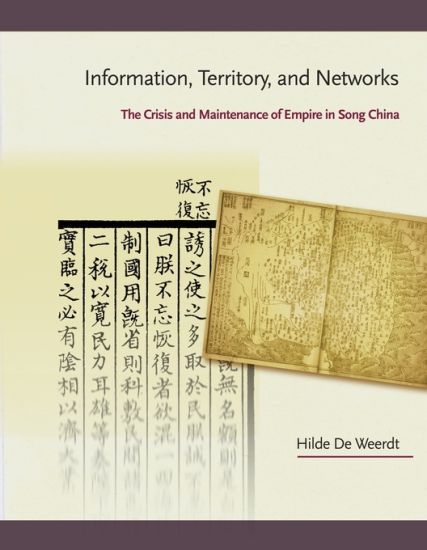
The occupation of the northern half of the Chinese territories in the 1120s brought about a transformation in political communication in the south that had lasting implications for imperial Chinese history. By the late eleventh century, the Song court no longer dominated the production of information about itself and its territories. Song literati gradually consolidated their position as producers, users, and discussants of court gazettes, official records, archival compilations, dynastic histories, military geographies, and maps. This development altered the relationship between court and literati in political communication for the remainder of the imperial period. Based on a close reading of reader responses to official records and derivatives and on a mapping of literati networks, the author further proposes that the twelfth-century geopolitical crisis resulted in a lasting literati preference for imperial restoration and unified rule.Hilde De Weerdt makes an important intervention in cultural and intellectual history by examining censorship and publicity together. In addition, she reorients the debate about the social transformation and local turn of imperial Chinese elites by treating the formation of localist strategies and empire-focused political identities as parallel rather than opposite trends.
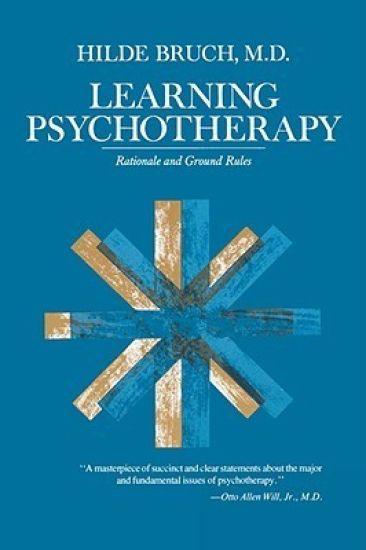
Hilde Bruch sets out to accomplish what has, until now, been virtually impossible—the teaching of psychotherapy by use of the written word, communicating the wisdom of a lifetime. Perhaps Dr. Bruch’s unique success at a task that has been tried and tried again, only to result in stereotyped dos and don’ts, stems from her own learning experiences with two great teachers: Harry Stack Sullivan and Frieda Fromm-Reichmann.Dr. Bruch shares her knowledge of the essential purpose of intensive psychotherapy as it has been shaped over her many years as a psychiatrist, psychoanalyst, and teacher. She sets forth a theoretical frame in straightforward and unmystical language without minimizing the complexities of demand that therapy makes on both patient and therapist.The reader accompanies the therapist from his first encounter with the stranger who comes to him with his trouble through the various steps that lead to the resolution of the problems. The patient is viewed as a participant in a multifaceted system of many experiences and people, not as an individual isolated from the world around him. In Dr. Bruch’s conception, psychotherapy is a situation where two people interact and try to come to an understanding of one another, with the specific goal of accomplishing something beneficial for the complaining person. The factors that help or hinder the attainment of this interaction are spelled out in the book, and the entire process of learning psychotherapy is thereby illuminated.
'My heart grew, then broke, then mended itself. A wise, funny, brave novel and a story that you will never want to forget.' Favel ParrettAn unforgettable story of loneliness, isolation and finding your way. Heart-wrenching, wise and wryly funny, this novel will make you kinder to those who are lost.Miss Kaye works at The Institute. A place for the damaged, the outliers, the not-quite rights. Everyone has different strategies to deal with the residents. Some bark orders. Some negotiate tirelessly. Miss Kaye found that simply being herself was mostly the right thing to do. Susie was seven when she realised she'd had her fill of character building. She'd lie between her Holly Hobbie sheets thinking how slowly birthdays come around, but how quickly change happened. One minute her Dad was saying that the family needed to move back to the city and then, SHAZAM, they were there. Her mum didn't move to the new house with them. And Susie hated going to see her mum at the mind hospital. She never knew who her mum would be. Or who would be there. As the years passed, there were so many things Susie wanted to say but never could.Miss Kaye will teach Susie that the loudness of unsaid things can be music - and together they will learn that living can be more than surviving.
'My heart grew, then broke, then mended itself. A wise, funny, brave novel and a story that you will never want to forget.' Favel ParrettAn unforgettable story of loneliness, isolation and finding your way. Heart-wrenching, wise and wryly funny, this novel will make you kinder to those who are lost.Miss Kaye works at The Institute. A place for the damaged, the outliers, the not-quite rights. Everyone has different strategies to deal with the residents. Some bark orders. Some negotiate tirelessly. Miss Kaye found that simply being herself was mostly the right thing to do. Susie was seven when she realised she'd had her fill of character building. She'd lie between her Holly Hobbie sheets thinking how slowly birthdays come around, but how quickly change happened. One minute her Dad was saying that the family needed to move back to the city and then, SHAZAM, they were there. Her mum didn't move to the new house with them. And Susie hated going to see her mum at the mind hospital. She never knew who her mum would be. Or who would be there. As the years passed, there were so many things Susie wanted to say but never could.Miss Kaye will teach Susie that the loudness of unsaid things can be music - and together they will learn that living can be more than surviving.
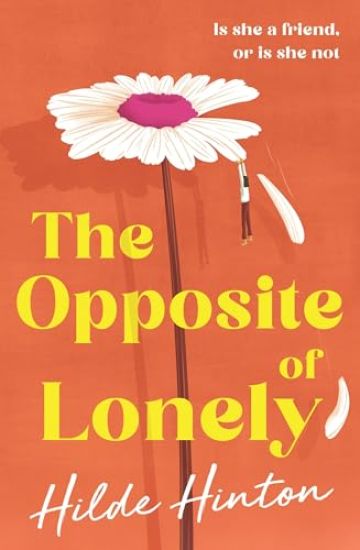
From the bestselling author of THE LOUDNESS OF UNSAID THINGS comes a compelling new novel that illuminates the joys and sorrows of an ordinary life and delivers profound insights into human nature. 'She glanced back at the sleeping boy on the back seat and flashing blue and red lights caught her eye in the rear vision mirror. A police car pulled up behind her. There was nowhere to go. What had she done?'Rose knows that she should be happy. She has a thoughtful son, a kind boss and a dream box full of savings for a rainy day. But sometimes the brick in her chest gets so heavy that it's all she can do to simply watch the minutes tick by on the oven clock.Things change when a stranger arrives. Rose can't believe that someone like Ellie would want to be her friend. Ellie always knows what to do. She is bright and shiny and so caring. With Ellie by her side, things feel possible again, and Rose starts to remember who she is. Soon, she can't imagine how it was without Ellie there. Sometimes, all you need is one friend to change your life. Because the best things in life are free. Aren't they?A novel about discovering that what you need is often right in front of you. And that friendship can hide many truths. 'In her third novel, Hilde Hinton delicately confronts the complexities of motherhood and friendships . . . [Her] strength lies in her ability to create characters who feel remarkably familiar, holding up a mirror to the reader and telling us something about ourselves. Fans of Kim Lock's The Other Side of Beautiful will enjoy this important story about finding your way back to yourself.' BOOKS+PUBLISHING'Hilde Hinton has written another gentle and perceptive look at the travails of life' THE BOOKLIST'A delight . . . Hinton again demonstrates her talent for exposing her characters' emotions and vulnerability' DAILY TELEGRAPH'A big-hearted novel about friendship and the devastation of betrayal' THE AUSTRALIAN WOMEN'S WEEKLY
Public Art acknowledges the trend among contemporary museums to promote participatory and processual exhibition strategies meant to elicit subjective experience. At the same time it valorizes the object-oriented tradition that has long differentiated museums from other institutions similarly committed to public service and the perpetuation of cultural values. To blend and expand these aims, Hein draws upon a movement toward ephemerality and impermanence in public art. She proposes a new dynamic for the museum that is temporal and pluralistic, while retaining a grounding in material things. The museum is an agent, not a repository; and like public art, it interacts constructively with passing and transitory publics. As an actor with social clout, the museum has moral impact and responsibilities beyond those of the individuals that comprise its collective identity. The book should be read by museum workers and students, by arts and foundation administrators, critics, educators, aestheticians, institutional historians and theorists, and by anyone interested in the transmission of cultural concepts and values.
Public Art acknowledges the trend among contemporary museums to promote participatory and processual exhibition strategies meant to elicit subjective experience. At the same time it valorizes the object-oriented tradition that has long differentiated museums from other institutions similarly committed to public service and the perpetuation of cultural values. To blend and expand these aims, Hein draws upon a movement toward ephemerality and impermanence in public art. She proposes a new dynamic for the museum that is temporal and pluralistic, while retaining a grounding in material things. The museum is an agent, not a repository; and like public art, it interacts constructively with passing and transitory publics. As an actor with social clout, the museum has moral impact and responsibilities beyond those of the individuals that comprise its collective identity. The book should be read by museum workers and students, by arts and foundation administrators, critics, educators, aestheticians, institutional historians and theorists, and by anyone interested in the transmission of cultural concepts and values.
Hilde Lindemann Nelson focuses on the stories of groups of people—including Gypsies, mothers, nurses, and transsexuals—whose identities have been defined by those with the power to speak for them and to constrain the scope of their actions. By placing their stories side by side with narratives about the groups in question, Nelson arrives at some important insights regarding the nature of identity. She regards personal identity as consisting not only of how people view themselves but also of how others view them. These perceptions combine to shape the person's field of action. If a dominant group constructs the identities of certain people through socially shared narratives that mark them as morally subnormal, those who bear the damaged identity cannot exercise their moral agency freely.Nelson identifies two kinds of damage inflicted on identities by abusive group relations: one kind deprives individuals of important social goods, and the other deprives them of self-respect. To intervene in the production of either kind of damage, Nelson develops the counterstory, a strategy of resistance that allows the identity to be narratively repaired and so restores the person to full membership in the social and moral community. By attending to the power dynamics that constrict agency, Damaged Identities, Narrative Repair augments the narrative approaches of ethicists such as Alasdair MacIntyre, Martha Nussbaum, Richard Rorty, and Charles Taylor.
The first full-length study of a pivotal figure in American evangelical faith. James Dobson - a child psychologist, author, radio personality, and founder of the Christian conservative organization Focus on the Family-published his first book, Dare to Discipline, in 1970 and quickly became the go-to family expert for evangelical parents across the United States as American evangelicalism rose as a major political force. The family expert became a leading voice in the Reagan Revolution, and he played a role in making American evangelicals even more firmly associated with the Republican Party. Dobson's principle beliefs are that the family is the center of Christian America and that the traditional family must be defended from perceived threats such as gay rights, feminism, abortion, and the secularization of public schools. Dobson and Focus on the Family dominated Christian media through print, radio, and online venues, and their message reached millions of American evangelical households, shaping the cultural sensibilities and political attitudes of evangelical families throughout the culture wars from the 1980s into the 2000s.Family Matters: James Dobson and Focus on the Family's Crusade for the Christian Home by Hilde Løvdal Stephens is an insightful history and analysis of James Dobson's rise to fame, effect on American evangelical culture, and subsequent descent from relevance. Extensively researched, Løvdal Stephens has scoured through Dobson's books, articles, and other materials published by Focus on the Family in order to explore how evangelicals defined and defended the traditional family as an ideal and as a symbol in an ever changing world. By contextualizing the history of Dobson's reign, Løvdal Stephens's discerning analysis fills an important gap in our understandings of the politics and culture of late twentieth-century conservative Christianity in the United States. She explores complex topics ranging from Dobson's celebration of what he believes are timeless biblical values, such as maintaining strict and defined gender roles, to the ways Dobson and Focus on the Family balanced their basic ideals with real everyday lives of average American evangelical families, facing the realities of divorce, working mothers, and other perceived threats to the traditional family.
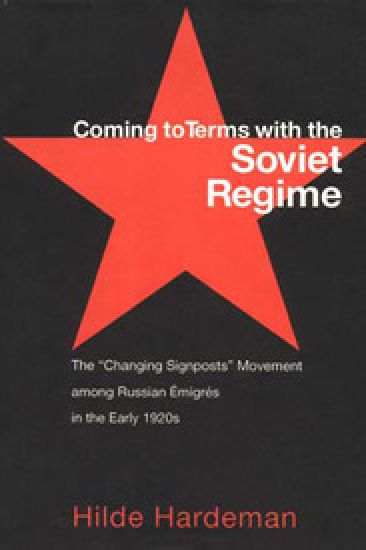
The Bolshevik takeover in 1917 and the subsequent Civil War drove thousands of Russians into exile. Expecting the Bolshevik dictatorship would soon collapse, they settled in the West, waiting for the moment they could leave their refuges in Berlin, Prague, and Paris and return to their homeland in triumph. But as the Reds tightened their grip, these emigres faced the dilemma of coming to terms with their enemies or accepting the loneliness of exile.Early in the 1920s, some of the emigres began to argue for an end to resistance, pleading that the Russian nation and state could be saved only if opposition to Soviet power came to an end. The smenovekhovstvo ("changing signposts") movement called for emigres to come to terms with the Soviet regime. Taking its name from a collection of articles written by young emigre intellectuals who had fought on the side of the Whites in the Civil War, the movement appealed for an end to the anti-Bolshevik struggle, the acceptance of the October Revolution as a Russian national revolution, and the return of the emigres to help rebuild Russia.Coming to Terms with the Soviet Regime traces the rise of the smenovekhovstvo movement among the emigres and those anti-Bolshevik intellectuals who had remained in Russia. The first comprehensive study of this long-ignored and critical subject, it broadens our understanding of the Russian intelligentsia and sheds new light on the relationship of the emigre community to the intellectual and political forces in their homeland. Of particular interest to historians of the Russian emigration and the Russian intelligentsia, Hardeman's study serves also as a sensitive case study of how men and women struggled to come to grips with the victory of the Bolsheviks.
This work has been selected by scholars as being culturally important and is part of the knowledge base of civilization as we know it.This work is in the public domain in the United States of America, and possibly other nations. Within the United States, you may freely copy and distribute this work, as no entity (individual or corporate) has a copyright on the body of the work.Scholars believe, and we concur, that this work is important enough to be preserved, reproduced, and made generally available to the public. To ensure a quality reading experience, this work has been proofread and republished using a format that seamlessly blends the original graphical elements with text in an easy-to-read typeface.We appreciate your support of the preservation process, and thank you for being an important part of keeping this knowledge alive and relevant.
Based on ethnographic observations of encounters between social workers and people with whom they do not have a shared language, this book analyzes the impact of language discordance on the quality of professional service provision. Exploring how street-level bureaucrats navigate the landscape of these discretionary assessments of language discordance, language proficiency, and the need for interpreting, the book focuses on four main themes:the complexity of social work talkthe issue of participation in language discordant meetingscommunicative interactionthe issue of how clarification is requested when needed, and whether professionals and service users are able to reach clarity when something is unclearBased on the findings presented on these different aspects of language discordant talk, the consequences of language discordance for social work are presented and discussed, focusing primarily on issues at the intersection of language, communication, power, dominance and subordination, representation, linguicism, and ultimately, human rights and human dignity.It will be of interest to all social work students, academics and professionals as well as those working in public services and allied health more broadly.
Based on ethnographic observations of encounters between social workers and people with whom they do not have a shared language, this book analyzes the impact of language discordance on the quality of professional service provision. Exploring how street-level bureaucrats navigate the landscape of these discretionary assessments of language discordance, language proficiency, and the need for interpreting, the book focuses on four main themes:the complexity of social work talkthe issue of participation in language discordant meetingscommunicative interactionthe issue of how clarification is requested when needed, and whether professionals and service users are able to reach clarity when something is unclearBased on the findings presented on these different aspects of language discordant talk, the consequences of language discordance for social work are presented and discussed, focusing primarily on issues at the intersection of language, communication, power, dominance and subordination, representation, linguicism, and ultimately, human rights and human dignity.It will be of interest to all social work students, academics and professionals as well as those working in public services and allied health more broadly.