Kirjojen hintavertailu. Mukana 11 244 527 kirjaa ja 12 kauppaa.

Kirjahaku

Etsi kirjoja tekijän nimen, kirjan nimen tai ISBN:n perusteella.

163 tulosta hakusanalla Intaek Oh

Neurobiology of Food and Fluid Intake

Neurobiology of Food and Fluid Intake

Kluwer Academic/Plenum Publishers
2004
sidottu
Like previous handbooks, the present volume is an authoritative and up-to-date compendium of information and perspective on the neurobiology of ingestive behaviors. It is intended to be stimulating and informative to the practitioner, whether neophyte or senior scholar. It is also intended to be accessible to others who do not investigate the biological bases of food and ?uid ingestion, who may teach aspects of this material or simply wonder about the current state of the ?eld. To all readers, we present this handbook as a progress report, recognizing that the present state of the ?eld is much farther along than it was the last time a handbook was published, but mindful of the likelihood that it is not as far along as it will be when the next handbook is prepared. This ?eld has witnessed a spectacular accretion of scienti?c information since the ?rst handbook was published in 1967. During the generation of science between then and the publication of the second handbook in 1990, numerous scienti?c reports have substantially changed the perspective and informational base of the ?eld.
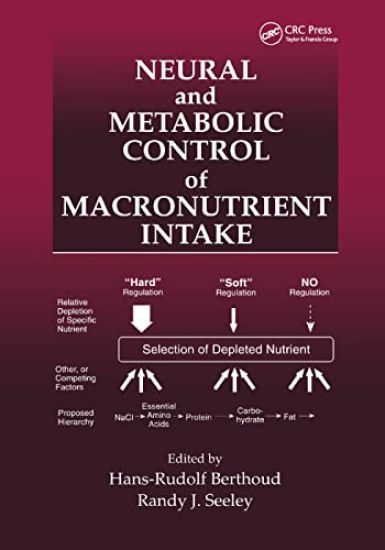
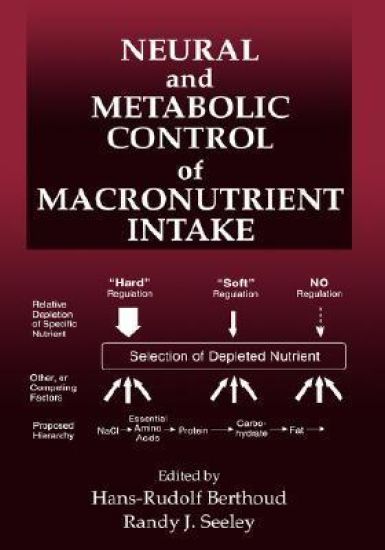
Neural and Metabolic Control of Macronutrient Intake
When an excessive proportion of the human energy requirement is derived from fat, the likelihood of obesity increases. Any such individual is at risk for diabetes and cardiovascular disease- grave and costly health hazards. The selective control of fat ingestion is a promising solution to these concerns. Existing data suggests that macronutrient intake can be manipulated. Further research is working to create pharmacological tools that will suppress fat consumption. It will also be possible to fight obesity, heart disease and diabetes. Neural and Metabolic Control of Macronutrient Intake systematically discusses the known physiological mechanisms involved in macronutrientselection, including their molecular, genetic and neurochemical aspects. The book is also a critical review of the hypothesis that ingestion of the three nutrients is regulated by separate neural control mechanisms, leaving open the possibility that strategies could be devised to intervene in bodily control systems and alter the proportion of fat in the diet. This reference provides three types of information: First, the basic background of the biochemical and physiological systems as they relate to macronutrient selection. Second, opinions and data concerning to what degree animals and humans show evidence of macronutrient selection. And, third, evidence about how the central nervous system might be involved in the choices animals make among macronutrients.
Family-Based Treatment for Avoidant/Restrictive Food Intake Disorder
This book describes the theoretical and clinical rationale for the use of Family-Based Treatment (FBT) for Avoidant/Restrictive Food Intake Disorder (ARFID). Based on years of clinical care and systematic study of children and adolescents with ARFID using Family-Based Treatment for Avoidant/Restrictive Food Intake Disorder (FBT-ARFID), the manual provides guidance about assessment of ARFID. Topics covered include how to incorporate the medical, nutritional, and psychiatric problems that are common with this disorder and how to evaluate the principle maintaining behaviors related to lack of interest or appetite, extreme sensory sensitivities to food, and fear of physical repercussions of eating (e.g. pain, vomiting, allergic reactions). Step-by-step illustrations of the key interventions in FBT-ARFID are provided and detailed case discussions demonstrate how these are implemented in a range of cases.Ideal for clinical practitioners who treat children and adolescents with eating disorders, specifically, psychologists, psychiatrists, social workers, and allied health practitioners.
Family-Based Treatment for Avoidant/Restrictive Food Intake Disorder
This book describes the theoretical and clinical rationale for the use of Family-Based Treatment (FBT) for Avoidant/Restrictive Food Intake Disorder (ARFID). Based on years of clinical care and systematic study of children and adolescents with ARFID using Family-Based Treatment for Avoidant/Restrictive Food Intake Disorder (FBT-ARFID), the manual provides guidance about assessment of ARFID. Topics covered include how to incorporate the medical, nutritional, and psychiatric problems that are common with this disorder and how to evaluate the principle maintaining behaviors related to lack of interest or appetite, extreme sensory sensitivities to food, and fear of physical repercussions of eating (e.g. pain, vomiting, allergic reactions). Step-by-step illustrations of the key interventions in FBT-ARFID are provided and detailed case discussions demonstrate how these are implemented in a range of cases.Ideal for clinical practitioners who treat children and adolescents with eating disorders, specifically, psychologists, psychiatrists, social workers, and allied health practitioners.
The Scientific Design of Exhaust and Intake Systems

The Scientific Design of Exhaust and Intake Systems

Philip H. Smith; John C. Morrison

Bentley (Robert) Inc.,US
1971
nidottu
For years, engineers, engine designers, high-performance tuners and racers have depended on the Scientific Design of Exhaust and Intake Systems to develop maximum potential from their engines.Dr. John C. Morrison is one of the foremost authorities on the analysis of the induction and exhaust processes of high-speed engines. Together with Philip Smith, he gives a thorough explanation of the physics that govern the behavior of gases as they pass through an engine, and the theories and practical research methods used in designing more efficient induction manifolds and exhaust systems, for both competition and street use.Chapter topics range from Simple Flow Problems and Sound and its Energy to Designing a System for Racing. This authoritative book will lead you through the complex theory to an understanding of how to design high-performance exhaust and intake systems for your own particular application.
Neural and Metabolic Control of Macronutrient Intake
When an excessive proportion of the human energy requirement is derived from fat, the likelihood of obesity increases. Any such individual is at risk for diabetes and cardiovascular disease- grave and costly health hazards. The selective control of fat ingestion is a promising solution to these concerns. Existing data suggests that macronutrient intake can be manipulated. Further research is working to create pharmacological tools that will suppress fat consumption. It will also be possible to fight obesity, heart disease and diabetes. Neural and Metabolic Control of Macronutrient Intake systematically discusses the known physiological mechanisms involved in macronutrientselection, including their molecular, genetic and neurochemical aspects. The book is also a critical review of the hypothesis that ingestion of the three nutrients is regulated by separate neural control mechanisms, leaving open the possibility that strategies could be devised to intervene in bodily control systems and alter the proportion of fat in the diet.This reference provides three types of information: First, the basic background of the biochemical and physiological systems as they relate to macronutrient selection. Second, opinions and data concerning to what degree animals and humans show evidence of macronutrient selection. And, third, evidence about how the central nervous system might be involved in the choices animals make among macronutrients.
Advances in the Assessment of Dietary Intake.
Diet is a major factor in health and disease. Controlled, long-term studies in humans are impractical, and investigators have utilized long-term epidemiological investigations to study the contributions of diet to the human condition. Such studies, while valuable, have often been limited by contradictory findings; a limitation secondary to systematic errors in traditional self-reported dietary assessment tools that limit the percentage of variances in diseases explained by diet. New approaches are available to help overcome these limitations, and Advances in the Assessment of Dietary Intake is focused on these advances in an effort to provide more accurate dietary data to understand human health. Chapters cover the benefits and limitations of traditional self-report tools; strategies for improving the validity of dietary recall and food recording methods; objective methods to assess food and nutrient intake; assessment of timing and meal patterns using glucose sensors; and physical activity patterns using validated accelerometers. Advances in the Assessment of Dietary Intake describes new avenues to investigate the role of diet in human health and serves as the most up-to-date reference and teaching tool for these methods that will improve the accuracy of dietary assessment and lay the ground work for future studies.
Cognitive-Behavioral Therapy for Avoidant/Restrictive Food Intake Disorder

Cognitive-Behavioral Therapy for Avoidant/Restrictive Food Intake Disorder

Jennifer J. Thomas; Kamryn T. Eddy

Cambridge University Press
2018
pokkari
Avoidant/Restrictive Food Intake Disorder (ARFID) is a common eating disorder diagnosis that describes children and adults who cannot meet their nutritional needs, typically because of sensory sensitivity, fear of adverse consequences and/or apparent lack of interest in eating or food. This book is the first of its kind to offer a specialist treatment, specifically for ARFID. Developed, refined and studied in response to this urgent clinical need, this book outlines a specialiZed cognitive-behavioral treatment: Cognitive-Behavioral Therapy for Avoidant/Restrictive Food Intake Disorder (CBT-AR). This treatment is designed for patients across all age groups, supported by real-life case examples and tools to allow clinicians to apply this new treatment in their own clinical settings.
Neurobiology of Food and Fluid Intake

Neurobiology of Food and Fluid Intake

Springer-Verlag New York Inc.
2011
nidottu
When I began graduate school in 1961, Physiological Psychology was alive with adventure and opportunity. It seemed possible, indeed easy, to determine which part of the brain influenced which aspect of behavior, and the relative absence of technical hurdles encouraged neophytes into the laboratory. New theories of brain function based on a wealth of reliable and provocative findings also stimu­ lated further laboratory investigation. And the results obtained in studies of food and fluid ingestion certainly were exciting, albeit perplexing. For example, eating could be stimulated by injecting one chemical agent into the rat brain, whereas drinking was stimulated by i~ecting a different chemical through the same hypothalamic cannula. After focal brain lesions rats would overeat but not work harder to obtain food. After other brain lesions in adjacent sites, rats would stop eating and drinking altogether, but ingestive behaviors would return gradu­ ally over a period of weeks or months despite permanent brain injury. Although some of these observations and related findings may provide less insight into the central control of ingestive behavior than had been believed initially, there was a strong impression then that much more was known about eating and drinking than other behaviors, and they became models of motivated activities in addition to being of interest in their own right. Twenty-two years ago, the American Physiological Society published the first handbook devoted exclusively to the subject of alimentary behavior.
How to Reduce Your Child's Sugar Intake
Sugar is everywhere. Do your children beg you to buy unhealthy sugary snacks at the supermarket, and kick up a tantrum if you refuse? Perhaps you crave sweet treats, bread, pasta and sauce-laden food yourself. Do you notice lethargy and mood swings in your children as a result of blood glucose spikes and dips? If the answer to any of these questions is yes, your family's health is at risk. Dr Val Wilson can help. Having lived with Type 1 diabetes for more than four decades, her relationship with sugar has at times been very unhealthy, but today she is well in control of her sugar intake. How to Reduce Your Child's Sugar Intake is packed with recent scientific research and nutritional information to help you understand addiction to sugar and conquer it. It provides simple, actionable advice and delicious recipes to help you break free from the mental, physical and emotional traps of old eating patterns.This book shows the way to a sustainable, healthy lifestyle. It will enable you and your family to enjoy dramatically improved health and mood, increased energy levels and weight loss.
Neurobiology of Food and Fluid Intake

Neurobiology of Food and Fluid Intake

Springer-Verlag New York Inc.
2013
nidottu
Like previous handbooks, the present volume is an authoritative and up-to-date compendium of information and perspective on the neurobiology of ingestive behaviors. It is intended to be stimulating and informative to the practitioner, whether neophyte or senior scholar. It is also intended to be accessible to others who do not investigate the biological bases of food and ?uid ingestion, who may teach aspects of this material or simply wonder about the current state of the ?eld. To all readers, we present this handbook as a progress report, recognizing that the present state of the ?eld is much farther along than it was the last time a handbook was published, but mindful of the likelihood that it is not as far along as it will be when the next handbook is prepared. This ?eld has witnessed a spectacular accretion of scienti?c information since the ?rst handbook was published in 1967. During the generation of science between then and the publication of the second handbook in 1990, numerous scienti?c reports have substantially changed the perspective and informational base of the ?eld.
Advances in the Assessment of Dietary Intake.
Diet is a major factor in health and disease. Controlled, long-term studies in humans are impractical, and investigators have utilized long-term epidemiological investigations to study the contributions of diet to the human condition. Such studies, while valuable, have often been limited by contradictory findings; a limitation secondary to systematic errors in traditional self-reported dietary assessment tools that limit the percentage of variances in diseases explained by diet. New approaches are available to help overcome these limitations, and Advances in the Assessment of Dietary Intake is focused on these advances in an effort to provide more accurate dietary data to understand human health. Chapters cover the benefits and limitations of traditional self-report tools; strategies for improving the validity of dietary recall and food recording methods; objective methods to assess food and nutrient intake; assessment of timing and meal patterns using glucose sensors; and physical activity patterns using validated accelerometers. Advances in the Assessment of Dietary Intake describes new avenues to investigate the role of diet in human health and serves as the most up-to-date reference and teaching tool for these methods that will improve the accuracy of dietary assessment and lay the ground work for future studies.
National Pollutant Discharge Elimination System - Cooling Water Intake Structures at Existing Facilities and Phase I Facilities - Requirements (US Env
National Pollutant Discharge Elimination System - Cooling Water Intake Structures at Existing Facilities and Phase I Facilities - Requirements (US Environmental Protection Agency Regulation) (EPA) (2018 Edition) The Law Library presents the complete text of the National Pollutant Discharge Elimination System - Cooling Water Intake Structures at Existing Facilities and Phase I Facilities - Requirements (US Environmental Protection Agency Regulation) (EPA) (2018 Edition). Updated as of May 29, 2018 The purpose of this action is to reduce impingement and entrainment of fish and other aquatic organisms at cooling water intake structures used by certain existing power generation and manufacturing facilities for the withdrawal of cooling water from waters of the United States. This rule establishes requirements under section 316(b) of the Clean Water Act (CWA) for existing power generating facilities and existing manufacturing and industrial facilities that are designed to withdraw more than 2 million gallons per day (mgd) of water from waters of the United States and use at least 25 percent of the water they withdraw exclusively for cooling purposes. These national requirements, which will be implemented through National Pollutant Discharge Elimination System (NPDES) permits, apply to the location, design, construction, and capacity of cooling water intake structures (CWIS) at regulated facilities and provide requirements that reflect the best technology available (BTA) for minimizing adverse environmental impact. On April 20, 2011, EPA published a proposed rule that included several options for addressing these impacts. Subsequently, EPA published two Notices of Data Availability (NODA), on June 11, 2012 and June 12, 2012, that further clarified EPA's proposed approach. This final rule also responds to judicial remand of aspects of the previously promulgated Phase II and Phase III section 316(b) rules. In addition, EPA is also responding to an earlier judicial decision by removing from the previously promulgated Phase I new facility rule a restoration-based compliance alternative and the associated monitoring and demonstration requirements. This book contains: - The complete text of the National Pollutant Discharge Elimination System - Cooling Water Intake Structures at Existing Facilities and Phase I Facilities - Requirements (US Environmental Protection Agency Regulation) (EPA) (2018 Edition) - A table of contents with the page number of each section
Pulmonary Hypertension Related to Aminorex Intake DNA Injuries, Their Repair, and Carcinogenesis Soft Tissue Tumors in the Rat Visceral Candidosis

Pulmonary Hypertension Related to Aminorex Intake DNA Injuries, Their Repair, and Carcinogenesis Soft Tissue Tumors in the Rat Visceral Candidosis

C. L. Berry; J. Nesland; J. Prat; W. Böcker; H. Cottier; P. J. Dawson; H. Denk; C. M. Fenoglio-Preiser; P. U. Heitz; O. H. Iversen; U. Löhrs; F. Nogales; U. Pfeifer; N. Sasano; G. Seifert; J. C. E. Underwood; Y. Watanabe

Springer-Verlag Berlin and Heidelberg GmbH Co. K
2011
nidottu
In 1967 cardiologists in Switzerland were struck by the sudden increase in the number of cases of so-called primary pulmonary hypertensive disease (PPHD). Up untill966, the cardiology centers in Switzerland had not seen more than one or two cases a year, but this number suddenly multiplied by ten or twenty times. At the June 1968 meeting ofthe Swiss Society of Cardiology, Gurtner et al. (1968b) presented a paper which raised the question whether the vascular types of cor pulmonale had increased. They also raised the question about the possible responsibility of environmental factors, such as toxins or drugs, in causing this increase. Krrihenbuhl et al. (1968) first suggested the possible responsibility of anorexigenic drugs, but no proof was provided. Soon after this, the cardiology team in Bem (Gurtner et al., 1968a) published their report, which resumed and completed the above-mentioned prelim- inary communication; 31 cases of PPHD, among which 17 had taken an anorexigenic drug, aminorex fumarate (Menocil, Cilag), were reported. The importance of this work was soon recognized and it was followed by several meetings (in Vienna, Hannover, and Burgenstock) and two round tables sponsored by the Swiss Society of Cardiology (in Montreux and Basel).
1...34567...9