Kirjojen hintavertailu. Mukana 11 717 486 kirjaa ja 12 kauppaa.

Kirjahaku

Etsi kirjoja tekijän nimen, kirjan nimen tai ISBN:n perusteella.

494 tulosta hakusanalla Ivor Edwards

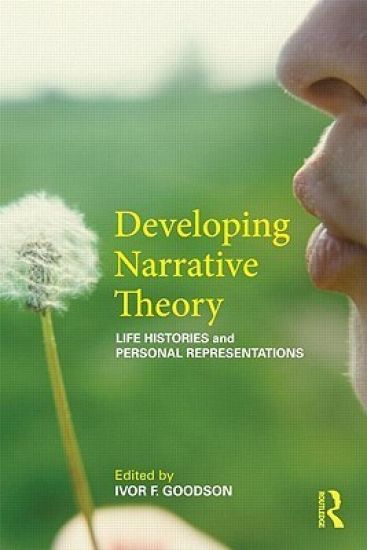
Developing Narrative Theory

Developing Narrative Theory

Ivor F. Goodson

Routledge
2012
nidottu
We live in an age of narrative: life stories are a crucial ingredient in what makes us human and, in turn, what kind of human they make us. In recent years, narrative analysis has grown and is used across many areas of research. Interest in this rapidly developing approach now requires the firm theoretical underpinning that would allow researchers to both approach such research in a reliably structured way, and to interpret the results more effectively.Developing Narrative Theory looks at the contemporary need to study life narratives, considers the emergence and salience of life narratives in contemporary culture, and discusses different forms of narrativity. It shows in detail how life story interviews are conducted, and demonstrates how the process often begins with relatively unstructured life story collection but moves to a more collaborative exchange, where sociological themes and historical patterns are scrutinised and mutually explored.At the core of this book, the author shows that, far from there being a singular form of narrative or an infinite range of unique and idiosyncratic narratives, there are in fact clusters of narrativity and particular types of narrative style. These can be grouped into four main areas: Focussed Elaborators; Scripted Describers; Armchair Elaborators; and Focussed Describers.Drawing on data from several large-scale studies from countries across the world, Professor Goodson details how theories of narrativity and life story analysis can combine to inform learning potential. Timely and innovative, this book will be of use to all of those employing narrative and life history methods in their research. It will also be of interest to those working in lifelong learning and with professional and self development practices.

Shakespeare's God

Shakespeare's God

Ivor Morris

Routledge
2010
nidottu
First published in 1972. Shakespeare's God investigates whether a religious interpretation of Shakespeare's tragedies is possible. The study places Christianity's commentary on the human condition side by side with what tragedy reveals about it. This pattern is identified using the writings of Christian thinkers from Augustine to the present day. The pattern in the chief phenomena of literary tragedy is also traced
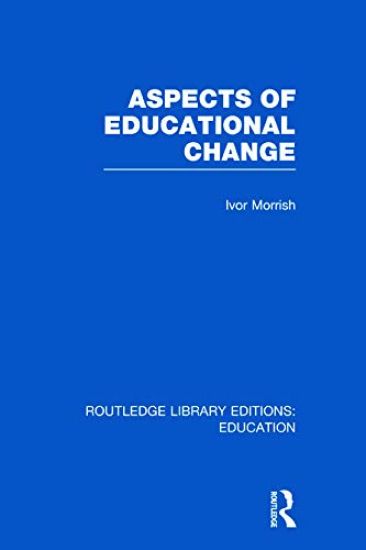
Aspects of Educational Change

Aspects of Educational Change

Ivor Morrish

Routledge
2011
sidottu
In recent years teachers have realized that change has become a permanent factor on the educational scene and therefore its operation or mechanism must not just be accepted, or even rejected, but above all understood. This book presents an approach towards some real understanding of educational changes and innovations. A number of mechanisms and processes are discussed and analysed in an attempt to present some sort of overview of the agents involved in change, an analysis of the major characteristics of resisters and innovators, an account of the traits and functions of innovative institutions and a description of three particular models which delineate the way in which change occurs. In the final section of the text attention is given to some contemporary educational innovations, and some suggestions provided for dealing with problems involved in their evaluation.
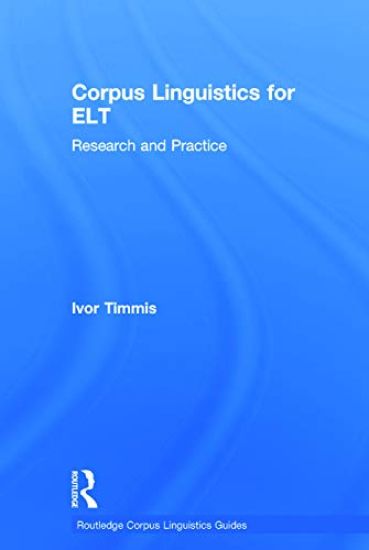
Corpus Linguistics for ELT

Corpus Linguistics for ELT

Ivor Timmis

Routledge
2015
sidottu
Corpus Linguistics for ELT provides a practical guide to undertaking ELT-related corpus research. Aimed at researchers, advanced undergraduate and postgraduate students of ELT and TESOL, and English language teachers, this volume: covers corpus research in the main areas of language study relevant to ELT: grammar, lexis, ESP, spoken grammar and discourse; presents a review of relevant corpus research in these areas, and discusses the implications of this research for ELT; suggests potential ELT-focused corpus research projects, and equips the reader with all the required tools and techniques to carry them out; deals with the growing area of learner corpora and direct classroom application of corpus material.Corpus Linguistics for ELT empowers and inspires readers to carry out their own ELT corpus research, and will allow them in turn to make a significant contribution to corpus-informed ELT pedagogy.
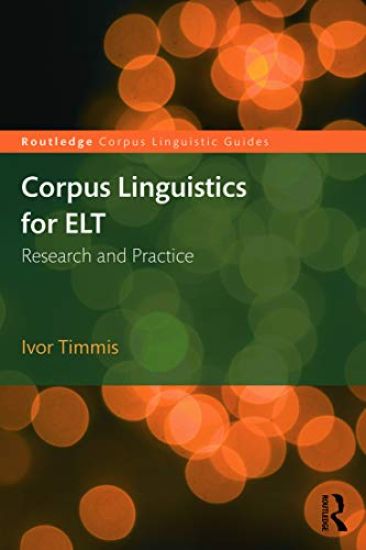
Corpus Linguistics for ELT

Corpus Linguistics for ELT

Ivor Timmis

Routledge
2015
nidottu
Corpus Linguistics for ELT provides a practical guide to undertaking ELT-related corpus research. Aimed at researchers, advanced undergraduate and postgraduate students of ELT and TESOL, and English language teachers, this volume: covers corpus research in the main areas of language study relevant to ELT: grammar, lexis, ESP, spoken grammar and discourse; presents a review of relevant corpus research in these areas, and discusses the implications of this research for ELT; suggests potential ELT-focused corpus research projects, and equips the reader with all the required tools and techniques to carry them out; deals with the growing area of learner corpora and direct classroom application of corpus material.Corpus Linguistics for ELT empowers and inspires readers to carry out their own ELT corpus research, and will allow them in turn to make a significant contribution to corpus-informed ELT pedagogy.
Aspects of Educational Change

Aspects of Educational Change

Ivor Morrish

Routledge
2014
nidottu
In recent years teachers have realized that change has become a permanent factor on the educational scene and therefore its operation or mechanism must not just be accepted, or even rejected, but above all understood. This book presents an approach towards some real understanding of educational changes and innovations. A number of mechanisms and processes are discussed and analysed in an attempt to present some sort of overview of the agents involved in change, an analysis of the major characteristics of resisters and innovators, an account of the traits and functions of innovative institutions and a description of three particular models which delineate the way in which change occurs. In the final section of the text attention is given to some contemporary educational innovations, and some suggestions provided for dealing with problems involved in their evaluation.
Education Since 1800

Education Since 1800

Ivor Morrish

Routledge
2014
nidottu
Originally published in 1970, this volume provides a survey of the wide field of the development of education since 1800. The book is structured as follows: Part One: The General Development of Popular EducationEnglish Elementary Education, the Development of Primary Education, English Secondary Education Part Two: Specific Topics in EducationIndependent, Private and Public Schools, Technical and Technological Education, The Universities, Teacher Training, Further and Adult Education, The Youth Services Part Three: Educational ThinkersJohann Friedrich Herbart (1776-1841), Friedrich Froebel (1782-1852), Froebelianism and Montessori, John Dewey (1859-1952).
Curriculum, Personal Narrative and the Social Future
Recent writing on education and social change, and a growing number of new governmental initiatives across Western societies have proceeded in denial or ignorance of the personal missions and biographical trajectories of key public sector personnel. This book stems from an underpinning belief that we have to understand the personal biographical if we are to understand the fate of social and political initiatives. In education a pattern has emerged in many countries around the world. Each new government enshrines targets and tests to ensure that teachers at the frontline delivery are ‘more accountable’. Whilst this often provides evidence of symbolic action to the electorate or professional audiences, the evidence at the level of service delivery is often far less impressive. Targets, tests and tables may win wide support from the public, but there are often negligible or even contradictory effects at the point of delivery, enforced by the ignorance or denial of personal missions and biographical mandates. This book locates most of its analysis and discussion at the point of culture clash between centralised dictates, and individual and collective life missions. Whilst the early part of the book considers a range of issues related to school curriculum, the focus on the biographical and life narrative becomes increasingly important as the analysis proceeds. Curriculum, Personal Narrative and the Social Future will be of key interest to practising teachers, educational researchers and students on teacher training courses, postgraduate courses and doctoral courses.
Curriculum, Personal Narrative and the Social Future
Recent writing on education and social change, and a growing number of new governmental initiatives across Western societies have proceeded in denial or ignorance of the personal missions and biographical trajectories of key public sector personnel. This book stems from an underpinning belief that we have to understand the personal biographical if we are to understand the fate of social and political initiatives. In education a pattern has emerged in many countries around the world. Each new government enshrines targets and tests to ensure that teachers at the frontline delivery are ‘more accountable’. Whilst this often provides evidence of symbolic action to the electorate or professional audiences, the evidence at the level of service delivery is often far less impressive. Targets, tests and tables may win wide support from the public, but there are often negligible or even contradictory effects at the point of delivery, enforced by the ignorance or denial of personal missions and biographical mandates. This book locates most of its analysis and discussion at the point of culture clash between centralised dictates, and individual and collective life missions. Whilst the early part of the book considers a range of issues related to school curriculum, the focus on the biographical and life narrative becomes increasingly important as the analysis proceeds. Curriculum, Personal Narrative and the Social Future will be of key interest to practising teachers, educational researchers and students on teacher training courses, postgraduate courses and doctoral courses.
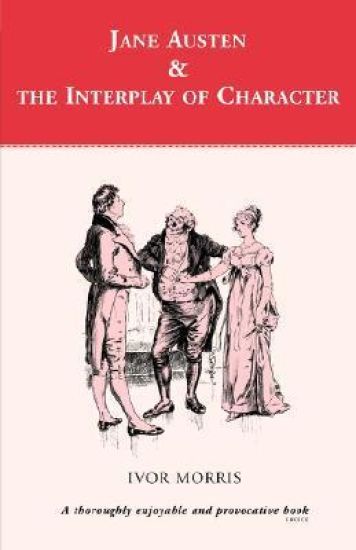
Jane Austen and the Interplay of Character

Jane Austen and the Interplay of Character

Ivor Morris

Continuum International Publishing Group Ltd.
1998
pokkari
The unique force of Jane Austen's novels lies in the interplay of her characters. Nothing much happens, on the surface; but, as in life, minor shifts and changes evoke enormous consequences in the lives of individuals. In this stimulating book, Ivor Morris anatomises one of her best-loved characters, Mr Collins: "conceited, pompous, narrow-minded, silly". His obsequious flatteries, parading self-approval, witless blunderings and hapless endeavours in romance have delighted generations of readers. By focusing on this entertaining figure, Ivor Morris has produced that rare thing - a seriously analytical and genuinely amusing study. Ivor Morris has also published on Elizabethan drama and elsewhere on Austen.
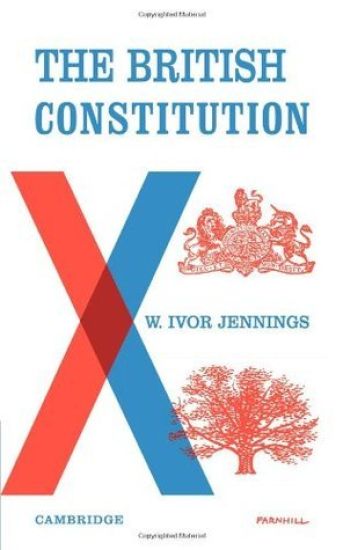
The British Constitution

The British Constitution

Ivor Jennings

Cambridge University Press
1967
pokkari
The British Constitution is accepted, in England at least, as the symbol for soundness and reliability: and yet its unwritten mysteries and its practical resilience are the despair of theorists. It is as unexpected as a person, and seems to be defined only by the fact that it lives and works. This 1966 book, then, might be described as a biography by one who has a first-hand knowledge of his subject. It offers ordinary British citizens a reasonable and detached introduction to the system in which they play so large a part; at the same time it provides, for friends and critics overseas, a simple and reliable account of its growth and functioning.
Parliament

Parliament

Ivor Jennings

Cambridge University Press
1969
pokkari
First published in 1939 Parliament sought to analyse the parliamentary institutions of the United Kingdom as pieces of constitutional machinery. This reprint is from the revised version of the book.
Party Politics: Volume 1, Appeal to the People

Party Politics: Volume 1, Appeal to the People

Ivor Jennings

Cambridge University Press
2010
pokkari
Originally published in 1960, this was the first of three volumes on 'Party Politics'. The whole work was the conclusion of Sir Ivor Jenning's standard survey of English constitutional and political practice begun with Cabinet Government (3rd edition, 1959) and continued in Parliament (2nd edition, 1957). Party Politics as a whole dealt with topics which must be seen as a continuous development since 1688. Like the companion volumes it benefited from Sir Ivor's unique combination of talents: knowledge of the law; knowledge of the history which produced the law, and personal knowledge of the way affairs of state are conducted. Volume I deals with elections in law and practice. Volume II, The Growth of Parties, deals with their composition and operation. Volume II, The Stuff of Politics dealt with leading political ideas.
Party Politics: Volume 3, The Stuff of Politics

Party Politics: Volume 3, The Stuff of Politics

Ivor Jennings

Cambridge University Press
2010
pokkari
Originally published in 1962, this is the final volume of Party Politics following Appeal to the People and The Growth of Parties, which appeared in 1960 and 1961. In it Sir Ivor Jennings analyses the nature of politics by discussing some of the political ideas such as Church and King, liberty, nationalism, imperialism, free trade and the welfare state, which were instrumental in shaping the British political system. The three volumes of Party Politics complete the survey of British political institutions which Sir Ivor Jennings began with Parliament and Cabinet Government. At the time of publication these volumes formed the standard twentieth century authority on British Constitutional history, law and practice.
Party Politics: Volume 2

Party Politics: Volume 2

Ivor Jennings

Cambridge University Press
2010
pokkari
This 1961 text is the second volume of Party Politics, following Appeal to the People which appeared in 1960. It is an historical analysis of the nature, growth and activity of organised political parties in England, from the parliamentary divisions of the Civil War to the general election of 1959. Sir Ivor Jennings shows that party conflict has roots going very far back in English history, though the decisive or formative stages were reached comparatively recently. But this ample and very readable history emphasises above all that English politics, in all their strangeness as well as their rationality, are an organic historical growth, forever developing.
The Approach to Self-Government

The Approach to Self-Government

Ivor Jennings

Cambridge University Press
2011
pokkari
During his lifetime, Sir Ivor Jennings (1903–1965) was well known as the author of several standard books on constitutional law. He acted as constitutional adviser to the governments of Ceylon and Pakistan and was Vice-Chancellor of the University of Ceylon. This 1956 book followed in the tradition of his earlier The British Constitution and is a clear statement by an expert with a characteristically practical point of view. It is principally concerned with a practical problem: what constitution shall be given to a new country about to govern itself for the first time? Published at a time when colonial empires were moving more or less peaceably towards self-government, it was based on a series of broadcast talks originally commissioned by the BBC in the belief that the experiences gained in Asia were in principle applicable to other countries approaching self-government.
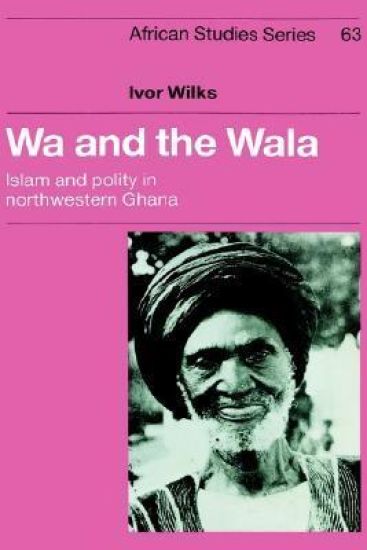
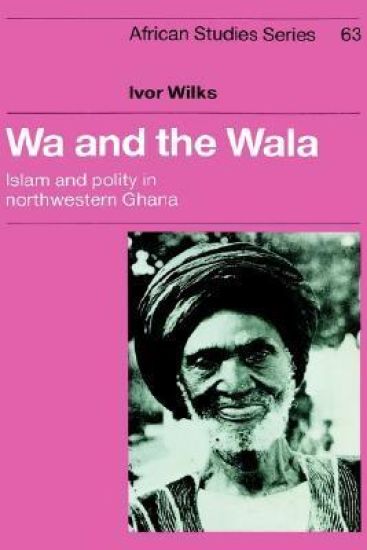
Wa and the Wala

Wa and the Wala

Ivor Wilks

Cambridge University Press
1989
sidottu
In the late seventeenth century Wala emerged as a small state in what is now northwestern Ghana. Its creation involved on the one hand warrior groups of Mande, Dagomba and Mamprusi origins, and on the other hand scholars from the centres of Muslim learning on the Middle Niger. Ivor Wilks traces the history of Wala from its beginnings to the present, paying particular attention to relations between the Muslim and non-Muslim elements in its population. He also examines the impact of Zabarima, Samorian, British and French intrusions into Wala affairs. By the use of orally transmitted traditions and recensions of these in Arabic and Hausa, he is able to show how the Wala themselves view their past. Wala is periodically convulsed by crises often resulting in communal violence. He suggests that the policy maker involved in the region’s political problems needs a sound knowledge of Wala history and an understanding of the deeper structures of Wala society, especially in the context of official support for decentralization.
Asante in the Nineteenth Century

Asante in the Nineteenth Century

Ivor Wilks

Cambridge University Press
1989
pokkari
Originally published in 1975, and reprinted with additional introductory material in 1989, this book provides an in-depth account of Asante history during the nineteenth century. The focus of the book is on the broad political development of Asante society, concentrating on the material factors which affected the decision making process during various administrations. This focus reflects the complex and sophisticated nature of the Asante social system, a system which had its basis in administrative unity and a core idea of nationhood. The text utilizes the abundant archival, printed and oral source materials available regarding the Asante, offering the reader a profound insight into the nature and structure of a remarkable society. This is a fascinating book that will be of value to anyone with an interest in African history.
Wa and the Wala

Wa and the Wala

Ivor Wilks

Cambridge University Press
2002
pokkari
In the late seventeenth century Wala emerged as a small state in what is now northwestern Ghana. Its creation involved on the one hand warrior groups of Mande, Dagomba and Mamprusi origins, and on the other hand scholars from the centres of Muslim learning on the Middle Niger. Ivor Wilks traces the history of Wala from its beginnings to the present, paying particular attention to relations between the Muslim and non-Muslim elements in its population. He also examines the impact of Zabarima, Samorian, British and French intrusions into Wala affairs. By the use of orally transmitted traditions and recensions of these in Arabic and Hausa, he is able to show how the Wala themselves view their past. Wala is periodically convulsed by crises often resulting in communal violence. He suggests that the policy maker involved in the region’s political problems needs a sound knowledge of Wala history and an understanding of the deeper structures of Wala society, especially in the context of official support for decentralization.